
Florence field review · WALKING TOURS
The Best of Florence Private Walking Tour with a Local Guide
Florence hits you fast, especially with the right guide. This private 2-hour walking tour gives you a clean orientation of the city’s Renaissance power centers, from the Duomo complex to the Medici story playing out in plazas and bridges. You get history you can actually picture, not just dates floating in the air.
I especially like the way the route mixes famous landmarks with less obvious stops, like Orsanmichele’s worker-church past and the medieval memory in the side streets. I also like that your guide builds in flexible pacing for your group, so you can linger when something catches your eye.
One consideration: with only about 2 hours, you need to go in ready to choose, not to do deep museum time at every stop.
Why This Private Walk Works for First-Time Florence
This tour is designed to get you oriented quickly. You start at Piazza di San Giovanni and end near Ponte Vecchio, which means you’re walking the classic old-town spine, but with a guide connecting the dots between religion, politics, and art patronage.
The private format matters here. If your group likes photos, your guide can slow down. If you want a faster overview, you can keep moving. The itinerary is built to cover big names and big spaces without feeling like a rushed checklist.
And yes, you also get practical recommendations along the way. That part is underrated. In Florence, where to eat and where to shop can make or break a trip, and a local guide’s advice is often more useful than another map app.
Florence walks that make the stone streets tell the story
- Florence: Guided Walking Tour★ 4.5 · 3,334 reviews
- Skip the line: Uffizi and Accademia Small Group Walking Tour★ 4.5 · 3,135 reviews
- Florence: Guided Walking Tour★ 4.6 · 1,602 reviews
- Florence: Renaissance and Medici Tales Guided Walking Tour★ 4.8 · 1,549 reviews
Highlights That Make the Tour Worth Your Time
- A tight overview of Florence’s big themes: church power, Medici politics, and Renaissance art in the same walking loop
- Architecture-focused commentary at key landmarks like the Duomo complex and Piazza della Signoria
- Medici-era connections you can visualize, including the route through bureaucratic Florence by way of the Uffizi area
- Street-level Florence, not just postcard points, with older towers and medieval street reminders
- Ponte Vecchio details that explain how the bridge and the Vasari Corridor fit into Medici life
- Dining and shopping intel, so you leave with a plan, not just photos
Start at Piazza di San Giovanni, Then Hit the Duomo Complex
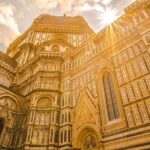
You begin at Piazza di San Giovanni, 14R (easy to find, near public transport). The first stop is Piazza del Duomo, where your guide frames the religious and artistic engine of Florence in one place.
Here’s what makes this stop work on a walking tour. You’re not staring at a single building. You’re seeing a whole set that shows how Florence expressed faith and power through design.
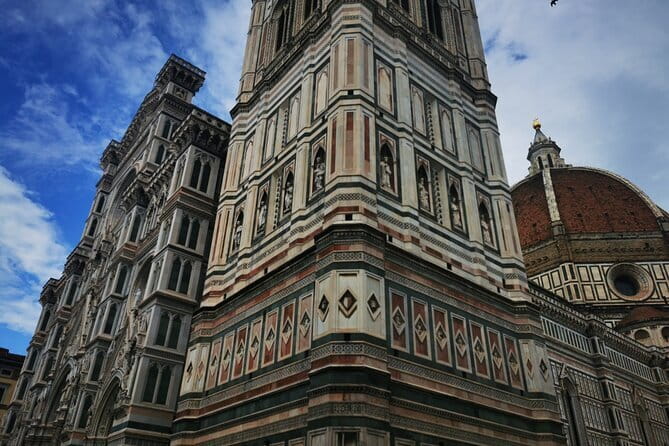
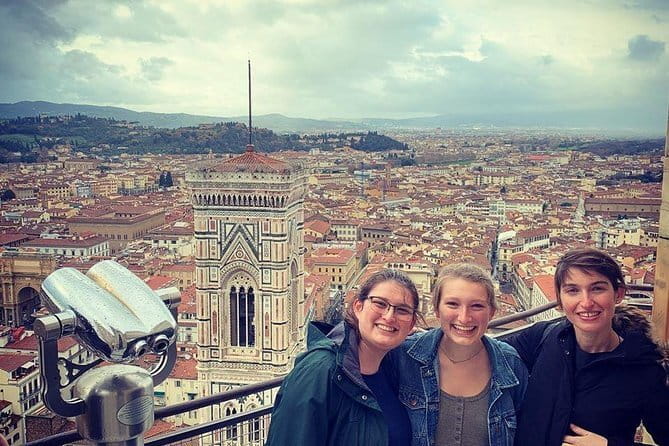
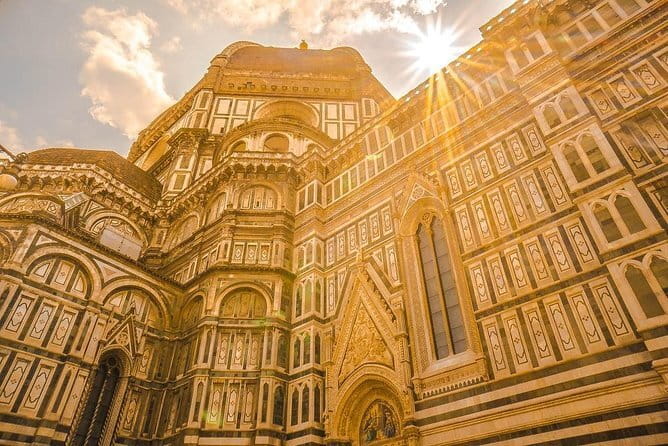
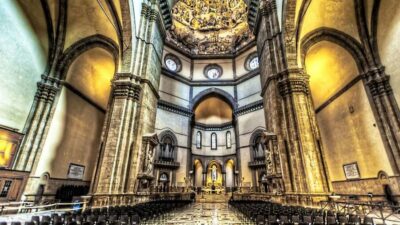
At St. John’s Baptistery, you’ll hear about the bronze doors, including what makes them so famous in Florentine art. Then you move to Santa Maria del Fiore Cathedral, with its marble exterior and the dome that dominates the city. Your guide also points out the Giotto’s belltower, described as an open-air museum of sculpture. That phrasing is helpful, because it nudges you to look for details rather than treating the tower like just a background prop.
Practical note: this is one of the most visually dense places in Florence. If your group is prone to getting photo-happy, tell your guide early. They can pace you so you still catch the key points.
The Medieval Street Memories Between Icons
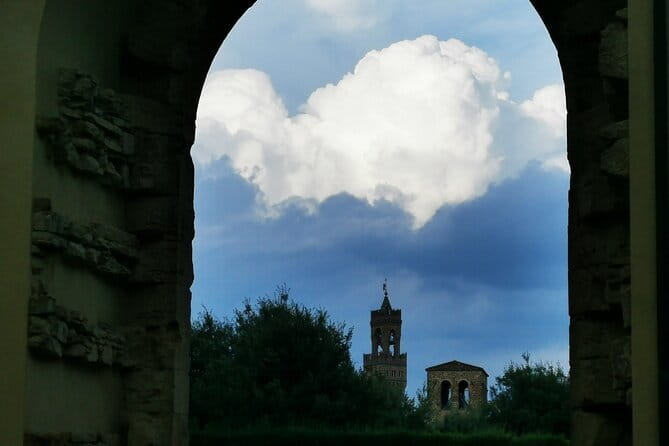
After the Duomo area, you take a short walk through Florence’s narrower streets, including an area known for older towers that echo medieval life. This is a smart insertion between the mega landmarks.
Why it matters: Florence can feel like museum rooms connected by streets. These older-tower glimpses remind you you’re moving through a lived-in city, not a theme park. Even if you’ve seen photos before, being at street level changes how you understand the scale.
This stop is brief, about 10 minutes, and it’s not meant to feel like a history lecture. It’s meant to reset your eyes so the next plaza hits harder.
Piazza della Repubblica and the Roman Origin Angle
Next is Piazza della Repubblica. Your guide shows you modern buildings and well-known café and shopping spaces, but the real value is the origin story.
The triumphal arch in the square is tied to the idea of Florence as the ancient center of the city, with Roman roots about two thousand years ago. That’s the kind of context that makes you look at the built environment differently. You stop seeing only the storefronts, and you start noticing layers.
One thing to keep in mind: this plaza is more active and commercial than the church and political squares. If you prefer quiet, focus on the architecture points your guide is highlighting rather than trying to linger in the crowd.
Orsanmichele: A Worker-Church With Renaissance Statues
Then you move to Orsanmichele, where the exterior is the hook. The building started life as a marketplace, then transformed into a church tied to Florentine workers.
This stop stands out because it gives you a different angle on Renaissance Florence. It’s not just Medici patrons and famous artists. It’s also about guilds, jobs, and who held influence. Your guide explains that Orsanmichele once housed what’s described as one of the richest collections of Renaissance statues. That’s exactly the kind of detail that makes the place feel like more than a random stop.
You’ll spend about 10 minutes here, and the goal is the same as the rest of the tour: learn what you’re looking at, so your future self can recognize what matters when you pass by again.
When a guide is worth having beside you in Florence
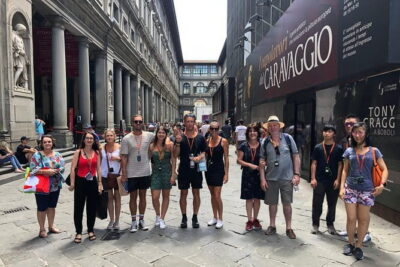
Piazza della Signoria: Political Florence in Stone
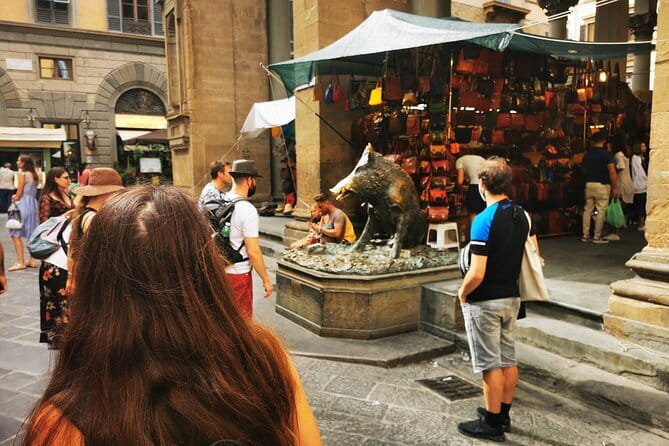
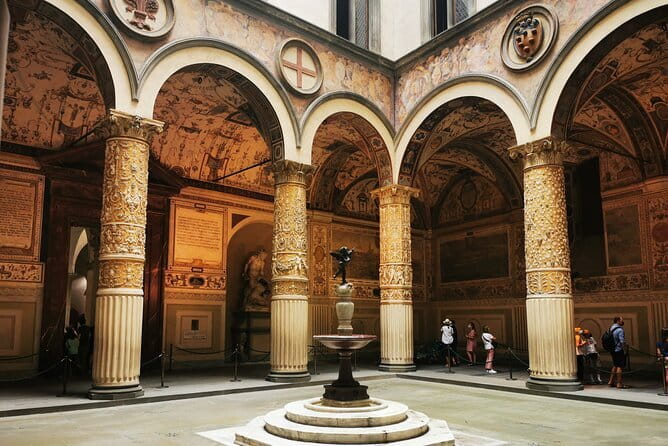
Piazza della Signoria is where Florence’s political identity shows up in full force. Your guide brings you to the square and connects the story to Palazzo Vecchio, which historically hosted meetings of the city council.
This place is described as the political center, and it earns that label. The “castle-looking” aspect of Palazzo Vecchio isn’t just a vibe. It signals power, authority, and control, plain and simple.
You’ll also notice the world-famous statues around the square from the 16th century. These works create a kind of open-air museum effect, and your guide helps you understand why so many important figures are staged here.
Then comes one of my favorite bits of tour structure: your guide heads toward the Arno River through the Piazzale degli Uffizi area. The Uffizi region is tied to Florence bureaucracy in the Medici era, and your guide notes how it transformed into one of the city’s major painting galleries. That matters because it shows the continuity between governance and culture in Florence, instead of treating museums as separate from politics.
Expect about 20 minutes around this segment. If your group wants the best photos, ask for a couple of angles that show both Palazzo Vecchio and the statues in one frame.
Ponte Vecchio: Goldsmiths and the Vasari Corridor Story
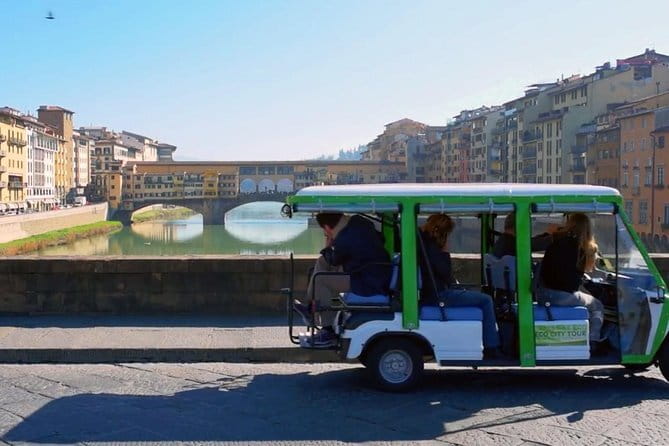
Next up is Ponte Vecchio, one of the most recognizable bridges in the world. Your guide adds story and specifics so you’re not just looking at shop windows.
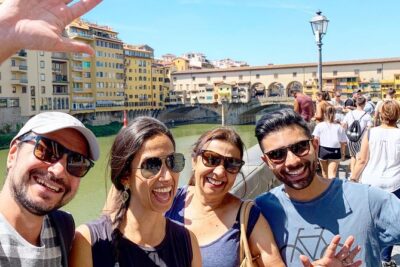
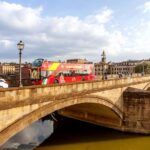
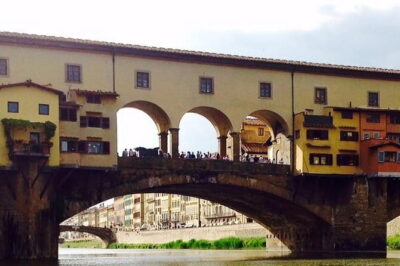
You’ll cross the medieval bridge built in the 1340s and look at the goldsmiths’ shops, with the glittering storefront windows that make the bridge feel like a jewelry box. Then your guide connects the bridge to the Medici family through the Vasari Corridor.
The Vasari Corridor is described as an overhead passageway constructed by Giorgio Vasari in 1565 for Cosimo de’ Medici. That detail changes how you think about Ponte Vecchio. It stops being only a scenic bridge and becomes part of a controlled, connected route for power.
Timing is short, about 8 minutes at this stop. It’s enough to get the meaning and a few solid photos, but you should plan to come back later if you want to browse the shops carefully.
Finish at Palazzo Pitti and the Medici Residence Legacy
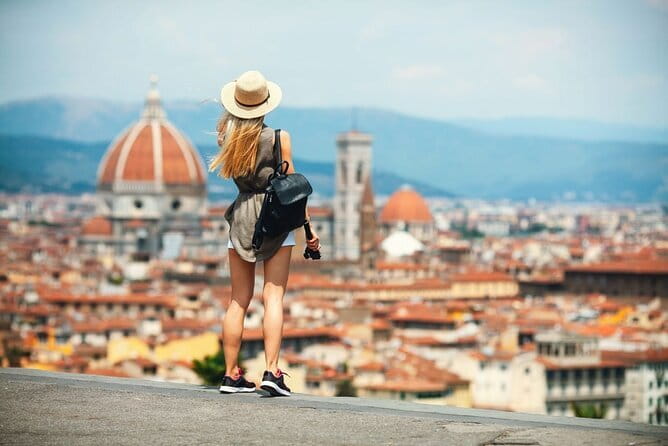
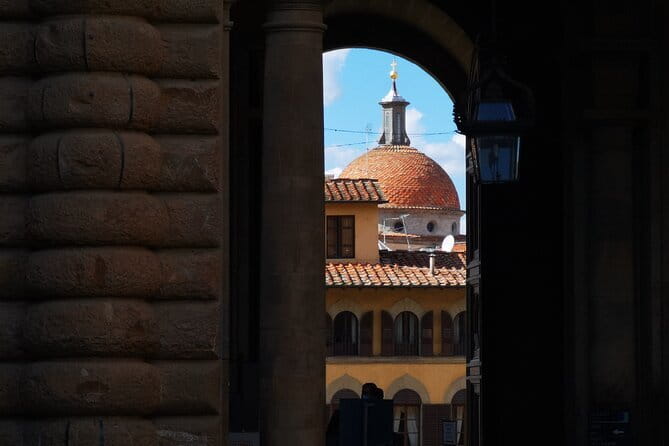
The tour ends at Piazza Pitti, with a view onto Palazzo Pitti. This finish gives you a final Medici-focused image before you break off on your own.
Your guide explains that Palazzo Pitti became the Medici residence until the family became extinct in 1737. That kind of “from this city center to that residence” framing helps the whole trip click into place. You’ve seen religious power, political staging, and cultural administration, and now you see the home base.
You’ll spend about 8 minutes around the finish area. If you’re the type who likes lingering, this is a good place to extend your walk on your own, especially if you want a quieter look compared to the busiest core areas.
Guides You Might Get, and What They Do Well
This experience is offered by FlorencePass, and the guides connected to this tour are often praised for telling the city like it’s a story you can walk through.
Names that come up include Maurizio (noted as a born-and-raised Florentine with a strong understanding of the city), Roberta (highlighted for being highly recommended and speaking with lots of stories and updates on architecture and history), and Claudio (praised for complete explanations of architecture and city history).
No matter which guide you get, the common thread is practical explanation. They don’t just point. They interpret what you’re seeing, then connect it to the next stop so you’re building a mental map as you walk.
Price and Value: What You’re Paying For
The tour costs $161.34 per person and runs about 2 hours. That sounds like real money for a walking tour, so here’s how I think about value in this case.
You’re paying for three things that cost time and effort on your own:
- A guided route that prioritizes the highest-impact sights in the old town
- Interpretation that makes architecture and art meaningful in plain language
- A private pace and local recommendations for food and shopping
If you’re traveling in a group size where you can share the cost, private tours often become more reasonable fast. If you’re solo, it can still be worth it because the value is in the guide’s ability to help you see more with less guesswork.
Also, Florence can be overwhelming. When you buy time back by getting your bearings in a couple of hours, that value carries into the rest of your trip.
Timing, Pace, and How to Get the Most From 2 Hours
On paper, it’s a compact route. In practice, Florence rewards attention. Here’s how to make the most of it without feeling stressed.
Wear comfortable shoes. This is a walk through plazas and streets that can involve uneven stone and lots of stops for looking up. Bring a phone for photos, but don’t let it steal all your time. When your guide points out something specific, like a dome feature or a corridor detail, that’s when the city starts to make sense.
If you care about food and shopping, ask your guide practical questions. The tour is built to include tips for places to eat and shop, so take advantage rather than saving those questions for later when you might be too hungry or too tired to decide.
Finally, plan to continue on afterward. The tour is an overview, not a full replacement for museum time.
Who This Tour Suits Best
This is a strong fit if you:
- Want a fast, guided orientation of Florence’s key sights
- Prefer private time with an itinerary that can flex to your pace
- Like architecture and want context that makes statues and buildings more than visual clutter
- Appreciate local recommendations for what to eat and where to shop
It’s also a good option if you’re short on time but still want to understand how Renaissance power worked in everyday city spaces.
If you’re the kind of traveler who wants to spend hours inside each monument, you might find the tour too short. Use it as a launch point, then pick one or two places to return to for a longer visit.
Should You Book This Florence Best Of Private Walking Tour?
Book it if you want Florence to click quickly. The route covers the Duomo complex, the political heart in Piazza della Signoria, the Medici-linked story through the Uffizi area, and the iconic Ponte Vecchio with its Vasari Corridor connection. That combination gives you an overview that helps the rest of your trip feel less random.
Skip it or pair it with extra time if you want heavy indoor museum focus every stop. This tour’s strength is interpretation and pacing across a compact walk, not long ticketed visits.
If your top priority is understanding what you’re seeing and leaving with a realistic plan for your next meal and stroll, this tour is a smart investment.
FAQ
How long is The Best of Florence private walking tour?
It lasts about 2 hours.
How much does the tour cost per person?
The price is $161.34 per person.
Where does the tour start and where does it end?
It starts at Piazza di San Giovanni, 14R, 50129 Firenze FI, Italy and ends near Ponte Vecchio, 46R, 50125 Firenze FI, Italy.
Is this a private tour?
Yes. It is private, meaning only your group will participate.
Do I need a printed ticket?
You’ll use a mobile ticket.
Is public transportation nearby?
Yes, the meeting area is near public transportation.
What are some of the main stops on the route?
Key stops include Piazza del Duomo, Piazza della Repubblica, Orsanmichele, Piazza della Signoria, Ponte Vecchio, and Piazza Pitti.
Are there admissions included at the sights?
The itinerary notes admission ticket Free for the listed stops.
How far in advance is it typically booked?
On average, it is booked about 97 days in advance.
Is free cancellation available?
Yes, you can cancel for a full refund up to 24 hours before the experience starts.
What if I’m not sure I can handle the walking?
Most travelers can participate.
Florence at walking speed

More Florence tours to open next
- The Best tour in Florence: Renaissance & Medici Tales – guided by a STORYTELLER
★ 5.0 · 12,316 reviews
Every Florence review, in one place
- Tuscany Day Trip from Florence: Siena, San Gimignano, Pisa and Lunch at a Winery
★ 5.0 · 21,634 reviews - The Best tour in Florence: Renaissance & Medici Tales – guided by a STORYTELLER
★ 5.0 · 12,316 reviews

Florence picks that sit just beyond this itinerary
- One Hour Uffizi Guided Tour: Masterpieces of the Renaissance
★ 5.0 · 3 reviews - Sightseeing Tuscany by touring bike – 1 day rental
★ 5.0 · 3 reviews - Private Siena, S. Gimignano, Chianti Road and Wine Tasting
★ 5.0 · 3 reviews - Bargello Museum Private Tour: Michelangelo’s Bacchus & Donatello’s David
★ 5.0 · 3 reviews - Authentic Florence Cooking Class at Costanza’s 1839 Family Estate
★ 5.0 · 3 reviews - San Gimignano and Volterra private tour: etruscans, romans and middle age jewels
★ 5.0 · 3 reviews
More Walking Tours worth comparing.
 ★ 4.5Guided Walking TourFrom $313,334 reviews
 ★ 4.5Skip the line: Uffizi and Accademia Small Group Walking TourFrom $1483,135 reviews
★ 4.6Guided Walking TourFrom $271,602 reviews
 ★ 4.8Renaissance and Medici Tales Guided Walking TourFrom $21,549 reviews
 ★ 4.7Uffizi & Accademia Small Group Walking TourFrom $1481,380 reviews
 ★ 5.0Skip-the-Line Florence Highlights and David Walking TourFrom $1171,127 reviews
 ★ 4.6Dark Mysteries and Legends Guided Walking TourFrom $21,081 reviews
 ★ 4.5Florence in a Day: Michelangelo’s David, Uffizi and Guided City Walking TourFrom $1341,048 reviews
Find this experience in another shortlist