
Florence field review · WALKING TOURS
The Best of Florence in few hours – private walking tour
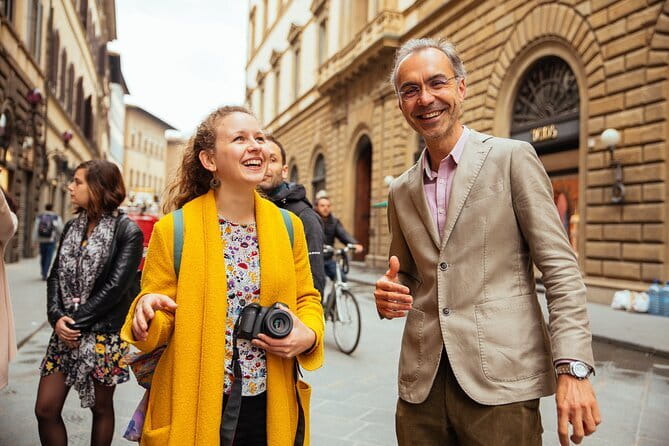
Florence can feel like a maze. This private walk makes it logical, with top sights strung together into an easy route you can repeat later. I love the way you get big landmarks like the Duomo and Ponte Vecchio covered in only a couple hours, and I also like the private-guide attention that helps you connect what you’re seeing with why it matters.
One thing to plan for: the tour has a strict dress code for churches and selected museums. If you show up with bare shoulders or uncovered knees, you could be turned away, and that can slow the flow.
Key highlights in plain sight
- Private, small-group format for a focused route and faster Q&A with your guide
- Duomo-area orientation at Santa Maria del Fiore, plus the complex’s major landmarks in the same window
- Ponte Vecchio and the Arno crossing to see Florence’s most famous bridge from both sides
- Piazza della Signoria and Loggia dei Lanzi for sculpture and power-center atmosphere without needing a full day
- Oltrarno visit to Pitti Palace and the Medici story that follows you around town
Florence walks that make the stone streets tell the story
- Florence: Guided Walking Tour★ 4.5 · 3,334 reviews
- Skip the line: Uffizi and Accademia Small Group Walking Tour★ 4.5 · 3,135 reviews
- Florence: Guided Walking Tour★ 4.6 · 1,602 reviews
- Florence: Renaissance and Medici Tales Guided Walking Tour★ 4.8 · 1,549 reviews
Why this 2-hour private Florence walk works so well
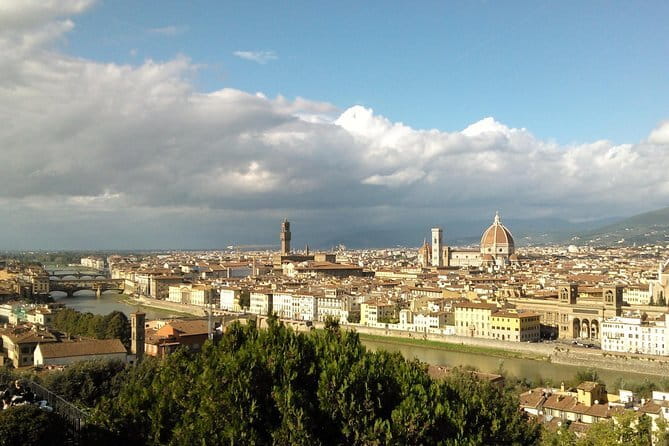
If you want to understand Florence quickly, this kind of route is the right tool. In about two hours, you cover the core “greatest hits” and the surrounding context that makes those hits click in your brain. You start near Borgo San Lorenzo, move through central squares, cross the Arno, and end near Piazza della Repubblica.
The best part is how the tour is built for re-visiting. Think of it like getting your map sketched in ink. You’ll see where the big sights are, how they relate to each other, and what you want to linger over on a return visit. It’s especially useful if you’re short on time, or if you arrive in Florence with that overwhelmed feeling of, Okay, where do I even begin?
At this price point, you’re paying for two things: time efficiency and human guidance. A guided private walk for a group (up to 15) isn’t the cheapest way to see Florence, but it can be good value when you consider that Florence is compact, yet confusing once you’re walking on your own.
Starting near Borgo San Lorenzo and Piazza della Repubblica
The meeting point is Borgo San Lorenzo, right where you can orient yourself for the rest of the day. From there, the first stop is Piazza della Repubblica. This square sits on layered Florence, including the old forum roots and later transformations. It also links to the city’s quieter past around the old ghetto area, swept away during the Risanamento, when Florence was pushing new avenues and boulevards during its period as capital of a reunited Italy.
You’ll also get a feel for how Florence’s public spaces shifted from medieval and communal functions into more central, city-showpiece roles. Even if you don’t care about every historical phase, the square gives you an easy visual starting point for your walk.
Practical tip: this is a good time to ask your guide how to pace your next steps. If you know ahead of time which sight you’ll come back to, you save yourself from the classic Florence problem, standing in front of something amazing and realizing you’ll never get back.
Piazza della Signoria: where power, art, and crowds intersect
Once you’re moving, the walk naturally funnels toward Piazza della Signoria, Florence’s political hub. This is one of those places where the buildings feel like they’re watching you. The square is surrounded by major Renaissance-era landmarks, including Palazzo Vecchio and the Uffizi Gallery area, plus Loggia dei Lanzi.
Here, your guide’s explanations matter. You’re not just looking at pretty architecture, you’re learning how Florence displayed authority in stone and public spaces. That makes the rest of the route easier to understand, because you’ll start recognizing the city’s “center of gravity.”
A practical note: Piazza della Signoria can be busy, especially at peak hours. The benefit of a private format is simple, you’re not stuck waiting to hear the same generic script as a long line of people. You can ask specific questions and get targeted answers while you’re in the right spot.
Loggia dei Lanzi: statuary in open air, no museum ticket required
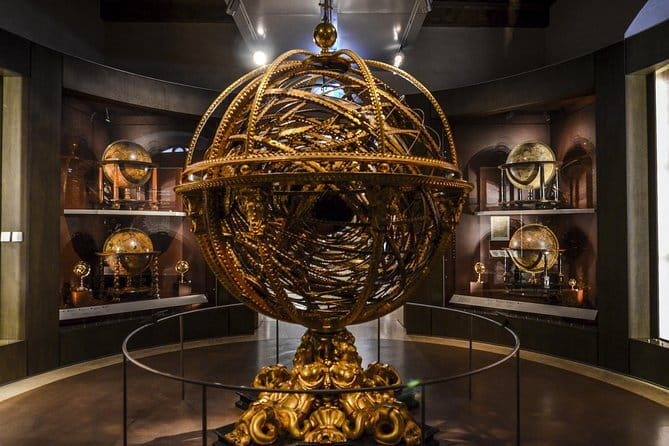
Right in the same orbit is Loggia dei Lanzi, an open-air gallery that’s free and quick. You’ll spend about 10 minutes there, enough time to notice key sculptures without getting stuck in a longer museum visit you didn’t plan.
This stop is more than a photo break. It’s a chance to see how Renaissance sculpture was meant to live in public space, not only inside walls. If you’re the type who loves details, you’ll likely find yourself looking up at the figures and then back down at how people circulate around the loggia.
Don’t force this into a long stop. The tour is timed for orientation, so treat this as a highlight teaser. If you want to spend more time, you’ll be able to do it on your own later with a clearer plan.
Santa Maria del Fiore (the Duomo complex) and the Gate of Paradise
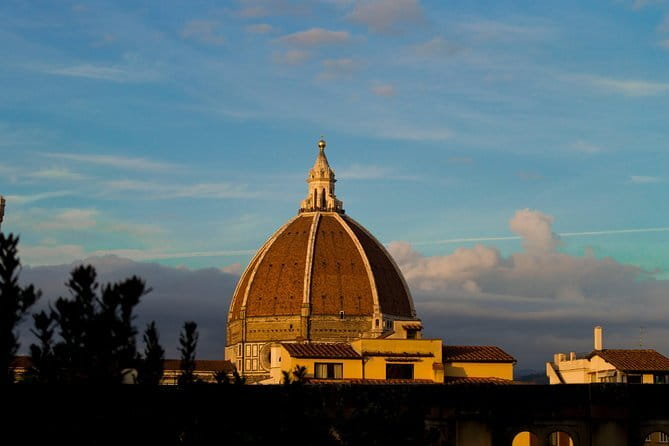
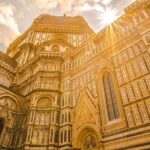
The centerpiece of the whole route is Santa Maria del Fiore, the Duomo. Construction began in 1296 in the Gothic style, based on designs attributed to Arnolfo di Cambio, and the cathedral was completed structurally in 1436. The dome engineering is credited to Filippo Brunelleschi, one of the great “how did they even do that?” moments in European architecture.
The tour takes you into the Duomo complex area, and you’ll see the connection between the main church, the Baptistery, and Giotto’s Bell Tower. That trio is part of the UNESCO-listed historic center and is why this area is the first thing most people want to check off in Florence.
A major practical win: there’s a strong incentive to time this with a guide. One review highlighted how desirable it felt to cut down on waiting at the Duomo entry area. Even if your own experience depends on timing, having a guide in this spot usually helps you avoid the most painful delays.
Then you hit a dramatic marble stop at a Romanesque building with a famous gilded-looking door: the Gate of Paradise, associated with the Baptistery. This is one of those Florence moments where you think, So this is the big deal. The details on the doors are visually striking, and your guide can point out what to look for instead of leaving you guessing.
Dress code warning: churches and selected museums require covered knees and shoulders. No bare tops, no shorts. If you’re planning this tour, wear something that already passes the test.
Private Florence options for a day with fewer compromises

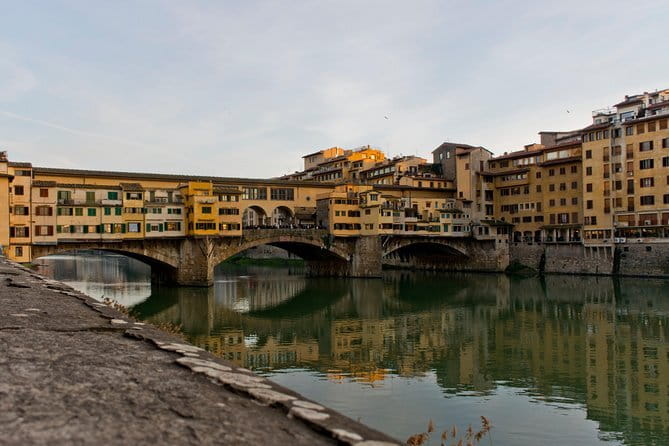
Crossing the Arno: Ponte Vecchio and the view that anchors Florence
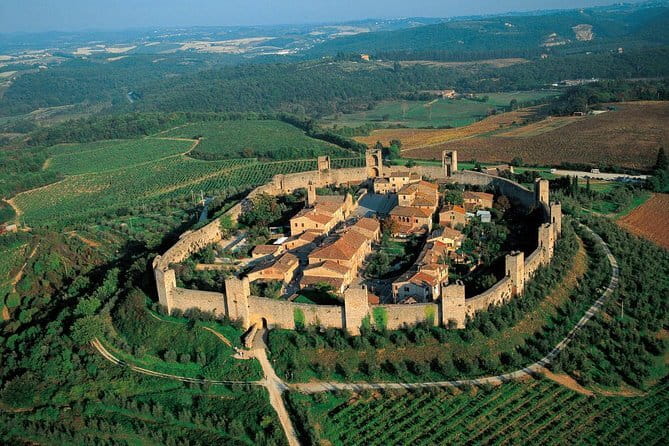
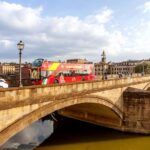
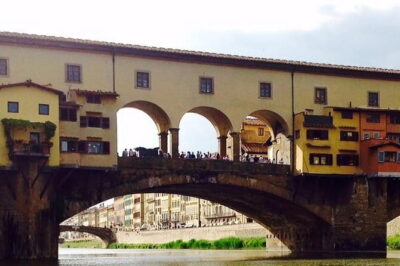
You’ll cross the Arno to see Ponte Vecchio, Florence’s best-known shiny bridge. Even from the first moments, it’s easy to understand why it became a signature symbol. The bridge position, the river bend, and the way the buildings stack visually give you a “Florence postcard” view, but also a real understanding of how the city’s geography works.
This is one of the tour’s best orientation tools. After you cross the river, Florence stops feeling like one flat map and starts feeling like two connected worlds. That matters because the best neighborhood-to-neighborhood vibe shifts once you’re on the Oltrarno side.
Practical tip: bring your eyes, not just your phone. Stand still for a moment. Watch how the river changes the light and how the bridge frames the city behind you.
Palazzo Vecchio to the city hall area: seeing Florence’s public face
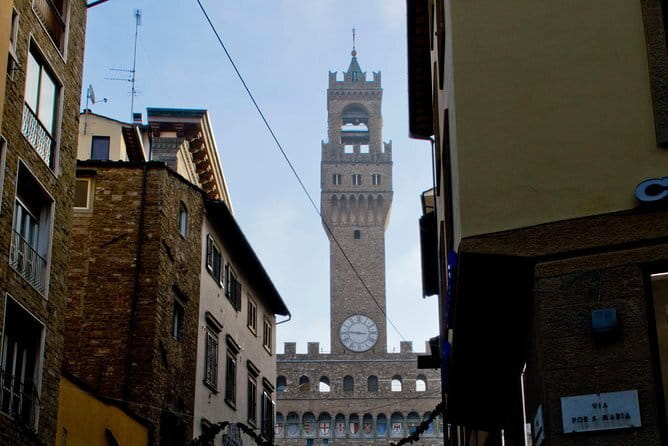
The walk also passes the city hall area, which ties back into the political feel of Piazza della Signoria. Palazzo Vecchio and the surrounding government space explain why Florence’s art and civic power were closely linked. This isn’t just sightseeing, it’s learning how a city like this presented itself.
If you’ve ever visited a place where the government building seems separate from everyday life, Florence is different. The city’s leadership and its artistic patronage are woven into the same public spaces. That’s why you’ll feel the tour isn’t a random hit list of landmarks, it’s a guided flow through the parts of town that tell the story of power and patronage.
Oltrarno side: Pitti Palace and what the Medici collected
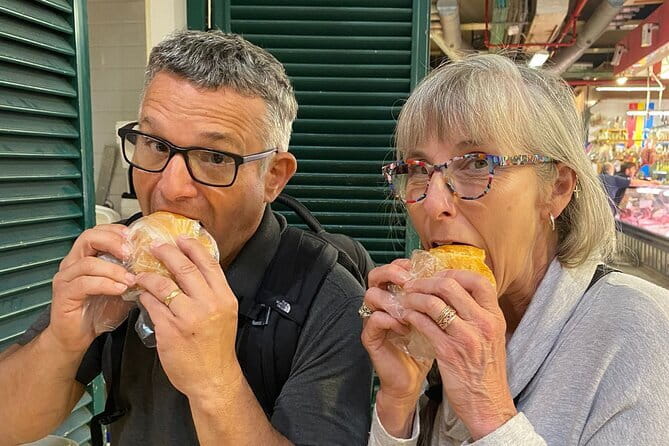
After crossing into Oltrarno, you’ll head toward Pitti Palace. This is a big one. The core of the current palazzo dates from 1458 and began as Luca Pitti’s residence. Pitti was an ambitious Florentine banker, and later the Medici family bought the property in 1549, turning it into the main residence for the ruling family of the Grand Duchy of Tuscany.
What you’ll learn here is how collecting shaped identity. The palace became a kind of treasure house where later generations amassed paintings, plates, jewelry, and other luxury possessions. Even if you don’t step into every room on this short walk, the stop gives you context for why the Medici mattered beyond politics.
This is also where the tour’s feel can shift from “core landmark sprint” to “neighborhood story.” Oltrarno has a different pace, and it sets you up to explore further without feeling like you’re trapped in one central square.
Dante’s house and the medieval neighborhood feel
Your guide may take you through a medieval neighborhood to admire the house of Dante Alighieri, writer of the Divine Comedy. This kind of stop works best when it’s brief but grounded, because it adds cultural texture to the architectural tour.
It’s also a helpful moment for perspective. Florence isn’t just a Renaissance backdrop. Dante represents a deeper literary thread that predates the high Renaissance buildings you’re seeing. That contrast makes the city feel more layered and less like one time period.
Giotto’s Bell Tower: Florence’s skyline marker
The walk includes the highest bell tower of Florence, Giotto’s Bell Tower. Even if you don’t go up during the tour, the stop helps you place Florence in three dimensions. Bell towers are practical city tools as much as they are symbols, and Giotto’s tower is one of the reasons the skyline is so recognizable.
For many visitors, this becomes a “mental bookmark.” You’ll start to notice it later when you’re walking around on your own, like your brain finally gets a reference point.
Medici burial ground energy: Basilica di San Lorenzo stop
Another stop focuses on one of Florence’s larger churches, located near the main market district. It’s also described as the burial place of the principal Medici family members. This is the kind of stop that ties the tour together, because you’ve already seen the civic power and palazzo wealth. Now you connect it to the family’s lasting presence in the city.
Even if you only get a glance in this time window, it’s a meaningful addition. Florence often makes you choose between art and story. This route keeps both in the same frame.
Is the $311.15 price per group a good value?
Let’s be honest. $311.15 per group for a private walk that lasts about two hours (up to 15 people) is not a budget tour. But it can be good value if you treat it as orientation and insider pacing, not as a replacement for timed museum tickets later.
Here’s how I judge the value:
- You’re buying time efficiency. Florence’s major sights are close, but the sequencing and the practical “what to see first” choices matter.
- You’re buying guide context. The route includes major churches, civic squares, and palaces. A good guide helps you understand what you’re looking at in the moment.
- You’re buying stress reduction. The Duomo complex area in particular can be frustrating without guidance and planning.
If you’re traveling with a small group, this can feel more reasonable per person. If you’re alone or in a pair, you’ll pay more per head, but you still may find the Duomo timing and orientation worth it.
Who should book this private Florence walk?
This tour is a strong fit if:
- you want a quick, structured introduction to Florence’s top sights
- you plan to return to certain places later and need a mental map first
- you prefer a private guide for direct Q&A rather than following a large group rhythm
It may be less ideal if:
- you have limited mobility and find standing and walking in central Florence tiring
- you can’t meet the dress code for churches and selected museums, since refusal of entry can spoil the flow
Should you book it?
If your goal is to get your bearings fast and see the Duomo complex, Ponte Vecchio, and the Medici-connected sights without wasting a half day guessing, I’d book this. The short duration keeps it efficient, and the route makes sense for first-timers.
Your decision comes down to one practical factor: dress code readiness. If you can cover your knees and shoulders, this tour gives you a high-impact Florence overview and a guide-led order of operations that makes future exploring easier.
If you can meet that requirement, this is one of the smarter ways to start a Florence trip.
FAQ
Where does the tour start and end?
It starts at Borgo San Lorenzo (Borgo S. Lorenzo, 50123 Firenze FI, Italy) and ends at Piazza della Repubblica (50123 Firenze FI, Italy).
How long is the private walking tour?
The tour lasts about 2 hours.
Is the tour private?
Yes. It’s a private tour/activity, and only your group participates.
What is the group size limit?
The tour is priced per group and is up to 15 people.
Is hotel pickup included?
No. Pickup is offered, but hotel pickup is not included.
What is included in the price?
You get a local guide and a professional guide.
Do I need a ticket on my phone?
A mobile ticket is included.
Is there a dress code?
Yes. You need to cover knees and shoulders for places of worship and selected museums. No shorts or sleeveless tops, and you may be refused entry if you do not comply.
When will I get confirmation after booking?
Confirmation is received within 48 hours of booking, subject to availability.
Can I cancel for a full refund?
Free cancellation is available, and you must cancel at least 24 hours in advance for a full refund.
Florence at walking speed
More Florence tours to open next
- The Best tour in Florence: Renaissance & Medici Tales – guided by a STORYTELLER
★ 5.0 · 12,316 reviews
Every Florence review, in one place
- Tuscany Day Trip from Florence: Siena, San Gimignano, Pisa and Lunch at a Winery
★ 5.0 · 21,634 reviews - The Best tour in Florence: Renaissance & Medici Tales – guided by a STORYTELLER
★ 5.0 · 12,316 reviews

Florence picks that sit just beyond this itinerary
- One Hour Uffizi Guided Tour: Masterpieces of the Renaissance
★ 5.0 · 3 reviews - Sightseeing Tuscany by touring bike – 1 day rental
★ 5.0 · 3 reviews - Private Siena, S. Gimignano, Chianti Road and Wine Tasting
★ 5.0 · 3 reviews - Bargello Museum Private Tour: Michelangelo’s Bacchus & Donatello’s David
★ 5.0 · 3 reviews - Authentic Florence Cooking Class at Costanza’s 1839 Family Estate
★ 5.0 · 3 reviews - San Gimignano and Volterra private tour: etruscans, romans and middle age jewels
★ 5.0 · 3 reviews
More Walking Tours worth comparing.
 ★ 4.5Guided Walking TourFrom $313,334 reviews
 ★ 4.5Skip the line: Uffizi and Accademia Small Group Walking TourFrom $1483,135 reviews
★ 4.6Guided Walking TourFrom $271,602 reviews
 ★ 4.8Renaissance and Medici Tales Guided Walking TourFrom $21,549 reviews
 ★ 4.7Uffizi & Accademia Small Group Walking TourFrom $1481,380 reviews
 ★ 5.0Skip-the-Line Florence Highlights and David Walking TourFrom $1171,127 reviews
 ★ 4.6Dark Mysteries and Legends Guided Walking TourFrom $21,081 reviews
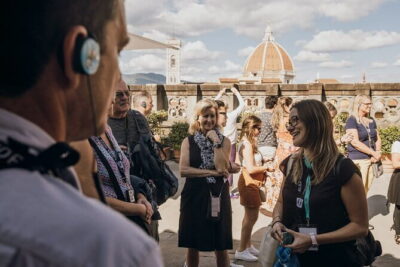 ★ 4.5Florence in a Day: Michelangelo’s David, Uffizi and Guided City Walking TourFrom $1341,048 reviews
Find this experience in another shortlist