
Florence field review · PRIVATE
Private Florence Highlights Electric Tour
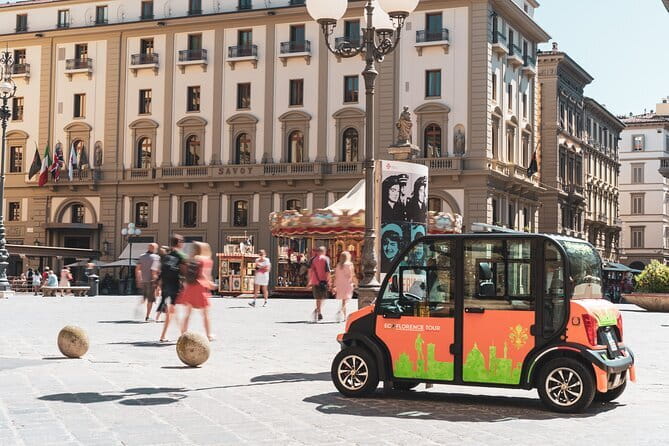
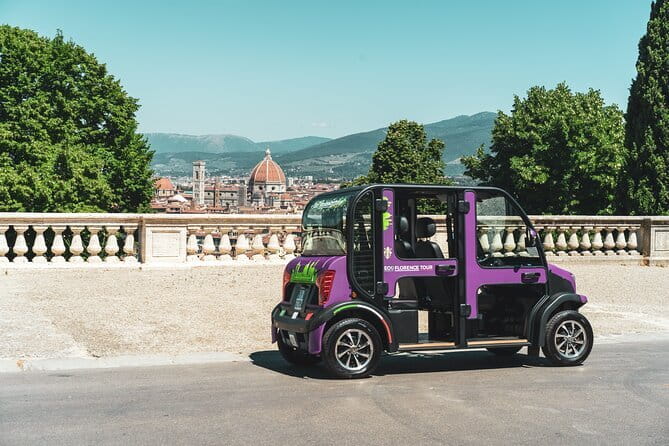
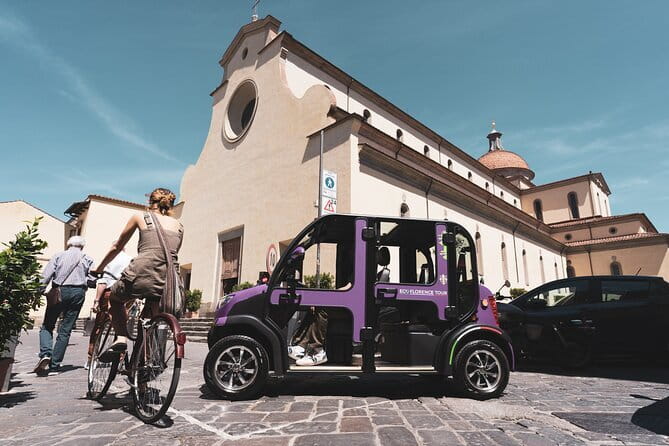
Florence in 90 minutes, with wheels. This private electric cart tour threads together iconic squares and bridges with quick photo moments, and the payoff is the sweeping balcony view from Piazzale Michelangelo. I love how it gives you a fast sense of Florence’s layout, and I also like the WiFi on board for quick map checks. One consideration: much of the narration is delivered through an audio track, so it is not the same experience as hiring someone to speak nonstop.
I also love the pacing. You get enough time at each stop to take photos, read the mood of the place, and decide what is worth your time later for a paid entry or longer look. It is a smart match for a first day when you want to reduce walking while still seeing the big landmarks up close.
Key highlights and what they mean in real life
- You cover multiple neighborhoods in a tight loop, so you start to understand how Florence is laid out
- Piazzale Michelangelo is built in as a true viewpoint moment, not just a quick roadside stop
- Medici power is everywhere on this route, from Palazzo Medici Riccardi to San Lorenzo and the Medici Chapels
- Three bridges, one river story (Ponte alla Carraia, Santa Trinita, and Ponte Vecchio) with plenty of photo chances
- Fast, light sightseeing means you can save energy for museums and church interiors later
Private Florence options for a day with fewer compromises
- Cinque Terre and Pisa Tower Tour from Florence Semi Private★ 5.0 · 1,406 reviews
- From Florence: Private Chianti Hills Tour with Tasting★ 4.3 · 809 reviews
- Private Self-Guided E-Bike Ride in Tuscany with Vineyard Visit★ 5.0 · 775 reviews
- Florence Private Transportation in Rickshaw★ 5.0 · 730 reviews
Price and value: is $83.45 for 90 minutes worth it?
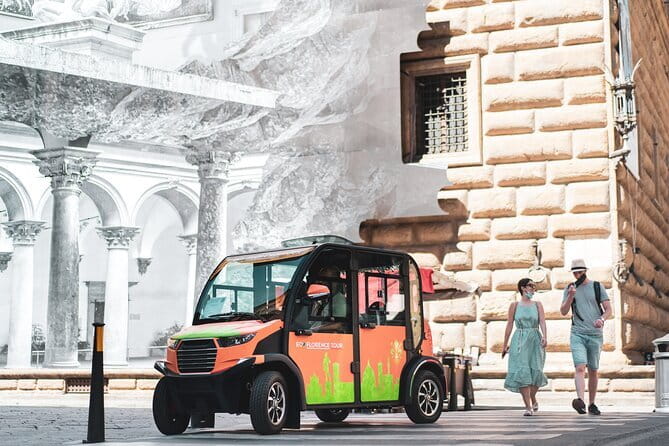
At $83.45 per person for about 1 hour 30 minutes, this is priced like an efficient “get oriented” tour. The value is not in museum entry, because entry tickets are not included. Instead, the value is in transport, tight routing, and giving you the right external views so you can prioritize what to enter on your own.
For me, the sweet spot is this: if your time in Florence is limited, walking can eat your day. An electric cart loop lets you see the major highlights without feeling like you are spending your whole trip in shoes-and-stairs mode. If you already plan to spend most of your time inside churches and museums, consider using this as a first-day orientation, not as your only Florence experience.
The private setup, vehicles, and how groups should think about it
This is a private service, meaning it is only your group in the vehicles used for your tour. The meeting point is Trattoria Sergio Gozzi, Piazza di San Lorenzo 8R, Florence, and the tour can end at any point within the route upon request, though the default end is back at the same meeting area.
Here is the practical part: your group may split across more than one cart/vehicle if you have more people than a single vehicle can comfortably handle. In the reviews, some groups reported being divided into two EVs even when they booked a private tour. That usually changes the vibe from togetherness to “two small groups rolling the same route.” If that would stress you out, keep your group size in mind when booking.
What the cart ride is really like (and why some people felt misled)
The big theme across the experience is speed and coverage, delivered mostly through an audio track. That is why some reviews loved the efficiency and others felt disappointed when they expected nonstop live guiding.
If you are the type who wants to ask follow-up questions on the fly, you may want to set expectations ahead of time: you will likely hear pre-recorded explanations rather than a guide speaking continuously. On the other hand, if you simply want the highlights narrated clearly while someone handles driving and logistics, this format can be a great fit.
A good compromise mindset: treat the audio as your headline guide. Use your short stops to ask your driver whatever you can in the moment, and then go deeper later by choosing the churches or interiors that pull you in.
Stop-by-stop: Santa Croce Square to Piazzale Michelangelo
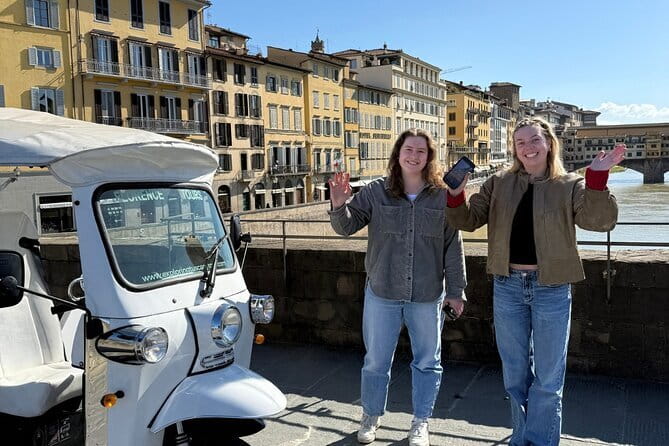
This route starts you in the historic center and then quickly pivots into some of Florence’s most recognizable scenes.
Santa Croce Square and Basilica area
Your first stop is Piazza Santa Croce and the Santa Croce Basilica zone. The vibe here is classic Florence: a wide square, a church that dominates the neighborhood, and a sense of place in the city’s eastern quarter. You get only a few minutes, and because tickets are not included, this is mainly a look-around moment and a photo-and-orientation stop.
Why I like it: Santa Croce is one of those places where the exterior alone already tells you the story of the neighborhood’s identity.

The National Library: Pietraforte and mixed architectural flavors
Next comes Biblioteca Nazionale Centrale. The building is known for its Pietraforte stone and for blending different architectural moods, mixing medieval and Renaissance elements. Again, you are not going inside on this tour, but the exterior gives you a sense of how Florence’s later 20th-century civic buildings still fit into the stone-and-street feel of the city.
Basilica of San Miniato al Monte and the panoramic payoff
San Miniato al Monte is one of the Florentines’ favorite churches, and the reason is practical: the viewpoint from here is strong. It is also noted as an example of Florentine Romanesque architecture, and the hill connects to older Christian communities that carved catacombs in the area.
This stop is short, but it is the kind of short that works. Even if you do not go inside, you still get the “why people care” factor: the position above the city changes everything.
Piazzale Michelangelo: the balcony view that anchors the whole tour
Then you hit Piazzale Michelangelo, where the experience feels like it clicks. Created between 1865 and 1875 by Giuseppe Poggi, it was designed during the period when Florence was the capital of the newly unified Kingdom of Italy. You get a big square built as a first real panoramic viewpoint concept for the city.
This stop is free, and it is also why a cart tour makes sense here. You are getting the view with less effort, and you can spend your time photographing without fighting the crowds for position.
Oltrarno and the river crossings: bridges that teach you the city
After the viewpoints, you shift to neighborhoods and bridges that show Florence from the “walkable layers” perspective.
Oltrarno district and Santo Spirito area
Oltrarno literally means beyond the Arno. This side of Florence grew in the 1200s with people coming in from the countryside. Later, it expanded in the 16th century with the Medici court at Palazzo Pitti.
You also pass by the Basilica of Santo Spirito area. Even without ticketed entry time, Oltrarno’s feel is worth the stop because it is less about “single monument” and more about neighborhood character.
Ponte alla Carraia: a bridge with a job
Ponte alla Carraia dates to 1218, and it gets named from its practical use: it helped transport goods on carts. This is a nice reminder that Florence’s architecture was shaped by everyday commerce, not just ceremonies.
Santa Croce Basilica area again
The route includes Santa Croce Basilica once more. That might feel repetitive if you are expecting a strictly linear “only once per site” plan, but in real life it can be useful. It gives you a second chance to reset your photos and catch the church from a different approach. If you are the kind of person who wants to linger, this duplication can help.
Medici landmarks: San Lorenzo, Medici Chapels, Palazzo Medici Riccardi
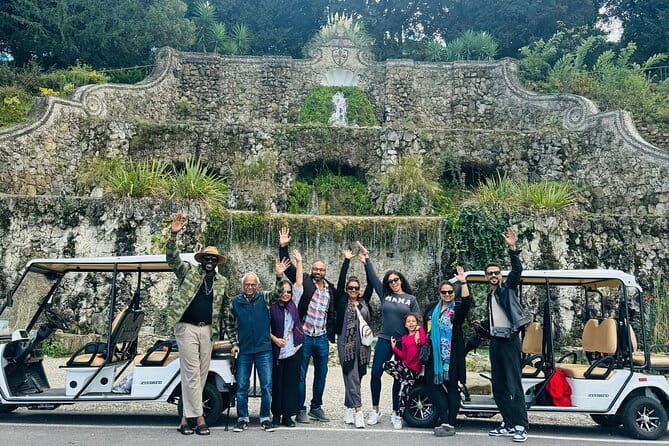
This is where the tour earns its keep. Florence’s Renaissance story is not just art. It is power and money, and the Medici family leaves fingerprints all over this route.
Palazzo Medici Riccardi
You stop at Palazzo Medici Riccardi, commissioned around 1445 by Cosimo the Elder. It was designed by Michelozzo. The Medici family’s origins trace back to Mugello, and by settling in Florence during the 1200s they became wealthy enough to build monumental proof of influence.
This is a quick stop, but it helps you connect the dots when you later see Medici names in paintings and chapel inscriptions.
Basilica of San Lorenzo
San Lorenzo is described as sitting on older worship ruins, including a paleochristian site that served as Florence’s basilica outside the Roman walls. The big rebuild begins under Giovanni di Bicci, with a complete rebuild starting in 1419 by Filippo Brunelleschi.
If you only have time to look, this stop still gives you a “why” behind the architecture. It shows a city built over older layers.
Medici Chapels: the mausoleum effect
Next is Cappelle Medicee, focused on the New Sacristy and the Chapel of the Princes. The two parts together are presented as a mausoleum of the ruling Medici family.
Even from the outside, the idea of a Medici family memorial complex matters. It changes how you see the church story. Instead of “random impressive chapel,” you start to understand it as statecraft done in stone.
Santa Maria Novella and Ognissanti: Dominican and wool-making clues
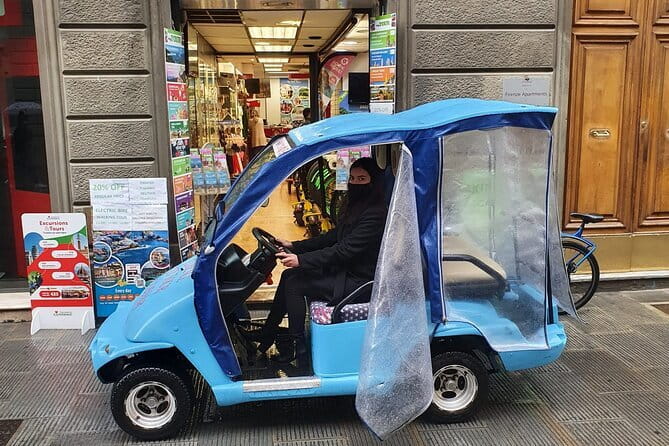
This part of the loop shifts from Medici dominance to the role of religious orders and working life.
Santa Maria Novella basilica and square
Basilica and Piazza of Santa Maria Novella is one of the city’s first major basilicas and served as the mother church of the Dominican order. The Dominicans settled here in the 1200s with a large convent. The square in front welcomed worshippers drawn by preaching, and it was expanded multiple times until it became one of Florence’s largest squares.
Even if you do not go inside, the scale of the square is the point. It shows how Florence organized community life around sermons and public gatherings.
Chiesa di San Salvatore in Ognissanti and the Umiliati
You also pass through the Ognissanti area and the Chiesa di San Salvatore in Ognissanti zone. This district ties to the Umiliati friars, a working mendicant order known for wool craftsmanship supported by the nearby river.
This is the kind of detail that makes the city feel less like a theme park. Florence is art, yes, but it is also production, trade, and practical labor.
From Ponte Santa Trinita to Ponte Vecchio and the Vasari Corridor
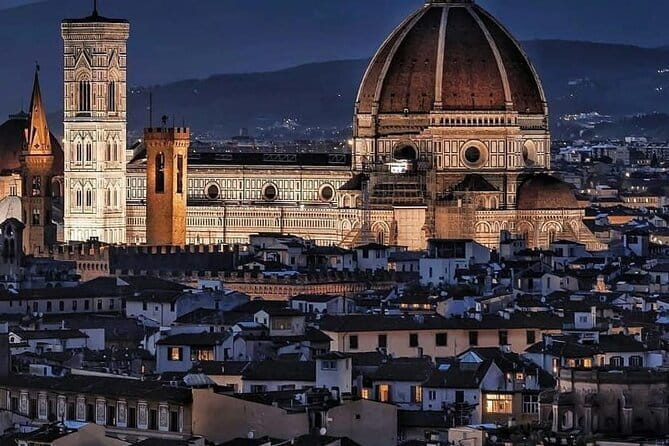
Now the tour hits its most postcard-perfect stretch: bridges and the river crossing that shaped Florence’s identity.
Ponte Santa Trinita: built, destroyed, rebuilt
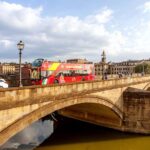
Ponte Santa Trinita was originally built in 1252 and destroyed by an Arno flood in 1557. It was later rebuilt based on a design by Bartolomeo Ammannati, a pupil of Michelangelo.
The takeaway: Florence’s bridges are not static museum pieces. They are repeatedly reworked because the river refuses to be ignored.
Ponte Vecchio and the Vasari Corridor
Ponte Vecchio dates back to Roman times, built at the river’s narrowest point using stone piers and a wooden deck. It was rebuilt in 1345 after an earlier flood. It has survived multiple Arno floods, including the devastating 1966 flood.
Then you get the Vasari Corridor context: constructed in 1565 in five months, it is an elevated private passage connecting Palazzo Vecchio and the Medici court at Palazzo Pitti. That means the bridge is not just a crossing. It is part of a political system, a way to move power safely and discreetly.
This is also where I think the short stop works well. You do not need 45 minutes here. You need enough time to see the bridge’s rhythm, snap your photos, and then keep rolling.
Palazzo Pitti and Piazza Pitti: the Medici rival masterpiece
Finally, the route leads to Palazzo Pitti, dominating Piazza Pitti. The palace was commissioned in 1440 by Luca Pitti and designed by Filippo Brunelleschi. The story here is about ambition: Pitti wanted to outshine both the Medici and the Strozzi, and he built a palace of such vast proportions it had no equal in the city at the time.
Even without ticketed entry, this last major stop helps you understand why Florence looks the way it does. The city’s grandeur is not random. It is competition, patronage, and constant “one-upmanship” between powerful families.
When the ride hits its best stride: who to book with and what to ask
Even within this audio-forward format, the human part still matters. A number of names came up in reviews as standout drivers or guides: Tommaso, Ruben, Tommy, Marcello, Michael, Giacomo, Federico, and Grazia, among others. I cannot promise you will get any specific person, but it is a useful signal. When you book, I would send a quick note asking the operator what they recommend for maximizing live interaction during your stops.
What I would ask for, based on common feedback:
- confirm how you will hear the commentary (volume and playback)
- ask whether you can turn off the audio if you prefer driver-led narration
- mention if your group wants more time at viewpoints like Piazzale Michelangelo
Practical tips so you enjoy every stop
A few small moves make this tour smoother.
Plan your day around short stops
Most stops are 3 to 10 minutes. That is plenty for a photo and a quick orientation, but it is not enough for slow museum browsing. Use this tour to pick what you want to enter later, especially if you care about church interiors and chapel details.
Bring a little patience for Florence streets
Narrow lanes and occasional road changes are real. Reviews praised drivers who adapted well, especially during heavy traffic or road closures. If you are the type who needs perfect timing, give yourself some buffer.
Use WiFi to avoid walking in circles after
With WiFi on board, you can quickly check opening hours, map routes, and the next thing you plan to enter. This is one of those small inclusions that helps you squeeze more value from your limited time.
Should you book the Private Florence Highlights Electric Tour?
Book it if you want a fast, low-effort way to get oriented and you like seeing Florence from multiple angles without spending all day walking. It is especially good on a first day, for groups that want efficiency, and for anyone who prefers photo stops and quick context over long museum sessions.
Skip it or think twice if you expect a fully live, conversational guide driving from stop to stop. Since the narration is often delivered through an audio track, you may feel shortchanged if you are paying specifically for nonstop human commentary.
If you match the tour’s strengths to your travel style, this can be a smart way to get your bearings fast, then spend your remaining time in the places you actually want to linger.
FAQ
How long is the Private Florence Highlights Electric Tour?
It runs for about 1 hour 30 minutes.
What is the price per person?
The price is $83.45 per person.
Is the tour offered in English?
Yes, it is offered in English.
Are entry tickets included for churches and attractions?
No. Entry to attractions is not included, and you should expect to view many stops from outside unless you purchase tickets separately.
Where do I meet for the tour?
The meeting point is Trattoria Sergio Gozzi, Piazza di San Lorenzo 8R, 50123 Firenze FI, Italy. The tour ends at the same meeting point, though it can end at any point within the route upon request.
What is the cancellation rule if I need to change plans?
You can cancel for a full refund up to 24 hours in advance. If you cancel less than 24 hours before the start time, the amount paid will not be refunded. The experience also requires good weather, and if it is canceled due to poor weather, you are offered a different date or a full refund.
Florence with the day to yourself

More Florence tours to open next
- The Best tour in Florence: Renaissance & Medici Tales – guided by a STORYTELLER
★ 5.0 · 12,316 reviews
Every Florence review, in one place
- Tuscany Day Trip from Florence: Siena, San Gimignano, Pisa and Lunch at a Winery
★ 5.0 · 21,634 reviews - The Best tour in Florence: Renaissance & Medici Tales – guided by a STORYTELLER
★ 5.0 · 12,316 reviews

Florence picks that sit just beyond this itinerary
- Florence: Duomo Complex Private Guided Tour & Optional Dome Climb
★ 5.0 · 4 reviews - Private Tour of Florence Cathedral, Bell Tower & Baptistery
★ 5.0 · 4 reviews - Michelangelo’s David Tour in the Accademia (Tickets NOT included)
★ 4.0 · 4 reviews - Exclusive Pisa Tour from Florence: With Skip-the-Line Access
★ 4.0 · 4 reviews - Full-Day Tour of Tuscany from Florence-small group up 8 pax
★ 4.5 · 4 reviews - Florence: Inferno Private Walking Tour
★ 5.0 · 4 reviews
More Private worth comparing.
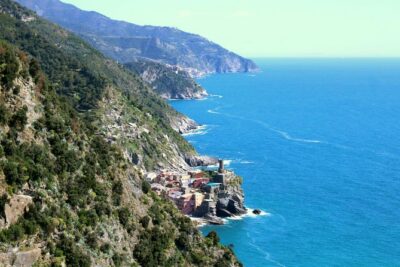 ★ 5.0Cinque Terre and Pisa Tower Tour from Florence Semi PrivateFrom $2851,406 reviews
 ★ 4.3From Florence: Private Chianti Hills Tour with TastingFrom $1,166809 reviews
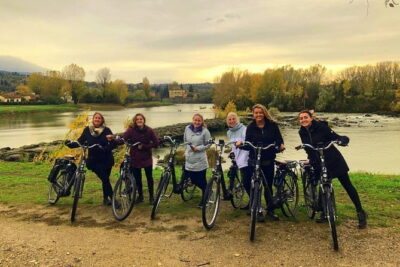 ★ 5.0Private Self-Guided E-Bike Ride in Tuscany with Vineyard VisitFrom $96775 reviews
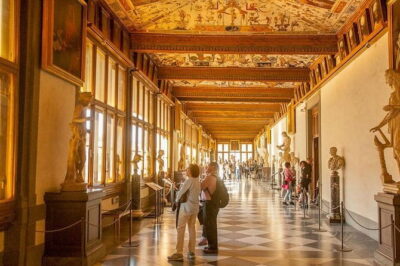 ★ 5.0Florence Private Transportation in RickshawFrom $47730 reviews
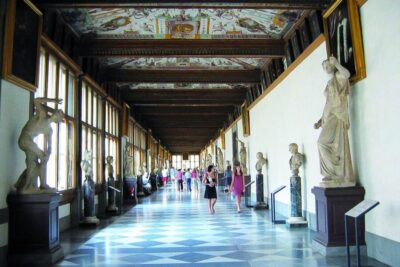 ★ 4.5Private Uffizi Gallery Discovery Tour with TicketFrom $198657 reviews
 ★ 4.5Florence Exclusive PRIVATE Food Tour with 6 or 10 TastingsFrom $137654 reviews
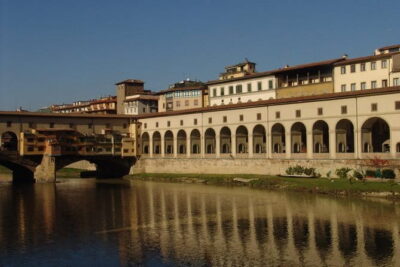 ★ 4.5Uffizi Highlights, In-Depth Masterclass or Private TourFrom $82641 reviews
 ★ 4.5Florence Vintage Bike Tour–guided, small group or private optionFrom $42524 reviews