
Florence field review · UFFIZI GALLERY TICKETS & TOURS
Florence: Uffizi Gallery Private Treasure Hunt for Families
Medusa has more than a mouthful. This Uffizi treasure hunt turns the gallery into a scavenger hunt, with myths and symbols explained in a way kids can actually follow. I especially like the family-focused format that keeps everyone moving and noticing details, and the chance to get up close to major Renaissance works, including Medici commissions. One thing to consider is that Uffizi is still a museum, so younger kids may need quick breaks if they get tired after 3 hours indoors.
You start outside at the Neptune Fountain, then walk through Piazza della Signoria and the Loggia dei Lanzi with guided stops that set the stage before you enter. The tour is private, runs about 3 hours, includes your entrance ticket, and comes with earphones for groups up to 8, plus a booklet for answers and a family portrait at the end.
Key highlights you will actually feel during the hunt
- Interactive clues that push kids (and adults) to look for symbols, not just famous paintings
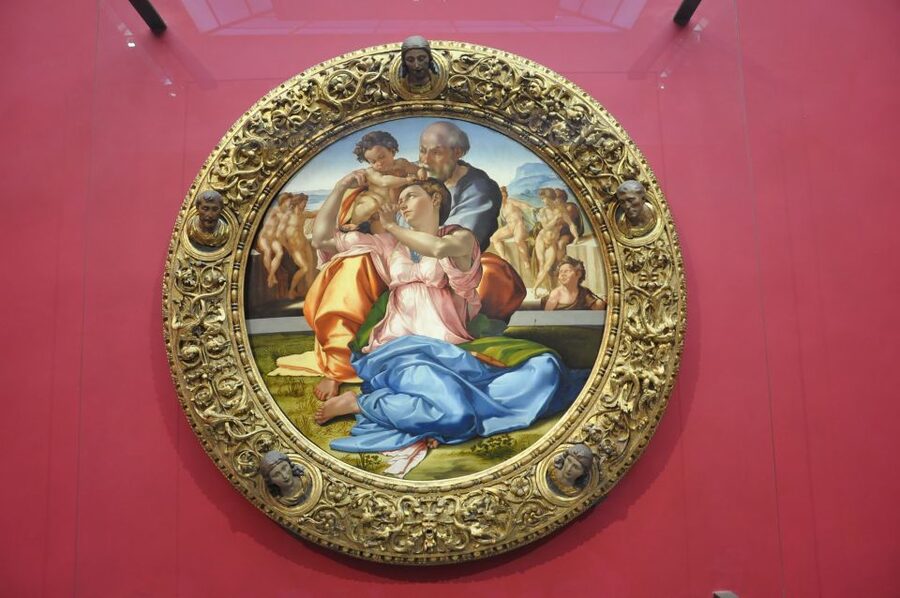
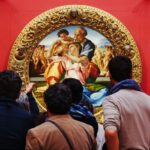
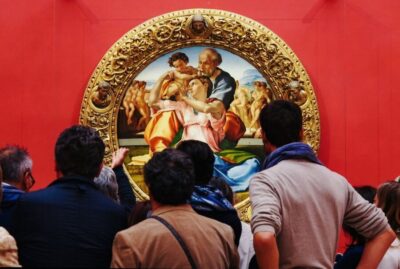
- Hidden details in Michelangelo’s Tondo Doni, including sculpture-like elements you’re meant to spot
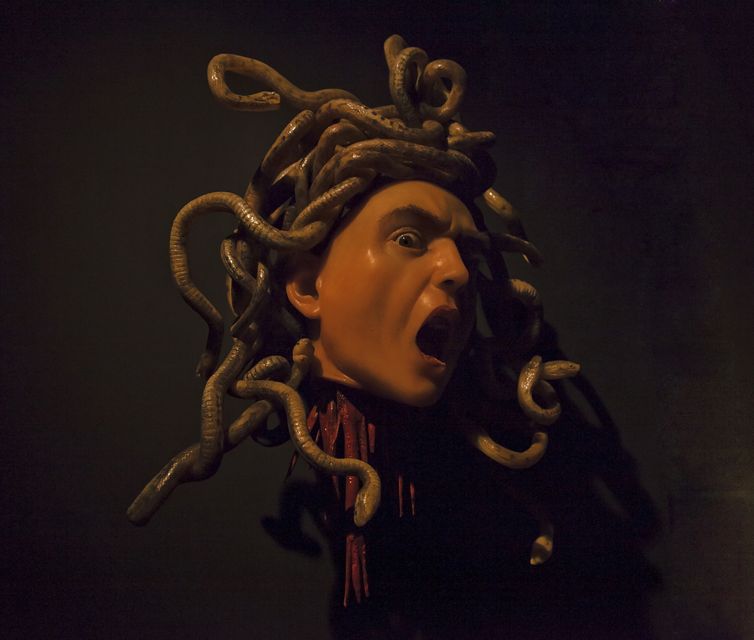
- Caravaggio’s Medusa through a hands-on question approach, starting with what lurks inside her mouth
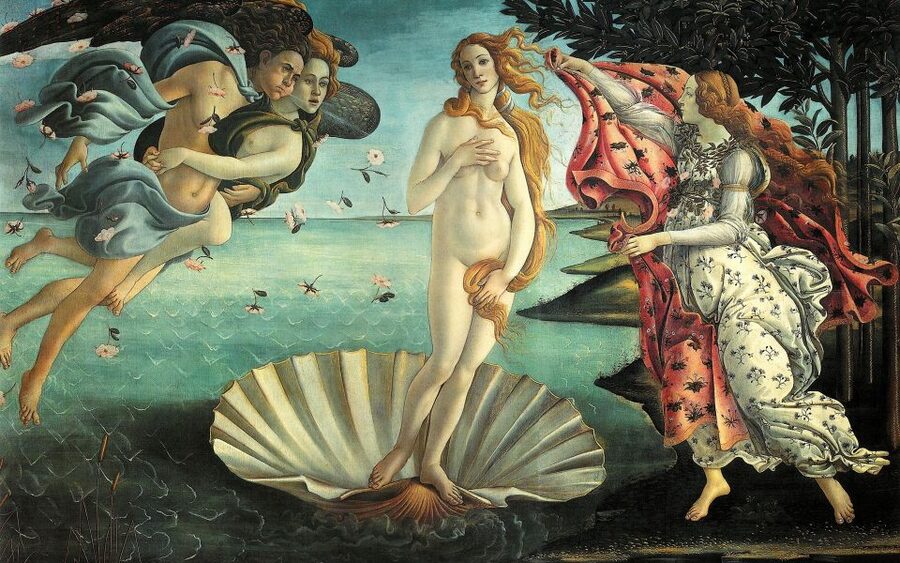
- Botticelli’s Annunciation explained with the specific puzzle about Mary’s bed and one pillow
- Search prompts for dogs, cats, flowers, and chairs inside Renaissance scenes
- Keep-your-answers booklet plus a family portrait to turn the day into a memory, not just photos
More ways through the Uffizi, with the queue and guide choice made clear
- Florence: Skip-The-Line Uffizi Gallery Timed Entry Ticket★ 4.5 · 27,832 reviews
- Florence: Uffizi Priority Ticket & Masterpieces Audio App★ 4.2 · 6,402 reviews
- Florence: Skip-the-Line Uffizi Small Group Tour★ 4.6 · 5,926 reviews
- Uffizi Gallery Small Group Tour with Guide★ 4.5 · 4,923 reviews
Why the Uffizi treasure hunt works for families (and not just art lovers)
The Uffizi Gallery can feel like a test for kids. Big rooms, crowded floors, and paintings that demand quiet. This tour flips the script. You and your family get guided questions that turn looking into a game, so the day becomes about finding meaning, not memorizing names.
What I like is that the hunt is built around specific moments, not vague, everyone-stands-here storytelling. You’re prompted to search for details and symbols across multiple artists. That’s the difference between kids watching a guide talk and kids solving something together.
The tour also leans into the human side of Renaissance art. You’ll hear myths and legends as you move through the museum, and those stories act like hooks for attention. Even when the artwork is complex, the tour’s questions give you a path through it. You’re not just staring at a masterpiece, you’re hunting for a clue the guide connects to a bigger idea.
Finally, the tone is family-friendly. One guide highlighted by name, Rosa, is praised for being very strong on Renaissance context while keeping young kids engaged. That combination matters. It means you get real explanations without the tour turning into a long lecture.
Neptune Fountain start, Piazza della Signoria momentum: a smart warm-up
Your tour begins at the Fontana del Nettuno, also called the Neptune Fountain. That matters more than it sounds. Uffizi trips can start in a rush, with people trying to figure out logistics first. Starting at a landmark gives you a clear beginning and a place where families can regroup before the hunt starts.
From there, you head to Piazza della Signoria for a guided stop. This is not just a scenic pause. You’re using the city outside the museum to build context for what you’ll see inside. In practical terms, it also helps you manage energy. A 3-hour museum experience can be hard for kids, so those early guided stops give you movement and variety before you settle into gallery time.
What I like about this approach is that it reduces the shock of walking into a packed museum and immediately trying to focus. You’re eased in step-by-step, with a guide keeping the flow moving.
Loggia dei Lanzi: the staging area for big art moments
After Piazza della Signoria, the tour includes Loggia dei Lanzi with guided time. Even if you’re not there to study sculptures in depth, this step has a real function: it helps your family read the city’s art language before you enter the Uffizi.
This stop also helps with pacing. Kids often do better when they can look, move, then look again. A guided stop like this breaks up attention and keeps the hunt feeling like it’s progressing, not stalling.
Then, once you reach the Uffizi, you already have a mental “map” created by the guide’s explanations. That means your first encounters with Leonardo, Botticelli, and Michelangelo land faster because you know what you’re supposed to notice.
Inside Uffizi: the clues you chase among Leonardo, Botticelli, Michelangelo, and Caravaggio
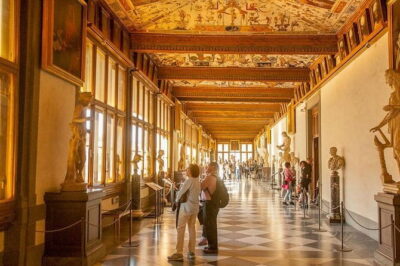
The main event is your Uffizi Gallery time, where the tour is guided and timed for about 3 hours total, starting with museum entry and then your hunt through the collections. Uffizi is one of Europe’s oldest museums, and it’s also one of the world’s most visited Renaissance galleries. That mix of age, crowds, and fame can be overwhelming. The treasure hunt format turns the overwhelm into a set of tasks you can do together.
Here’s what stands out as the interactive core of the experience.
The hunt for hidden sculptures in Michelangelo’s Tondo Doni
You’ll search for hidden sculptures in Michelangelo’s Tondo Doni. The tour doesn’t treat it like a distant, reverent icon. Instead, you’re given a reason to look closely, which is exactly what families need in a major museum.
Even if you only catch the “clue moment” at the right angle or distance, the process helps you feel like you discovered something, not that you merely observed it. That’s the best kind of museum learning for kids: they participate.
Private Florence options for a day with fewer compromises



Medici commissions up close, not as textbook notes
You also get to see Medici family commissions up close. Medici patronage is one of the keys to understanding why Renaissance art looks the way it does, and this tour uses that idea as part of the hunt. Instead of “here’s a famous family,” you’re using their role as context for what you’re seeing in front of you.
For adults, this is a chance to connect the art to power and politics in a way that feels grounded. For kids, it becomes a story engine, because the guide can explain who commissioned the work and why that matters.
Caravaggio’s Medusa: what lurks inside her mouth
One of the most vivid guided puzzles focuses on Caravaggio’s Medusa and specifically what lurks inside her mouth. That’s a great example of how this tour keeps attention: it starts with a specific visual question, then explains the meaning behind it.
You’ll also hear myths and legends connected to these images. When a guide ties a strange visual detail to a story, kids stop asking why they should care, and start asking what they should look for next.
Botticelli’s Annunciation: the one pillow question
You’ll learn about Botticelli’s Annunciation, including a very concrete puzzle: why Mary’s bed has only one pillow. That kind of detail question is perfect for families because it’s answerable from what you can actually see.
It also trains your eyes. You start noticing composition choices and small objects that artists included on purpose. Kids often latch onto the “wait, that’s different” moment, and then adults get a helpful prompt for deeper meaning without needing a formal art history lecture.
Searching for animals and objects: dogs, cats, flowers, chairs
Another fun element of the hunt is that you’re prompted to search for dogs, cats, flowers, and chairs in Renaissance paintings and ponder what those things might mean.
This is more than a scavenger game. Those objects and animals in Renaissance art often function as symbols or compositional tools. The tour’s approach turns symbol hunting into something you do with your own eyes, while the guide helps you understand the why.
Leonardo, too, with the same question-based approach
The tour explicitly includes major works by Leonardo as part of what you’ll see. The key is not whether you can name every artist before you arrive. The point is that the guide keeps the same method across artists, using questions and details so you’re actively involved.
By the end, the Uffizi stops feeling like a list of masterpieces and starts feeling like a connected world of stories, patrons, and symbolism.
The booklet, earphones, and family portrait: what you get beyond the art
This tour doesn’t end when you leave the gallery. You get a booklet to note your answers, and it’s designed to be part of the hunt, not an afterthought.
That booklet also helps kids stay on task. When there’s something to write or check, children are more likely to keep looking instead of zoning out. Adults benefit too, because it gives structure to what might otherwise feel like “too much to take in.”
Earphones are included, with support for up to 8 people. In a family context, this is practical. Kids can hear the guide clearly without everyone crowding into one tight line. It also helps if one person needs to ask a question while others want to continue listening.
And at the end, you get a family portrait to commemorate your time in Florence. For families, that’s a real value add. Museum days create memories, but photos in crowds often turn out chaotic. A scheduled portrait makes the day feel like an event.
Timing, movement, and what to expect at each stop
The overall flow makes sense for families: outside landmarks first, then concentrated museum time.
- Stop 1: Neptune Fountain (Fontana del Nettuno)
A clear meeting point that helps families start without stress.
- Stop 2: Piazza della Signoria
Guided time that sets context while giving kids something to look at and move between.
- Stop 3: Loggia dei Lanzi
Another guided stop that keeps pacing and builds the city backdrop before the Uffizi.
- Stop 4: Uffizi Gallery, guided visit and treasure hunt
This is where the guided questions and object hunting happen, with a focus on major artists and specific details across multiple works.
- Return: Neptune Fountain
You end back at the meeting point, so you’re not stuck planning transportation from deep inside central Florence.
If your family struggles with long museum time, the treasure hunt approach is still your friend. It gives frequent moments of attention, and the guide’s job is to keep the group on the “find and understand” rhythm.
Languages and private-group comfort: making the experience easier to manage
This is a private group tour, which matters a lot when you have kids. Private doesn’t just mean exclusivity. It usually means your guide can keep the pace aligned with your family’s needs, and your questions are more likely to get answered as you go.
Language options are wide, with the guide available in English, French, German, Spanish, Italian, and Russian. That makes it easier to find the best fit if your family wants explanations in your strongest language.
Wheelchair access is listed as available. If someone in your group needs mobility support, it’s worth planning your route inside the museum with the guide’s help on arrival.
Price and value: is $286.04 per person worth it?
The price listed is $286.04 per person, and the tour lasts about 3 hours. At first glance, that can sound steep compared to a standard museum ticket. The value comes from what’s included and how families actually use guided time.
You’re not just paying for entrance. Your package includes:
- An entrance ticket
- Earphones for up to 8 people
- A booklet to record answers and support the hunt
- A family portrait
- A live guide leading the treasure hunt and keeping everyone engaged
For families, the biggest cost of a museum day is usually not the ticket. It’s the time spent trying to keep everyone focused. A guide who knows how to keep kids moving, asking, and searching turns your museum hours into usable learning.
If your kids love questions, animals, and puzzles, this format can be a strong value. If your group is made of very serious quiet museum lovers who already plan to study every painting on their own, you may not get as much out of the game-like structure. But for most families, this kind of guided hunt is a practical way to make a big museum day feel manageable.
Also check that first Sunday note, because it can change cost expectations. On the first Sunday of each month, entrance is free of charge, but tickets can’t be reserved ahead of time, so entry isn’t guaranteed. If you’re traveling then, this tour can still be a good plan, but you should expect that the free day can add uncertainty.
Who should book this family Uffizi treasure hunt?
This is a strong choice if:
- You’re traveling with kids and want a museum day that feels like a team activity
- You want Leonardo, Botticelli, Michelangelo, and Caravaggio in one guided experience
- Your family likes stories, symbols, and “spot it” challenges
- You want a keepsake moment, the family portrait, planned into the experience
You might think twice if:
- Your family dislikes structured activities or prefers independent wandering
- Your kids need lots of downtime and may struggle with a 3-hour museum block, even with a guide to keep things lively
- You are planning to focus on a very specific art niche, like only one artist or one school, with deep reading time
Should you book this Uffizi treasure hunt?
I think it’s a smart booking for families who want Uffizi to work for everyone, not just adults who already know where to look. The treasure hunt approach is the main reason to choose it, because it turns famous works into an experience you participate in, not just walk past.
Book it if you want a guide to handle the hard parts, like keeping kids engaged and connecting details to meaning. Skip it only if your group prefers quiet self-guided studying or you know you won’t like a structured scavenger-style format in a museum.
If you’re aiming for a Florence day that feels like you did something together, this is the kind of Uffizi visit that turns the gallery into your family story.
FAQ
How long is the Uffizi Gallery family treasure hunt?
The tour lasts about 3 hours. Exact starting times depend on availability.
Where does the tour start and end?
The meeting point is at the Neptune Fountain (Fontana del Nettuno). The tour ends back at the same meeting point.
What’s included in the price?
The price includes the entrance ticket, a booklet to write answers in and add a family picture, and earphones for up to 8 people.
What languages are the guides available in?
The live guide is available in English, French, German, Spanish, Italian, and Russian.
Is the tour wheelchair accessible?
Yes, wheelchair access is listed as available.
What should we bring?
Bring a passport or ID card.
Is Uffizi entrance free on the first Sunday of the month?
On the first Sunday of each month, entrance is free of charge, but tickets cannot be reserved ahead of time, so entry is not guaranteed.
Florence with the day to yourself




Every Florence review, in one place
- Tuscany Day Trip from Florence: Siena, San Gimignano, Pisa and Lunch at a Winery
★ 5.0 · 21,634 reviews - The Best tour in Florence: Renaissance & Medici Tales – guided by a STORYTELLER
★ 5.0 · 12,316 reviews



The Uffizi, another way


Florence picks that sit just beyond this itinerary
- One Hour Uffizi Guided Tour: Masterpieces of the Renaissance
★ 5.0 · 3 reviews - Sightseeing Tuscany by touring bike – 1 day rental
★ 5.0 · 3 reviews - Private Siena, S. Gimignano, Chianti Road and Wine Tasting
★ 5.0 · 3 reviews - Bargello Museum Private Tour: Michelangelo’s Bacchus & Donatello’s David
★ 5.0 · 3 reviews - Authentic Florence Cooking Class at Costanza’s 1839 Family Estate
★ 5.0 · 3 reviews - San Gimignano and Volterra private tour: etruscans, romans and middle age jewels
★ 5.0 · 3 reviews
More Uffizi Gallery Tickets & Tours worth comparing.
 ★ 4.5Skip-The-Line Uffizi Gallery Timed Entry TicketFrom $3027,832 reviews
 ★ 4.2Uffizi Priority Ticket & Masterpieces Audio AppFrom $316,402 reviews
 ★ 4.6Skip-the-Line Uffizi Small Group TourFrom $715,926 reviews
 ★ 4.5Uffizi Gallery Small Group Tour with GuideFrom $764,923 reviews
 ★ 4.5Skip the line: Uffizi and Accademia Small Group Walking TourFrom $1483,135 reviews
 ★ 4.8Uffizi Gallery and Accademia Gallery Guided TourFrom $1402,028 reviews
 ★ 4.7Uffizi Gallery Small-Group Guided Tour with TicketFrom $762,003 reviews
 ★ 4.5Michelangelo’s David, Accademia & Uffizi Small Group TourFrom $471,986 reviews
Find this experience in another shortlist