
Florence field review · WALKING TOURS
Florence: Private City Walking Tour
Florence hits differently when you walk it. This private, 3-hour route pairs major Renaissance landmarks with a guide who connects the dots across religion, politics, and art. I especially like the way you start at the Duomo complex and then keep moving through the squares where Florence’s power and patronage played out.
Two things I like a lot: the guided focus at Piazza della Signoria and the quick-but-meaningful stop at the Uffizi Gallery area. One possible drawback is that several stops are brief by design, so if you want lots of museum time inside, you may need an add-on later.
Key highlights you’ll actually feel on this walk
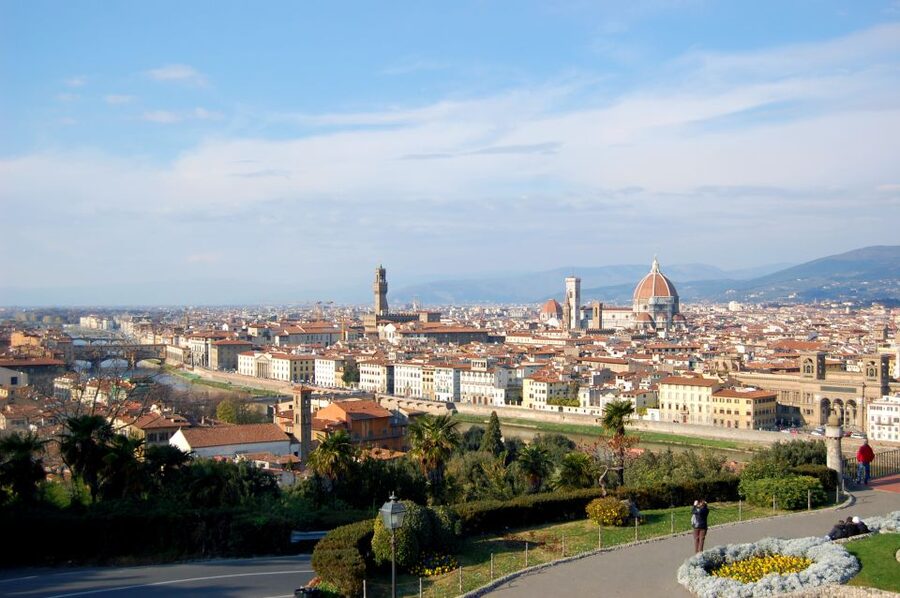
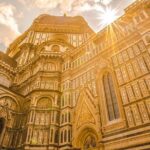
- Duomo complex first, starting at the cathedral with the Baptistery, Santa Maria del Fiore, Giotto’s bell tower, and Brunelleschi’s dome in view
- Medici and Dante context, including Palazzo Medici Riccardi, plus the Dante area and the Guelphs and Gibellini towers
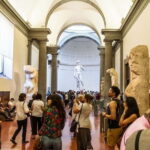
- Piazza della Signoria focus, with Palazzo Vecchio, the Statue of David, and La Loggia dei Lanzi statues
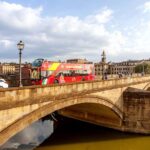
- Uffizi plus Ponte Vecchio rhythm, including a short Uffizi look and a guided crossing of Ponte Vecchio
- Oltrarno and beyond, with time in Oltrarno and stops around Piazza Santa Trinita and Piazza della Repubblica
Florence walks that make the stone streets tell the story
- Florence: Guided Walking Tour★ 4.5 · 3,334 reviews
- Skip the line: Uffizi and Accademia Small Group Walking Tour★ 4.5 · 3,135 reviews
- Florence: Guided Walking Tour★ 4.6 · 1,602 reviews
- Florence: Renaissance and Medici Tales Guided Walking Tour★ 4.8 · 1,549 reviews
Why this 3-hour private walk works for first-timers and art lovers
If you have limited time in Florence, this style of tour helps you get your bearings fast. A private guide matters here because you are not just collecting photos, you are learning how Florence “runs,” from church authority to Medici patronage to civic power in the squares.
I like that the route keeps you moving through the historic center rather than hopping around randomly. You start at the religious heart, then shift toward political power, and finally reach the art world, with key stops chosen for what they represent, not just what they look like on a postcard.
The other practical win is that it is built for real walking. You are outdoors for most of the experience, with brief guided moments and short sightseeing walks that fit a 3-hour window. If you are prone to getting tired in crowds, this is where you want to be honest with yourself, because you will be on your feet.
Duomo Complex stop: start at the cathedral and learn the design story
You begin in front of the central door of the Cathedral of Santa Maria del Fiore. That matters, because the Duomo complex is not one single building, it is a whole system of religious and artistic statements packed into the same area.
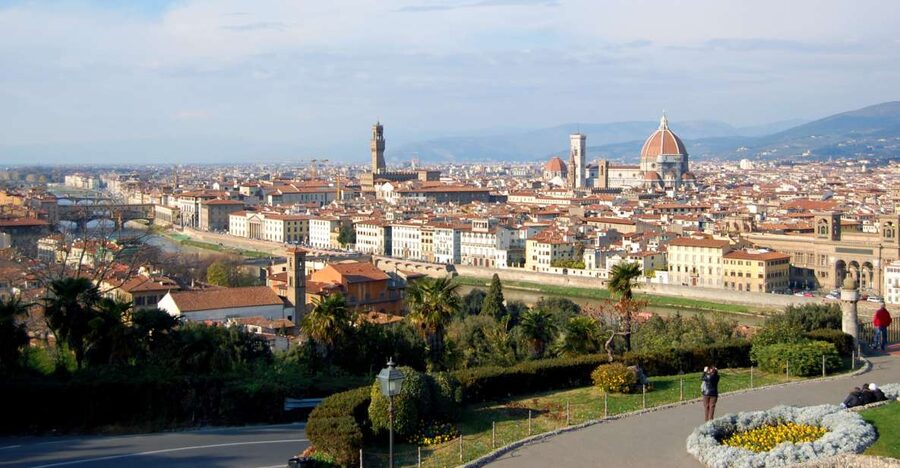
The tour then targets the major components you will see as you move through the Duomo complex: the Baptistery of San Giovanni, the Cathedral itself, Giotto’s bell tower, and the octagonal dome designed by Filippo Brunelleschi. Even if you already recognize names like Brunelleschi, having them tied to what you are looking at makes the architecture easier to read.
From a value perspective, starting here is smart. You often plan to see the Duomo at some point anyway, but a guide helps you notice the differences between structures and why the dome was such a big deal. You also get the religious context that helps you understand why the city’s central square feels like the “main stage.”
Practical note: the Duomo area can be busy and the walking is steady. Wear comfortable shoes and plan for the fact that you are doing this as a walking tour, not a sit-down lecture.
Medici and Dante section: palaces, towers, and who ruled Florence
After you leave the Duomo zone, the route leads into Florence’s more political and intellectual world. The guide heads toward Palazzo Medici Riccardi, described as the first Medici palace, connected to Cosimo the Elder and Lorenzo the Magnificent. You also hear how it became a workplace for major artists such as Donatello, Michelangelo, Benozzo Gozzoli, and Botticelli.
This part of the walk is where Florence stops feeling like a collection of monuments and starts feeling like a system. The Medici were not only wealthy patrons, they helped set cultural priorities. When you are listening while you look, you start to connect why certain artists were present, and why certain public spaces later filled with symbols of power.
The tour also brings in the Dante Alighieri connection, including the house and church area, plus the Guelphs and Gibellini towers. That helps explain Florence’s medieval divisions, and it gives the “tall tower shapes” you see around town a story beyond aesthetics.
If you care about Renaissance art and patronage, this section is one of the best uses of your paid guide time. It is the bridge between the church-centered start and the civic power you see later in the big public square.
Piazza della Signoria to La Loggia dei Lanzi: political power in stone
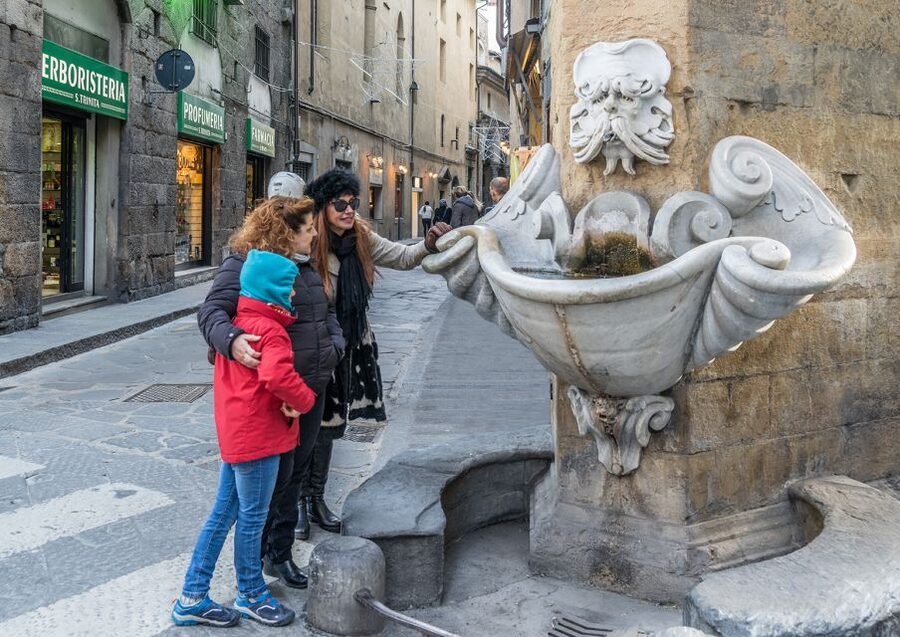
Next comes one of the most important public squares in Florence: Piazza della Signoria. This is the center of political power in the way the city presented it, with key civic spaces and famous sculptures arranged right in the open.
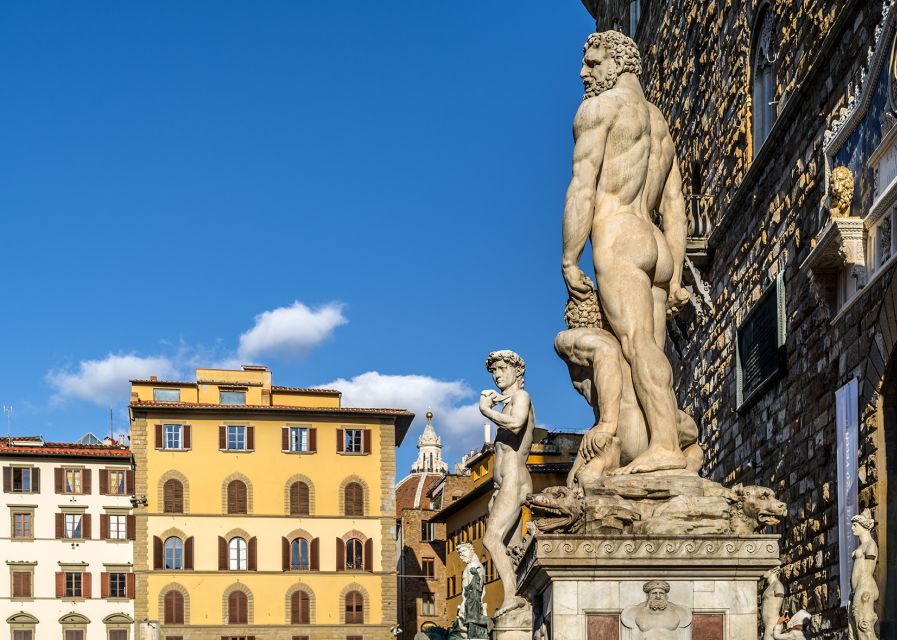
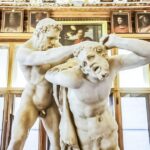
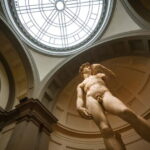
You get a guided look at Palazzo Vecchio, which is framed as a symbol of civil power. From there, the tour points you toward the Statue of David located in the square, and then continues to La Loggia dei Lanzi, where several statues are highlighted, including The Rape of the Sabine Women and works by Giambologna and Benvenuto Cellini such as Hercules, Centaur, and Perseus.
What I like about this stretch is how it turns art into a language. In a square like this, sculptures are not background, they are public messaging. Even if you are not a hardcore art student, you start noticing how Florence used myth, strength, and famous forms to communicate values.
One consideration: since this is a walking tour with short guided windows at each stop, you may not get a long time staring at every statue. That is actually normal and, for many people, the right tempo. You will still come away with names and context, and you can choose what to revisit later on your own.
Uffizi snapshot, Ponte Vecchio, and the Oltrarno side of town
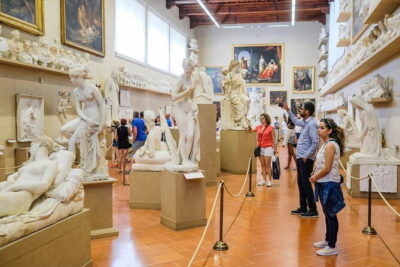
After the civic square, the route heads to the Uffizi Gallery. The tour includes sightseeing and walking time there, but it is not a full, all-day museum plan. In other words, you get an introduction and a quick orientation to the idea of the Uffizi, where many Renaissance masterpieces are kept, rather than a complete tour of the galleries.
This is exactly why the timing works. If you have only 3 hours total, it is better to understand where the Uffizi fits into Florence’s artistic story than to burn half a day trying to see everything. You can then decide whether you want to schedule a dedicated visit with a ticket and more focused time.
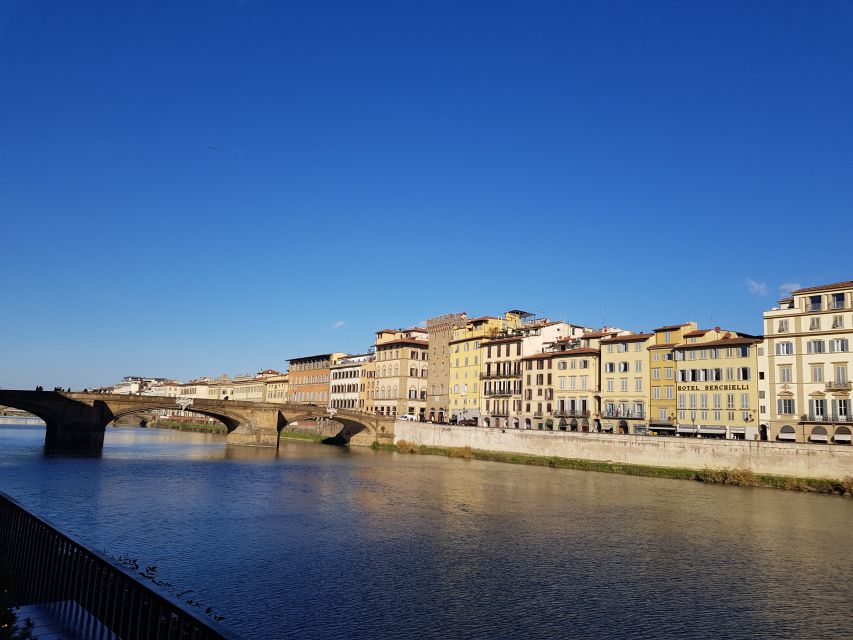
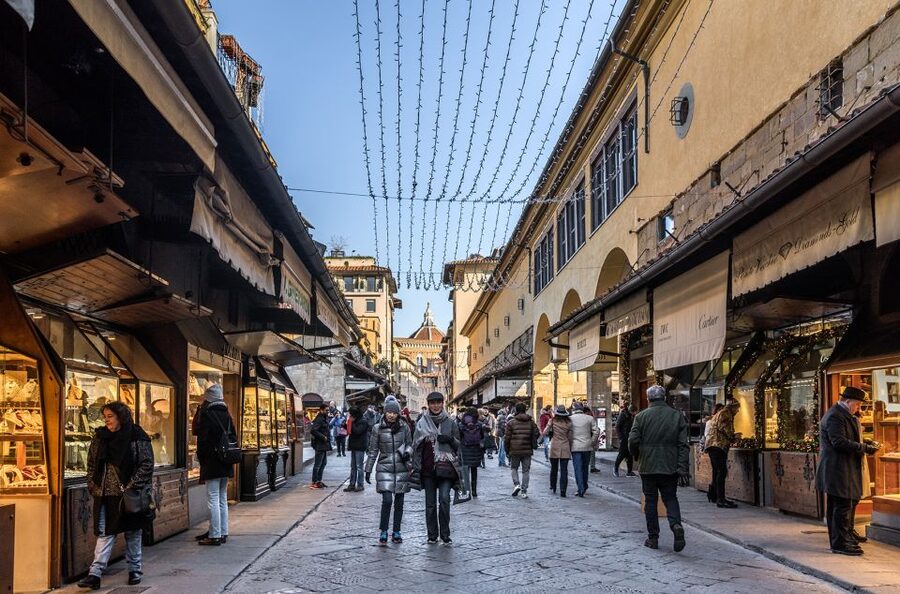
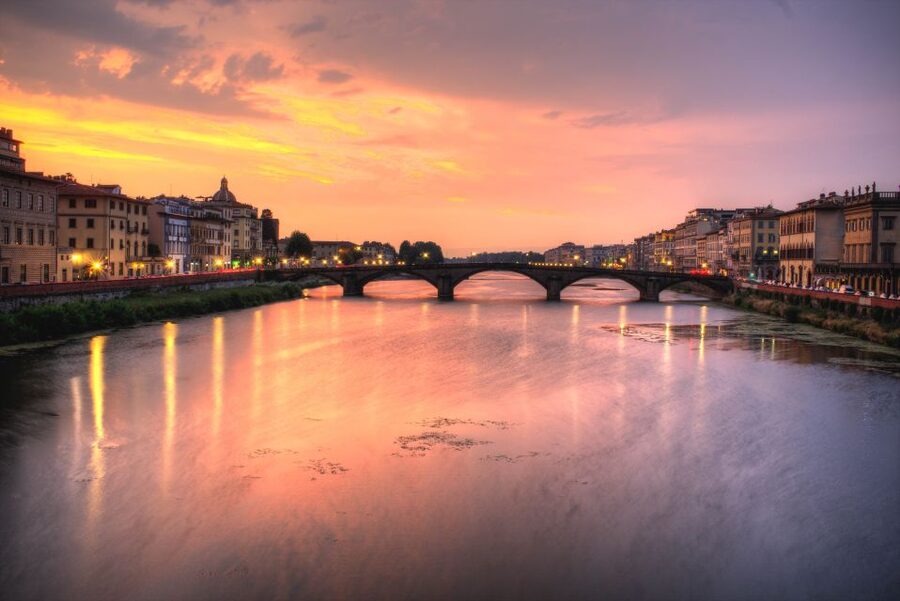
Then you cross Ponte Vecchio. The tour includes guided elements and a walk across the bridge, which connects the city center with the Oltrarno side of town. Ponte Vecchio is more than a pretty crossing, it functions as a shortcut between “public power” Florence and the other neighborhoods where crafts and daily life shape the vibe.
In Oltrarno, the guide keeps moving with a short guided segment. After that, you reach Piazza Santa Trinita, which is another useful reset point during the walk. Instead of only stacking monuments, the tour gives you breathing space to absorb the neighborhood feel.
If you are the type who likes to picture a city as layers, this final third is where you start to feel it. You go from institutional Florence to lived-in Florence, all while staying within a manageable walking schedule.
Keep the Florentine shortlist moving
Price, comfort, and whether to book for your dates
At $192.58 per person, this is a mid to upper price for a short walk, but it is also a private tour with an expert guide. You are paying for guide time that covers multiple top-tier sights in one coherent route, instead of piecing together separate museum visits, guided tours, and self-guided wandering.
Food and drinks are not included, so factor that in if you plan to eat afterward. Also, since the tour includes short guided and sightseeing windows at major stops, it is best for orientation and context. If your goal is deep museum time, you will likely want another plan for the Uffizi later.
Comfort matters. The tour recommends comfortable shoes, and that is not just polite advice. You are covering a lot of ground across iconic areas, and Florence streets can be uneven and crowded near the landmarks.
One more plus: the tour is wheelchair accessible and is offered in multiple languages, including French, German, Italian, English, and Spanish. It is also a private group, which typically makes it easier to ask questions and keep the pace aligned with your needs.
Should you book? If you want a guided, understandable route through Duomo Florence, Medici Florence, and the civic-art Florence of squares and bridges, this is a strong choice. If you already know you will want hours inside museums or prefer a slower pace, use this tour as a fast orientation and then build your own longer visits around what you liked most.
FAQ
How long is the Florence private city walking tour?
It lasts 3 hours. Starting times vary, so you should check availability for the schedule.
Where does the tour start?
The meeting point is in front of the central door of the Cathedral of Santa Maria del Fiore.
When does the tour end?
The tour ends back at the meeting point, at the Cathedral of Santa Maria del Fiore area.
Is an expert guide included?
Yes. The tour includes an expert guide throughout the walking route.
Are food and drinks included?
No. Food and drinks are not included in the tour price.
What languages are available for the live guide?
The live guide is available in French, German, Italian, English, and Spanish.
Is this tour private?
Yes, it is a private group tour.
Is it wheelchair accessible?
Yes, it is wheelchair accessible.
What should I wear for this walking tour?
The recommendation is to wear comfortable shoes since you will be walking for the duration of the tour.
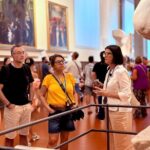
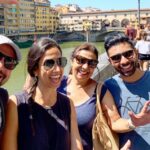
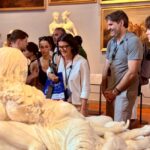
Florence at walking speed
More Florence tours to open next
- The Best tour in Florence: Renaissance & Medici Tales – guided by a STORYTELLER
★ 5.0 · 12,316 reviews
Every Florence review, in one place
- Tuscany Day Trip from Florence: Siena, San Gimignano, Pisa and Lunch at a Winery
★ 5.0 · 21,634 reviews - The Best tour in Florence: Renaissance & Medici Tales – guided by a STORYTELLER
★ 5.0 · 12,316 reviews

Florence picks that sit just beyond this itinerary
- One Hour Uffizi Guided Tour: Masterpieces of the Renaissance
★ 5.0 · 3 reviews - Sightseeing Tuscany by touring bike – 1 day rental
★ 5.0 · 3 reviews - Private Siena, S. Gimignano, Chianti Road and Wine Tasting
★ 5.0 · 3 reviews - Bargello Museum Private Tour: Michelangelo’s Bacchus & Donatello’s David
★ 5.0 · 3 reviews - Authentic Florence Cooking Class at Costanza’s 1839 Family Estate
★ 5.0 · 3 reviews - San Gimignano and Volterra private tour: etruscans, romans and middle age jewels
★ 5.0 · 3 reviews
More Walking Tours worth comparing.
 ★ 4.5Guided Walking TourFrom $313,334 reviews
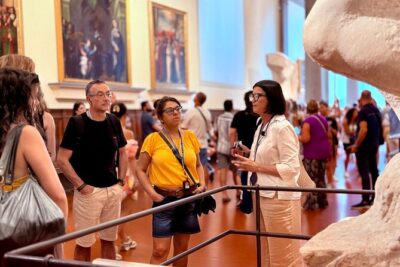 ★ 4.5Skip the line: Uffizi and Accademia Small Group Walking TourFrom $1483,135 reviews
★ 4.6Guided Walking TourFrom $271,602 reviews
★ 4.5Skip the line: Uffizi and Accademia Small Group Walking TourFrom $1483,135 reviews
★ 4.6Guided Walking TourFrom $271,602 reviews
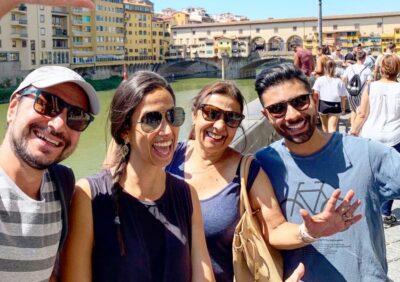 ★ 4.8Renaissance and Medici Tales Guided Walking TourFrom $21,549 reviews
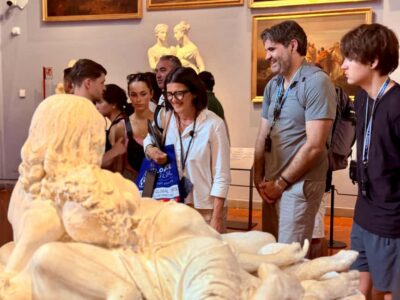 ★ 4.7Uffizi & Accademia Small Group Walking TourFrom $1481,380 reviews
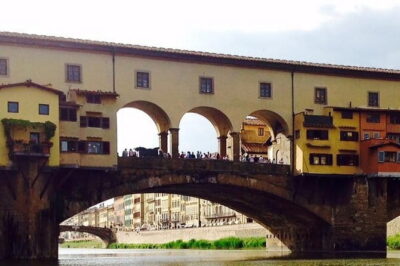 ★ 5.0Skip-the-Line Florence Highlights and David Walking TourFrom $1171,127 reviews
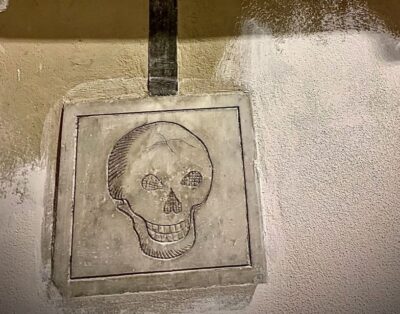 ★ 4.6Dark Mysteries and Legends Guided Walking TourFrom $21,081 reviews
 ★ 4.5Florence in a Day: Michelangelo’s David, Uffizi and Guided City Walking TourFrom $1341,048 reviews
Find this experience in another shortlist