
You can smell lunch before you even taste it. In a small Florence classroom, I love that you actually shape pasta yourself and then build a from-scratch tiramisu with the chef’s method. One thing to keep in mind is that the hands-on pace can feel busy if you’re expecting a sit-and-watch experience.
I also like that the wine is part of the flow, not an afterthought. Unlimited regional pours make it easier to relax, chat, and focus on technique, even if you’re a total beginner. In my view, the best part is the teaching, with chefs like Lucella, Andrea, and Leo showing the steps in a way that clicks fast.
This is the kind of activity that fits both solo travelers and families. You get enough structure to learn confidently, but still enough social energy to make new friends over something you just made with your own hands.
Key points worth knowing before you go
- Hands-on pasta shaping: You knead, roll, and form ravioli and pappardelle yourself.
- Tiramisu from scratch: You assemble the layers, not just follow a shortcut.
- Unlimited regional wine: Wine is included throughout the experience.
- Small-group attention: The format supports questions and technique fixes while you cook.
- Take-home recipes: You leave with written guidance to recreate the dishes later.
- Chef-led, step-by-step teaching: English and Italian support, led by professional instructors.
Roll, knead and churn through the Florence cooking-class shortlist
- Florence: Pasta Cooking Class with Unlimited Wine★ 4.9 · 10,285 reviews
- Florence Pizza or Pasta Class with Gelato Making at a Tuscan Farm★ 5.0 · 6,801 reviews
- Florence: Pasta & Tiramisu Cooking Class with Unlimited Wine★ 4.9 · 6,708 reviews
- Florence: Pasta Cooking Class with Unlimited Wine★ 5.0 · 6,413 reviews
Florence pasta and tiramisu cooking class, with unlimited wine
If you’re in Florence and you want more than a meal, this kind of class makes sense. You get the fun of cooking, the satisfaction of eating what you made, and the confidence that comes from learning real steps. The menu is classic and practical, fresh pasta plus tiramisu, which means your skills transfer to your own kitchen right away.
The setting matters, too. This is described as intimate, with small class sizes. That typically means you are not squeezed into a huge crowd, and you can actually hear the chef, ask questions, and adjust your dough or assembly without feeling rushed. Add in unlimited regional wine, and the whole thing has a relaxed, sociable rhythm rather than a stiff, formal feel.
At 2.5 hours, it’s also a sweet spot. Long enough to do real work, short enough that you’re not sacrificing your whole afternoon or evening. And because ingredients, equipment, water, and Wi-Fi are included, you can show up ready to cook instead of worrying about logistics.
What you actually learn: ravioli, pappardelle, and tiramisu steps
This class is built around three skills: making fresh pasta dough, shaping pasta, and building tiramisu correctly. Even if you start at zero, the structure is designed to bring you through each step in sequence, with coaching along the way.
Fresh pasta, from dough to shapes
You knead and roll your own dough, then shape pasta including ravioli and pappardelle. That matters more than it sounds. “Fresh pasta” can be vague when it’s served at restaurants, but when you knead, you feel how dough changes with handling. When you roll, you understand how thin is thin, and how to prevent sticking.
Ravioli and pappardelle also teach different techniques. Ravioli pushes you toward precision and consistency, since the shape and portioning affect how it cooks. Pappardelle teaches a different kind of control, focusing on cutting and uniform strips so the pasta cooks evenly.
Tiramisu, assembled layer by layer
You craft authentic tiramisu from scratch. That usually means you learn the logic of the dessert: how the layers are built, how the components behave, and how to assemble so it sets well. The chef guidance is the key here, because tiramisu is one of those desserts where small process details make a difference in texture and balance.
A practical bonus is that you are not just tasting the final result. You’re learning how to recreate it, because the class is set up to make you leave with the confidence to do it again at home.
Using local ingredients, for real flavors
The experience emphasizes fresh, high-quality local ingredients. You don’t need to be a food snob to appreciate this. When your ingredients are good, your technique shows up in the final dish. And when you’re learning, it’s easier to notice what you’re doing right if the ingredients behave predictably.
Florence cooking classes beyond the first bowl of pasta
The chef-led format and why small groups matter
Cooking classes can swing two ways: either they are hands-on and chaotic, or they are polished but hands-off. This one aims for hands-on with structure, and the small-group format is what makes it work.
In the experience, you get step-by-step instruction in English and Italian. That is especially helpful if you’re traveling with mixed language comfort. It also means you can ask questions without feeling like you have to guess your way through.
The coaching style is part of the value. Names like Andrea, Lucella, and Leo show up in the teaching experience, and the common thread is how they explain techniques in a way that feels accessible. If you’re a beginner, you’ll likely appreciate the focus on fundamentals like dough texture and how to handle it while rolling.
You might notice the class operating in smaller groups during the session, which can be a good thing. Smaller groups typically mean the chef can spot small issues early, like dough that’s too sticky or uneven thickness. Those details are what separate a good attempt from a great one.
Value for $35: skills, ingredients, and wine included
At about $35 per person for 2.5 hours, this is not a high-end luxury class. It’s priced like a straightforward, do-the-work experience. And honestly, that’s part of the appeal. You’re paying for a chef-led process where the output is something you can actually remake later.
Here’s what you get in practical terms:
- Professional chef instruction
- Cooking ingredients and equipment
- Unlimited regional wines
- Water and Wi-Fi
- Recipes to take home
The biggest value is not the meal itself. It’s the skill transfer. When you learn to knead and roll dough, shape pasta, and assemble tiramisu, you’re buying repeatable know-how. If you plan to cook at least once at home soon after your trip, you’re already getting your money’s worth in spirit, even if the wine is not included again.
Also, unlimited wine changes the feel. It keeps the vibe social. More importantly for value, it makes the experience more “worth it” emotionally. You’re not rushing to finish and then go find a drink afterward.
The flow of the 2.5 hours, and what you’re doing at each stage
The total time is 2.5 hours, which creates a clear, workable schedule. You start learning the pasta process, move through shaping and cooking prep, then shift into dessert assembly, with wine flowing during the session.
Early stage: get your hands working
At the beginning, you’ll focus on pasta dough. Kneading and rolling are the foundation steps. This is where you learn how dough should feel and how to work it without panic.
If you’ve never rolled pasta, this is the moment you go from watching to doing. The chef’s step-by-step guidance matters here, because the difference between smooth dough and stubborn dough is usually small, but noticeable.
Middle stage: shape ravioli and pappardelle
Next comes shaping. Ravioli requires portioning and sealing technique, while pappardelle is about cutting and uniformity. This is also where groups help. If your dough is too thick or your shapes look uneven, the chef can guide you while you’re still in the process.
Final stage: tiramisu assembly
Then you shift to tiramisu. This is a different kind of work, more precise in assembly and timing. You’ll learn how to build the layers so the finished dessert has the right structure.
By the time you’re eating, you understand what you did well. That turns dinner into a kind of achievement.
Social energy, wine, and how to make the most of it
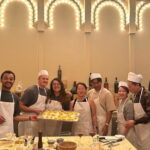
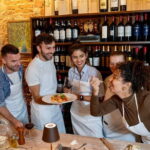
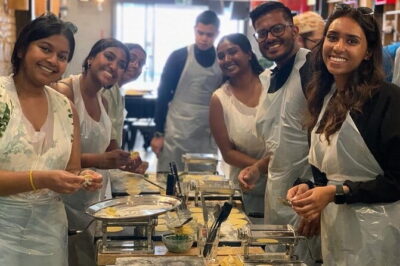
This class is described as an intimate setting, and that tends to produce a certain kind of travel memory. You cook with people in the room, you eat together, and you share the laughs that naturally happen when someone tries to roll dough for the first time.
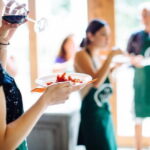
Unlimited regional wine plays a role in that. It keeps the tone convivial, and it also means you don’t have to interrupt your cooking for separate drink runs. You can relax between steps and focus on doing the next one right.
One practical tip for making the most of it: pace yourself. You will be hands-on with dough and then switching to dessert. If you drink too fast early, you’ll likely feel it when you need steady focus for the tiramisu layers.
Also, since the class supports English and Italian, you can participate even if your Italian is limited. You don’t need to be a language genius to enjoy the process.
What to bring and what to do after the class
The main “bring” item is simple: comfortable shoes. You’ll be on your feet, working at a station, and moving between steps. If you wear stiff shoes or high heels, your feet will complain before your dough does.
The other helpful piece is what you take home. You receive detailed recipes, which is where the class becomes more than a one-time activity. I like classes where the chef doesn’t just show you what to do, but also gives you a plan to recreate it later.
Afterward, you’ll likely want to practice soon, while your memory of texture and assembly is fresh. Even if you don’t nail it immediately, you’ll understand why the steps matter, and that makes your second attempt easier.
If you’re traveling with family, this class can also be a fun way to socialize. One of the nice things about learning together is that you can support each other while the chef keeps things on track.
Should you book this Florence pasta and tiramisu class?
Book it if you want a hands-on Florence food experience with real skill building. You’ll get fresh pasta technique plus from-scratch tiramisu, and you’ll do it with professional chef guidance, unlimited regional wine, and recipes you can use again at home.
Skip it if you hate active participation. This is not a passive tasting tour. You’ll knead, roll, shape, and assemble, and that’s the point.
If you’re traveling as a couple, with friends, or as a family, the small-group structure is a plus. And if you’re catching a rainy morning or want something indoor that still feels like Italy, this format is a solid match.
FAQ
How long is the Florence pasta and tiramisu cooking class?
The class runs for 2.5 hours.
What is included in the class price?
You get a professional chef, cooking ingredients and equipment, unlimited regional wines, water, and Wi-Fi.
What dishes will I make during the class?
You will knead, roll, and shape fresh pasta including ravioli and pappardelle, and you will craft tiramisu from scratch.
What languages are the instructors?
The instruction is available in English and Italian.
Do I need prior cooking experience?
No prior experience is required. The class is designed to welcome all skill levels.
Where is the meeting point?
The meeting point may vary depending on the option booked.
What should I bring?
Wear comfortable shoes.
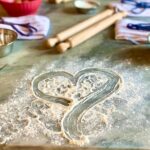
Flour on the Florence worktop
- Cooking Class and Lunch at a Tuscan Farmhouse with Local Market Tour from Florence
★ 5.0 · 4,831 reviews
Every Florence review, in one place
- Tuscany Day Trip from Florence: Siena, San Gimignano, Pisa and Lunch at a Winery
★ 5.0 · 21,634 reviews - The Best tour in Florence: Renaissance & Medici Tales – guided by a STORYTELLER
★ 5.0 · 12,316 reviews



Cook it before you order it
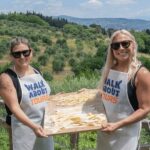
- Cooking Class and Lunch at a Tuscan Farmhouse with Local Market Tour from Florence
★ 5.0 · 4,831 reviews
Florence picks that sit just beyond this itinerary
- One Hour Uffizi Guided Tour: Masterpieces of the Renaissance
★ 5.0 · 3 reviews - Sightseeing Tuscany by touring bike – 1 day rental
★ 5.0 · 3 reviews - Private Siena, S. Gimignano, Chianti Road and Wine Tasting
★ 5.0 · 3 reviews - Bargello Museum Private Tour: Michelangelo’s Bacchus & Donatello’s David
★ 5.0 · 3 reviews - Authentic Florence Cooking Class at Costanza’s 1839 Family Estate
★ 5.0 · 3 reviews - San Gimignano and Volterra private tour: etruscans, romans and middle age jewels
★ 5.0 · 3 reviews
More Florence Pasta, Pizza & Gelato Classes worth comparing.
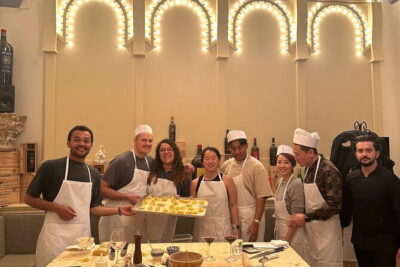 ★ 4.9Pasta Cooking Class with Unlimited WineFrom $2110,285 reviews
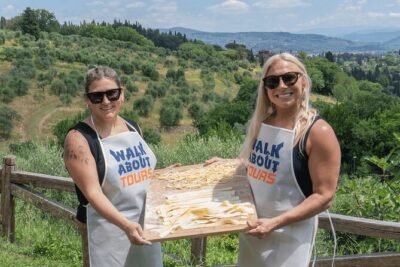 ★ 5.0Florence Pizza or Pasta Class with Gelato Making at a Tuscan FarmFrom $1456,801 reviews
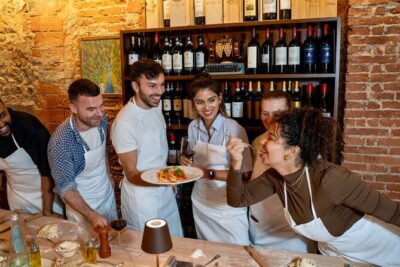 ★ 4.9Pasta & Tiramisu Cooking Class with Unlimited WineFrom $566,708 reviews
★ 5.0Pasta Cooking Class with Unlimited Wine6,413 reviews
★ 4.9Pasta & Tiramisu Cooking Class with Unlimited WineFrom $566,708 reviews
★ 5.0Pasta Cooking Class with Unlimited Wine6,413 reviews
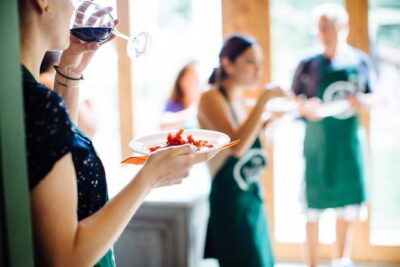 ★ 5.0Cooking Class and Lunch at a Tuscan Farmhouse with Local Market Tour from FlorenceFrom $1454,831 reviews
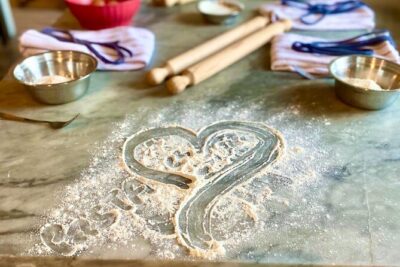 ★ 5.0Pastamania – Florence Pasta Making ClassFrom $493,050 reviews
 ★ 5.0Cooking Class Pasta & Tiramisu Making Unlimited WineFrom $892,234 reviews
 ★ 5.0Florence Cooking Class The Art of Making Gelato & Authentic PizzaFrom $642,053 reviews
Find this experience in another shortlist