
Florence field review · FLORENCE CHURCHES & CHAPELS
Basilica of Santa Croce: Where Legends Rest in Florence
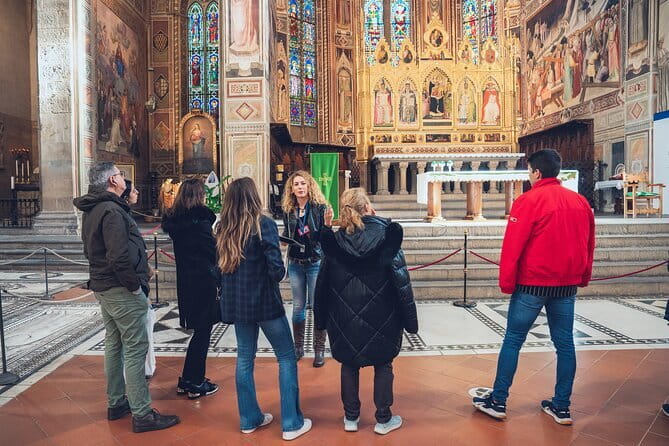
Santa Croce hits you fast, then keeps paying off. I like that you get an official certified guide plus a radio system, so the art and stories stay clear even in a busy church. I also like how the tour steers you to the exact chapels and details that most visitors miss, including Giotto scenes and Brunelleschi architecture. The main drawback to weigh is the strict dress code, because if your shoulders or knees are bare, entry can be refused and you will not get a redo.
This is a great “smart shortcut” through a big, impressive basilica. You walk in with context for what you are seeing, and you leave understanding why Santa Croce is more than a pretty church. If you are tight on time in Florence, one hour can feel perfect.
Key things that make this tour worth your time
- Official certified guide who can explain what you are actually looking at
- Radio system so you hear every detail clearly inside the church
- Giotto and Gaddi fresco highlights in the main chapels
- Brunelleschi and Donatello moments that reward careful looking
- Final resting place legends including Michelangelo, Galileo, and Machiavelli
- Optional Tuscan wine tasting with pairings if you want to extend the experience
Florence churches where the art still belongs to the room
- Florence: Santa Maria Novella Entry Ticket & Audioguide★ 4.3 · 717 reviews
- Florence: 1.5-hour Santa Croce Guided Experience★ 4.8 · 254 reviews
- Florence: Medici Chapels Guided Tour★ 4.8 · 217 reviews
- Florence: Santa Croce Church Tour with Entry Ticket★ 4.8 · 179 reviews
Santa Croce at a Glance, why this basilica feels different
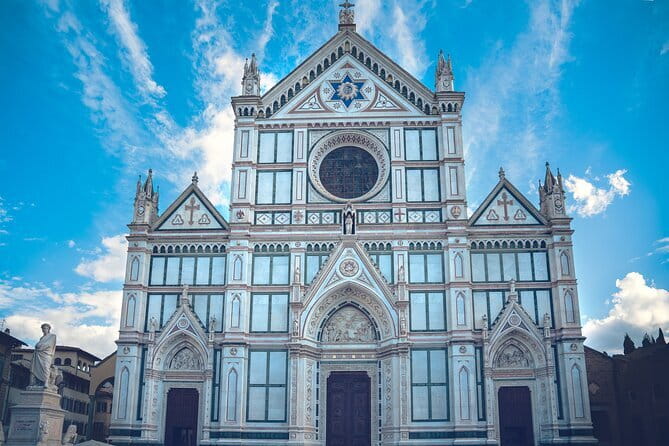
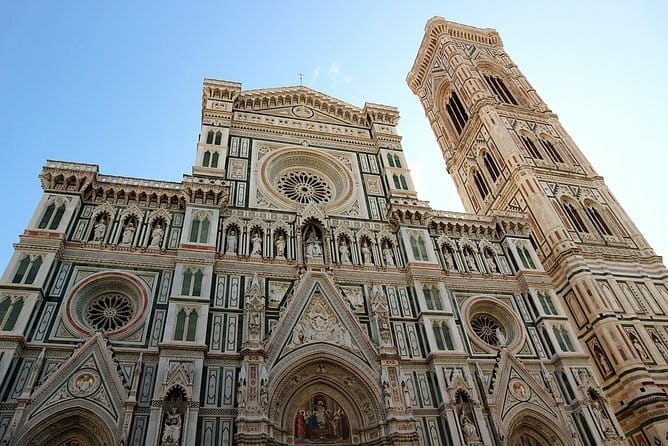
Santa Croce sits in a lively slice of Florence called the Piazza di Santa Croce, and the place has a rhythm to it. Every June, the square is famous for Calcio Storico, the kind of spectacle locals treat like theater and tradition at the same time. That energy matters because it helps explain why Santa Croce never feels frozen in the past. It is a public landmark, a monument, and a living cultural anchor.
Inside, Santa Croce is one of those churches where the wow factor is not just one thing. You are looking at major artists, carefully planned chapels, and memorials tied to big names. The tour format is built for exactly that kind of site: you do not just wander, you get guided line by line through the best points so you can connect what you see with what it means.
Your one-hour plan, what you will do step by step
The tour is about one hour, and that compact timing is a big part of the value. You start at the basilica in the square, then the guide leads you through a structured route so you are not spending your time figuring out where the key artwork is hiding.
Here is the flow you can expect:
- You enter and get oriented to the major spaces, then move into the most important chapels.
- You focus on fresco programs and the artists tied to them.
- You shift from art to people, because Santa Croce is also a kind of memorial hall for prominent figures.
- You end with the cemetery area and restoration story, which adds a practical, human layer to the visit.
A key benefit is that the guide is not treating the church like a checklist. The tour points you toward specific chapels and features, so you see what the church is famous for, instead of leaving with vague impressions.
Frescoes that give you instant context: Giotto, Gaddi, and the chapel stories
If you have ever stood in a church and felt like you were looking at “something beautiful, somewhere,” Santa Croce fixes that. The guide pushes you toward the frescoes that carry the most meaning and are tied to recognizably important names.
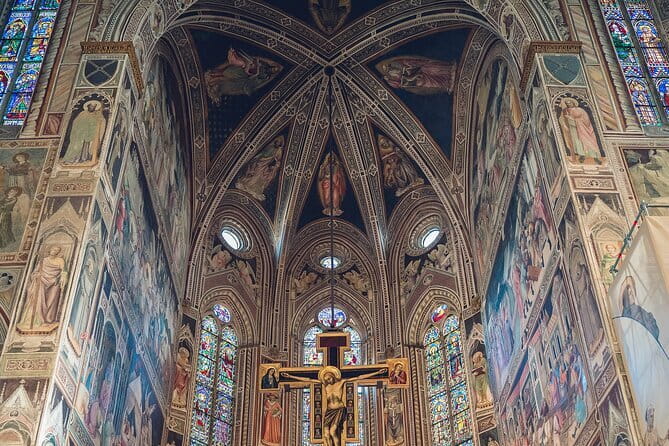
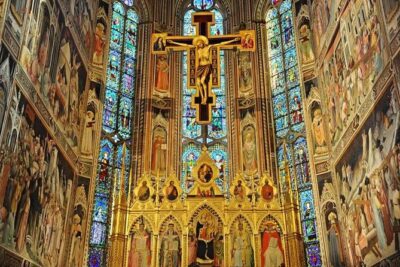
In the Cappella Maggiore, you focus on frescoes by Gaddi, which portray the story of Santa Croce itself. That framing helps a lot. Without context, fresco cycles can look like a swirl of religious scenes. With the guide’s explanation, you start seeing the narrative structure and how the chapel’s decoration supports the church’s identity.
Then you move into Giotto’s work in the Bardi and Peruzzi Chapels. You are guided to scenes from the lives of St. Francis and St. John. This is a strong pairing for many visitors because it gives you two threads to follow at once, rather than one overwhelming scene. I like that this tour treats the chapel art as a set of stories you can actually track with your eyes.
What to watch for during the fresco time
You will get the most out of this part if you:
- slow down once you enter a chapel, then let your eyes “find” the key scenes the guide points out
- ask a quick question if something feels confusing, because the radio system keeps it easy to hear the answer
Brunelleschi’s chapel and Donatello’s crucifix, where small details make a big impression
Santa Croce’s Renaissance side is not only about famous names, it is also about how design changes what you feel. The tour makes room for that through two big highlights: Brunelleschi’s Cappella de’ Pazzi and Donatello’s crucifix.
Brunelleschi’s chapel is described as harmonious, and that word matters. In practice, it means you start noticing the architectural balance, proportions, and the way the space directs your attention. If you have toured other churches in Florence, you will recognize that not every Renaissance space feels equally “ordered.” Here, the guide’s focus helps you connect the architecture to the bigger Renaissance idea of clarity and proportion.
Donatello’s jewel-like crucifix is another great reminder that Santa Croce is not just about large fresco walls. The crucifix detail can be easy to miss if you rush. The guide’s stop here is valuable because it teaches you where to look and why the object itself matters.

Memorials and legendary burials: Michelangelo, Galileo, and Machiavelli
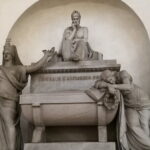
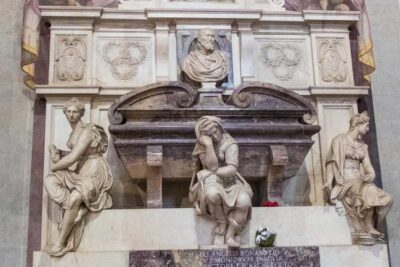
One of Santa Croce’s most famous draws is the list of luminaries linked to the church. You are guided to final resting places that include Michelangelo, Galileo, and Machiavelli. Even if you are not an art-history expert, these names give you an immediate emotional anchor. The basilica becomes a place of ideas and influence, not just a place to look up at ceilings.
And then there are the smaller, surprising memorial details that make the visit feel more personal. For example, the tour includes a memorial to playwright Niccolini, described as a forerunner of the Statue of Liberty. That is the kind of comparison that turns a monument into something you can instantly understand.
The guide also weaves in other Renaissance connections along the way, like the way Donatello and Brunelleschi fit into the church’s broader identity. This is the part where the tour feels like a story with multiple characters.
The cemetery area and restoration story, why the church keeps changing
Santa Croce is not only a museum of completed works. You will also hear about the monumental cemetery and how restoration has helped bring flood-damaged paintings back. That adds a practical layer to the visit.
It matters because it changes how you interpret what you are seeing. Instead of thinking the church is frozen in time, you start recognizing that preservation is an ongoing job. You are seeing art that has survived, been repaired, and been kept visible for future visitors.
This is also where the tour can feel slightly more emotional than the art-focused moments. The story of damage and restoration turns Santa Croce from a beautiful stop into a living responsibility. If you like travel that has a human side, you will probably appreciate this segment.
Official guide, radio system, and a group of up to 20
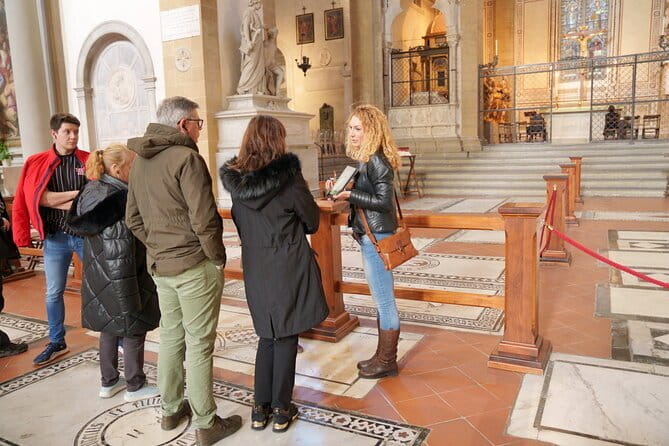
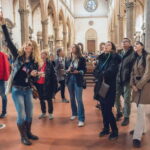
This tour uses a radio system and gives you an official certified guide, which is a huge quality signal for a church visit. In a busy religious site, normal talking pace often fails. With the radio, you can actually follow along without craning or losing the thread.
It also helps that the group size is capped at 20 travelers. Smaller groups typically mean fewer interruptions and less crowding around the guide during tight spots in chapels. You still get the energy of a group, but you do not feel like a stampede.
One practical tip: bring your full attention for the first 10 minutes. That is when the guide usually sets up what to look for, and once you have that mental map, everything else feels easier.
Dress code and timing, the two things that can spoil the day
The dress code is strict: no shorts or sleeveless tops, and knees and shoulders must be covered for both men and women. This is not a “nice to have” rule. You can be refused entry if you do not meet it, and the tour will not be rescheduled or refunded.
Plan around this like a pro:
- wear lightweight long pants and a top with sleeves, even if Florence is warm
- if you only packed a tank top, bring a light layer that covers shoulders
- arrive early so you can adjust before you reach the entrance
Timing matters too. If you arrive after the tour start time, you cannot join and there is no refund or reschedule. With an experience that is about one hour, the clock is part of the deal.
Wine tasting with pairings, how the add-on changes the schedule
The optional Tuscan wine tasting class with pairings can be a smart add-on if you like connecting local food and drink to the place you are visiting. It turns Santa Croce from a pure art stop into a more rounded Florence morning or afternoon.
The key thing to know is timing. If you choose the wine option, the Santa Croce guided tour that operates at 10:30am or 3:00pm will initially start later, then the wine tasting happens at Meeting Point 02. So you cannot treat the add-on like a quick extra after the church. It is built into the plan.
Also pay attention to your comfort level with wine. If you have intolerance or allergies, alert the team when booking and again before the tour, so you can avoid inconvenience.
Price and value for a Florence one-hour art hit
At $56.48 per person for about an hour, this is not the cheapest thing you can buy in Florence. But the value math changes when you factor in what is included.
You are paying for:
- an official certified guide
- entrance tickets
- a radio system
- and potentially the wine tasting and pairings if you select the option
For Santa Croce, the biggest cost driver is access and guiding inside multiple chapels in a limited time window. If you tried to do this solo, you would need to line up entry, then also figure out which chapels matter most and why. Here, you get a structured route that targets big names like Giotto and design highlights like Brunelleschi, plus the memorial side that includes Michelangelo, Galileo, and Machiavelli.
So, if you value efficiency and clarity, this pricing can feel fair. If you want a slow, self-paced church wander where you control every turn, you might prefer to build your own itinerary.
Who this tour suits best
This works especially well if:
- you only have about an hour for Santa Croce and want maximum payoff
- you like art with a guide that points out the right details
- you appreciate a radio system because churches can be noisy and sound carries poorly
- you want the option to extend the experience with a Tuscan wine pairing class
It is also a good choice if you enjoy travel that mixes big names with smaller, memorable connections, like the memorial to Niccolini described as a forerunner of the Statue of Liberty.
If you are traveling as a group of two who can’t afford to gamble on crowds, the smaller cap of 20 helps. And if you are sensitive to dress-code stress, double-check your clothing before you leave the hotel.
Should you book Basilica of Santa Croce with a guide?
I would book it if you want Santa Croce to make sense fast. The combination of official guide, radio system, and a focused route through Giotto, Brunelleschi, Donatello, and key memorials is exactly what turns a beautiful church into a memorable visit you can explain later.
I would pause before booking if you are not ready for the dress code or you might be late. One hour is short, and the rules are strict about entry and timing.
If you do meet the basics, this is a strong use of limited Florence time, and the optional wine pairing can make it even more satisfying.
FAQ
How long is the Basilica of Santa Croce tour?
The tour is approximately 1 hour.
What is included in the price?
It includes an official certified guide, a radio system to hear the guide clearly, entrance tickets, and the wine tasting and pairing class only if you select that option.
Can I add wine tasting to the Santa Croce tour?
Yes. You can select a Tuscan wine tasting class with pairings. If you choose this option, the Santa Croce guided tour at 10:30am or 3:00pm starts later first, and then the wine tasting happens at Meeting Point 02.
What dress code do I need for Santa Croce?
You must cover your knees and shoulders. No shorts or sleeveless tops are allowed. If your outfit does not meet the dress code, entry can be refused.
Does the tour run in bad weather?
Yes, it operates in all weather conditions. Dress appropriately.
What happens if I arrive late?
If you arrive after the tour start time, you will not be able to join and you will not receive a refund or rescheduling.
Every Florence review, in one place
- Tuscany Day Trip from Florence: Siena, San Gimignano, Pisa and Lunch at a Winery
★ 5.0 · 21,634 reviews - The Best tour in Florence: Renaissance & Medici Tales – guided by a STORYTELLER
★ 5.0 · 12,316 reviews

Art still in Florence’s churches
Florence picks that sit just beyond this itinerary
- One Hour Uffizi Guided Tour: Masterpieces of the Renaissance
★ 5.0 · 3 reviews - Sightseeing Tuscany by touring bike – 1 day rental
★ 5.0 · 3 reviews - Private Siena, S. Gimignano, Chianti Road and Wine Tasting
★ 5.0 · 3 reviews - Bargello Museum Private Tour: Michelangelo’s Bacchus & Donatello’s David
★ 5.0 · 3 reviews - Authentic Florence Cooking Class at Costanza’s 1839 Family Estate
★ 5.0 · 3 reviews - San Gimignano and Volterra private tour: etruscans, romans and middle age jewels
★ 5.0 · 3 reviews
More Florence Churches & Chapels worth comparing.
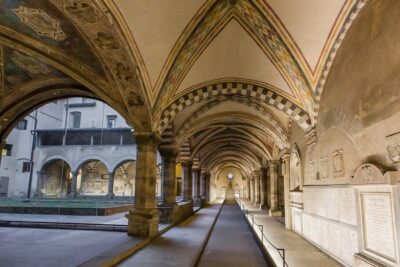 ★ 4.3Santa Maria Novella Entry Ticket & AudioguideFrom $18717 reviews
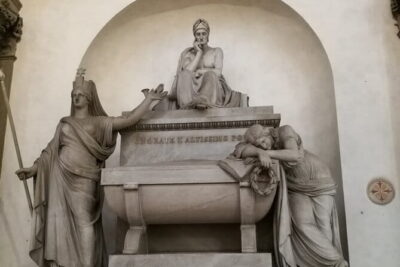 ★ 4.81.5-hour Santa Croce Guided ExperienceFrom $42254 reviews
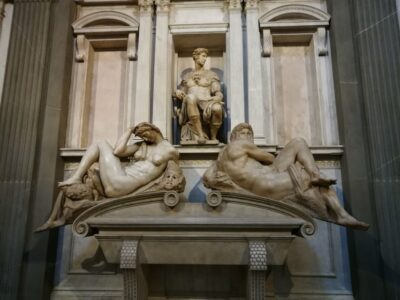 ★ 4.8Medici Chapels Guided TourFrom $50217 reviews
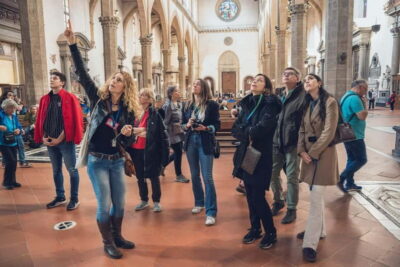 ★ 4.8Santa Croce Church Tour with Entry TicketFrom $54179 reviews
 ★ 5.0MEDICI CHAPELS Private Tour in FlorenceFrom $135119 reviews
 ★ 5.0Basilica Santa Croce: Walking Among the Masters of FlorenceFrom $58107 reviews
 ★ 3.5Skip the Line: Santa Croce Basilica Entrance Ticket in FlorenceFrom $2194 reviews
 ★ 3.5Skip the Line: Medici Chapels Ticket in FlorenceFrom $2258 reviews
Find this experience in another shortlist