
Florence field review · FLORENCE CHURCHES & CHAPELS
Basilica Santa Croce: Walking Among the Masters of Florence
Santa Croce feels like an art syllabus in stone. This guided walk covers Santa Croce Square plus the basilica’s interiors, tombs, crypt, cemetery, and even the 16 chapels, so you’re not just ticking off a church. I especially like how the guide connects the big-name art to specific places, like fresco stories you can pinpoint and Renaissance masterpieces you can actually see up close.
Two things I really valued are the reserved entrance (you can get in without the usual scramble) and the radio system (the guide’s explanations stay clear even in a busy church). The only drawback to plan around is the strict dress code for worship spaces, since shoulders and knees must be covered to avoid getting turned away.
Key Highlights You Should Expect
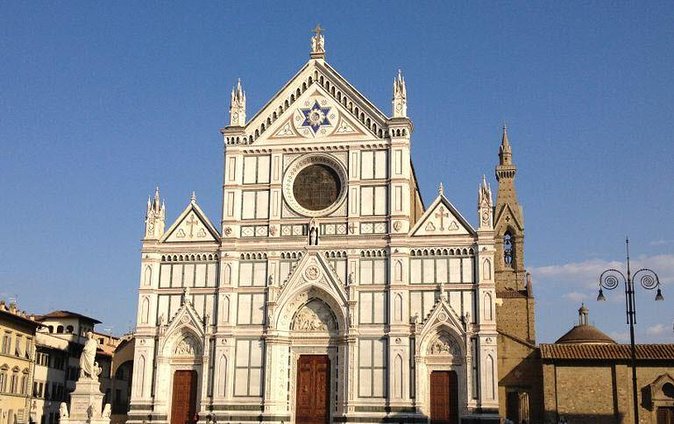
- Santa Croce Square context, including the annual medieval-costume Calcio Storico Florentino match in June
- Giotto and Gaddi fresco storytelling, tied to the Bardi and Peruzzi chapels, plus the Cappella Maggiore cycle
- Renaissance set pieces you can locate fast, like Donatello’s crucifix and Brunelleschi’s Chapel of Fools
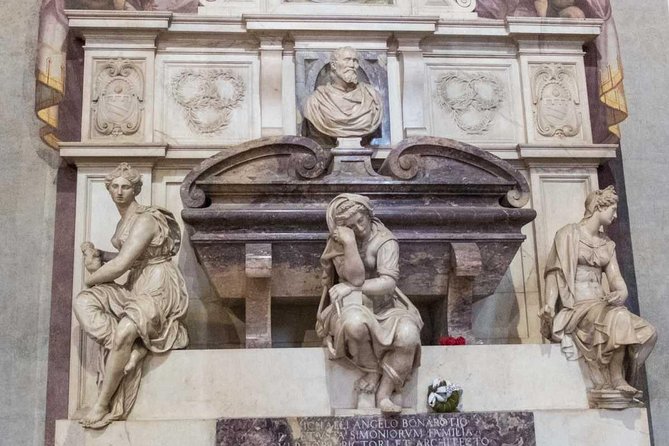
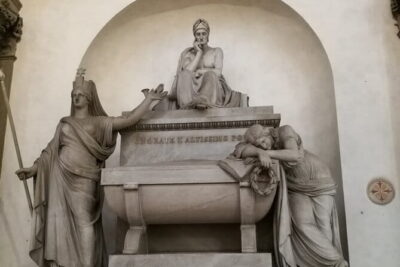
- Top tombs in one route, with famous names including Michelangelo, Galileo, Machiavelli, and Rossini
- The 1966 Florence flood and restoration story, including damage to paintings and what was repaired afterward
- Crypt, bell tower area, and 16 chapels, making the hour feel packed but organized
Florence churches where the art still belongs to the room
- Florence: 1.5-hour Santa Croce Guided Experience★ 4.8 · 254 reviews
- Florence: Medici Chapels Guided Tour★ 4.8 · 217 reviews
- Florence: Santa Croce Church Tour with Entry Ticket★ 4.8 · 179 reviews
- MEDICI CHAPELS Private Tour in Florence★ 5.0 · 119 reviews
Santa Croce Square First, Then the Art Hits
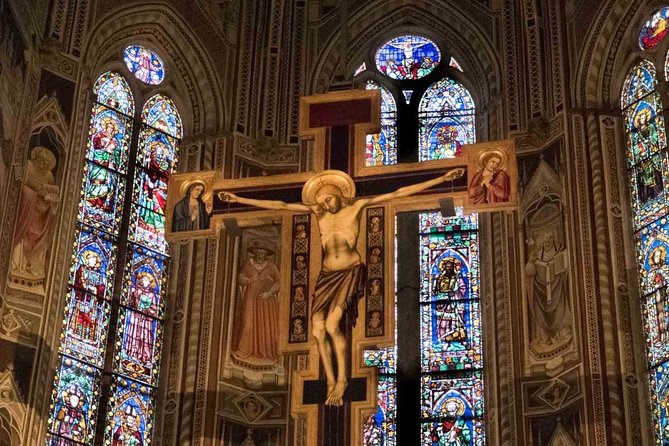
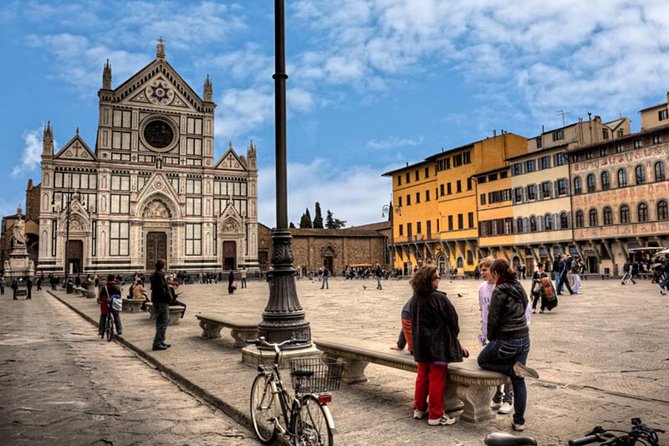
I like starting in the square because it changes how the basilica feels once you step inside. Santa Croce sits right where Florence gathers, and your guide frames the space with the yearly Calcio Storico Florentino, a famous soccer tradition held in June in medieval costumes. Even if you’re not visiting in June, hearing that background helps you notice the square as a living part of the city, not just a photo stop.
In this tour, you also get a quick extra “how the world got connected” moment before you cross the doorway. Near the entrance area, your guide points out the memorial of Giovanni Battista Niccolini, built as an inspiration for the Statue of Liberty. It’s a small stop, but it makes sense of why Florence’s influence shows up far beyond Italy.
Practically, it also helps you get oriented. If you’ve been zig-zagging across Florence all day, that first grounding moment makes the rest of the route easier to follow.
Entering the Basilica, Where Frescoes Tell Stories
Once inside, Santa Croce stops being abstract. The basilica is basically a visual textbook, and the tour teaches you how to read it.
One of the biggest reasons I’d take a guide here is the way the tour “pins” major works to the exact chapel spaces you’re walking through. You’ll hear about frescoes linked to the Cappella Maggiore, including frescoes from 1380 by Gaddi, described as telling the story of Santa Croce. Then you’ll move into chapels where the guide highlights fresco work connected to Giotto, especially in the Bardi and Peruzzi Chapels, with scenes from the life of St. Francis and St. John the Evangelist.
What’s valuable for you is that this stops you from looking at art like decoration. Instead, you learn what you’re seeing and why it mattered to Florentines. That makes the paintings and architectural spaces start talking to each other.
There’s also a “Renaissance meets faith” thread in how the guide explains different art forms. Donatello’s work and Brunelleschi’s architecture come up as you move through, so you see how the church served as a stage for major artists and major ideas, not only for worship.
Donatello and Brunelleschi: The Renaissance Set Pieces
Santa Croce has a way of surprising you. From the outside, it can look like one more church. Inside, it turns into a mini museum of landmark genius.
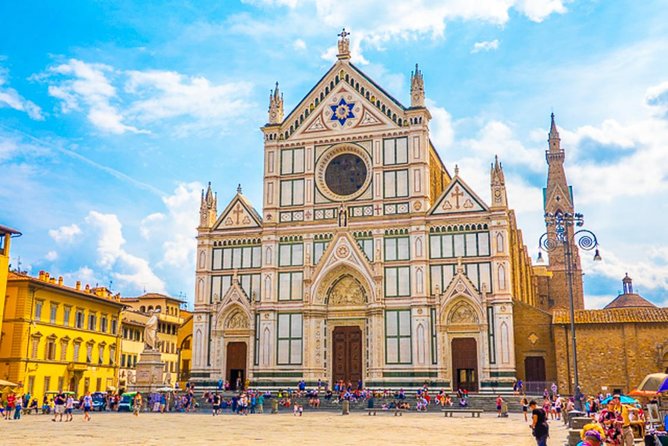
The tour spotlights Donatello’s crucifix, described as one of the Renaissance jewels you’d be likely to overlook if you’re simply wandering. You’re also led toward the Chapel of Fools by Brunelleschi, with your guide explaining the architectural harmony that makes that space feel intentionally balanced. When you hear the reasoning behind the design, you tend to notice details you would have missed, like how the space guides your eye and your movement.
This is one of those tours where the “what” and the “how to look” matter equally. You’re not just being told famous names. You’re shown where to stand, what to focus on, and what each work is doing in the bigger story of Santa Croce.
If you like art history but hate long lectures, this fits your style. The guide’s explanations are tied to physical locations, which keeps you engaged without getting lost in theory.
The Tombs You Came For, With a Map in Your Head
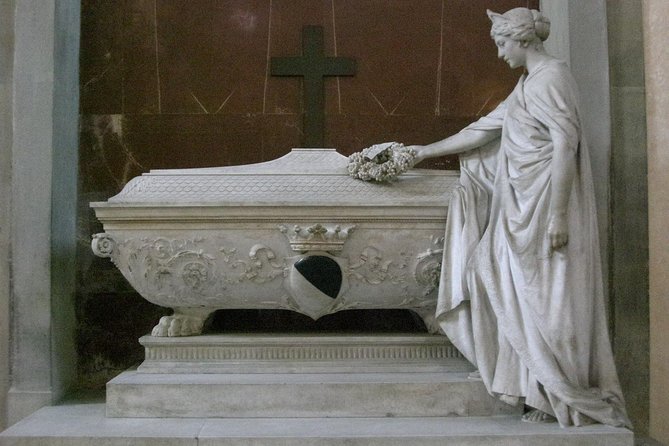
Santa Croce is famous for its tombs, and this tour makes sure you don’t spend your time hunting. You’ll focus on how the burial grounds are part of the church’s identity, not a separate sightseeing add-on.
Names like Michelangelo, Galileo, Machiavelli, and Rossini are highlighted, and your guide adds context so the famous names connect to the place. I find that matters most when you’re in the real space, where the scale and proximity can feel different from museum labels.
Even in only about an hour, the tour route helps you build a mental map. You get enough guidance to know what you’ve just seen, and you can decide what to return to after the tour ends.
One of the small advantages of a guided route is emotional. Standing where major figures were laid to rest can feel heavy. With the guide’s background, it becomes more than a list of names. It turns into a quick, meaningful story you can carry with you.
The 1966 Flood Story, and Why It Changes What You See
A major reason Santa Croce feels “alive” is that it has a modern chapter, too. The tour includes a visit to the monumental cemetery area and references damaged paintings destroyed in the tragic Florence flood of 1966, along with the restoration that followed.
This matters because you are literally looking at the physical evidence of damage and repair. Once you know the restoration story, you may start noticing where the basilica shows scars, or where the paint and surfaces look “newer” than you expected. That’s not about ruining the experience with sadness. It’s about making the art and the space feel honest, because history includes recovery, not only glory.
Your guide also helps connect the restoration effort to why people kept investing in this place. That perspective gives you a deeper reason to care, even if you’re the kind of traveler who usually skips the heavy details.
Florence walks that make the stone streets tell the story
Crypt, Bell Tower Area, and the 16 Chapels Plan
The tour doesn’t stop at the big-picture spaces. It keeps moving into parts that make Santa Croce feel larger than you expected.
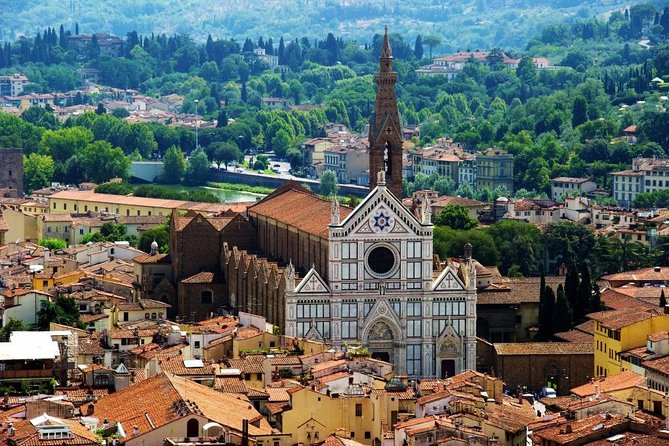
After the interior highlights, you’ll see the exterior polychrome marble façade described as a feature you can appreciate once the inside context is in your head. Then the route shifts toward the bell tower area, the crypt, and the 16 chapels, which your guide tours around as part of the main loop.
Here’s how I’d think about this if you’re deciding whether an hour is enough. You’re not getting a slow, sit-down museum experience. You’re getting a guided, efficient sweep that helps you understand how the whole complex works as one artistic and spiritual system. Since you get to return to anything you want after the tour ends, you can treat this as the “get oriented and pick your favorites” stage.
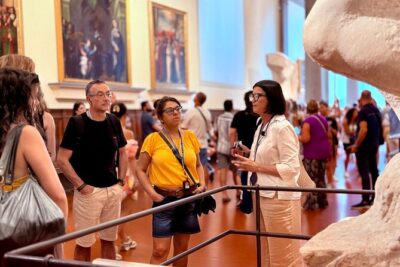
Also, small groups help. The tour has a maximum of 20 travelers, which means you’re less likely to be a human traffic jam and more likely to hear questions answered if you have one.
Radio System and Certified Guide: Practical Value in Real Terms
If you’re wondering whether the guide is worth it for a one-hour visit, look at what’s included. You get an official certified guide, entrance tickets with reservations, and a radio system so you can hear clearly.
In a church, sound can bounce off stone. Without the radio, you often end up straining or just guessing at what the guide is pointing out. With the radio system, you can track the explanations and keep your eyes on the exact artworks and tombs the guide is referencing.
That practical hearing piece is one of the most praised parts of this experience in the feedback style people wrote. You’ll see comments praising guides for staying helpful, explaining significance clearly, and making the experience feel like more than a quick walk through rooms.
Guide names that stood out in previous groups included Chiara Conti, Raphael, Elena, Matteo, Marcello, Sarah, Guido, Jenny, and Hilary. I cannot guarantee you’ll get any particular person, but it’s a sign that the operator tends to match guests with guides who take the job seriously.
One note to keep expectations real: a small number of experiences mention that language clarity can be an issue for certain guides. The radio system helps, but if you rely heavily on spoken detail, do arrive early, get comfortable with the headset fit, and ask questions when you can.
Dress Code and Timing: The Two Things That Can Derail You
This is the part you should take seriously. There is a dress code required to enter places of worship and selected museums. No shorts and no sleeveless tops are allowed, and knees and shoulders must be covered for both men and women. If you don’t meet the rule, entry can be refused, and you won’t get rescheduled or refunded.
So, pack smart. If you’re visiting in summer and you’re tempted to wear light clothing, bring a thin layer you can throw on quickly. Scarves and light shawls can solve shoulders, but you still need knees covered.
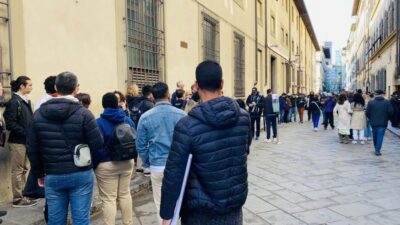
Timing matters too. If you arrive after the tour start time, you cannot join, and you will not be refunded or rescheduled. That’s not a “maybe,” it’s a hard rule. The best move is simple: build in extra time to reach the meeting point in the square.
Also, the tour runs in all weather conditions. Florence weather can change quickly, so bring a light rain layer or umbrella you’re comfortable carrying in a crowded church.
Price and Value: Paying for Context, Not Just Tickets
At $58.05 per person for about one hour, it isn’t the cheapest thing you’ll do in Florence. But here’s how I’d judge the value without overthinking it.
You’re paying for:
- an official certified guide,
- reserved tickets so you don’t waste time,
- and a radio system so you can actually follow what’s being pointed out.
You’re also getting a structured route that includes Santa Croce Square, the interior, crypt, cemetery, bell tower area, and the 16 chapels. That’s a lot of ground in a short window.
If you have the energy to explore solo, you might still enjoy Santa Croce. But the cost is easier to justify when you realize this place has layers you can miss: fresco cycles, specific chapels, the significance of tomb placement, and the flood restoration story. A guide helps you see the meaning, not only the images.
In short, you’re buying time and clarity. For many first-time Florence visitors, that’s exactly what you want.
Should You Book This Santa Croce Tour?
I’d book it if you want a guided, efficient way to get the most out of one of Florence’s most important church complexes, and you care about understanding what you’re seeing. It’s also a good fit if you’re visiting with mixed interests, because the route covers art, famous burials, architecture, and a real historical event from the 1966 flood.
Skip it only if you already know Santa Croce well and you prefer a slow, self-paced wander where you can spend long minutes in one chapel without following a set loop. Also reconsider if your clothing doesn’t meet the dress code and you don’t have a plan to cover up.
If you do book, show up with covered knees and shoulders, arrive a little early, and use the hour to get oriented. Then, when the tour ends, return to the spots that tugged at you most, now that you know what each one is telling you.
FAQ
How long is the Basilica Santa Croce walking tour?
The tour is approximately 1 hour.
Is the ticket price only for the church, or does it include a guide?
The price includes an official certified guide, a radio system, and entrance tickets with reservations.
What language is the tour offered in?
The tour is offered in English.
Where does the tour start and end?
It starts at the Monument to Dante Alighieri in Piazza di Santa Croce and ends back at the same meeting point.
What is the dress code?
You must cover your knees and shoulders. No shorts or sleeveless tops are allowed, and you may risk refused entry if you do not comply.
Does the tour run in bad weather?
Yes, it operates in all weather conditions, so dress appropriately.
What parts of Santa Croce does the tour cover?
You’ll see Santa Croce Square, the basilica interior, the crypt, the cemetery, the bell tower area, and the 16 chapels.
How big is the group?
The tour has a maximum of 20 travelers.
Is there a minimum number of guests?
Yes. The tour requires a minimum of two guests to run, and if it does not meet the requirement you’ll be offered an alternative or a full refund.
Florence at walking speed

Every Florence review, in one place
- Tuscany Day Trip from Florence: Siena, San Gimignano, Pisa and Lunch at a Winery
★ 5.0 · 21,634 reviews - The Best tour in Florence: Renaissance & Medici Tales – guided by a STORYTELLER
★ 5.0 · 12,316 reviews


Art still in Florence’s churches


Florence picks that sit just beyond this itinerary
- Florence: Duomo Complex Private Guided Tour & Optional Dome Climb
★ 5.0 · 4 reviews - Private Tour of Florence Cathedral, Bell Tower & Baptistery
★ 5.0 · 4 reviews - Michelangelo’s David Tour in the Accademia (Tickets NOT included)
★ 4.0 · 4 reviews - Exclusive Pisa Tour from Florence: With Skip-the-Line Access
★ 4.0 · 4 reviews - Full-Day Tour of Tuscany from Florence-small group up 8 pax
★ 4.5 · 4 reviews - Florence: Inferno Private Walking Tour
★ 5.0 · 4 reviews
More Florence Churches & Chapels worth comparing.
 ★ 4.3Santa Maria Novella Entry Ticket & AudioguideFrom $18717 reviews
 ★ 4.81.5-hour Santa Croce Guided ExperienceFrom $42254 reviews
 ★ 4.8Medici Chapels Guided TourFrom $50217 reviews
 ★ 4.8Santa Croce Church Tour with Entry TicketFrom $54179 reviews
 ★ 5.0MEDICI CHAPELS Private Tour in FlorenceFrom $135119 reviews
 ★ 3.5Skip the Line: Santa Croce Basilica Entrance Ticket in FlorenceFrom $2194 reviews
 ★ 3.5Skip the Line: Medici Chapels Ticket in FlorenceFrom $2258 reviews
 ★ 5.0Express Florence – Medici Chapel & Highlights Walking TourFrom $5832 reviews
Find this experience in another shortlist