
Florence field review · MUSEUMS
Private Florence San Marco Museum Tour with Skip-the-Line Entry
San Marco rewards a calm start. This private tour gets you into Florence’s Dominican convent museum fast, using skip-the-line admission, then takes you room by room through some of the city’s most moving Renaissance art. You’ll meet at Piazza San Marco, admire the convent exterior, and learn how the site is still connected to Dominican life.
What I like most is the way the guide ties the buildings to the art. The route moves through cloister, refectories, and monks’ cells, with clear attention to Fra Angelico and other Dominican artists, so you are not just looking at paintings, you understand what they were for. The only drawback to plan for is the tight 2-hour window, which means you may want to save any extra wandering for before or after the tour rather than expect endless time inside.
Key Things I’d Plan For
- Skip-the-line entry with a pre-booked ticket so you can bypass the main entrance queues.
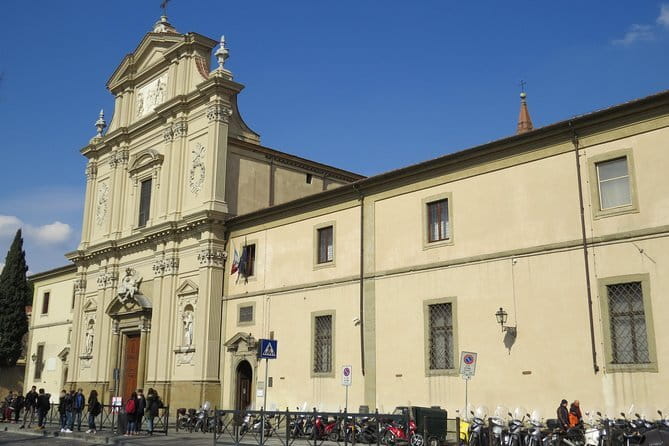
- A Michelozzo-designed Dominican convent commissioned by Cosimo I de’ Medici in the 1400s, still used by monks.
- The cloister, frescoed doorways, and key refectories that set up the main fresco experience.
- Beato Angelico’s monks’ cell fresco cycle, plus the cell associated with Girolamo Savonarola.
- A short exterior extension to Piazza San Marco and Piazza della Santissima Annunziata, near Spedale degli Innocenti.
Private Florence options for a day with fewer compromises
- Cinque Terre and Pisa Tower Tour from Florence Semi Private★ 5.0 · 1,406 reviews
- From Florence: Private Chianti Hills Tour with Tasting★ 4.3 · 809 reviews
- Private Self-Guided E-Bike Ride in Tuscany with Vineyard Visit★ 5.0 · 775 reviews
- Florence Private Transportation in Rickshaw★ 5.0 · 730 reviews
San Marco Is Not a Typical Museum Stop
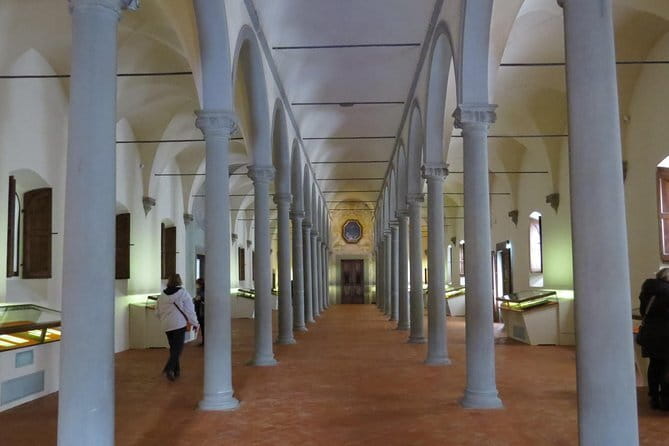
San Marco is Florence, but it feels quieter than most big-ticket museum visits. The reason is simple: you’re touring a 15th-century Dominican convent that was designed to function like a living religious site. That changes how the art lands. The frescoes are not “detached masterpieces,” they are part of daily rhythm and shared spiritual work.
The guide frames the convent’s big-picture story, starting outside and then moving inside with the architecture in mind. The convent was commissioned by Cosimo I de’ Medici in the 1400s, with the work entrusted to Michelozzo, one of the key names of Renaissance architecture. Even if you are not an architecture person, it helps to know you are walking through a building that was made with purpose, not just display.
And yes, you’ll still see the site’s ongoing connection to Dominican monks. That detail matters because it explains why the experience feels focused, not crowded or commercial.
Skip-the-Line Entry and the 9:00 Start
This tour runs about 2 hours and starts at 9:00 am, which is a smart timing choice if you hate fighting lines. The skip-the-line part is built around the San Marco Museum’s main entrance, and your pre-booked ticket is used to bypass that bottleneck.
You also get the advantage of a private format, meaning it is only your group. Private does not just mean less noise, it usually means the guide can adjust pace when you lean in to ask questions. If you want a visit that is more conversation than lecture, this format supports that.
There is one more practical perk: you’ll have earphones if your group is bigger than 7. That suggests you will still hear the guide clearly without everyone craning their neck. It’s a small thing, but it makes the flow easier inside rooms where voices carry.
Meeting at Piazza San Marco, Then Getting Oriented Fast
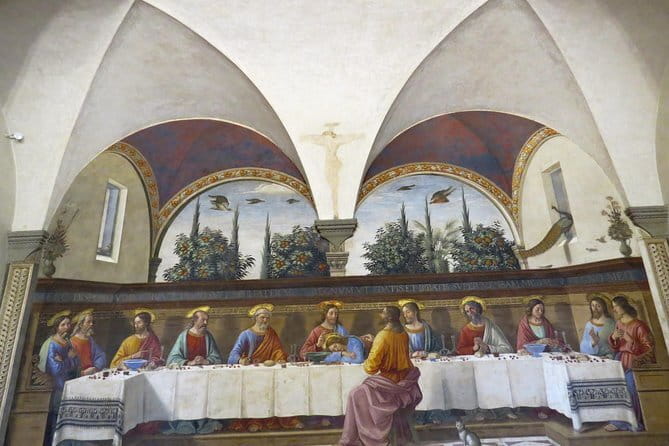
Your meet point is right at the Museo di San Marco, Piazza San Marco 3, Florence. Starting here is useful because you can orient yourself quickly before you ever step into the museum spaces.
From the outside, the guide highlights why the convent is considered one of Florence’s architectural gems. That quick context pays off later when you see how the spaces connect. You’ll also learn that the convent was commissioned in the 1400s, with the architecture work associated with Michelozzo, so the building has a Renaissance backbone from the start.
If you like historical context delivered as you look at the actual site, this opening works well. You do not have to imagine what you’re seeing, the guide gives you a map in words before the building does the rest.
Cloister of St. Anthony and Fresco-Painted Doorways
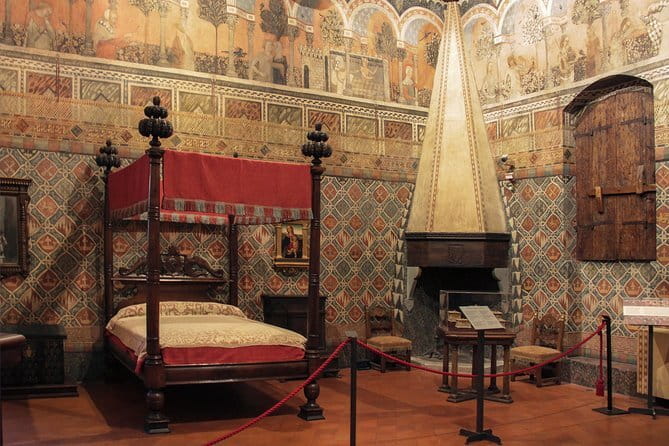
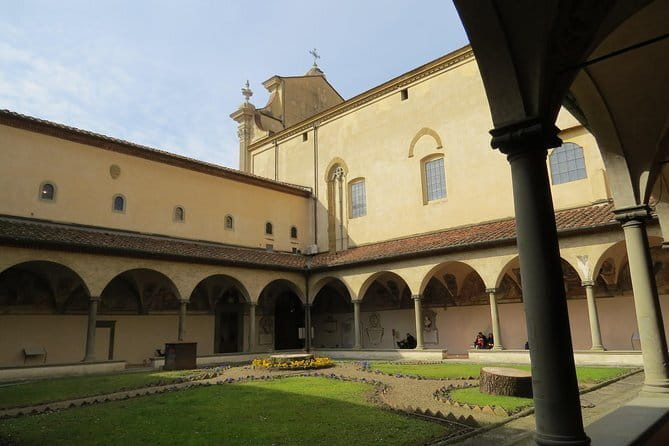
The visit begins in the Cloister of St. Anthony, which sets the tone immediately. This is not just a pretty courtyard moment. You’re meant to notice the fresco-painted lunettes and the doors that lead deeper into the museum halls.
Then you move along those pathways that were designed to guide movement through convent spaces. Doors, thresholds, and corridors matter here. If you pay attention, the painting program starts to feel like a coordinated plan rather than a random collection of artworks.
This is a great place to ask early questions, too. If you want to know what you should look for later, this start is the moment to get that guidance before the museum piles on visual details.
Great Refectory and Fra Bartolomeo’s Works
Next comes the Great Refectory, and the focus turns toward Dominican art beyond Fra Angelico. You’ll see works by Fra Bartolomeo, another important Dominican monk and artist of the early 1500s.
The refectory is a key room because it connects art to communal life. Food is part of the daily cycle, and the refectory is where that cycle played out. Seeing paintings here makes you think about what kind of setting the artworks were meant to live with.
A possible downside of any convent-museum experience is that your attention can splinter across rooms. The guide’s job is to keep you pointed at what matters, and the way this tour is structured helps. You get the right room next, with the right reason for seeing it.
More Florence museums with the visit format already compared
Small Refectory and Ghirlandaio’s Last Supper Fresco
Then the tour highlights the Small Refectory with a standout work: the fresco of the Last Supper by Domenico Ghirlandaio.
This is where the visit tightens. You’re moving from larger communal spaces into a smaller setting, which changes both acoustics and your viewing angle. If you’ve ever felt that big museums encourage speed, this shift works against that. It asks for slower looking.
It also gives you a useful comparison point. You can reflect on how different artists handled religious themes inside different convent rooms. That comparison makes your notes feel personal instead of generic.
Upstairs in the Monks’ Cells, Where Fra Angelico Takes Over
The museum’s big moment is upstairs in the monks’ cells, and this is the stop people remember. You’ll admire the showpiece fresco program created by Beato Angelico for his fellow monks.
This is where the title of the museum becomes more than branding. You’re seeing how Fra Angelico’s art was built for life in enclosed spaces, not for mass viewing with a crowd. In these rooms, the frescoes have a devotional scale and a quiet intensity.
If you care about technique, you’ll likely notice how the frescoes are meant to be seen close and repeatedly. If you care about story, you’ll likely feel the guide’s emphasis on the intended audience. Either way, it tends to click.
One review theme that really matters for your expectations: the best visits are the ones where the guide explains the art in a way that makes you see the everyday life behind it. That focus on conditions and context is especially important in the cells, because the space is small and the art has a lot to say without being flashy.
Savonarola’s Cell and the 1498 Execution Story
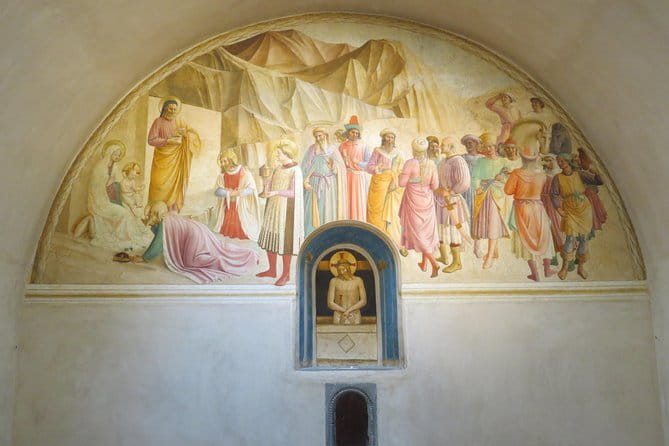
After the main fresco cycle, you’ll visit the cell once used by Girolamo Savonarola, the Dominican friar described as a Renaissance firebrand. The tour connects his story directly to the site and includes the detail that he was burnt at the stake in Piazza della Signoria in 1498.
This part of the visit can change how you read the artwork you just saw. Without turning it into a history lecture, it gives you the human stakes behind religious art and political tension. You start thinking about the convent as a place where ideas mattered, not just a quiet backdrop.
If you want a practical tip: let yourself sit with the story for a minute. Even if you know the name already, the convent setting helps it feel less like a textbook fact and more like a lived conflict.
Convent Library and Medici Manuscripts
The tour ends at a library space connected to the Medici family, described as home to priceless manuscripts. This is a good closing note because it expands the meaning of the convent beyond painting. It reminds you this was also a place for study, copying, and preservation.
The library part is a chance to shift from wall frescoes to the idea of knowledge housed in the same environment. You might find yourself looking at the setting differently after you’ve just experienced the cells.
If you are a manuscript-history fan, you’ll probably leave wanting more. But the 2-hour structure keeps the visit tight, so you are not stuck with information overload.
Piazza San Marco and Santissima Annunziata in About 15 Minutes
Before or after the core museum time, you get an exterior guided look around the squares. After the museum visit, the tour adds a short stop at Piazza San Marco and then nearby Piazza della Santissima Annunziata.
The tour points out the Santissima Annunziata church and Spedale degli Innocenti, described as Europe’s oldest orphanage. This 15-minute add-on is small, but it helps you connect San Marco to the broader neighborhood and to one of Florence’s major civic landmarks.
It’s a good option if you want a “museum plus” experience without committing to another long attraction. If you prefer only art inside, you might treat this outdoor segment as a pleasant orientation walk rather than a must-do sight.
Asking Smart Questions in a Small, Private Group
The tour is designed to let you go at your own pace and ask questions, which makes a difference in how much you absorb. In a place like San Marco, your enjoyment often depends on whether you know what to look for. A guide can steer your focus to fresco cycles, artists, and the reason each room matters.
Here are a few questions worth asking as you move through:
- Which parts of the fresco program were meant for the monks’ daily routines?
- How does Fra Angelico’s approach differ from what you see in the refectories?
- What did Savonarola’s presence mean for the convent community at that time?
- Where should I spend extra time if I return on my own later?
If your guide is Hilaria, note that she is specifically praised for explaining Fra Angelico and the convent with clarity, and for making the frescoes feel accessible rather than overwhelming. Even if you do not get Hilaria, the tour format clearly supports that style of explanation.
Price and Value: Is $175.80 Worth It?
At $175.80 per person, this is not a budget museum visit. The value comes from a few concrete elements rather than vague promises.
First, you get a local professional guide. That matters here because San Marco’s power is not just that the art is famous, it’s that the site is organized around religious living. The guide’s explanations help you translate spaces into meaning.
Second, the tour includes San Marco Museum skip-the-line tickets. In Florence, timing is everything. Saving time at the main entrance can turn a stressful morning into a calm one.
Third, the private setup is part of the pricing logic. You are paying for less friction, more direct conversation, and a pace that works for your group.
What to watch for: if you are the kind of traveler who wants a long independent, self-guided museum day, you might feel constrained by the roughly 2-hour duration. In that case, you might prefer a self-guided pass plus extra time in the library and the square after.
Who Should Book This San Marco Tour?
This tour is a great fit if you:
- Love art that’s tied to place, especially frescoes in their original rooms.
- Want a clear explanation of Dominican artists like Beato Angelico, Fra Bartolomeo, and Domenico Ghirlandaio.
- Are interested in Savonarola and the bigger Florence story around 1498.
- Prefer a calmer morning experience, since the schedule naturally supports it.
It may be less ideal if you:
- Need a long, slow museum stay with lots of independent wandering.
- Want only outdoor views or only one artist, without moving through multiple key rooms.
The good news is the tour notes that most travelers can participate, so it is not framed as overly specialized. It’s designed for a wide mix of visitors, from casual art admirers to people who want deeper context.
Should You Book This San Marco Museum Tour?
If you care about getting the most out of San Marco in a short, well-paced morning, I think this is an easy yes. The combination of private guiding, skip-the-line entry, and a route that hits the cloister, refectories, monks’ cells, Savonarola’s cell, and the library makes it hard to replicate on your own without either rushing or spending extra time figuring out what to focus on.
The only real reason to hesitate is time. If you want hours and hours inside the convent spaces, this 2-hour format may feel too structured. But if you want a high-value Florence morning that turns a famous site into a legible, meaningful experience, book it.
FAQ
How long is the Private Florence San Marco Museum Tour?
It lasts about 2 hours (approximately).
Where do I meet the guide?
The meeting point is Museo di San Marco, Piazza San Marco 3, 50121 Firenze FI, Italy.
Does the tour include skip-the-line entry?
Yes. Your tour includes San Marco Museum skip-the-line tickets.
What is included in the price?
Included are a local professional guide, skip-the-line tickets for the San Marco Museum, and earphones if your group has more than 7 participants.
Is this a private tour?
Yes. It is private, meaning only your group will participate.
Can I change or get a refund if my plans change?
No. This experience is non-refundable and cannot be changed for any reason.
Florence with the day to yourself


More Florence tours to open next
- The Best tour in Florence: Renaissance & Medici Tales – guided by a STORYTELLER
★ 5.0 · 12,316 reviews

Every Florence review, in one place
- Tuscany Day Trip from Florence: Siena, San Gimignano, Pisa and Lunch at a Winery
★ 5.0 · 21,634 reviews - The Best tour in Florence: Renaissance & Medici Tales – guided by a STORYTELLER
★ 5.0 · 12,316 reviews

Florence picks that sit just beyond this itinerary
- Florence: Duomo Complex Private Guided Tour & Optional Dome Climb
★ 5.0 · 4 reviews - Private Tour of Florence Cathedral, Bell Tower & Baptistery
★ 5.0 · 4 reviews - Michelangelo’s David Tour in the Accademia (Tickets NOT included)
★ 4.0 · 4 reviews - Exclusive Pisa Tour from Florence: With Skip-the-Line Access
★ 4.0 · 4 reviews - Full-Day Tour of Tuscany from Florence-small group up 8 pax
★ 4.5 · 4 reviews - Florence: Inferno Private Walking Tour
★ 5.0 · 4 reviews
More Museums worth comparing.
 ★ 4.5Skip-The-Line Uffizi Gallery Timed Entry TicketFrom $3027,832 reviews
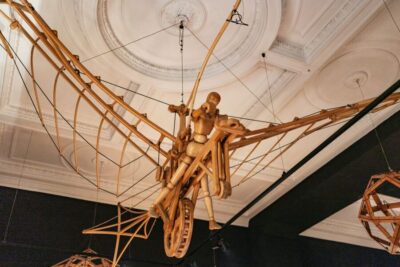 ★ 4.5Leonardo Interactive Museum Entry TicketFrom $911,763 reviews
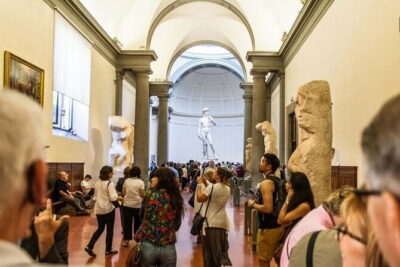 ★ 4.5Florence Accademia Gallery Tour with Entrance Ticket IncludedFrom $456,148 reviews
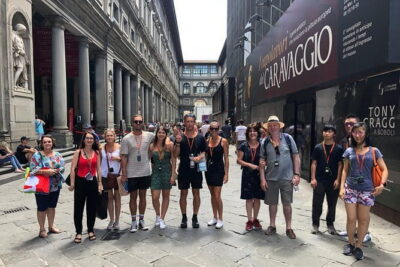 ★ 4.5Uffizi Gallery Small Group Tour with GuideFrom $764,923 reviews
Accademia Gallery Guided TourFrom $534,156 reviews
★ 4.5Uffizi Gallery Small Group Tour with GuideFrom $764,923 reviews
Accademia Gallery Guided TourFrom $534,156 reviews
 ★ 4.6Accademia Gallery Guided Tour with Entry TicketFrom $492,253 reviews
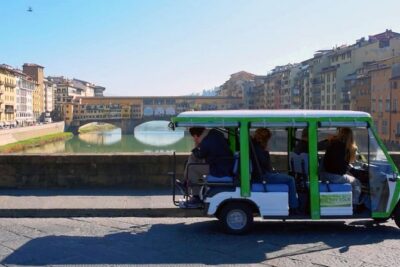 ★ 4.5Golf Cart Tour to Fiesole Roman Theatre and MuseumFrom $952,039 reviews
 ★ 4.8Uffizi Gallery and Accademia Gallery Guided TourFrom $1402,028 reviews
Find this experience in another shortlist