
Florence field review · HISTORICAL TOURS
3-Hour Historic WhoDunIt Tour in Florence
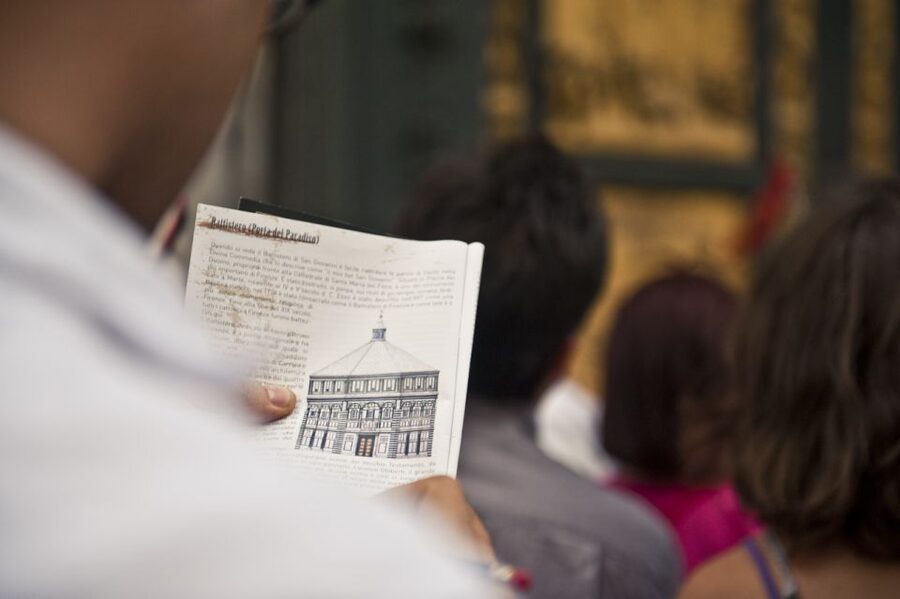
Florence has a murder to solve. This 3-hour historic WhoDunIt is a self-guided walk where you use a booklet of clues to figure out who did it in Renaissance-era Florence. For $27, you get the game materials and the city becomes your evidence board.
I like two things right away. First, the clues are designed so you can find the answers by looking around, without needing attraction tickets. Second, the small-group format (limited to 10) plus the winner gift makes it feel like a real competition, not just a casual stroll.
One drawback to consider is value. Because there is no guide included, you are on your own with the booklet, and some people felt the route could feel repetitive and the price too high for what is essentially a paper tour.
Key highlights and what matters most

- A Renaissance murder plot you solve by following clue checkpoints on foot
- Answers you can get from street-level observations, not attraction entry tickets
- A winner gift that adds momentum to the walk
- Small group size, capped at 10 participants
- A route that can feel like lots of walking between sights
- Duration listed as 3 hours, but it can run long if you go slowly
Keep the Florentine shortlist moving
- Tipsy Tour: Guided Bar Crawl In Florence with Dark History★ 5.0 · 271 reviews
- Florence Cooking Course with Historic Local Market Visit★ 4.5 · 151 reviews
- Florence: Medici Family History Tour★ 4.3 · 93 reviews
- Historical Guided Tour of Florence’s Iconic Cathedral★ 3.5 · 88 reviews
A Renaissance murder plot you solve as you walk
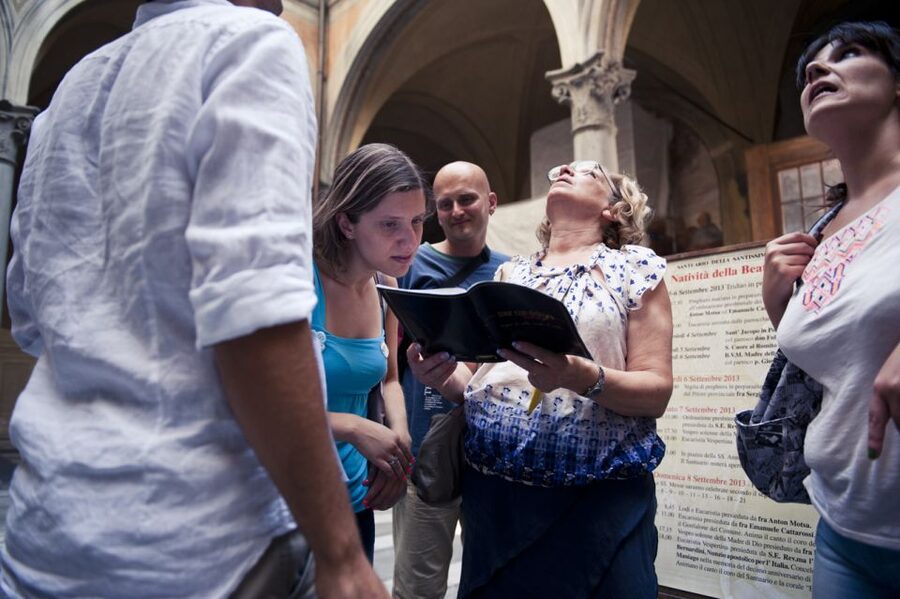
This is not a lecture tour. It is a citywide game where Florence is the setting, and your job is to act like a detective. You’ll use the booklet to work through clues, then choose the most likely suspect from the options provided.
The whole idea is clever because you don’t just look at famous Florence, you search for details. You’ll be reading, counting, comparing, and paying attention to how art and architecture tell stories. If you enjoy “wait, look closer” moments, you’ll likely have fun.
Also, you can keep the vibe playful. A magnifying glass and deerstalker hat are optional, but they match the spirit of the activity. This is one of those tours where you can treat it like a game without needing to be an art expert.
Price and value for a self-guided 3-hour game
At $27 per person, you’re paying for a short, structured experience: the booklet plus the chance to win a gift. What you are not paying for is a guide walking alongside you to interpret every stop.
That’s the key value question. If you want someone to guide your eyes, explain context, and manage timing, this may feel thin because it is self-guided. On the other hand, if you like figuring things out yourself and you’re already comfortable exploring on foot, the price can feel more reasonable, especially because you do not need attraction tickets to answer at least part of the clues.
The feedback you’ll see online is split. Some people say it is overpriced for a paper-based route, while others say the answers are findable and the format works. I’d treat it as an activity you buy for the game experience, not for a high-touch, guided tour feel.
Start point at Piazza Madonna degli Aldobrandini 8, 2nd floor

The meeting point is specific: 2nd floor, Piazza Madonna degli Aldobrandini 8. Plan to arrive a few minutes early so you can get oriented before the game starts.
Because this is self-guided, your timing matters. You’ll want to start with a clear understanding of what you have in your hands. Once you begin, you should keep the booklet open and ready, because the whole format depends on spotting the evidence tied to each question.
Small-group size also matters here. With a maximum of 10 participants, you are less likely to have a crowded start where people are constantly catching up or blocking sightlines. You’ll still be walking with others, but it should feel more manageable than big bus-tour energy.
How the clues work, and where the evidence actually is
This is a “follow the clues” experience delivered through a game booklet. You investigate by moving through the historic center and answering questions tied to what you see. Your payoff is the final conclusion, when you match the clues to a suspect list.
Here’s what I think makes the format work well: the questions are tied to visible details. One key point from the feedback is that you can find answers without buying tickets to attractions. That means your detective work is largely street-level, based on what you can observe in front of you.
Your job is also not just to glance. You’ll need close looking. Some clues are the kind where you count elements, compare features, or identify repeating motifs. That shifts the walk from passive sightseeing into active searching, and that is the whole point of the tour.
Two practical tips if you want better results:
- Take a slow moment before answering each question. If you rush, you’ll miss the detail the booklet is asking for.
- If you get stuck, re-check the physical landmark or area the clue references. A lot of self-guided mystery frustration comes from being one step off the exact spot.
Florence art-detail clues, including the Loggia dei Lanzi example
One clue example stands out from the experience descriptions: you might be asked questions like how many female statues are present at the Loggia dei Lanzi. That tells you a lot about the style of the game.
This is not a mystery solved with hidden references on museum placards. It leans on what you can see directly, especially sculpture and architectural ornament. If you enjoy art at human speed, this kind of clue structure feels satisfying because your attention turns into a tool.
It also explains why some people feel it can turn repetitive. If you dislike counting and answering questions, you may find yourself walking to familiar-looking vantage points just to complete an assignment. But if you do like puzzles, the “mission” tone makes you notice corners and details you’d otherwise skip.
I also like that this approach can work even if you’ve visited some major sights before. The game can still be useful because you’re not just looking for the big postcard view. You’re searching for specific evidence tied to the story.
Keep the Florentine shortlist moving


Timing reality: when 3 hours becomes more
The tour is listed at 3 hours, and that’s a good starting estimate. But you should mentally budget for extra time.
The feedback includes two patterns. One is that the activity can last longer than 3 hours if you are not simply checking the booklet off quickly. Another is that it helps to plan for breaks like lunch or snacks, which naturally stretch the timeframe.
So here’s my advice: treat 3 hours as the minimum “game time,” not the end of your day. Wear comfortable walking shoes, bring water, and expect to pause more than you would on a standard quick walking route.
If you’re the type who likes to complete things at a sprint pace, you might be fine with the listed duration. If you prefer a slower sightseeing rhythm, plan for a longer outing and you’ll avoid feeling rushed.
The self-guided experience: fun for puzzle lovers, less ideal for context seekers
Because there is no guide included, you’re responsible for your own interpretation. That can be a win or a miss depending on what you want from Florence.
If you want a playful detective mission with flexible pacing, the lack of a guide can be freeing. You can linger where you need to, re-check a clue, and decide when to move on. The game structure gives you a reason to slow down.
If you want deeper historical explanation, this may frustrate you. The booklet and the questions drive the experience, but the activity is not positioned as a narrated history tour. You might finish with the satisfaction of solving the mystery, but less of the background you get from a guided format.
This is also where the value discussion matters again. Since you are not paying for guiding commentary, you’re paying for the game itself, plus the winner gift. If you’re expecting a guided tour quality experience, you may feel you paid for the wrong thing.
Who should book this WhoDunIt tour (and who should skip)
I’d steer puzzle-driven people toward this. It fits especially well if you like:
- solving riddles or logic-style questions while you walk
- looking closely at sculpture and details
- exploring at your own tempo
It’s also worth considering if you already know Florence basics. The game can turn familiar areas into something new because you’re hunting for specific evidence rather than just collecting views.
Who might skip it? If you mainly want a teacher who explains everything, you’ll likely prefer a guided walk. And if you hate repetition in walking routes, you might find the experience frustrating, especially if you expect a tight, efficient loop.
Also, if you’re traveling with kids, the concept can land really well. One note from the feedback describes it as especially engaging for children, and that’s logical. The mystery format gives them a role and turns sightseeing into play.
Provider reality check and practical tips for having a smooth game
This activity is run by ACCORD Italy Smart Tours. With a setup like this, your success depends on how you manage the booklet, not on hoping for quick fixes.
Here’s what I’d do to maximize your odds and minimize stress:
- Start with clear expectations. This is self-guided clue-solving, not a museum docents tour.
- Keep your eyes up and your booklet down. Use the clue to point your attention to what you’re seeing, then actually look.
- If you miss a detail, don’t panic. Back up a minute and re-check the exact landmark area tied to the question.
- Bring water and a little patience. Florence walking games can stretch beyond what you plan, especially if you stop for snacks or longer looks.
And if winning matters to you, play seriously. The prize is a gift for the winner, so there is a built-in reason to take your evidence seriously and not guess wildly at the end.
Should you book the 3-Hour Historic WhoDunIt Tour in Florence?
Book it if you want a short detective-style walking game, and you’re happy to work from a booklet instead of relying on a guide. I think it’s a good value when you treat the $27 as payment for the mystery format: clue hunting, walking between evidence points, and the winner gift.
Skip it if you want a guided interpretation-heavy tour, or if you know you’ll get annoyed by counting questions and possibly repetitive movement around central sights. In that case, you’ll probably feel the price is too high for what is essentially paper-and-pace sightseeing.
If you’re deciding last-minute, use this rule of thumb: if you’d enjoy solving a puzzle in the open air, you’ll likely have fun. If you’d rather hear the story than search for it, choose a standard guided Florence walk instead.
FAQ
How long is the 3-Hour Historic WhoDunIt Tour in Florence?
It lasts 3 hours.
Is there a guide included with the tour?
No. The activity is self-guided, and a guide is not included.
What is included in the price?
You get a game booklet and a gift for the winner.
Where is the meeting point?
You meet at 2nd floor, Piazza Madonna degli Aldobrandini 8.
Is the tour wheelchair accessible?
Yes, the activity is listed as wheelchair accessible.
How large is the group?
It is limited to 10 participants.
Can I cancel for a full refund?
Yes. You can cancel up to 24 hours in advance for a full refund.
More Historical Tours in Florence





More Florence tours to open next
- The Best tour in Florence: Renaissance & Medici Tales – guided by a STORYTELLER
★ 5.0 · 12,316 reviews



Every Florence review, in one place
- Tuscany Day Trip from Florence: Siena, San Gimignano, Pisa and Lunch at a Winery
★ 5.0 · 21,634 reviews - The Best tour in Florence: Renaissance & Medici Tales – guided by a STORYTELLER
★ 5.0 · 12,316 reviews




Florence picks that sit just beyond this itinerary
- One Hour Uffizi Guided Tour: Masterpieces of the Renaissance
★ 5.0 · 3 reviews - Sightseeing Tuscany by touring bike – 1 day rental
★ 5.0 · 3 reviews - Private Siena, S. Gimignano, Chianti Road and Wine Tasting
★ 5.0 · 3 reviews - Bargello Museum Private Tour: Michelangelo’s Bacchus & Donatello’s David
★ 5.0 · 3 reviews - Authentic Florence Cooking Class at Costanza’s 1839 Family Estate
★ 5.0 · 3 reviews - San Gimignano and Volterra private tour: etruscans, romans and middle age jewels
★ 5.0 · 3 reviews
More Historical Tours worth comparing.
 ★ 5.0Tipsy Tour: Guided Bar Crawl In Florence with Dark HistoryFrom $78271 reviews
 ★ 4.5Florence Cooking Course with Historic Local Market VisitFrom $95151 reviews
 ★ 4.3Medici Family History TourFrom $13793 reviews
 ★ 3.5Historical Guided Tour of Florence’s Iconic CathedralFrom $1088 reviews
 ★ 4.2Fashion History Guided Walking Tour & Museum VisitFrom $9072 reviews
 ★ 5.0The History of Florence: The Renaissance Era Private TourFrom $19849 reviews
 ★ 4.5Pitti Palace and Palatine Gallery: A Royal Art and History TourFrom $9342 reviews
 ★ 4.5Private Tour of the Historic Center of Florence by Golf CarFrom $6640 reviews
Find this experience in another shortlist