
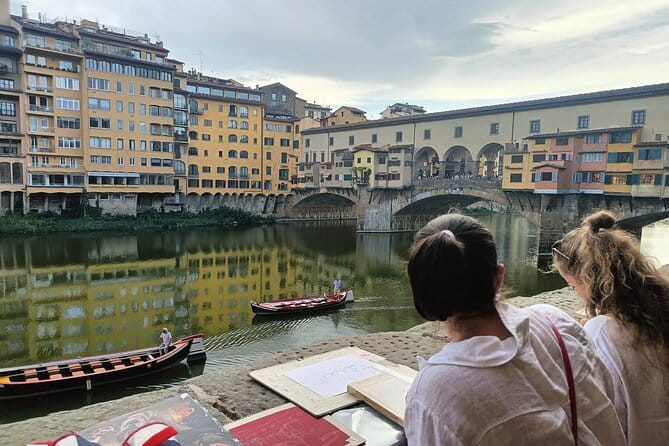
Florence field review · WORKSHOPS
Urban Drawing Workshop in Florence
Florence begs to be drawn, not just photographed. This urban sketch workshop turns the city’s architecture into a real, finishable artwork you can take home. I love the way it mixes Renaissance drawing basics with modern illustration, so even beginners can make progress fast.
The class is led by an architect-illustrator, and Francesca comes up again and again as patient, clear, and especially helpful with tough perspective ideas. One drawback to consider is that, in the past, there have been reports of the instructor not showing up at the meeting point, so it pays to arrive early and keep your booking contact handy.
Key things to know before you start drawing in Florence
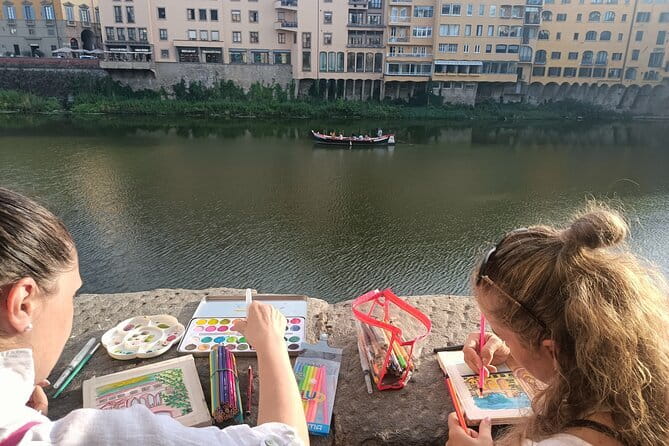
- Small group size (max 6) means you get hands-on guidance instead of vague tips.
- Two main sketch stops focus your time, Florence Historic Center and Ponte Vecchio.
- You start with a proper city sketch that includes a Florentine icon or a standout view, then build it into a finished illustration.
- The instructor teaches simple architecture drawing rules for depth and dimension, not just copying what you see.
- Art supplies are included, so you can travel light and start right away.
- The workshop runs about 2 hours of making after you get set up and learn the basics.
Keep the Florentine shortlist moving
- Florence: Pasta Cooking Class with Unlimited Wine★ 4.9 · 10,285 reviews
- Florence Pizza or Pasta Class with Gelato Making at a Tuscan Farm★ 5.0 · 6,801 reviews
- Florence: Pasta & Tiramisu Cooking Class with Unlimited Wine★ 4.9 · 6,708 reviews
- Florence: Pasta Cooking Class with Unlimited Wine★ 5.0 · 6,413 reviews
Why sketching Florence in 2 hours 15 minutes makes sense
Florence can feel like information overload. You see domes, façades, bridges, and carvings everywhere, and your phone keeps winning. This workshop flips the order and gives you a concrete job: translate that visual chaos into a sketch with structure.
The best part is that it is not just artistic freedom with no plan. You get guidance on how to set up the drawing, then you apply mixed art techniques to turn it into something more polished. That practical flow is what makes it work for first-timers.
Where you meet (and how to not lose time)
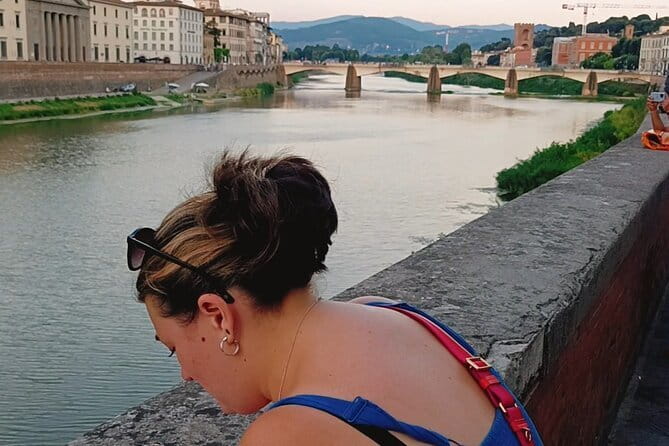
You meet at P. Signoria, 7, 50122 Firenze FI near public transportation. The experience ends back at the meeting point, so you are not building your own route mid-class.
With any walking-based drawing workshop, timing matters. I suggest you arrive 10 to 15 minutes early and be ready to start. Also, keep an eye on your confirmation details, because a small group moving quickly is normal once the instructor is ready.
What the workshop covers, from city icons to finished illustrations
The day plan is straightforward. You begin by making a sketch of the city that includes one famous Florentine icon or a striking view angle, then you create an artwork from it using mixed techniques.
The instructor works as both a teacher and a guide to the drawing process. You get basic rules of drawing architecture so your lines and shapes hold up in proper perspective. Instead of copying randomly, you learn how to organize your drawing so depth and proportion feel right.
They also keep the experience flexible for different skill levels. If you are a beginner, you get construction guidance. If you already draw, you practice illustration by capturing a different angle of Florence rather than doing the same postcard scene again.
Stop 1: Florence Historic Center for “real” architecture lines
The first stop is in the Florence Historic Center. This is where you get the visual foundation. The instructor steers you toward details that are hard to notice with a camera, like how façades stack, how edges line up, and how repeated shapes create rhythm across buildings.
What you learn here is not just artistic. It is visual literacy for how cities are built. You start to see the city as planes and angles, not flat walls. That is exactly what makes the next step easier.
A practical tip in this kind of class is to pick a focal area early. If you try to draw everything, your sketch will sprawl. When you choose one strong icon or a tight architecture section, the whole composition looks intentional by the time you add shading or texture.
Stop 2: Ponte Vecchio, where perspective becomes obvious
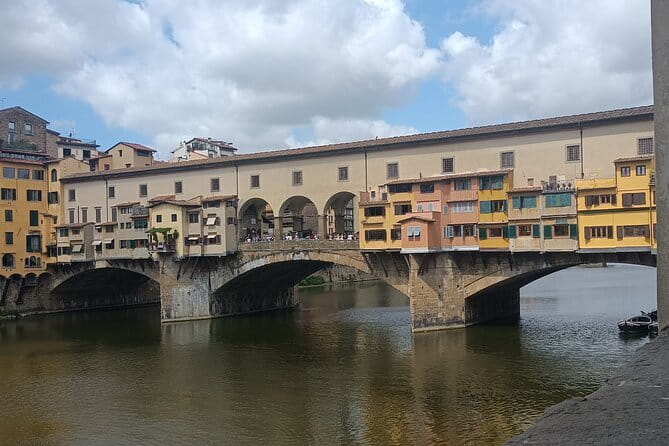
Then you move to Ponte Vecchio, Florence’s signature bridge scene. Bridges are a gift to a drawing class because they create natural perspective cues: repeating elements, lines that converge, and strong horizontal bands.
This stop is where your “dimensional proper way” training starts paying off. You are practicing how to place bridge elements so they do not float or flatten out. Even if you feel shaky with perspective, the instructor can guide the construction so your drawing looks grounded.
It is also a good place to practice illustration choices. You are not just getting an architectural sketch, you are aiming for a finished artwork. That means you can experiment with how you add mixed-media texture, and how you make the final drawing feel like a crafted image instead of a quick study.
The instructor’s method: Renaissance technique plus modern illustration
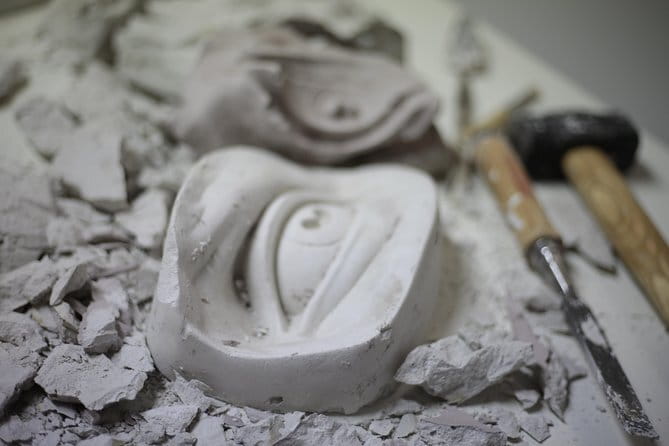
The workshop is built around Renaissance-inspired drawing principles, but it is not trapped in the past. The goal is to connect those classic technique habits to something you can use now, whether you are doing loose sketching or aiming for cleaner illustration.
From the class structure, you can expect a process like this:
- Start with a proper sketch plan using clear structure.
- Build toward your refined drawing, focusing on architecture rules.
- Apply mixed art techniques to finish the artwork.
The teaching style is one of the biggest reasons people like this workshop. The standout point in the feedback is how clearly the instructor explains difficult ideas, especially perspective. Beginners especially value that clarity because it turns a confusing subject into a series of manageable steps.
If you already have some drawing skills, you still benefit. The structure nudges you to improve how you start a drawing, which is often where the biggest errors happen.
Art supplies are included, but your effort is the real “ticket”

The workshop includes art supplies, so you do not need to guess what to bring. That is a big value point. When you show up with the right materials, you spend your energy on drawing, not on improvising.
Still, it helps to think like a working artist for 2 hours and change. You are going to refine your sketch, then produce an artwork from it. This is not a sit-and-watch class, and it is not just a souvenir photo moment.
Group size is tiny, and that changes everything
This is capped at 6 travelers, which keeps things personal. In a small group, an instructor can watch your sketch and correct the specific problem in your line placement or proportions.
That size also makes the workshop feel friendly if you want to meet like-minded people. You will see other students wrestle with the same architecture challenges, and it is encouraging when you realize you are not the only one who finds perspective tricky.
If you are traveling solo, a small group like this can be a comfortable way to join an activity without feeling surrounded by strangers.
Price and value for a Florence art workshop
At $30.04 per person, this sits in the budget-friendly zone for an activity that includes guided instruction and art supplies. You are paying for more than a walk and a view, because you get structured drawing help, plus a real output: a refined sketch and finished artwork.
The value depends on what you want. If you want a casual sketch with no teaching, you might find cheaper options. But if you want to learn the rules of architectural perspective and apply them during the session, the price is reasonable for what you get.
Also, two things boost value:
- You get 2 major sketch locations in one session.
- Your instructor is actively helping you build the drawing, not just giving a general lecture.
Timing and weather: the one practical risk to plan around
The workshop runs about 2 hours 15 minutes. That is tight enough to feel focused, but it is long enough to get beyond the first messy draft.
Weather matters. The experience requires good weather, and if it is canceled due to poor conditions, you are offered a different date or a full refund. Because Florence can shift quickly, it is smart to dress for changing conditions and stay flexible.
If weather forces a change, your best move is to rebook sooner rather than later. Drawing dates sell out quickly for popular slots, especially in a city where everyone wants art experiences.
Who this workshop is perfect for (and who should think twice)
This workshop is a strong fit if:
- You want practical instruction for drawing architecture and perspective.
- You are a beginner and want clear guidance, not vague “just draw what you see” advice.
- You like the idea of combining Renaissance-inspired structure with modern illustration techniques.
- You want a small-group activity that includes meeting other art-minded travelers.
It might be less ideal if:
- You hate walking or standing for a long sketch session. You will be working outdoors.
- You expect a private, one-on-one class. With a max of 6, instruction is supportive but shared.
- You need absolute certainty that the instructor will arrive on time every single time, because there have been past reports of no-show situations at the meeting point. I would treat this as a “show up early and be prepared” situation, not a “trust it blindly” plan.
Tips to get better fast during the class
If you want the best experience, come with the right attitude. This is about improvement in a short window, so you do not need to aim for perfection.
A few habits help:
- Pick a focal point early, then build out from it.
- Expect your first lines to change. That is how drawing gets real.
- Use the instructor’s perspective guidance as your starting rules, not suggestions to ignore.
- Think of the final artwork as a combination of your sketch plus your finishing choices, not just your first drawing.
And if you feel frustrated, that is normal. Perspective feels awkward at first. The good news is that the structure of this workshop is designed to get you past that rough stage.
Should you book this urban drawing workshop in Florence?
Yes, if you want a guided way to turn Florence into an actual artwork. The small group size, the inclusion of art supplies, and the focus on architectural perspective make this a high-value class for the time you spend.
I would book it if you like structured creativity, and especially if you are newer to drawing or feel stuck when buildings start looking wrong on paper. It is also a solid option if you have already hit the major sights and want a different way to experience the city.
Just do one smart thing: arrive early at P. Signoria, 7, double-check your contact details in your booking, and dress for good weather. With that, you should leave with a sketch you helped build, not just an activity stamp.
FAQ
How long is the urban drawing workshop in Florence?
It runs for about 2 hours 15 minutes.
Where does the workshop meet in Florence?
The meeting point is P. Signoria, 7, 50122 Firenze FI, Italy.
Is the workshop taught in English?
Yes. The experience is offered in English.
What is included in the price?
You get art supplies included. Food and beverages are not included.
How big is the group?
The workshop has a maximum of 6 travelers.
Is it suitable for beginners?
Yes. The workshop is designed so beginners can participate, and the instructor provides guidance. (It is also fine if you already draw.)
What happens if the weather is poor?
The experience requires good weather. If it is canceled due to poor weather, you will be offered a different date or a full refund.
More Workshops in Florence
- Cooking Class and Lunch at a Tuscan Farmhouse with Local Market Tour from Florence
★ 5.0 · 4,831 reviews



Every Florence review, in one place
- Tuscany Day Trip from Florence: Siena, San Gimignano, Pisa and Lunch at a Winery
★ 5.0 · 21,634 reviews - The Best tour in Florence: Renaissance & Medici Tales – guided by a STORYTELLER
★ 5.0 · 12,316 reviews
Florence picks that sit just beyond this itinerary
- One Hour Uffizi Guided Tour: Masterpieces of the Renaissance
★ 5.0 · 3 reviews - Sightseeing Tuscany by touring bike – 1 day rental
★ 5.0 · 3 reviews - Private Siena, S. Gimignano, Chianti Road and Wine Tasting
★ 5.0 · 3 reviews - Bargello Museum Private Tour: Michelangelo’s Bacchus & Donatello’s David
★ 5.0 · 3 reviews - Authentic Florence Cooking Class at Costanza’s 1839 Family Estate
★ 5.0 · 3 reviews - San Gimignano and Volterra private tour: etruscans, romans and middle age jewels
★ 5.0 · 3 reviews
More Workshops worth comparing.
 ★ 4.9Pasta Cooking Class with Unlimited WineFrom $2110,285 reviews
 ★ 5.0Florence Pizza or Pasta Class with Gelato Making at a Tuscan FarmFrom $1456,801 reviews
 ★ 4.9Pasta & Tiramisu Cooking Class with Unlimited WineFrom $566,708 reviews
★ 5.0Pasta Cooking Class with Unlimited Wine6,413 reviews
★ 4.9Pasta & Tiramisu Cooking Class with Unlimited WineFrom $566,708 reviews
★ 5.0Pasta Cooking Class with Unlimited Wine6,413 reviews
 ★ 5.0Cooking Class and Lunch at a Tuscan Farmhouse with Local Market Tour from FlorenceFrom $1454,831 reviews
 ★ 5.0Pastamania – Florence Pasta Making ClassFrom $493,050 reviews
 ★ 5.0Cooking Class Pasta & Tiramisu Making Unlimited WineFrom $892,234 reviews
 ★ 5.0Florence Cooking Class The Art of Making Gelato & Authentic PizzaFrom $642,053 reviews
Find this experience in another shortlist