
Florence field review · MEDICI FLORENCE & RENAISSANCE STORIES
The Medici family and the Renaissance with a local art historian
Florence makes more sense when power has a face. This 2-hour Medici and Renaissance walk uses storytelling to connect art, politics, and everyday symbols across the city. You start in the area of San Lorenzo, then work your way toward the Duomo, Piazza della Signoria, and Ponte Vecchio, with a guide who can explain why these places mattered.
I especially love the people-first approach, where the Renaissance feels driven by real choices, not just dates. I also like that the route is focused, so you get a lot of meaning without spending half a day on transit.
One possible drawback: it is a tight schedule, and some stops have admission not included, so if you want to go inside everything, you may need to plan extra time and ticket costs.
Key highlights you should know before you go
- Medici storytelling that ties art to real power in Florence
- A compact route in about two hours, capped at 15 people
- Building details you might miss on your own, from towers to iconography
- Guides like Deborah and Manuel Messina who keep history moving with narrative
- Stops planned as no-admission moments, like the Duomo viewpoint and Piazza areas
- A finish near the river by Ponte Vecchio, close to the Uffizi zone
More Medici stories behind the palaces, paintings and city streets
- The Best tour in Florence: Renaissance & Medici Tales – guided by a STORYTELLER★ 5.0 · 12,316 reviews
- The Best Tour in Florence: Renaissance and Medici Tales★ 5.0 · 10,810 reviews
- Florence: Renaissance and Medici Tales Guided Walking Tour★ 4.8 · 1,549 reviews
- Florence: Mysteries of the Medici Guided Walking Tour★ 4.4 · 940 reviews
Why the Medici story belongs on Florence’s streets
If you want Florence without the guesswork, this is a strong way to start. The Renaissance here was not just artists in a vacuum, it was families, ambition, and public image. The Medici mattered because they backed creativity while also shaping what people saw and believed.
What I like most is how quickly the tour makes connections. You do not just hear about the Medici name, you see how it plays out in major church spaces, palaces, and political squares. Even if you know a little already, you will probably pick up new angles, like how architecture can act like messaging.
This kind of walk is also a great “orientation tool.” You learn where things sit in relation to each other, so later you can navigate museums and churches with more confidence and less wandering.
Meeting point and timing: how to make 2 hours feel like more
You start at Piazza di San Lorenzo, 13, right in the heart of the historic center. The tour begins at 2:00 pm, and it ends along the river at Lungarno Anna Maria Luisa de’ Medici, 8, near the Uffizi and in front of Ponte Vecchio.
The duration is about two hours, so you should show up ready to walk and listen. Wear comfortable shoes, and bring water, especially in warmer months. The tour also works best with good weather, so if Florence is doing its usual surprise rain routine, plan for an adjustment.
With a maximum of 15 travelers, you should get that calmer, human feel. It is large enough that it does not feel like a private lecture, but small enough that the guide can keep the story moving at a good pace.
Basilica di San Lorenzo: Florence symbols before you hit the power blocks
Your first stop is the Basilica di San Lorenzo. Even if you have seen Florence churches before, this one is a key opening because it sets the tone for what follows. The tour starts by framing Florence using its symbols, so the rest of the day feels less like random sightseeing.
This is the kind of stop where a good art historian can help you notice more than you would on your own. You are looking for visual cues that connect faith, wealth, and civic identity. It is not only about admiring stone, it is about understanding why people built and used these spaces.
Admission is not included for this stop, so think of it as a “site introduction” first. If you want to go inside beyond what the tour covers, you will likely need to buy your own ticket, so build that into your expectations and timing.
Palazzo Medici Riccardi: the Renaissance as a family project
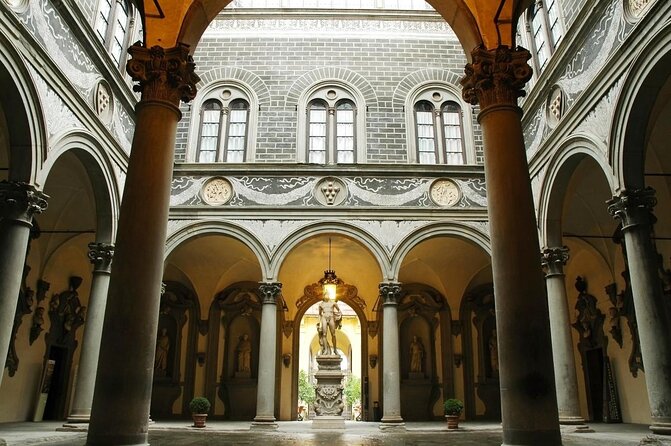
Next comes Palazzo Medici Riccardi, tied directly to the Medici. This is where the tour’s theme really locks in, because palaces are where Renaissance ambition becomes physical. The building functions like branding, and the guide’s storytelling helps you read it.
You will meet Laurence the Magnificent as part of the narrative. That matters because it turns a famous surname into a specific kind of leadership, one that valued culture as a strategy, not a hobby. You will also likely get tips on what to look for in the facade and nearby details, because palaces reward close attention.
Admission is not included for this stop either. In practical terms, that means you should treat it as a major “read the architecture” moment, and decide separately if you want to pay for interior access. If you are trying to keep your budget lean, the tour still gives value through the exterior and context.
Duomo: the giant effect and what makes it special
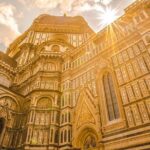
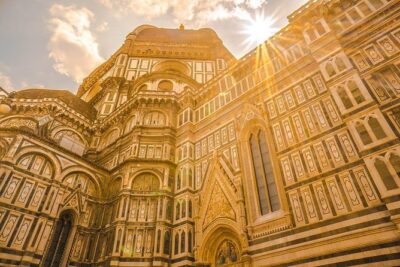
Then you hit the Duomo, Florence’s visual heavyweight. This stop is planned as free in terms of the tour’s admission approach, which is great for value. Even without adding extra ticket costs, you can still get a lot out of it because the guide points out why it dominates the skyline and why people cared so much.
At around 20 minutes, the time is short enough that you need to focus, not wander. Listen for the why behind the drama: scale, symbolism, and the way the Duomo anchors the city’s identity. This is also a place where the guide’s style matters, because hearing the explanation makes your eyes start working faster.
One of the best takeaways from the tour’s approach is learning how to notice patterns around Florence, like why you see so many towers. You might not spot it at first glance, but a guide can give you a framework that makes the city start to “organize” in your mind.


Piazza della Signoria: where Medici power shows up in public spaces
From the Duomo zone, the tour moves to Piazza della Signoria. This is one of Florence’s most important social and political stages, and it is smart to cover it after you already understand the Duomo’s role. Now the city feels connected, not just a set of landmarks.
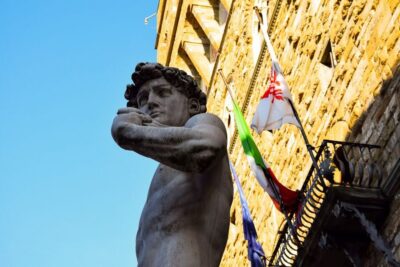
This stop is planned with admission free, so you can spend your attention on the open-air details. Piazza spaces teach you about civic life in a way museums often cannot, because you experience scale and sightlines as you look around.
The Medici show up again here in the story, and the guide helps you understand why the family’s influence would be visible in public squares, not just behind palace walls. You also get practice reading the visual language of Florence, statues, placement, and the “message” of monuments in a shared space.
If you have ever felt overwhelmed by Florence’s number of famous sites, this is where that feeling usually flips. The guide’s connections make the square feel like a chapter, not a list.
Palazzo Vecchio: the political heart with color and attitude
Next is Palazzo Vecchio, the political heart of Florence. This stop is designed to be colorful both literally and historically. The guide frames it as a place of power, and in Florence, power is rarely quiet.
Admission is not included here, so consider it another “read the building” stop. But even on the exterior, this kind of visit can be surprisingly useful. It tells you how government, spectacle, and identity worked together in Renaissance cities.
You also get a chance to learn about hidden stories connected to how people moved and lived around these spaces. Some guides on this walk also highlight lesser-noticed features like passageways or details you would likely miss. Even if you do not go into every area, you walk away with a sense that Florence has layers.
This is a good moment to slow down slightly and look. In piazzas and palazzi, the smallest carvings and placements can carry meaning, and a guide helps you see what is worth your attention.
Ponte Vecchio finish: making the river feel like part of the story
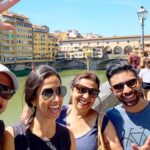
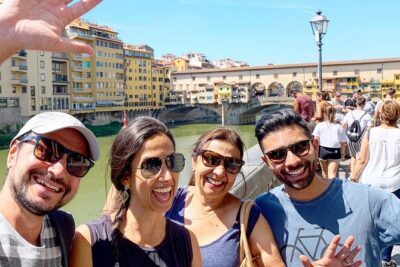
If there is time, the tour concludes at Ponte Vecchio, and it is a strong end point. This is where the city’s Renaissance energy turns into a living postcard, but the key difference is that you arrive with context now. The bridge is not just scenery, it is a geographic anchor for how Florence grew and presented itself.
This stop is planned as free within the tour approach. You will likely spend around 10 minutes here, so again, keep expectations focused. Use the time to observe the river as a connector, not just a backdrop.
One of the most satisfying parts of reaching Ponte Vecchio at the end is the shift from “learning buildings” to “seeing a whole picture.” You can look back on your path and understand the route’s logic, how church space, elite residences, government squares, and commerce relate.
The finish location also sets you up well for what many people do next in Florence, stroll by the river, check out sights near the Uffizi area, or continue walking toward other neighborhoods.
Price and value: what $100 buys you in Florence time
At $100 for about two hours, this is not a budget-only option, but it can be good value if you care about meaning. The price makes sense because you are paying for interpretation, pacing, and a route that connects major sites without drowning you in details.
Here is how I think about value in tours like this:
- You avoid spending your time guessing what to look for in each landmark.
- You get a tight sequence that makes the story easier to remember.
- You reduce decision fatigue about where to start and what to pair together next.
Admission is not included for some stops, while other moments are treated as free in the tour plan. So you should budget for optional ticket costs only if you decide you want to go further inside. If you like exterior storytelling and city-reading, you can keep the total spend under control.
Small group size also matters for value. If you are paying for guidance, a group that tops out at 15 helps the tour feel more conversational and less like a crowded march.
Who this tour suits best, and who might want a different format
This walk is ideal if you want Renaissance context fast. It is also a great fit if you enjoy art history but feel museums are too quiet or too slow at the start of a Florence trip. The storytelling angle, plus the mix of churches, palaces, political squares, and river views, makes it a strong first “big picture” experience.
It also suits travelers who like walking but do not want a long day. Two hours is enough to get oriented, learn key themes, and still leave you energy for gelato and independent exploring.
You might want a different format if you are the type who needs extensive interior access at every stop. Since some admissions are not included, you could feel slightly constrained unless you plan to add separate visits later.
Tips for getting the most out of every stop
A few practical moves will help you benefit from the guide’s attention to detail. Since this tour rewards listening, arrive a few minutes early so you do not rush at the start. Bring water, and keep your phone charged if you plan to check extra info after.
Wear shoes that handle uneven pavement. Florence can be smooth on maps, but your feet will feel the reality. Also, give yourself a mindset shift: treat this as story geography. You are learning where ideas live in stone and streets.
If you want to keep your budget tidy, decide in advance which stops you will just enjoy from the outside and which you may want to pay to enter. That way, the tour stays enjoyable instead of becoming an ongoing calculation.
Finally, aim to take a short note or two during the walk, the Medici theme, a surprising detail about towers, or a point about power in public spaces. It makes your next Florence visit click.
Should you book this Medici and the Renaissance walk?
If your goal is to understand Renaissance Florence without getting lost in dates and guidebook fragments, I think this is a smart booking. The guides bring the story to life, and the route gives you a clean sequence of major landmarks tied to one theme.
I would book it if you want:
- Story-led art history, with clear connections between people and place
- A manageable two-hour start to a Florence sightseeing plan
- A finish near Ponte Vecchio, so you end with views and momentum
I would hesitate if you only care about ticketed interiors and want longer time in museums or churches. In that case, pair this with separate paid visits later, or choose a format that focuses more on in-building access.
FAQ
How long is the Medici family and the Renaissance tour in Florence?
The tour lasts about 2 hours.
Where does the tour start and end?
It starts at Piazza di San Lorenzo, 13, 50123 Firenze FI, Italy, and ends at Lungarno Anna Maria Luisa de’ Medici, 8, 038983 Firenze FI, Italy, near the Uffizi Gallery and in front of Ponte Vecchio.
What is the price?
The price is $100.
When does the tour run?
The start time listed is 2:00 pm.
Is this tour limited to a small group?
Yes. The maximum group size is 15 travelers.
Do I need an admission ticket for every stop?
Not for every stop. Some locations are listed as admission ticket not included, while the Duomo, Piazza della Signoria, and Ponte Vecchio are listed as admission ticket free within the tour plan.
What do I receive for booking?
You get a mobile ticket.
Is the tour dependent on weather?
Yes. It requires good weather. If canceled due to poor weather, you are offered a different date or a full refund.
Can I get a full refund if I cancel?
Free cancellation is allowed up to 24 hours before the experience starts for a full refund. If you cancel less than 24 hours before, the amount paid is not refunded.
What should I bring for the walk?
Bring water and wear comfortable shoes. The tour also suggests bringing good vibes. Service animals are allowed, and the meeting point is near public transportation.
Every Florence review, in one place
- Tuscany Day Trip from Florence: Siena, San Gimignano, Pisa and Lunch at a Winery
★ 5.0 · 21,634 reviews - The Best tour in Florence: Renaissance & Medici Tales – guided by a STORYTELLER
★ 5.0 · 12,316 reviews

The Medici thread through Florence
- The Best tour in Florence: Renaissance & Medici Tales – guided by a STORYTELLER
★ 5.0 · 12,316 reviews

Florence picks that sit just beyond this itinerary
- One Hour Uffizi Guided Tour: Masterpieces of the Renaissance
★ 5.0 · 3 reviews - Sightseeing Tuscany by touring bike – 1 day rental
★ 5.0 · 3 reviews - Private Siena, S. Gimignano, Chianti Road and Wine Tasting
★ 5.0 · 3 reviews - Bargello Museum Private Tour: Michelangelo’s Bacchus & Donatello’s David
★ 5.0 · 3 reviews - Authentic Florence Cooking Class at Costanza’s 1839 Family Estate
★ 5.0 · 3 reviews - San Gimignano and Volterra private tour: etruscans, romans and middle age jewels
★ 5.0 · 3 reviews
More Medici Florence & Renaissance Stories worth comparing.
 ★ 5.0The Best tour in Florence: Renaissance & Medici Tales – guided by a STORYTELLERFrom $312,316 reviews
 ★ 5.0The Best Tour in Florence: Renaissance and Medici TalesFrom $310,810 reviews
 ★ 4.8Renaissance and Medici Tales Guided Walking TourFrom $21,549 reviews
 ★ 4.4Mysteries of the Medici Guided Walking TourFrom $31940 reviews
 ★ 4.0Accademia Gallery: Michelangelo’s David and High Renaissance ArtFrom $43872 reviews
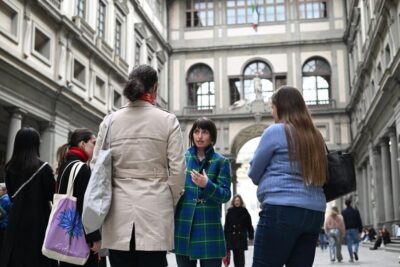 ★ 4.7Guided Tour of Medici Family Secrets and ChapelsFrom $93512 reviews
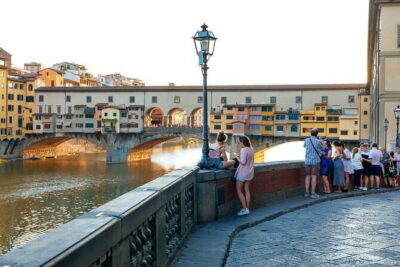 ★ 5.0Florence Private Tour: Renaissance, Famous Families & Hidden GemsFrom $199233 reviews
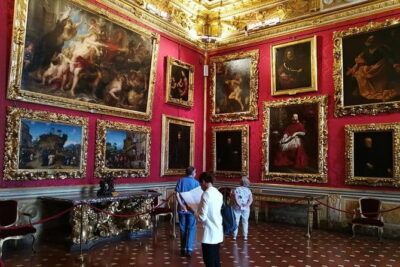 ★ 4.5Pitti Palace, Palatina Gallery and the Medici: Arts and Power in Florence.From $82223 reviews
Find this experience in another shortlist