
Florence field review · WALKING TOURS
The Best of Florence Walking Tour in a Small Group
Want Florence without feeling rushed?
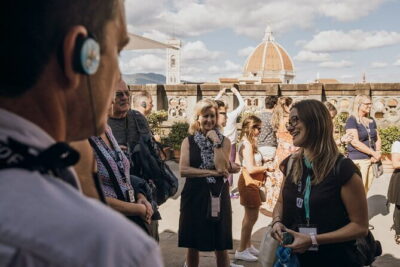
This best-of Florence walking tour strings together the Duomo complex and the Medici power places with a local guide, and the whisper system helps you hear clearly in crowded squares. It is designed for people who want to slow down, understand what they are looking at, and leave with a sharper sense of where to go next.
I love two things most: the group cap of 15 keeps the walk personal, and the guides use the stops like chapters, not checkboxes. I also like that the tour wraps in practical ideas for what to do and where to dine, including the kind of street-level pointers that make Florence feel less like a postcard and more like a living city.
One consideration: the time at each highlight is brief, and most site admission is not included, so if you want to go inside everything you will likely need extra tickets and planning beyond the tour.
Key things to know before you walk
- Max 15 travelers for an intimate feel, not a cattle-call experience
- Whisper system ear pieces so you can actually follow the guide in busy areas
- Medici to Duomo story flow, from San Lorenzo to Brunelleschi’s dome
- Duomo complex orientation with quick, clear context for what you are seeing
- Local recommendations for places to eat and what to notice as you stroll
- Ends near Ponte Vecchio, so it is easy to keep exploring afterward
Florence walks that make the stone streets tell the story
- Florence: Guided Walking Tour★ 4.5 · 3,334 reviews
- Skip the line: Uffizi and Accademia Small Group Walking Tour★ 4.5 · 3,135 reviews
- Florence: Guided Walking Tour★ 4.6 · 1,602 reviews
- Florence: Renaissance and Medici Tales Guided Walking Tour★ 4.8 · 1,549 reviews
A Small-Group Florence Walking Tour That Actually Keeps Its Pace
Florence is one of those cities where you can get “wow” overload fast. This tour works because it gives you structure while still moving at a human speed. You spend about 1 hour 45 minutes walking, so you get real context, not just a blur of famous façades.
What makes it especially handy is the way the guide links the city’s biggest landmarks to the people behind them. Expect a talk that connects the Medici family, Renaissance ambition, and the architectural choices you see around the Piazza del Duomo.
You also get the practical side: the guide points out details you might miss on your own. And because the group is capped at 15, the guide can adjust when the pace needs to slow, when questions pop up, or when families need a bit more energy.
Price and What You Get for Your $59.26
At $59.26 per person, you are not paying for a museum ticket marathon. You are paying for a licensed guide, a small group, and the whisper system that makes the tour experience easier to follow. You are also getting built-in local recommendations for what to do and where to eat, which is often where a walking tour quietly earns its value.
Most major stops are external or quick-view based, and the tour does not include every admission. That can be a benefit if you hate long lines and prefer a first pass with context. It can also be a drawback if you want to turn every stop into an inside visit.
A smart way to use this value: treat it as your orientation. Then you decide later, based on what you liked most, which places deserve your time and money for tickets.
Starting Point Near Piazza di San Giovanni, Then Straight Into the Medici Story
You meet at Caffè Scudieri Firenze, located at Piazza di San Giovanni, 19R. The tour starts at 12:15 pm. Ending near Ponte Vecchio means you finish where the city is lively and walkable, with plenty of options for lunch afterward.
This route is arranged so the early part gives you the Medici context, long before you hit the Duomo area. If you have ever looked at Florence and wondered why everything seems tied to one family or one era, the early stops answer that.
The guides also tend to bring the story down to street level. In past tours, guides such as Manuel and Camilla have been praised for blending the big picture with specific street detail, including side-street shopping and points of interest you would not spot from a guidebook alone.
Basilica di San Lorenzo: Where Medici Power Gets Buried and Explained
Your first stop is Basilica di San Lorenzo, in the main market district area. This church is not just big, it matters. It is tied to the Medici legacy because it is the burial place of principal Medici family members, from Cosimo il Vecchio to Cosimo III.
Why this works for your trip: it gives you a quick “why” for what you will see later. Florence’s Renaissance art and architecture can feel like random masterpieces if you only skim names. Here, you get a reason for the Medici to pour money into churches and public spaces.
Practical note: entry is not included for this stop. You get the guided introduction, but if you want to spend time inside, plan for separate tickets and a bit of extra time on your own.
Biblioteca Medicea Laurenziana: Michelangelo’s Architectural Pushback
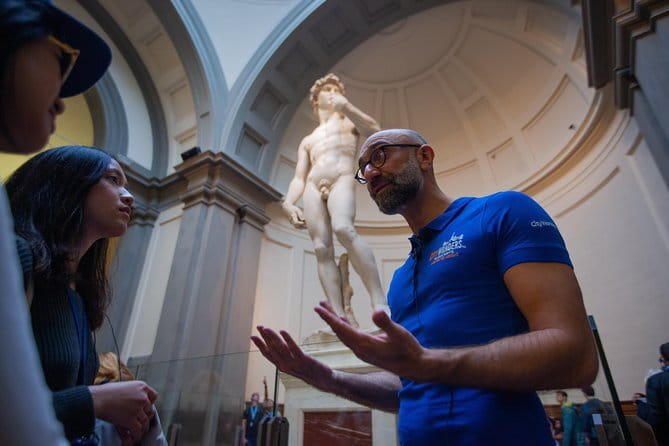
Next up is the Laurentian Library, supported by the patronage tied to Medici pope Clement VII. The tour frames the library as a statement, not just a room full of books. The Medici wanted to show they were more than merchants, pushing into intellectual and ecclesiastical standing.
This library is also famous for its architecture designed by Michelangelo, and it is a strong example of Mannerism. Even if you only get a short stop, the guide helps you look past the “cool building” reaction and understand what the design is doing.
As with the first site, admission is not included here. So again, this is a strong orientation stop, not a “settle in for an hour” type of visit.


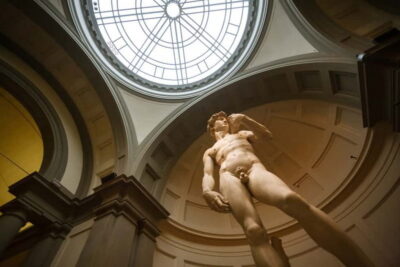
Cappelle Medicee and the New Sacristy: Michelangelo Steps In
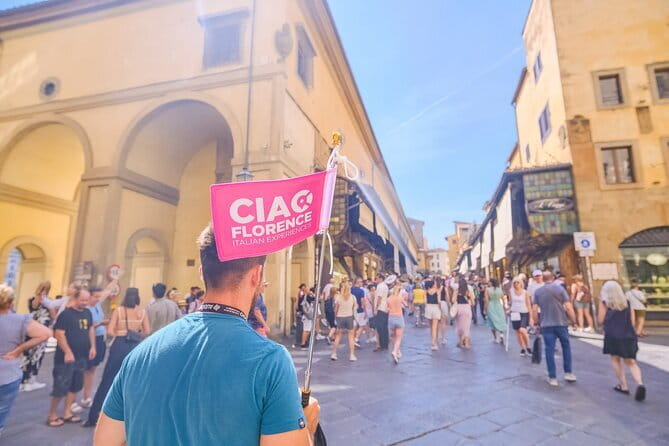
At the Medici Chapels, you are in the world of 16th and 17th-century expansions linked to Brunelleschi’s earlier church structure. The point is celebration of the Medici family and the Grand Dukes of Tuscany, with the chapels serving as a sculptural and architectural monument to power.
The tour spotlights the Sagrestia Nuova, known as the New Sacristy, which was designed by Michelangelo. This is one of those places where the design choices feel like they are meant to impress, persuade, and outlast.
Admission is not included at this stop. But you still get the guided context that makes later visits feel more meaningful because you know what to look for.
Palazzo Medici Riccardi: Banking Roots to Brick-and-Stone Ambition
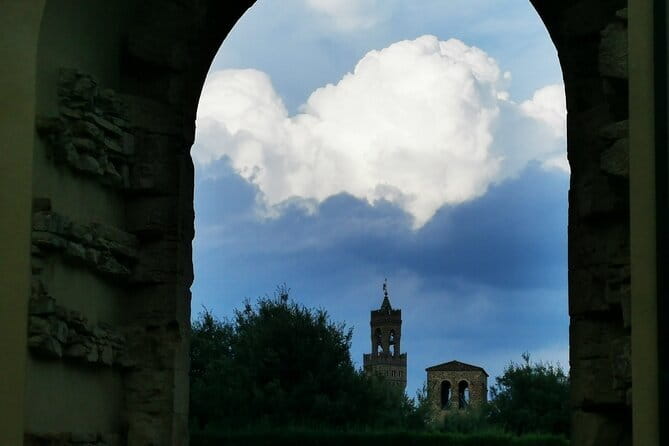
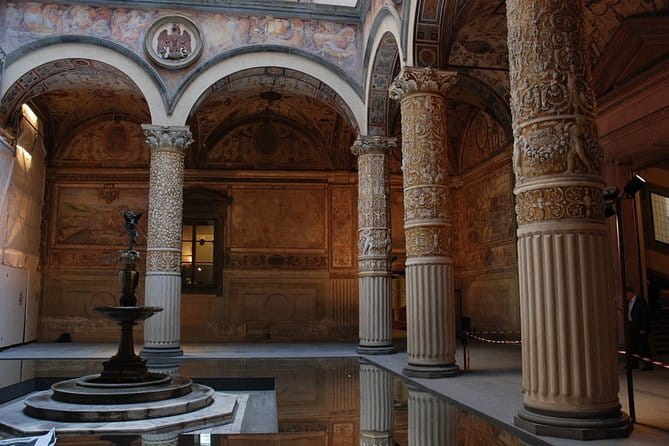
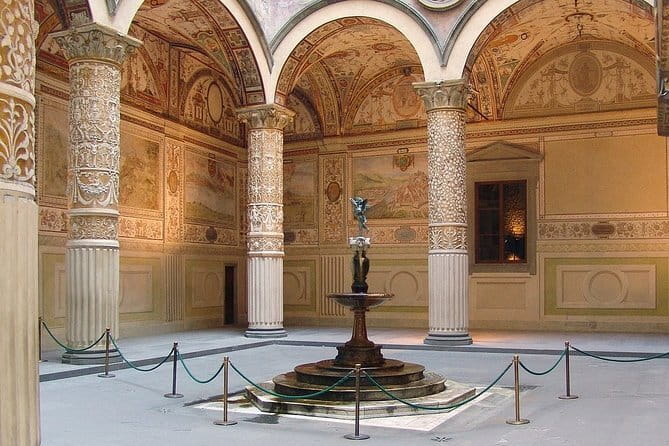
Then you shift from sacred spaces to a political and economic landmark: Palazzo Medici Riccardi. This was designed for Cosimo de’ Medici, and it was built from 1444 to 1484.
It is easy to separate Florence in your mind into “church stuff” and “palace stuff.” This stop helps glue them together. You see how the same family that funded major religious projects also built the civic, administrative, and residence structures that shaped the city.
Admission is not included here. You will get the guided exterior framing, which is ideal for a walking tour that still needs time for the Duomo complex.
Duomo Area: A Guided Look at the Cathedral Complex Without the Stress
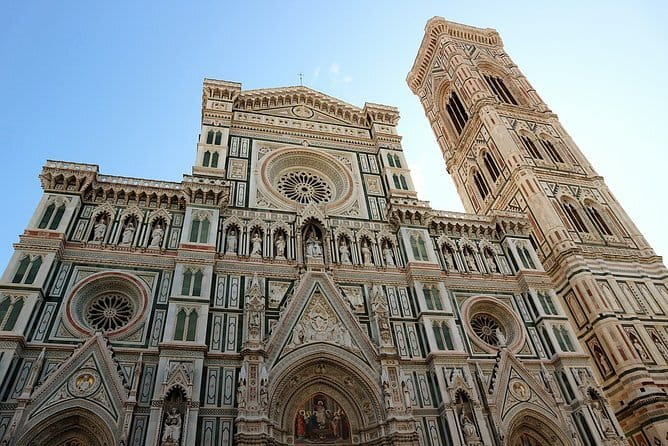
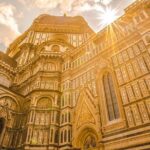
The heart of the tour becomes the Duomo complex. First you reach the cathedral area tied to the Cattedrale di Santa Maria del Fiore. This cathedral complex is part of a UNESCO World Heritage Site and includes multiple famous structures: the cathedral, the Baptistery, and Giotto’s Campanile.
Here is why this portion is so valuable: most people arrive at the Duomo already saying “I love it.” The guide helps you understand how it was begun in 1296, why the style was Gothic with a design associated to Arnolfo di Cambio, and how the whole cluster fits together.
Quick stop, clear payoff: what you see around the cathedral
- The Duomo cathedral façades and marble look (you get focused time to orient yourself)
- The Baptistery of San Giovanni, constructed between 1059 and 1128 in Florentine Romanesque style
- Brunelleschi’s dome, described as the largest brick dome ever constructed, a major architectural “mystery” for its scale and audacity
- Giotto’s Campanile, with rich sculptural decoration and polychrome marble encrustations, plus the design attribution to Giotto
Admission handling on these stops is mixed. One Duomo stop is listed as free, while several other Duomo-related stops state admission is not included. So treat this segment as guided orientation around the complex. If you want to go inside or climb, you will likely need to plan that separately.
Piazza della Signoria and Palazzo Vecchio: Florence as a Public Stage
After the cathedral cluster, the walk moves to Piazza della Signoria. This is an L-shaped square in front of the Palazzo Vecchio and it is the meeting place of Florence, near both the Duomo area and the gateway to the Uffizi.
This is where the tour broadens from religious patronage to civic identity. The guide helps connect how Florence staged its power, artwork, and politics in public space.
Next, you reach Palazzo Vecchio. This fortress-palace functions as the city’s town hall. You also get the visual cues people care about immediately, including the square’s relationship to the famous David copy and the sculpture-filled Loggia dei Lanzi area nearby.
Admission is not included here. Still, this stop is worth it because it teaches you how to read the square as “Florence’s living room,” not just a photo backdrop.
Uffizi Gallery as a Walk-By Lesson, Not a Full Museum Day
The tour then brings you to the Gallerie degli Uffizi. It is one of Italy’s most important art museums and among the most visited and well known in the world. The collection is especially strong for Italian Renaissance works.
The Uffizi building itself matters too. It was begun by Giorgio Vasari in 1560 for Cosimo I de’ Medici, originally intended to house the offices of Florentine magistrates, hence the name uffizi, meaning offices.
Admission is not included for the stop on this walk. For many people, that is perfect. If you want the museum experience, you can book a separate visit when you feel ready. On this tour, you get the guided “why it exists here” overview, which makes it easier to decide later whether you want to spend half a day indoors.
Ponte Vecchio and Palazzo Pitti: End With a Classic View and a Medici Afterglow
You finish the walk at Ponte Vecchio, then continue into the area near Palazzo Pitti as part of the route.
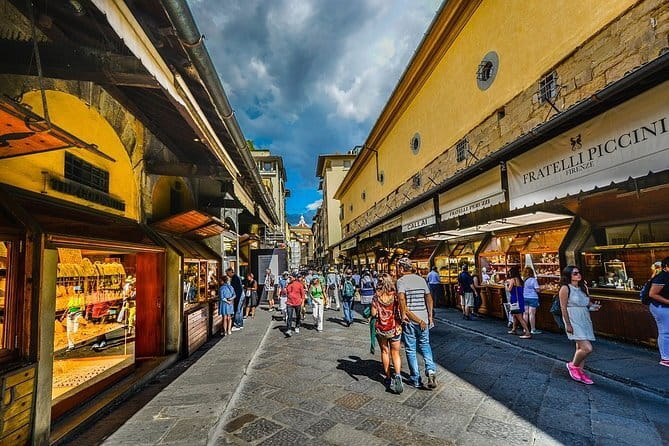
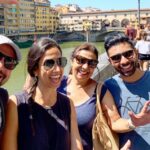
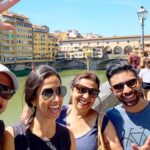
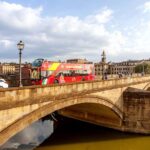
Ponte Vecchio is Florence’s oldest bridge over the Arno River. It is famous for shops built along it. In earlier times, those shops included butchers, tanners, and farmers, but today the tenants are jewelers and art dealers. Even if you have seen it in photos, the guided framing changes how you interpret the scene.
Admission is listed as free for the bridge stop. That means you are getting the payoff of the location without additional entry costs.
Then you pass by Palazzo Pitti, bought by the Medici family in 1549 and becoming the chief residence of the ruling families of the Grand Duchy of Tuscany. The palace grew into a treasure house as later generations accumulated paintings, plates, jewelry, and luxury possessions.
Admission is not included here. But a guided mention of how the Medici moved from banking roots to ruling residence helps you “see” the city as one connected arc.
Why the Guide’s Stories Change How You Explore Next
This tour earns its high marks because guides treat Florence like a narrative. In guides such as Manuel, Camilla, Simona, and others, the stand-out skill is pacing and focus. The walk is not just facts, it is a way to look.
A few themes show up again and again in how people describe the experience. Guides tend to:
- Keep the tour fun with humor while still explaining what you are looking at
- Point out what might be hidden in plain sight, like architectural details and street patterns
- Share where to eat and what to watch for as you move through different neighborhoods
- Adjust the walk to the group, including kids when families are in the mix
That last bit matters if you are traveling with children or if you do not want to be stuck at a rigid speed. People also mention the ear pieces and the fact that the whisper system makes the tour easier to follow. If you have ever been in a crowded square squinting at a guide while trying to hear them, you will appreciate this.
Best Time to Book, and Why Doing This Early Helps
You can book it for a specific start time, and it is listed as starting at 12:15 pm. Since it is an orientation-focused tour, I like the idea of doing it early in your Florence stay.
Also, it is commonly booked about 59 days in advance. That does not mean you cannot find space later, but it does suggest this is a popular walk. If Florence is a big part of your trip, you may want to lock it in sooner rather than assuming you can decide at the last minute.
What to Wear and How to Get the Most From 1 Hour 45 Minutes
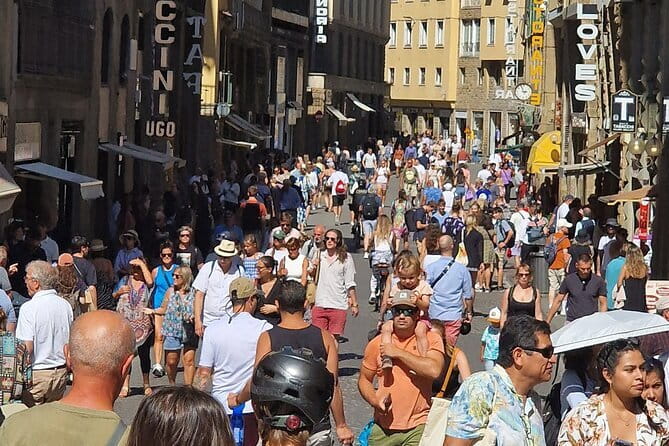
Because this is a walking tour of major neighborhoods, comfort matters. Wear shoes that you trust on uneven pavement and plan for city crowds around the Duomo area.
Bring a mindset shift too. This route moves fast by design, with quick stops of about 5 minutes for most sights, a longer moment around Brunelleschi’s dome, and then more walking through key squares. Think of each stop as a guided title page. After you learn what the place is and why it matters, you can decide how deep you want to go later.
If you hate ticket hassle, this is still a good fit because you are not forced into multiple paid entries by default. If you love interiors, you will probably want to layer in additional visits on separate days.
Who This Tour Fits Best, and Who Might Skip It
This tour is ideal if you want:
- A first-day overview so Florence feels clearer fast
- A focused way to connect the Medici story to the Duomo area
- A guide-led walk where you can hear easily with the whisper system
- Practical advice on what to do and where to eat, not just monuments
It might be less ideal if:
- You want long inside visits at each stop, because many admissions are not included
- You prefer a fully museum-based day rather than a walking orientation
- You dislike quick stops and would rather spend a longer time in fewer places
That said, even if you plan to buy separate tickets later, this tour can still help you buy the right tickets on the right day because you know what matters most to you.
Should You Book This Florence Walking Tour?
If you want a tight, smart introduction to Florence that connects the Medici legacy to the Duomo complex, this is a strong pick. The combination of a small group capped at 15, a licensed guide, and the whisper system makes it feel smoother than many big-name tours that get swallowed by crowds.
I would book it if you are the type who enjoys walking, likes seeing context in real time, and appreciates recommendations for food and how to notice details as you go. I would hesitate only if you are hoping every stop turns into a full inside visit, since most admissions are not included and the stop times are brief.
FAQ
How long is the Florence Best of Florence Walking Tour?
It runs for about 1 hour 45 minutes.
How many people are in the group?
The group is limited to a maximum of 15 travelers.
What language is the tour offered in?
The tour is offered in English.
Where does the tour start and when does it begin?
It starts at Caffè Scudieri Firenze, Piazza di San Giovanni, 19R, 50123 Firenze, Italy, and the start time is 12:15 pm.
Are entrance tickets included?
Most admissions are not included. One Duomo-related stop is listed as free, while other stops indicate admission tickets are not included.
Is cancellation free?
Yes, free cancellation is available. You can cancel up to 24 hours in advance for a full refund.
What happens if the weather is bad?
The experience requires good weather. If it is canceled due to poor weather, you will be offered a different date or a full refund.
Florence at walking speed
More Florence tours to open next
- The Best tour in Florence: Renaissance & Medici Tales – guided by a STORYTELLER
★ 5.0 · 12,316 reviews
Every Florence review, in one place
- Tuscany Day Trip from Florence: Siena, San Gimignano, Pisa and Lunch at a Winery
★ 5.0 · 21,634 reviews - The Best tour in Florence: Renaissance & Medici Tales – guided by a STORYTELLER
★ 5.0 · 12,316 reviews

Florence picks that sit just beyond this itinerary
- One Hour Uffizi Guided Tour: Masterpieces of the Renaissance
★ 5.0 · 3 reviews - Sightseeing Tuscany by touring bike – 1 day rental
★ 5.0 · 3 reviews - Private Siena, S. Gimignano, Chianti Road and Wine Tasting
★ 5.0 · 3 reviews - Bargello Museum Private Tour: Michelangelo’s Bacchus & Donatello’s David
★ 5.0 · 3 reviews - Authentic Florence Cooking Class at Costanza’s 1839 Family Estate
★ 5.0 · 3 reviews - San Gimignano and Volterra private tour: etruscans, romans and middle age jewels
★ 5.0 · 3 reviews
More Walking Tours worth comparing.
 ★ 4.5Guided Walking TourFrom $313,334 reviews
 ★ 4.5Skip the line: Uffizi and Accademia Small Group Walking TourFrom $1483,135 reviews
★ 4.6Guided Walking TourFrom $271,602 reviews
★ 4.5Skip the line: Uffizi and Accademia Small Group Walking TourFrom $1483,135 reviews
★ 4.6Guided Walking TourFrom $271,602 reviews
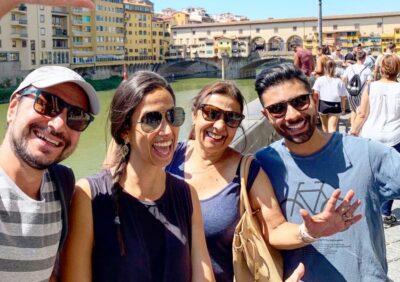 ★ 4.8Renaissance and Medici Tales Guided Walking TourFrom $21,549 reviews
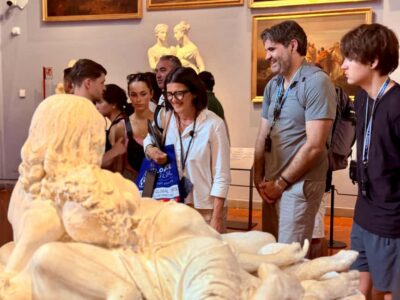 ★ 4.7Uffizi & Accademia Small Group Walking TourFrom $1481,380 reviews
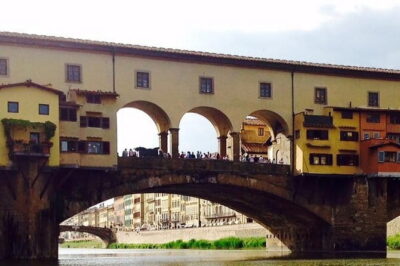 ★ 5.0Skip-the-Line Florence Highlights and David Walking TourFrom $1171,127 reviews
 ★ 4.6Dark Mysteries and Legends Guided Walking TourFrom $21,081 reviews
 ★ 4.5Florence in a Day: Michelangelo’s David, Uffizi and Guided City Walking TourFrom $1341,048 reviews
Find this experience in another shortlist