
Florence field review · ACCADEMIA & DAVID EXPERIENCES
Skip the Line: Guided Tour of Michelangelo’s David at Accademia
Seeing Michelangelo close up is the whole point. This guided, skip-the-line visit to Florence’s Accademia Gallery gets you to David faster and helps you read what you’re seeing, including the unfinished sculptures and the craft behind them. You also get a downloadable audio guide, so the story can keep going even after the museum gets loud.
I especially like how the tour is built around “what to notice” at each stop, not just a checklist of artworks. The itinerary also adds extra value beyond David, including the museum’s musical instruments and the plaster cast workshop materials that explain how sculptors trained before carving marble.
One thing to consider: the full experience still depends on being able to find your group and start on time, and Florence can be chaotic during busy days.
Key things to know before you go
- Priority entrance helps you spend more of your hour looking and less time waiting at the Accademia
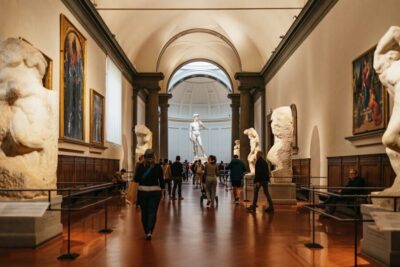
- A structured route moves you from Colosso Hall to David to the related sculpture rooms without wandering
- Michelangelo’s process gets explained, including why the Prisoners are unfinished
- Musical instruments are part of the story, including Medici-era violins and famous makers like Stradivari
- Small-group format (max 19) makes it easier to keep up with the guide and photos
- Time is tight by design, so come ready with comfortable shoes and a plan to look slowly
Compare the Accademia visits built around the original David
- Florence: Timed Entrance Ticket to Michelangelo’s David★ 4.6 · 16,983 reviews
- Florence: Michelangelo’s David Skip-the-Line Entry Ticket★ 4.5 · 12,764 reviews
- Florence Accademia Gallery Tour with Entrance Ticket Included★ 4.5 · 6,148 reviews
- Florence: Accademia Gallery Guided Tour★ 4.6 · 4,156 reviews
First Steps at Via Ricasoli 39 and the Crown Tours Meet-Up
Your visit starts at Via Ricasoli 39. This is one of those helpful Florence meeting points where you can get your bearings fast, and it’s near public transportation, so you can arrive without turning your day into a transit puzzle.
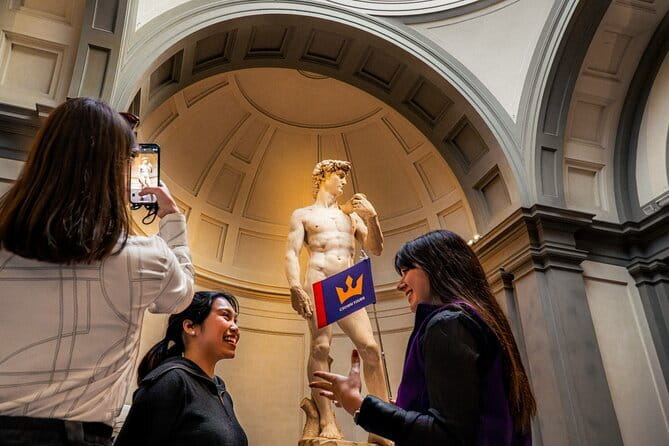
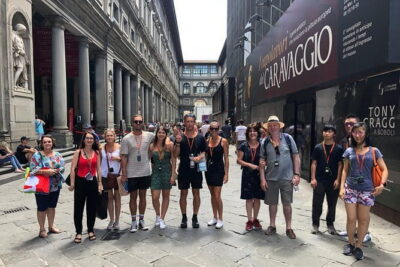
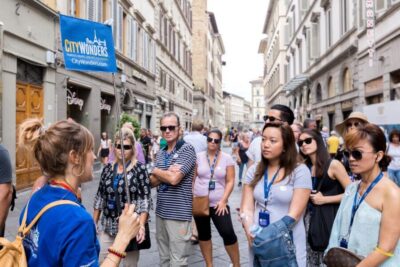
At check-in, look for the Crown Tours flag and the team in purple attire. That matters more than people think. During heavy crowd periods, you do not want to be scanning faces while your timed slot starts ticking away.
The tour also has a clear “start and return” setup. You meet at Via Ricasoli 39, and it ends back there. That makes it easier to plug the visit into a day of eating, walking, and hitting another museum without guessing where your guide will send you next.
Priority Entrance Through the Accademia, Then Straight to Colosso Hall
The big promise here is skip-the-line access. You’re not just buying museum entry. You’re getting a planned arrival and priority entrance, so the guide can get you inside and moving while other people are still sorting tickets and waiting to funnel in.
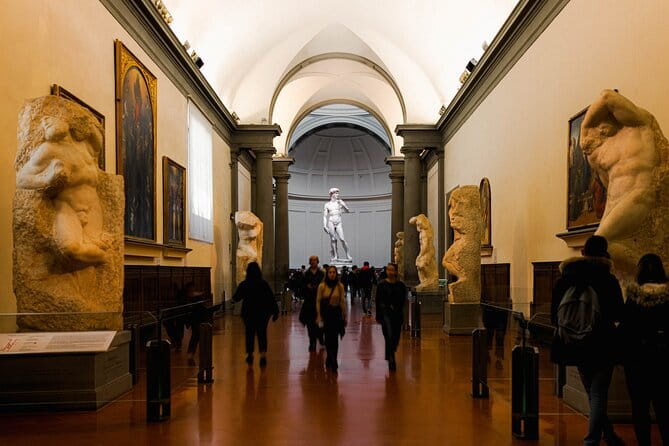
Once inside, your first real gallery focus is Colosso Hall, named for its centerpiece, The Rape of the Sabines. This is a smart opener because it sets a tone. Instead of jumping straight into David, you get context about Renaissance sculpture and how the Accademia’s rooms fit into Florence’s artistic education machine.
Expect your guide to talk through what you’re looking at and how it connects to the world Michelangelo lived in. If you usually read signage slowly, having a person explain the drama behind the main works will save you time and help you notice details you might otherwise miss.
The Musical Instrument Room: Florence Isn’t Just for Sculpture
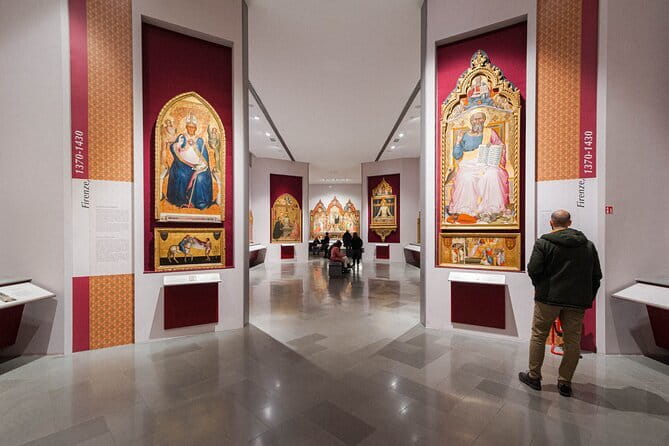
After Colosso Hall, the tour turns to a lesser-talked-about part of the Accademia: the Museum of Musical Instruments. This is where the experience feels different from the typical “see David, exit” approach.
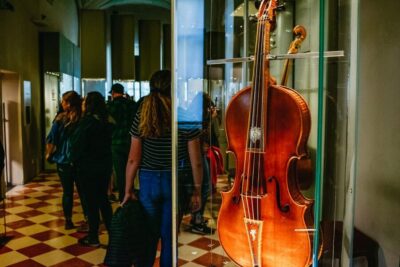
You’ll spend time with Medici-era violins, antique pianos, and mentions of Stradivari masterpieces. The practical payoff is that you start thinking of Florence as a full cultural ecosystem. The Renaissance was not only marble and frescoes. It was also performance, patronage, and craft.
Even if you are not a music person, this stop gives you a break from the visual strain of statues. It’s also a nice reminder that when Florence funded artists, it funded many kinds of art. The guide’s stories help you connect the dots between materials, makers, and the status of instruments as objects of beauty.
Michelangelo’s Prisoners: How Unfinished Sculpture Changes Everything
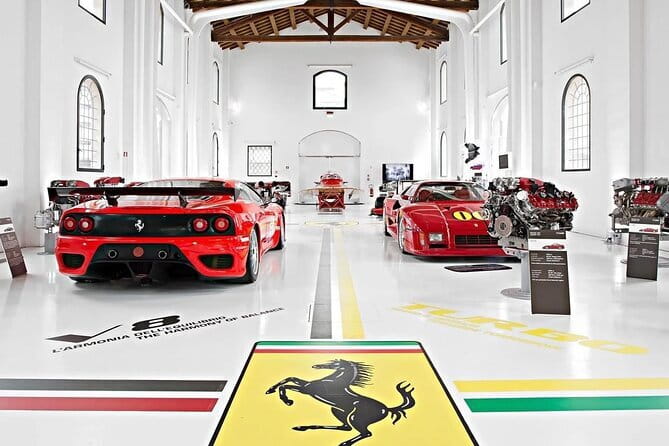
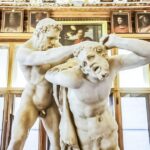
Next comes one of the most satisfying stops on the route: Michelangelo’s Prisoners. These sculptures can look haunting because they feel like figures trapped inside stone, and the guide helps you understand why.
You’ll be told about Michelangelo’s creative process and specifically why these works were left unfinished. That concept changes how you look. Instead of treating unfinished stone like a problem, you start seeing it as part of the message. The surface quality, the gestures, and the partially formed bodies all become clues.
This is also a great moment for anyone who thinks they already “know the story” of David. The David masterpiece is what people talk about, but it takes stops like the Prisoners to show you how Michelangelo worked, planned, and adjusted his ideas in real time.
Standing Before David: What to Look for in the Real Thing
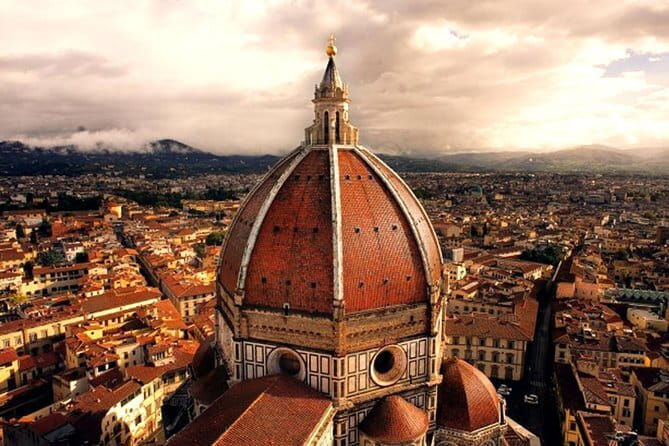
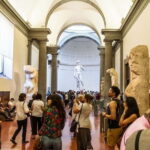
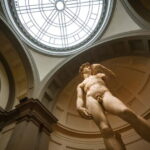
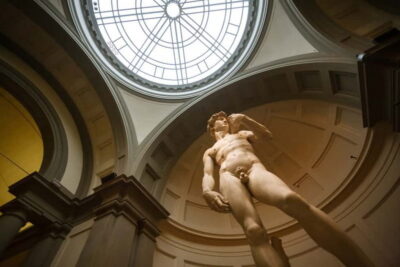
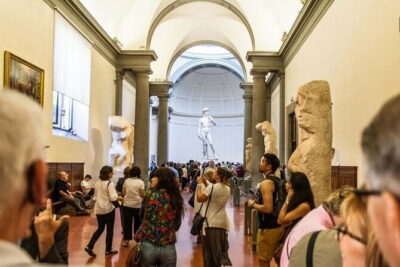
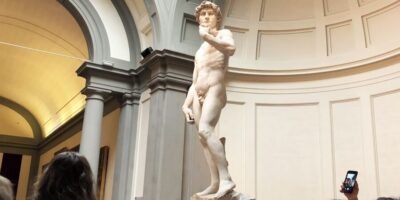
Now, the main event: David. You finally get the kind of up-close view that photos never fully deliver, because scale, tension, and the face all hit at once when you stand in front of it.
A good guide here is everything, and the tour’s format is built around that. You’re not just standing and staring. The guide helps you decode details like the intensity in his eyes and the precision across the muscle groups.
Here’s what you can do to get the most out of the time you have:
- Position yourself so you can see his face and hands without craning too hard.
- Take a second to notice how the figure’s posture carries emotion, not just anatomy.
- Keep listening for the guide’s connections between this sculpture and the broader Accademia context you’ve already walked through.
This is one of those places where your “time with the artwork” feels short if you rush. But because the route is planned and timeboxed, you will probably feel less frantic than you would wandering on your own.
When a guide is worth having beside you in Florence
Plaster Cast-Making: The Training Behind the Marble
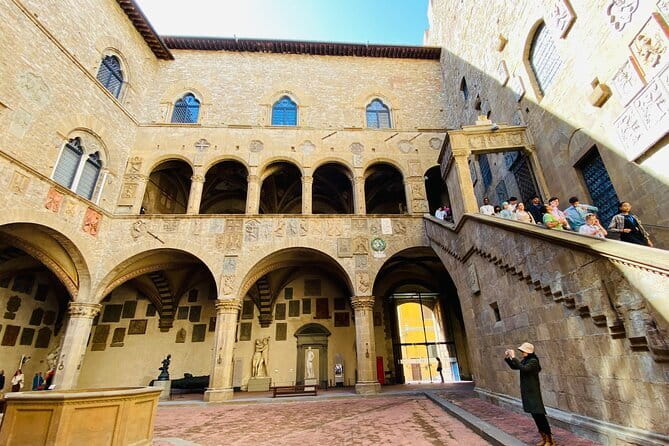
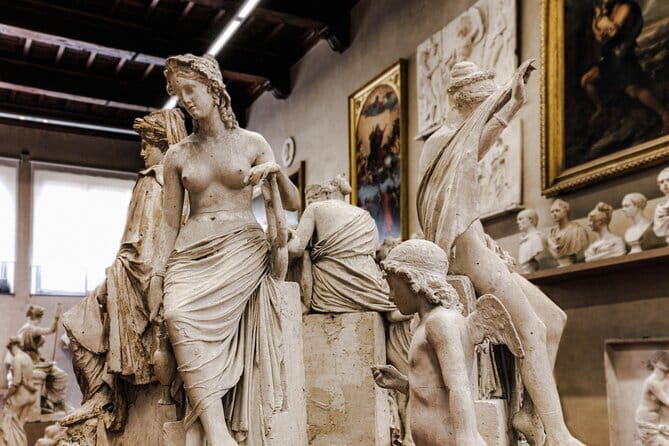
Right after David, the tour shifts again to a craft-focused angle: plaster cast-making. This part of the Accademia can feel a little technical at first glance, but it’s extremely useful if you’ve ever wondered how sculptors got so accurate.
You’ll see plaster cast replicas and learn how this method helped artists refine proportions and features before committing to marble. That means the “genius” you see in the finished works did not come out of nowhere. It came through training, repetition, and measurement.
If you like hands-on making, pay attention here. The plaster materials explain why Renaissance sculpture looks so controlled. And when you circle back in your mind to Prisoners and David, you start connecting artistic vision to the practical tools that made the vision possible.
Renaissance and Baroque Rooms, Then Lorenzo Monaco in the Late Gothic Hall
The tour doesn’t stop at sculpture. It keeps moving into rooms with Renaissance and Baroque masters, including paintings that shaped Florence’s artistic landscape.
This section matters because it broadens what you associate with the Accademia. If your mental image is only marble statues, the paintings help you see the same artistic culture working through different media.
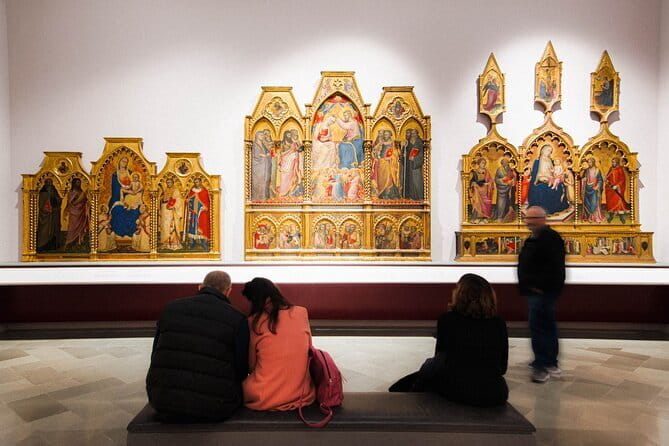
You end in the Late Gothic Hall, where you’ll see works by Lorenzo Monaco. This is a clever finish point because the guide will frame it as a transition from medieval styles toward the Renaissance. You’re not just leaving the museum. You’re closing the loop on how Florence’s art changed over time.
If you’ve got a little energy left, this final stop is a good one to slow down for. The contrast between styles is easier to spot once you’ve already been trained by the route and the guide’s explanations.
Timing, Group Size, and How to Avoid Stress in Florence Crowds
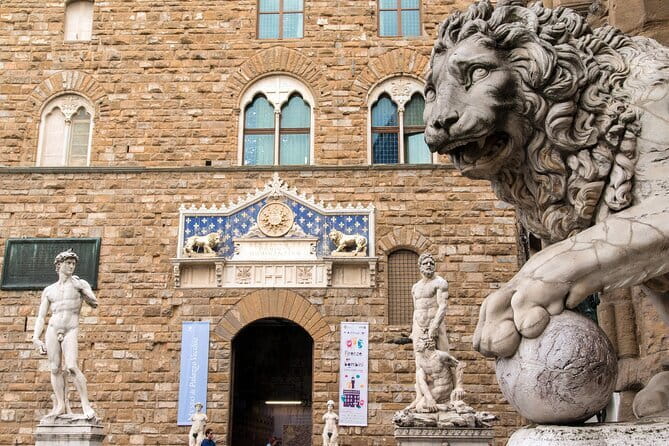
This tour runs about 1 hour and the internal stops are tightly paced. The structure is clear enough that you’ll never feel completely lost, but it also means you should arrive ready to move.
Group size is capped at 19 travelers. That’s an advantage over huge “herd” tours. A smaller group makes it easier for the guide to keep track of people during transitions between rooms and for you to hear the guide without shouting across a crowd.
Still, Florence can be wild. If you are traveling during a holiday weekend or peak season, build in extra time and be early to the meeting point. Finding the tour group in a crowd is not a skill you want to practice when your start time is already close.
Also, bring a backup plan for photos. The tour is timeboxed, and rooms can get crowded. Decide in advance whether you want one or two careful photos, or a bunch of quick ones. Then follow through.
English-Language Guide and the Downloadable Audio Bonus
This experience is offered in English. That matters because the guide’s value comes from interpretation, not just pointing.
You also get an audio guide you can download. I like this feature because it helps you keep the story straight after you exit the main room. Museums can be sensory overload, especially at the Accademia, where crowds compress your viewing space.
Practical tip: use the audio guide during quieter moments, or right after you finish the main David area, while your memory of what you just saw is still fresh.
Price Value: Why $32.44 Can Be a Good Deal
The price is $32.44 per person for an approximately 1-hour guided tour. For that, you are getting skip-the-line style entry support plus admission tickets included for the museum stops.
The real value is not the sticker price. It’s what you get inside that hour:
- priority entrance to reduce your waiting time
- guided explanations of major works
- extra sections beyond David, like musical instruments and plaster casts
- an audio guide that extends the experience
If you only want a quick selfie with David, a self-guided visit might feel cheaper. But if you want your museum time to feel coherent, guided, and worth every minute, this price can make sense.
One more value angle: the tour is often booked about 30 days in advance on average, which is a sign the slots are in demand. If you’re planning your Florence days with any certainty, booking ahead will keep you from scrambling.
What Would Make Me Think Twice?
The biggest caution is operational. On rare occasions, tours can get disrupted if communication breaks down or if guides have trouble connecting with guests at the meeting point. To protect your day, double-check your booking details before you go and arrive early enough that you have time to sort it out calmly if anything feels off.
Second, remember that skip-the-line does not always mean zero waiting in a high-demand museum. If you expect a museum with perfect flow even during peak crowd periods, you might be disappointed. Better expectation: priority entrance helps, and the guide makes your time inside more efficient.
Should You Book This David Tour?
Book it if:
- You want to see David and also understand what you’re looking at.
- You like a structured route where the hour has a plan, not just museum wandering.
- You’re interested in more than sculpture, especially the musical instruments and plaster cast-making side.
Skip it or shop around if:
- You only care about the fastest possible look at David with no time spent on context.
- You hate tight timing and prefer long, slow viewing with lots of flexibility.
If you want your Accademia visit to feel like you got the key storylines, this tour is a strong choice. The route makes smart use of your limited time, and the added stops give you a fuller picture of why David matters in the bigger Renaissance picture.
FAQ
Is this tour offered in English?
Yes. The experience is offered in English.
How long is the guided tour?
It runs about 1 hour (approximately).
Does the price include museum admission?
Yes. Admission tickets are included as part of the tour stops.
Where do I meet the tour group?
You meet at Via Ricasoli 39, 50122 Firenze FI, Italy. The experience also ends back at the meeting point.
What is the maximum group size?
The tour has a maximum of 19 travelers.
Can I cancel for a full refund?
Free cancellation is available up to 24 hours in advance of the experience start time for a full refund. If you cancel less than 24 hours before, the amount paid is not refunded.
More Florence tours to open next
- The Best tour in Florence: Renaissance & Medici Tales – guided by a STORYTELLER
★ 5.0 · 12,316 reviews
Every Florence review, in one place
- Tuscany Day Trip from Florence: Siena, San Gimignano, Pisa and Lunch at a Winery
★ 5.0 · 21,634 reviews - The Best tour in Florence: Renaissance & Medici Tales – guided by a STORYTELLER
★ 5.0 · 12,316 reviews

David and the Accademia, compared
Florence picks that sit just beyond this itinerary
- Florence: Duomo Complex Private Guided Tour & Optional Dome Climb
★ 5.0 · 4 reviews - Private Tour of Florence Cathedral, Bell Tower & Baptistery
★ 5.0 · 4 reviews - Michelangelo’s David Tour in the Accademia (Tickets NOT included)
★ 4.0 · 4 reviews - Exclusive Pisa Tour from Florence: With Skip-the-Line Access
★ 4.0 · 4 reviews - Full-Day Tour of Tuscany from Florence-small group up 8 pax
★ 4.5 · 4 reviews - Florence: Inferno Private Walking Tour
★ 5.0 · 4 reviews
More Accademia & David Experiences worth comparing.
 ★ 4.6Timed Entrance Ticket to Michelangelo’s DavidFrom $2616,983 reviews
 ★ 4.5Michelangelo’s David Skip-the-Line Entry TicketFrom $4512,764 reviews
 ★ 4.5Florence Accademia Gallery Tour with Entrance Ticket IncludedFrom $456,148 reviews
Accademia Gallery Guided TourFrom $534,156 reviews
★ 4.5Florence Accademia Gallery Tour with Entrance Ticket IncludedFrom $456,148 reviews
Accademia Gallery Guided TourFrom $534,156 reviews
 ★ 4.6Timed Entry Ticket to Michelangelo’s David & eBookFrom $374,049 reviews
 ★ 4.5Skip the line: Uffizi and Accademia Small Group Walking TourFrom $1483,135 reviews
 ★ 4.5Skip-the-Line Accademia Guided TourFrom $432,327 reviews
 ★ 4.6Accademia Gallery Guided Tour with Entry TicketFrom $492,253 reviews
Find this experience in another shortlist