
Florence field review · MEDICI FLORENCE & RENAISSANCE STORIES
Renaissance & Medieval Florence Guided Walking Tour plus mobile App
Florence is all layers, and this walk gives you the map fast. I like how it threads the Medici story through real streets in San Lorenzo, then pivots to the Duomo Complex and back out to Piazza della Signoria and the Ponte Vecchio area. I also love that you get a bonus way to keep exploring after the group walk, with the VOX CITY mobile app audio. One possible drawback to watch for is that time can feel a bit tight if the group ends up switching languages or spending extra minutes waiting in crowded spots.
At about 1 hour 30 minutes, it works well as a first-day orientation or a short-stay hit list, ending right by the Ponte Vecchio. The price, $30.04 per person, is reasonable when you factor in a local guide plus the app audio, and the fact that many main viewpoints are exterior. Just plan on bringing your own smartphone and headphones for the app, and wear comfortable shoes.
Key Things I Think Are Worth Your Time
- San Lorenzo and the Medici story told in context, not just dates
- Duomo Complex viewpoints tied to Brunelleschi, Giotto, and the Baptistery
- Icon statues and street rituals, including the Porcellino piglet luck tradition
- Piazza della Signoria as an outdoor sculpture museum, with major names like Giambologna
- An external path of the Vasari Corridor, linking Uffizi courtyards, Arno sights, and Ponte Vecchio
- Medieval Florence finale, including areas connected to Dante and landmark churches and palaces
More Medici stories behind the palaces, paintings and city streets
- The Best tour in Florence: Renaissance & Medici Tales – guided by a STORYTELLER★ 5.0 · 12,316 reviews
- The Best Tour in Florence: Renaissance and Medici Tales★ 5.0 · 10,810 reviews
- Florence: Renaissance and Medici Tales Guided Walking Tour★ 4.8 · 1,549 reviews
- Florence: Mysteries of the Medici Guided Walking Tour★ 4.4 · 940 reviews
A 90-Minute Florence Starter Pack From San Lorenzo to Ponte Vecchio
This is a smart format for people who want context fast. You start in central Florence, join up with your guide, and then move through a tight loop of neighborhoods and landmarks that are scattered across the city’s main eras. The pacing is built for orientation: you do not need to think about where to go next, but you still get plenty of time to look around with your own eyes.
The tour caps at 20 travelers, which usually helps things feel manageable. Some groups can end up with a mix of languages in real life, so if you want the whole thing in English only, I suggest double-checking language setup when you book. Even with that caveat, the overall idea is solid: you get a guided “story route,” then you keep going on your own.
A practical note: the meeting point is Via de’ Martelli, 50 (you can map it easily). The tour ends at Ponte Vecchio, which is handy because it’s a natural crossroads for your next step, whether that means crossing the river, heading toward museums, or just wandering.
San Lorenzo: Medici Power, Markets, and the Chapels Connection
San Lorenzo is where Florence feels both everyday and historical. The guide heads you into the Medici orbit, and you get that sense of how power, banking, and art all moved together. You are also near the open-air market area in the broader San Lorenzo zone, famous for leather goods, clothing, and more. Even if you do not shop, it adds texture to the stop: Florence is not just monuments, it’s street life around them.
The standout part here is how the Medici story gets attached to specific places. You visit the Basilica of San Lorenzo area and its cloister, which the itinerary describes as an elegant, quiet pocket in the Medici district. From there, you connect the dots to the Medici Chapels, designed by Michelangelo and Matteo Nigetti, where Medici family members are buried. This is the kind of visit that helps you understand why Florence art is so political, not just pretty.
You also see the Palazzo Medici Riccardi, with its courtyard, tied to the Medici banking dynasty. The way this is framed matters. Instead of treating the Medici as background wallpaper, the tour positions them as the people who shaped what Florence built, commissioned, and celebrated.
If you get chilly, build that into your timing. Reviews included mentions of standing around for a chilly day, so think layers and a scarf. Also, the streets around these stops can get packed, so give yourself a little patience and a quick eye for where your guide is standing before you stop chatting with friends.
The Duomo Complex: Brunelleschi, Giotto, and the Baptistery Mood
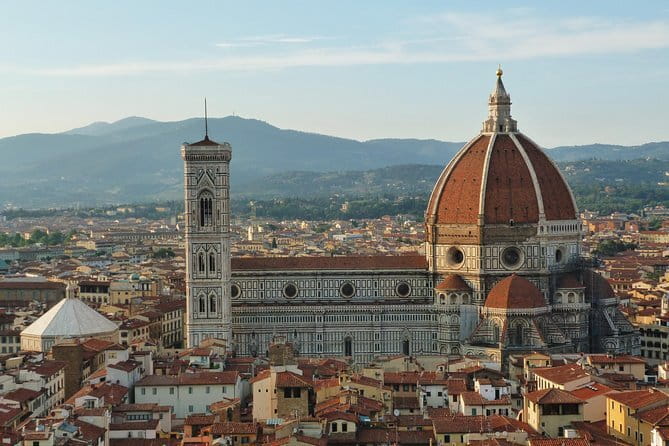
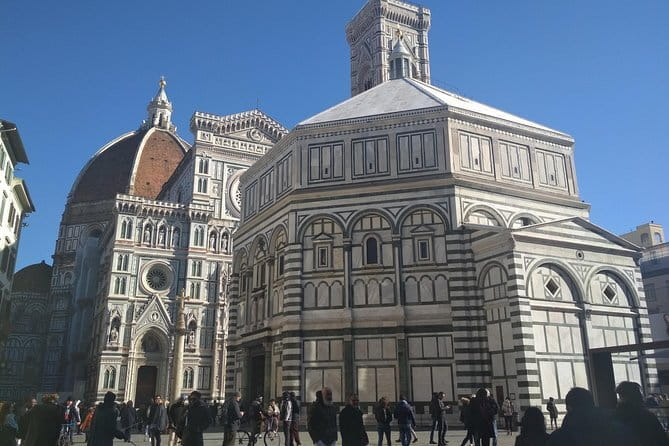
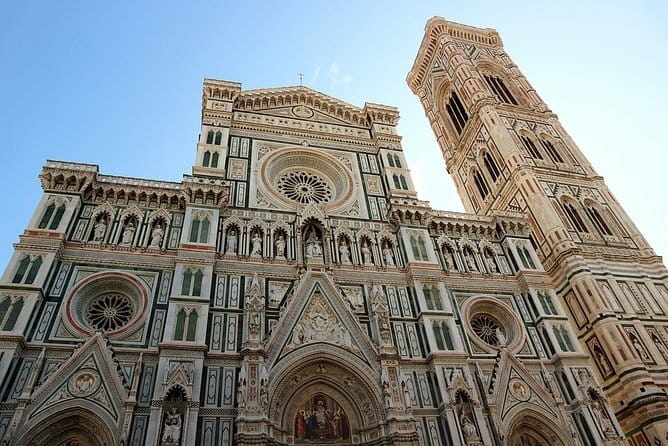
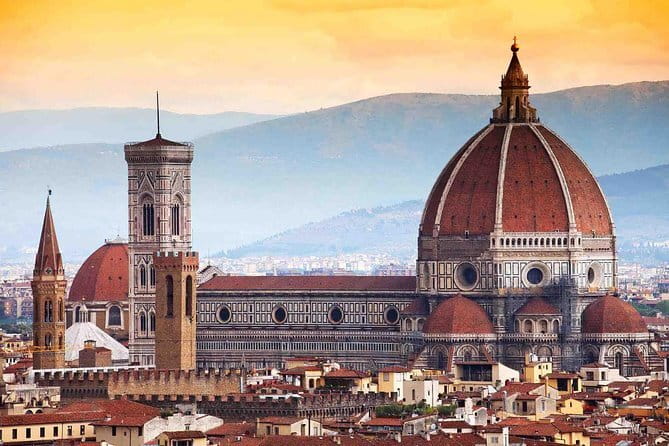
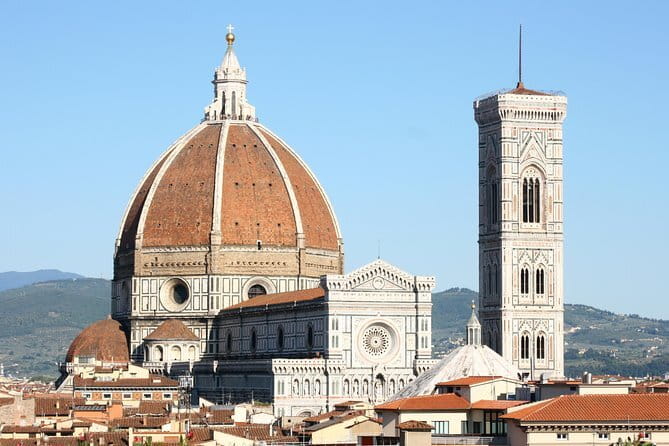
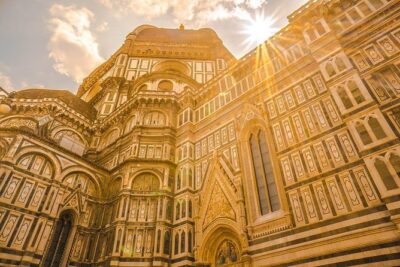
Next comes one of the most recognizable skyline moments in Italy. The tour gets you to the Duomo Complex area, in the big square often called Piazza del Duomo. Here, the guide sets the architecture story in plain terms, tying Brunelleschi’s Dome to why it was such a leap forward, and connecting Giotto’s Bell Tower and the Baptistery of San John.
You’re also in a place where it’s easy to get distracted, because everything looks important at once. That’s why a guided stop helps. You learn what to look for, and in return you get a better viewing experience on your own later.
The itinerary lists this as admission ticket free, which matters if you are trying to keep costs down. Still, the tour provider notes that entry to attractions is not included. In practice, that usually means you get excellent exterior and square time, while any extra interior tickets depend on what you choose to do beyond the guided route. If you want to go inside major sites, plan that separately.
Porcellino in the Straw Market: Luck, Legends, and a Photo Break
Then you hit a Florence ritual that’s simple and oddly fun. The stop is the Fontana del Porcellino, the bronze piglet in the Mercato della Paglia, the straw market. The tradition is that people rub the piglet’s nose for luck. The tour frames it as a superstition, but it’s also just a classic Florence moment.
This is a good palate cleanser between big “wow” monuments. After Duomo-scale architecture and Medici-level power, it’s a switch to street-level symbolism. You get a quick moment to look for details on the statue, take photos, and reset for the next cluster of sculpture and palaces.
The stop is short in the itinerary, around 10 minutes. If you really want time for photos, arrive ready to move fast once your group is there. This is one of those “you’ll see it, then you’ll move on” stops.
Piazza della Signoria: Sculpture, Politics, and Palazzo Vecchio Dominance
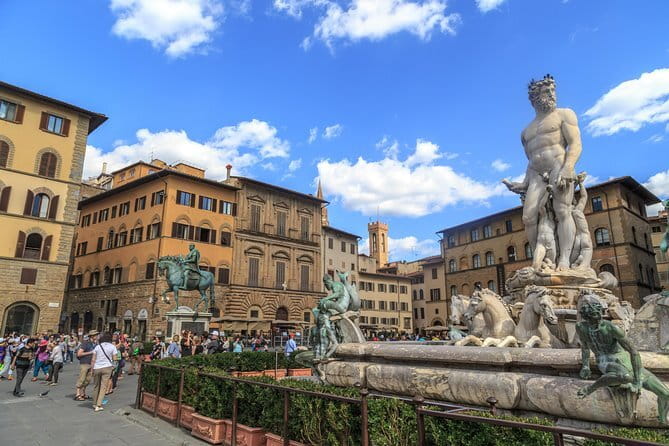
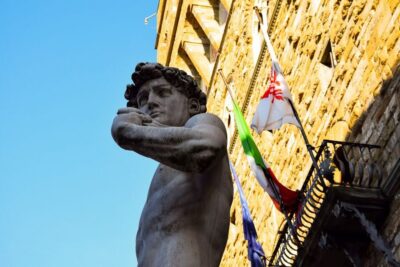
Piazza della Signoria is the kind of place where Florence history spills out into the open air. The square is dominated by Palazzo Vecchio, and it functions like a public room for art and authority.
This stop is valuable because it turns the city into an outdoor museum concept. You get pointed attention on famous sculptures, including Giambologna’s Rape of the Sabine Women. The tour also gives you the feel of how this square has served as a stage for Florence civic life over centuries.
If you like your Florence history tied to real settings, this is one of the stronger stops. You can see why people call these squares “stages” for public power. And when you walk away, it’s easier to recognize how many landmarks in Florence relate to one another.
The itinerary lists this as admission ticket free. That’s helpful. It means you can keep spending on food and coffee instead of tickets.
Florence walks that make the stone streets tell the story
Following the Vasari Corridor Externally, Then Sliding Into Ponte Vecchio
One of the tour’s smartest ideas is that it does not just stop at a single famous building. It points you along an external path linked to the Vasari Corridor, explaining how the corridor connects spaces.
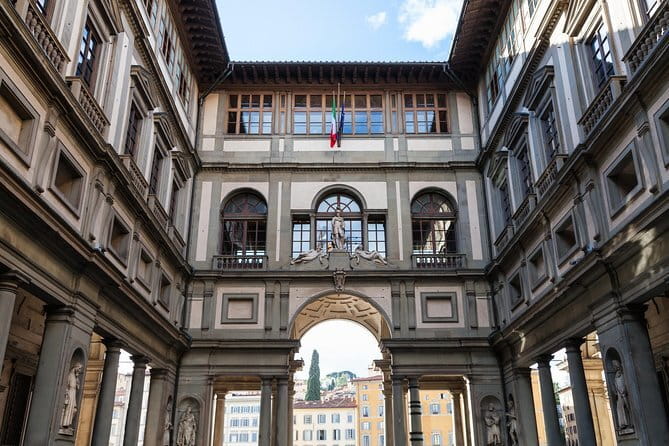
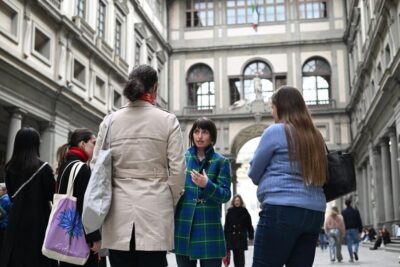
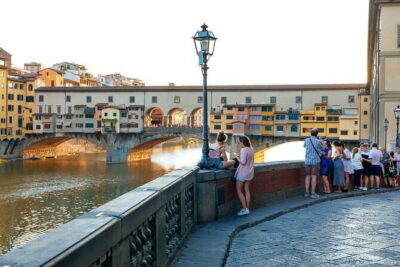
You pass by the Uffizi Gallery courtyard area as part of this corridor story, then you cross toward the Arno River with views and walking time that leads you to Ponte Vecchio. The itinerary is explicit that you walk along the historic Ponte Vecchio, described as the oldest bridge in Florence and often nicknamed the jewels bridge for its visual character.
Now, a small reality check. You are following the corridor path externally, not walking inside the corridor itself. That’s still useful. You get the geography lesson, and it makes it easier to later understand why Uffizi and the riverfront areas matter so much.
Ponte Vecchio is also where the tour ends up placing you in a position to keep going. If you want to do more on your own, you can cross to the other side, grab a meal, or simply wander streets radiating away from the river.
The itinerary lists Ponte Vecchio time as about 15 minutes, with admission ticket free. That usually means plenty of time to look around and take photos, but not enough time to do longer museum stops.
Medieval Florence: Dante’s Area, Badia Fiorentina, and Bargello
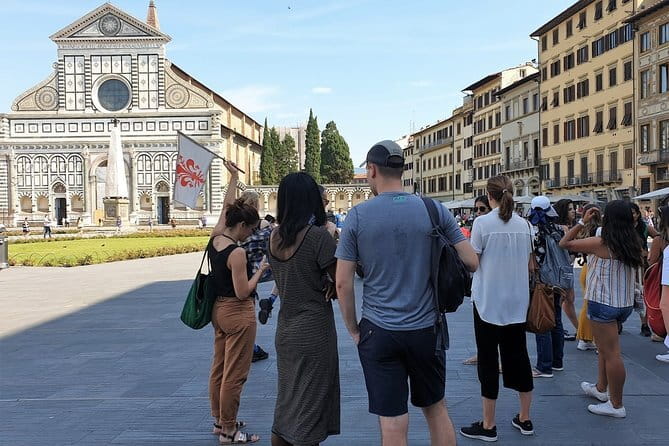
The final stretch shifts you into the medieval quarters. This part matters because Florence is not only Renaissance. You hear about Dante Alighieri living in the area, and you visit two landmark stops in the neighborhood feel you might miss if you stay purely in the Duomo to Uffizi corridor.
The itinerary includes Badia Fiorentina and Bargello Palace. Even if you do not go inside, the idea here is that you end with a different “texture” of Florence, tighter and older in feeling, before you disperse on your own.
This is also a practical time to think about how you want to spend the rest of your day. If you come on a day when you still want to see museums, you can plan next steps based on where you end up. If you’re done with big sights, you’re close to good strolling territory.
Price and Value: Why $30.04 Can Make Sense
Let’s do the math in real-world terms. You pay $30.04 per person for a 1 hour 30 minute guided loop, plus:
- Local professional guides
- Access to a self-guided mobile city guide
- Multilingual audio commentary of itineraries and points of interest
- Assistance at the meeting point
This can be a strong value if you’re the kind of traveler who benefits from structure. Florence is famous, which means it’s also confusing for first-time planning. A guide does the work of turning a pile of landmarks into a sequence you can remember.
It’s also good value because a lot of what you see is either in public spaces or in areas where the itinerary lists admission as free. That helps you keep the budget under control while still getting context.
The main “cost” is not money. It’s your phone. The app experience requires your own smartphone and headphones, and headphones are not included. If you travel with wired headphones, test them before you leave your hotel. If your phone lacks audio output for your kind of headphones, bring an adapter.
What You’ll Get From the VOX CITY App After the Walk
One of the practical perks is that the guided route is paired with an app plan for continuing on your own. You download VOX CITY from the App Store for iOS or Android. Before you start, you receive the app credentials from the assistant.
Once the guided portion ends, you can use the app’s self-guided itineraries and multilingual audio commentary at points of interest. This is especially helpful if you want to revisit a spot you liked, or if your day turns into a slow wander and you want the audio to point you where to look next.
The tour also notes that the audio exists for itineraries and interest points, which usually means you can keep the story going even after you’ve left your guide behind.
My advice: do not treat the app as optional. If you want the best value, plan your headphones and get the app ready before the tour starts so you are not scrambling later.
Tour Pacing, Crowd Reality, and How to Avoid the Common Headaches
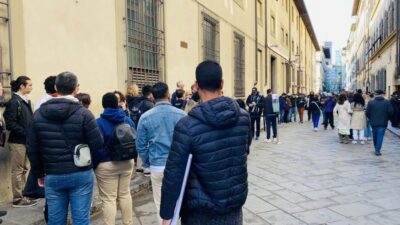
This is a walking tour in central Florence, so you should expect some crowd pressure at squares and landmark entrances. Your guide may also need to pause while switching between languages if the group is mixed. A few past experiences flagged this issue, and it makes sense: crowds slow everyone down, and language switching eats time.
Here’s how you protect your experience:
- Arrive early enough at Via de’ Martelli to find your guide quickly.
- Wear shoes you can walk in for an extended city stroll.
- Bring layers if the weather is chilly. Reviews mentioned standing around in cold conditions.
- If you care about English only, confirm language setup at booking, not on arrival.
Also, while the itinerary lists several stops as free to enter, the general rule says entry to attractions is not included. So if you want to go inside big interiors, treat those as add-on plans, not “covered automatically” by this walk.
Who This Tour Suits Best
I think this tour fits these travelers best:
- First-timers who want the main Florence landmarks connected into one story
- Short-stay visitors, especially if you only have a few hours for guided orientation
- Travelers who like Medici politics and art as a theme, not just a list of buildings
- People who want to end near Ponte Vecchio to keep strolling after the tour
It may feel less ideal if you’re after a lot of indoor museum time. This is a walking tour with viewpoint stops and exterior connections. It is not positioned as a “go inside everything” day.
Should You Book It?
If you want a fast, guided overview that links Renaissance and medieval Florence through the Medici, architecture, sculpture, and street-level rituals, I’d book this. The blend of San Lorenzo and the Duomo area plus the pivot into Piazza della Signoria and the Ponte Vecchio route gives you a memorable “spine” through the city.
I would only hesitate if you are extremely sensitive to timing or language switching. In crowded Florence, a mixed-language group can slow the flow. If that would drive you nuts, ask about language setup ahead of time, and you’ll make the day work for you.
FAQ
How long is the Renaissance and Medieval Florence Guided Walking Tour?
It lasts about 1 hour 30 minutes.
What does the tour cost?
The price listed is $30.04 per person.
What is included in the price?
You get local professional guides, access to a self-guided mobile city guide, multilingual audio commentary, and assistance at the meeting point.
What do I need to use the mobile app?
You need your own smartphone and headphones. Headphones are not included. You can download the VOX CITY app on iOS or Android.
Where does the tour start and end?
It starts at Via de’ Martelli, 50, 50122 Firenze FI, Italy, and ends at Ponte Vecchio, 50125 Firenze FI, Italy.
Are attraction tickets included?
Entry to attractions is not included. The itinerary lists some stops as free, but if you want to go inside major sites, you should plan for separate tickets.
Can I cancel and get a full refund?
Yes. You can cancel up to 24 hours in advance for a full refund.
More Florence tours to open next
- The Best tour in Florence: Renaissance & Medici Tales – guided by a STORYTELLER
★ 5.0 · 12,316 reviews
Every Florence review, in one place
- Tuscany Day Trip from Florence: Siena, San Gimignano, Pisa and Lunch at a Winery
★ 5.0 · 21,634 reviews - The Best tour in Florence: Renaissance & Medici Tales – guided by a STORYTELLER
★ 5.0 · 12,316 reviews




The Medici thread through Florence
- The Best tour in Florence: Renaissance & Medici Tales – guided by a STORYTELLER
★ 5.0 · 12,316 reviews

Florence picks that sit just beyond this itinerary
- One Hour Uffizi Guided Tour: Masterpieces of the Renaissance
★ 5.0 · 3 reviews - Sightseeing Tuscany by touring bike – 1 day rental
★ 5.0 · 3 reviews - Private Siena, S. Gimignano, Chianti Road and Wine Tasting
★ 5.0 · 3 reviews - Bargello Museum Private Tour: Michelangelo’s Bacchus & Donatello’s David
★ 5.0 · 3 reviews - Authentic Florence Cooking Class at Costanza’s 1839 Family Estate
★ 5.0 · 3 reviews - San Gimignano and Volterra private tour: etruscans, romans and middle age jewels
★ 5.0 · 3 reviews
More Medici Florence & Renaissance Stories worth comparing.
 ★ 5.0The Best tour in Florence: Renaissance & Medici Tales – guided by a STORYTELLERFrom $312,316 reviews
 ★ 5.0The Best Tour in Florence: Renaissance and Medici TalesFrom $310,810 reviews
 ★ 4.8Renaissance and Medici Tales Guided Walking TourFrom $21,549 reviews
 ★ 4.4Mysteries of the Medici Guided Walking TourFrom $31940 reviews
 ★ 4.0Accademia Gallery: Michelangelo’s David and High Renaissance ArtFrom $43872 reviews
 ★ 4.7Guided Tour of Medici Family Secrets and ChapelsFrom $93512 reviews
 ★ 5.0Florence Private Tour: Renaissance, Famous Families & Hidden GemsFrom $199233 reviews
 ★ 4.5Pitti Palace, Palatina Gallery and the Medici: Arts and Power in Florence.From $82223 reviews
Find this experience in another shortlist