
Florence field review · WALKING TOURS
Heart of Florence Guided Walking Tour
Florence can feel huge. This 90 minute guided walk gives you a tight, logical route through the core sights. You start at Piazza del Duomo and get clear context for Brunelleschi’s dome and Giotto’s bell tower, plus stop by standout spots like the Baptistery doors by Lorenzo Ghiberti.
What I like most is how the guide turns famous views into an easy map you can remember. The second big win is the ending stretch near Ponte Vecchio, so you finish with that iconic photo and a sense of where everything sits. One consideration: it moves at walking tour pace, so if you want long sits inside churches or you dislike crowds, you may want more time in your schedule.
Key highlights worth your attention
- Brunelleschi and Giotto up close with quick, practical explanations of what you are actually looking at
- Baptistery details including Porta del Paradiso, the gilded bronze doors associated with Lorenzo Ghiberti
- Ponte Vecchio finish that lands you right where you can keep exploring on your own
- Coin toss and the Porcellino pig for Florence-style good luck rituals
- Small group size (up to 20), with headphones if the group is larger than 10
Florence walks that make the stone streets tell the story
- Florence: Guided Walking Tour★ 4.5 · 3,334 reviews
- Skip the line: Uffizi and Accademia Small Group Walking Tour★ 4.5 · 3,135 reviews
- Florence: Guided Walking Tour★ 4.6 · 1,602 reviews
- Florence: Renaissance and Medici Tales Guided Walking Tour★ 4.8 · 1,549 reviews
The “Heart of Florence” route, in plain terms
This tour is built for first timers, or for anyone who has a short runway in Florence but still wants the must sees to click into place. The pacing is active, but not rushed in a chaotic way, and the guide’s job is to connect each stop to the next one so you feel like you understand the city, not just walked through it.
You meet in the historic center, then you work through the religious and political core. After that, you slide into the commercial and landmark streets where Florence feels like a living city, not a museum. By the end, Ponte Vecchio anchors the whole experience.
Who this works best for
This is a good fit if:
- You have about 1.5 hours to spare and want a high value overview.
- You like walking with a plan, rather than guessing where to go next.
- You want help spotting what matters, especially around the Duomo complex and Piazza della Signoria.
It is also a smart starter on day one. Even if you return later, you will know what you already saw and what you want to see again.
Price and what you get for $30.04
At $30.04 per person for roughly 90 minutes, the real value is not in any single “big ticket” landmark. It’s the threading, the explanations, and the route logic. Florence is famous for being beautiful, but it can also be confusing. A guide helps you connect major names, styles, and buildings so you stop feeling like you are just collecting photos.
Here’s what matters for value:
- A local professional guide who can connect monuments to the city’s story.
- Small group touring (maximum 20), which usually means you can actually hear and ask questions.
- Headphones for groups over 10, which is huge on a busy square day.
- Optional traditional Tuscan lunch if you want to slow down after the walk.
What is not included: several sights are listed as admission not included. That is normal for walking tours in Florence. Plan to pay separately only if you decide you want to go inside beyond the exterior focus.
Meeting at Piazza del Duomo: start smart, dress for churches
You meet at 2:45pm in the Duomo area, in the center of Florence’s historic district. The listed start point is Via de’ Martelli, 50, and the tour description puts you at Piazza del Duomo as the meeting landmark.
Practical tip: wear comfortable shoes. This is a walking route with multiple stops, and Florence streets are not designed for sneakers that hate cobblestones.
Also, you will pass through religious sites. Bring clothing that fits the moment. You do not need to be in a full outfit plan, but you should cover up appropriately so you are not stuck on the edge of an entrance wishing you had planned five minutes better.
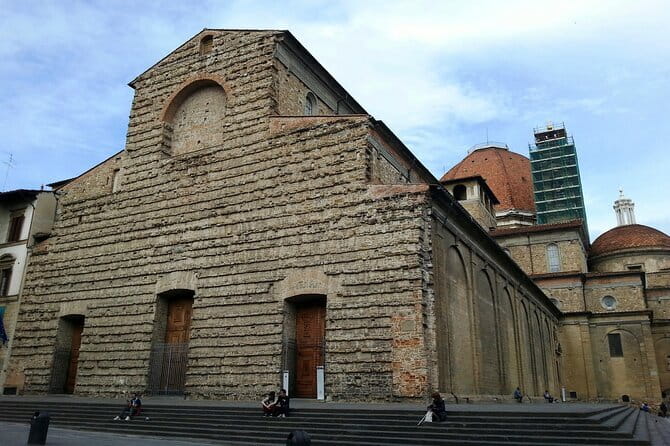
Stop 1, Palazzo Medici Riccardi: Medici power before the art speeches
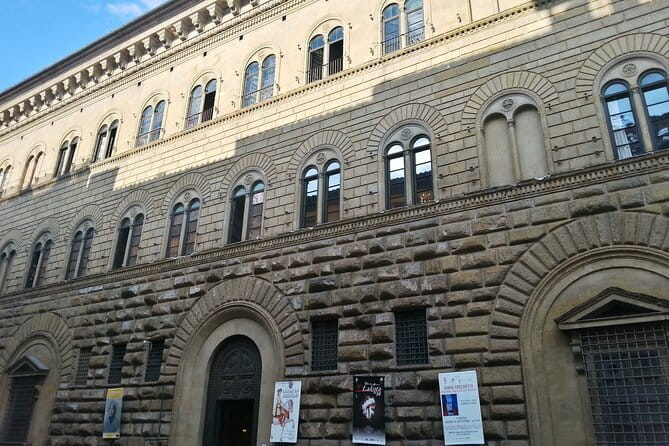
Palazzo Medici Riccardi is the first stop, in the San Lorenzo district. Even if you have seen “Medici” mentioned in guidebooks, this is where the name starts to feel real. This residence links wealth, politics, and patronage to the shape of Florence itself.
Why it works in a walking tour:
- The outside view is enough to place the building in the city’s early power network.
- It sets you up for everything you will see later, where civic and religious authority overlap.
Possible drawback: since admission is not included, you will not be going inside. If you are hoping for a museum-style look, you will want to pair this with a separate ticket later.
When a guide is worth having beside you in Florence
Stop 2, Piazza di San Lorenzo: the market energy hit
Next you reach Piazza di San Lorenzo. This is the local, everyday Florence part of the route: surrounding historic buildings, lively market life, and the nearby church area you recognize from many Florence itineraries.
What you get here is perspective. Florence’s landmarks are grand, but the city’s rhythm is market, street life, and daily movement. This stop helps you remember that the Duomo complex is not the only center of gravity.
If you are sensitive to crowding, plan for people flow. This square is designed for foot traffic, and your group will weave through it.
Stop 3, Piazza San Giovanni: getting oriented around the Baptistery and Dome
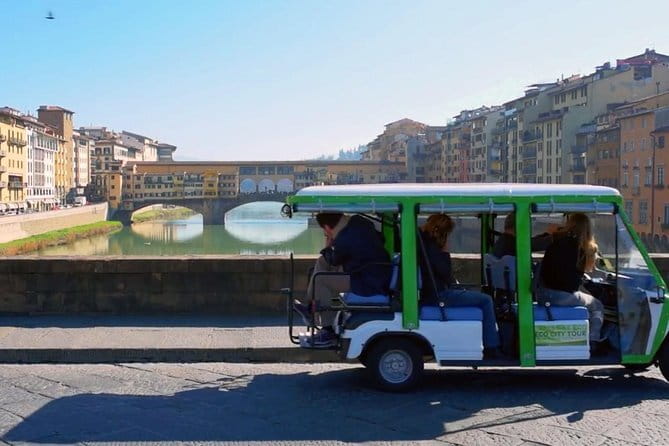
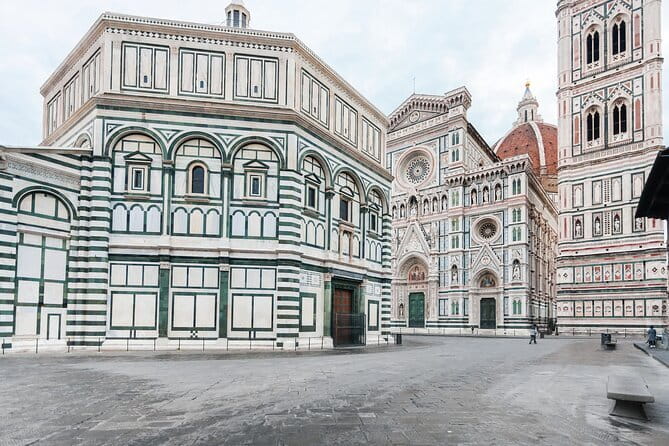
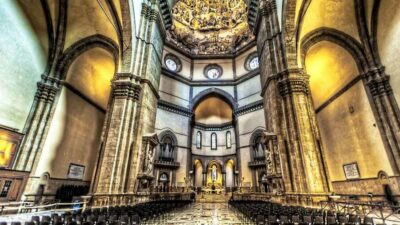
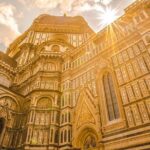
Piazza San Giovanni is where Florence’s religious heavyweight trio comes into focus. You get the Cathedral with Brunelleschi’s dome, Giotto’s bell tower, and the Baptistery of San Giovanni.
This is one of the most useful moments of the tour because it gives you a layout you can picture later. Once you see these landmarks framed from the right angles, it is easier to understand why people obsess over the geometry and the design choices.
You also start seeing how the route will connect to the later civic square at Piazza della Signoria. Florence’s center is tight, and the walking path follows that logic.
Stop 4, Duomo complex: what to look for when you are face-to-face
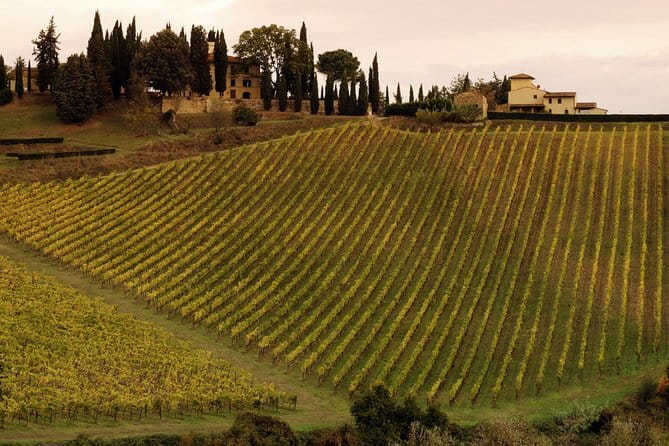
At Duomo, you are focused on the whole monument complex that characterizes Florence’s religious center:
- The Cathedral, featuring Brunelleschi’s dome
- The Baptistery of San Giovanni with the Porta del Paradiso, linked to Lorenzo Ghiberti
- Giotto’s elegant bell tower
A walking tour is the perfect length for this stop because it teaches you “what you are looking at” without trapping you in a long line for interior access. If you only have one short window, this is the place you will feel the most benefit from a guide.
Quick guide to the big names you will hear
- Brunelleschi’s dome: the dome is not just impressive, it is a key signature of Renaissance engineering thinking.
- Giotto’s campanile: the bell tower is a style lesson you can spot even from a distance.
- Porta del Paradiso: the gilded bronze doors are tied to Lorenzo Ghiberti, and the doors are often a major highlight when you study the Duomo complex more closely.
Admission is listed as not included here, so this is an exterior experience. If you want inside access, you will need separate plans later.
Stop 5, Orsanmichele: Gothic art for people who think churches are boring
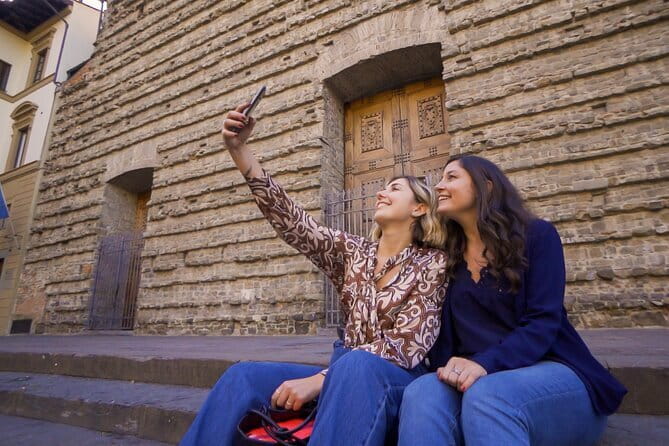
Orsanmichele comes next, and it is a different mood from the Duomo. This church and museum complex is described as a Florentine gothic art masterpiece, with shrines decorated by statues of patron saints connected to medieval trade guilds.
Why this is a smart stop on a short tour:
- It adds variety. You are not only seeing the same architectural flavor.
- You learn the idea that churches in Florence also functioned as civic identity for powerful groups.
Admission is listed as not included, so the tour focus is mainly on the exterior and the key concept. Still, it is enough to shift your view from pretty buildings to how Florentines used art and architecture for social signaling.
Stop 6, Mercato del Porcellino: rub the pig, toss the coin
This is where the tour becomes fun and very Florence. You head to Mercato del Porcellino, and you do the classic good luck ritual: rub the nose of the famous porcellino pig and toss a coin into the fountain.
These are simple, playful moments, but they are also good anchors for memory. When you later tell someone about Florence, you will likely remember the pig and the fountain more easily than a random alley.
Practical note: you will be in a street-market setting. Expect people and take care with phones in hand. The coin toss and rubbing gets busy fast.
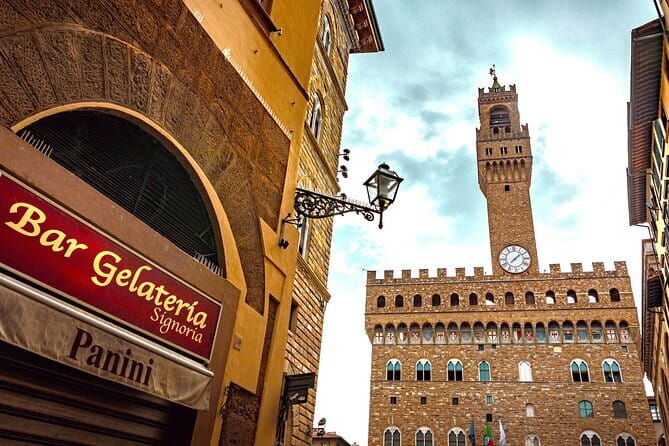
Stop 7, Piazza della Signoria: the outdoor museum effect
Piazza della Signoria is one of Florence’s best-known squares and basically a political and art stage all at once. You will see the works that anchor the space, including:
- Bartolomeo Ammannati’s Fountain of Neptune
- A replica of Michelangelo’s David
- Loggia dei Lanzi
- Arnolfo di Cambio
This is a top-value stop because it teaches you how the city organized power visually. You are not just seeing art, you are seeing where Florentines gathered, argued, and displayed authority.
A note on the “replica” detail
You do not need to be an art historian to appreciate it. Even a replica matters here because it shows what Florence wanted to project. It is part of the story of how Michelangelo’s David became a symbol.
Potential drawback: Piazza della Signoria can get crowded, and your group time is limited. If you want to linger long enough for close detail, you might need to come back after the tour ends.
Stop 8, Ponte Vecchio: the iconic finish, with the best next steps
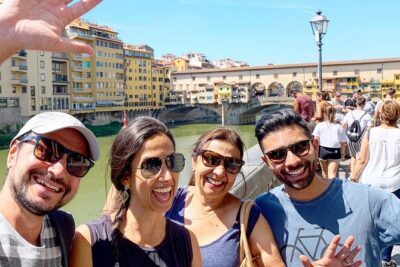
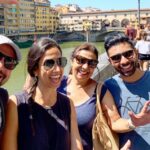
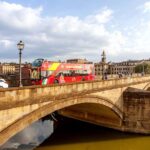
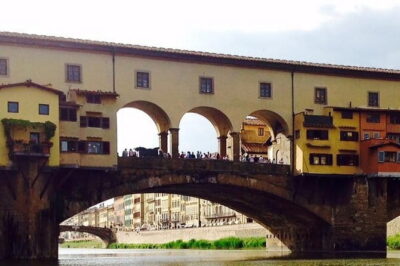
You end at Ponte Vecchio, the oldest and most famous bridge in Florence. Even if you have seen it in photos, the real value is how the guide sets you up to recognize what you are seeing in the moment: the bridge layout, the surrounding buildings, and why this spot keeps drawing people back.
Finishing here is smart. You are dropped close to a major sightseeing hub, so after the tour, you can keep moving in whichever direction you feel like.
Optional Tuscan lunch: add fuel if your schedule allows
If you choose the lunch option, you get a traditional Tuscan meal in the heart of Florence. It is a 3-course set menu, and drinks are paid on the spot.
This can be a great pairing if:
- You want to keep the day moving without hunting for food right after.
- You like structured plans that protect your time.
The trade-off: lunch adds time. So make sure you do not plan a second “must” reservation right after the walk unless you know your own pace.
Group size, headphones, and language: small details that really matter
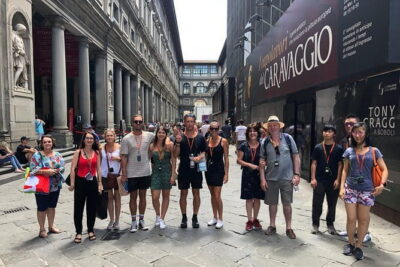
This tour caps at 20 travelers, and it is described as a small group tour. That size generally helps you hear the guide and keeps the route manageable.
Headphones are provided for groups over 10. If you hate missing half the story because the crowd is loud, this is a big plus.
Language is offered in English. There is also a note that from April to October it is monolingual, and from November 1st, 2024 to March 31st, 2025 Spanish language is confirmed with a minimum of 4 participants. The tour also mentions that guides may be provided in two languages due to operational reasons.
If English is a must for your trip, you should check what will be confirmed for your exact date before you lock in.
How much walking is this really?
The tour is about 1 hour 30 minutes, and you have multiple short stops. Each stop is only around 10 minutes. That means you are not stuck standing in one place forever, but you also do not get long, slow museum time.
So treat it like this:
- You are getting the map, the context, and the key visuals.
- You are not getting deep interior access everywhere.
If you love architecture and want more time inside specific sights, plan to budget additional hours later in your trip.
Should you book: who gets the most value
Book this tour if you want a smart first pass through Florence that helps you connect the Duomo complex to Piazza della Signoria and finish at Ponte Vecchio. The price makes sense for what you get: a structured route, a local guide, and a route that saves you time deciding where to go.
Skip it, or add a bigger plan, if:
- You want long time inside churches or museums during this same window.
- You prefer slow travel with lots of personal wandering and minimal group movement.
- You are very specific about language quality and want to avoid any chance of mixed delivery.
FAQ
What is the duration of the Heart of Florence Guided Walking Tour?
The tour lasts about 1 hour 30 minutes.
Where do I meet the guide?
You meet at Piazza del Duomo in the historic center of Florence, with the listed starting address near Via de’ Martelli, 50, 50122 Firenze FI.
What time does the tour start?
The tour meeting time is 2:45pm.
Where does the tour end?
The tour ends at Ponte Vecchio.
What is included in the price?
The price includes a local professional guide, a small group tour, and multilingual assistance at the meeting point. If you select the lunch option, that is also included. Headphones are provided for groups over 10 participants.
Are Duomo, Baptistery, and Orsanmichele tickets included?
Admission tickets are not included for the stops where admission is marked as not included.
Is there a lunch option?
Yes. If you select it, you get a typical Tuscan lunch with a 3-course set menu. Drinks are paid on the spot.
What language is the tour offered in?
The tour is offered in English. Seasonal notes mention Spanish confirmation in a specific period, and the tour may be exceptionally provided in two languages due to operational reasons.
How big is the group?
This tour has a maximum of 20 travelers.
Is cancellation free?
Yes, you can cancel for a full refund if you cancel at least 24 hours in advance.
Florence at walking speed
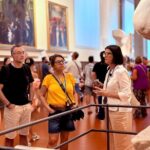
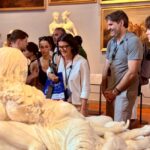
More Florence tours to open next
- The Best tour in Florence: Renaissance & Medici Tales – guided by a STORYTELLER
★ 5.0 · 12,316 reviews
Every Florence review, in one place
- Tuscany Day Trip from Florence: Siena, San Gimignano, Pisa and Lunch at a Winery
★ 5.0 · 21,634 reviews - The Best tour in Florence: Renaissance & Medici Tales – guided by a STORYTELLER
★ 5.0 · 12,316 reviews

Florence picks that sit just beyond this itinerary
- One Hour Uffizi Guided Tour: Masterpieces of the Renaissance
★ 5.0 · 3 reviews - Sightseeing Tuscany by touring bike – 1 day rental
★ 5.0 · 3 reviews - Private Siena, S. Gimignano, Chianti Road and Wine Tasting
★ 5.0 · 3 reviews - Bargello Museum Private Tour: Michelangelo’s Bacchus & Donatello’s David
★ 5.0 · 3 reviews - Authentic Florence Cooking Class at Costanza’s 1839 Family Estate
★ 5.0 · 3 reviews - San Gimignano and Volterra private tour: etruscans, romans and middle age jewels
★ 5.0 · 3 reviews
More Walking Tours worth comparing.
 ★ 4.5Guided Walking TourFrom $313,334 reviews
 ★ 4.5Skip the line: Uffizi and Accademia Small Group Walking TourFrom $1483,135 reviews
★ 4.6Guided Walking TourFrom $271,602 reviews
★ 4.5Skip the line: Uffizi and Accademia Small Group Walking TourFrom $1483,135 reviews
★ 4.6Guided Walking TourFrom $271,602 reviews
 ★ 4.8Renaissance and Medici Tales Guided Walking TourFrom $21,549 reviews
 ★ 4.7Uffizi & Accademia Small Group Walking TourFrom $1481,380 reviews
 ★ 5.0Skip-the-Line Florence Highlights and David Walking TourFrom $1171,127 reviews
 ★ 4.6Dark Mysteries and Legends Guided Walking TourFrom $21,081 reviews
 ★ 4.5Florence in a Day: Michelangelo’s David, Uffizi and Guided City Walking TourFrom $1341,048 reviews
Find this experience in another shortlist