
Florence field review · WALKING TOURS
Florence Walking Tour
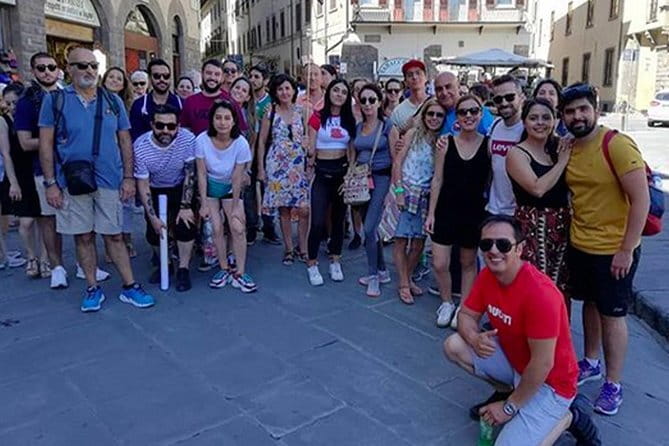
Florence clicks into place on a guided walk. This is a short, English-language stroll designed to help you understand the city’s main sights without playing map ping-pong, from Medici landmarks to the Duomo area and across toward Ponte Vecchio.
I like the small group format (max 4), and I also like that it is priced low, with a pay-what-you-feel approach using a voluntary tip at the end.
One thing to consider, audio can be inconsistent at times, so plan to stay close to your guide and be ready for a louder street environment.
Key things you will notice on this Florence walk
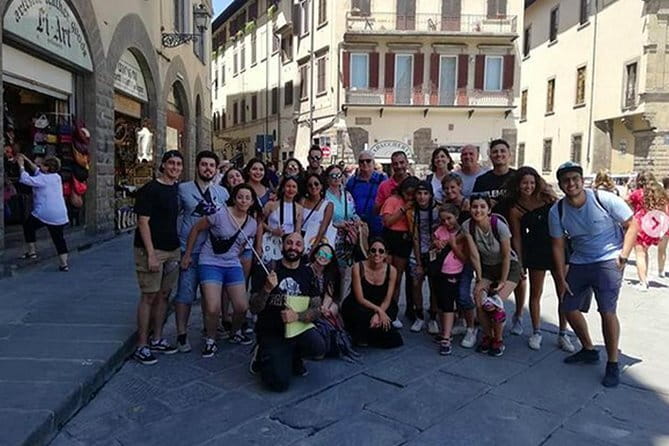
- Fast orientation of Florence’s layout in about 2.5 hours, not a full-day commitment
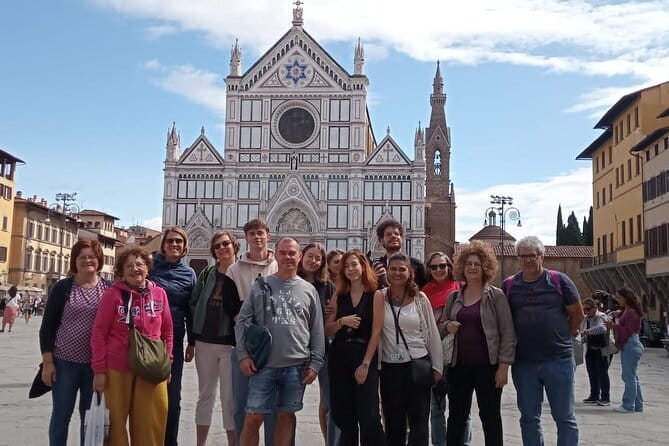
- Big-name sights in an efficient route, including Duomo, Signoria, Ponte Vecchio, and Santa Croce
- Small group energy that makes questions easier
- Practical local guidance, often including how to plan your next stops and meals
- Exterior viewing style, so you can keep moving without ticket lines slowing you down
Florence walks that make the stone streets tell the story
- Florence: Guided Walking Tour★ 4.5 · 3,334 reviews
- Skip the line: Uffizi and Accademia Small Group Walking Tour★ 4.5 · 3,135 reviews
- Florence: Guided Walking Tour★ 4.6 · 1,602 reviews
- Florence: Renaissance and Medici Tales Guided Walking Tour★ 4.8 · 1,549 reviews
Why this 2.5 hour orientation walk works so well
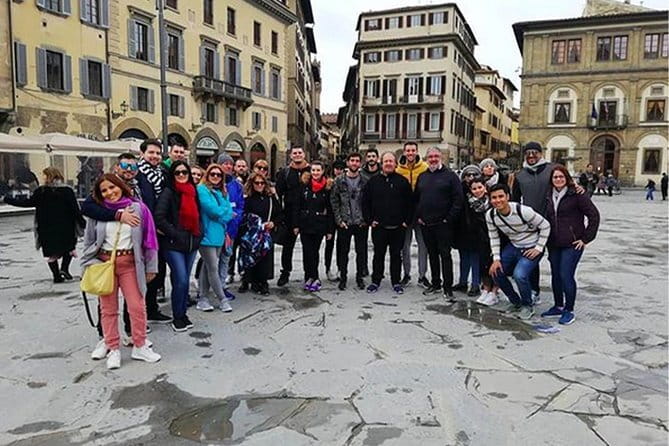
Florence is compact, but it still feels maze-like when you first arrive. This tour is built for that exact moment. In about 2 hours 30 minutes, you get a clear sense of where the power centers were, where the religious sights sit, and how the river bends the city together.
I love that the route connects landmark to landmark with explanations that help you see patterns. You will understand why certain squares matter, why certain buildings dominate the skyline, and how the city’s identity is stitched from family power, churches, and trade.
You do not need to be an art expert. The walk is mostly about direction and context, so you can decide later what to revisit for a longer museum visit or a slower wander.
Meeting at Piazza dell’Unità Italiana, then ending in a new spot
You start at Piazza dell’Unità Italiana, 50123 Firenze FI, Italy. That choice helps because you are already in the city fabric, and you can move from there toward the historic core on foot.
At the end, the activity finishes in a different location, so do check your exact end-point details before you walk off. This matters because Florence streets are busy and finding a meeting end by guesswork can waste time.
The good news: it is near public transportation. If you want to pair the walk with dinner plans or a museum reservation, it is easier to slot it into a normal day instead of building your whole schedule around it.
Medici Chapel, San Lorenzo Market, and the Medici Riccardi Palace
This is the “who ran Florence” part of the day, and it starts with the Medici Chapel. Even if you only catch glimpses from the street, you get the sense that this city’s art and architecture are deeply tied to the Medici family and the role they played in Florentine life.
Next you head toward the San Lorenzo Market area. This is where history meets daily life. Market zones keep Florence feeling real, not frozen behind museum glass, so you get a quick read on what this neighborhood feels like now.
From there, you pass the Medici Riccardi Palace and the San Lorenzo Church. This combo is useful because it teaches you to spot the difference between official power, religious structures, and the way the city repurposes its identity over time. You also get a better instinct for how to navigate later when you choose whether to spend time inside these spaces.
What to watch for: look up at details and think in layers. Florence often rewards that habit. You will likely notice how the streets guide your eyes toward the big focal points, which makes it easier to plan your own self-guided stops later.
Possible drawback: this stretch can be busy and noisy near commercial areas. If you struggle with crowded sidewalks, plan to keep your spot near the guide and be ready to pause frequently rather than sprinting between sights.
Duomo Cathedral and Baptistery: Florence’s most photographed heart
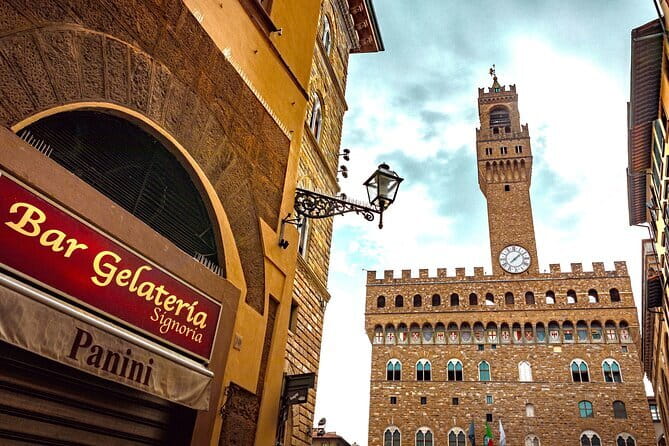
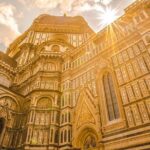
No Florence walk is complete without the Duomo complex. As you move into the Duomo Cathedral area, you get a sense of scale quickly. The streets and the surrounding buildings are arranged so the cathedral dominates your view, and that is part of why this spot feels like the city’s anchor.
Then you visit the Baptistery area. The Baptistery is often photographed from different angles, but the real value here is understanding why it is such a landmark for locals and why it connects to the larger religious story of the city.
This section is also where your orientation pays off. Once you understand how the Duomo area sits relative to major squares, you stop feeling like you are walking randomly. Instead, you start moving with intention, which helps whether you are looking for views, churches, or your next museum visit.
Practical tip: if you plan to do a Duomo-related visit later, use this walk to figure out which direction you want to approach from. Getting the “feel” of the area first saves you time the next day.
What you might miss: the tour is designed to keep admissions free, so you are not counting on entry into ticket-only spaces. You will still get famous views and explanations, but if you want indoor time, you will likely schedule that separately.
Repubblica Square and Orsanmichele to Porcellino and Signoria Square

After the cathedral area, the tour shifts into street-level Florence, with Repubblica Square as a key transition point. This square helps you understand how Florence opens up into larger gathering spaces. Even if you only spend a few minutes looking around, you get a sense of the city’s social rhythm.
Then you reach Orsanmichele Church. This stop matters because it shows how Florence blends art with public life. Churches here are not just quiet interiors, they are part of the everyday city scene, and the explanations on the walk help you interpret what you are seeing.
Porcellino is a quick, memorable moment. It is one of those Florence icons that feels instantly recognizable once you are near it. It also works well as a pause point, giving you a short break in the pacing while still keeping the route on track.
Signoria Square is the next major shift. This is where the city’s identity feels political and artistic at the same time, and the guide points you toward the logic of the space. You get a better sense of why this area has been central for centuries, and how it fits into Florence’s broader story.
Small-group advantage here: with a max group size, you usually get more chance to ask questions while you are standing in the right spot for photos or for hearing details. If you like to ask why something matters, this format is a plus.


Uffizi exterior, Ponte Vecchio, and Santa Croce Square
Uffizi is included as an exterior stop, which is smart for an orientation walk. You can see the museum’s presence in the streetscape without committing to a longer timed-entry plan right then. That gives you a feel for the area, and you can decide later if you want to trade a few hours for masterpieces inside.
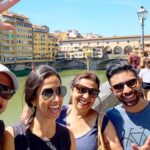
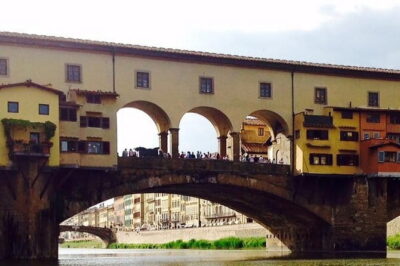
Then you head to Ponte Vecchio, the river crossing Florence is famous for. This is one of the easiest places to understand why the city built around the Arno. The views tell the story even before the guide finishes the explanation, because the bridge is both a passage and a showpiece.
Finally, the tour ends in the Santa Croce Square area. Santa Croce gives you a natural finishing point because it sits in a part of the city where you can keep walking, browse, or pivot to your next planned activity. It is also a good “bookmark” spot, so you can decide which direction to explore after the tour ends.
If you like building a sightseeing map in your head, this last stretch helps. You connect the river, the museum corridor feel, and the broader Santa Croce neighborhood mood into a single mental picture.
The $3.63 price and the tip-style value choice
This tour is listed at $3.63 per person for the experience. That is remarkably low for a guided, 2.5-hour walking format in a city like Florence. The highlight notes a voluntary tip at the end, and that is a key part of the value equation.
Here is how I think about it: you are paying mostly for orientation and a guide’s context, not for museum admissions. The itinerary is built around famous sightlines and learning points, so your “cost” is time on your feet and your ticket is the chance to get the story fast.
The added practical value is that it is offered in English and uses a mobile ticket. That reduces friction on a travel day when you are juggling other reservations.
Group size also boosts value. With a maximum of 4 travelers, you are less likely to feel like you are being herded through photo stops. It is easier for the guide to keep the pace, answer questions, and course-correct if someone needs a quick restroom break or has trouble hearing in a loud stretch.
Making it smooth in real Florence: weather, sound, and timing
This walk requires good weather. If rain is in the forecast, plan for the tour to shift or cancel based on conditions, and keep your schedule flexible.
Audio is the only consistent complaint theme. At times, the microphone and speaker system can be hard to hear, or the volume can make voices sound garbled. Your best move is simple: stand where you can hear clearly, do not force yourself to hear from far back, and treat it like a street walk first and a lecture second.
Timing can also be a factor in old-city walking tours. One thing you can control is this: confirm the start time close to departure. If the time changes, you want to be ready to go, because Florence streets make it hard to recover from a missed meeting point.
If you want the biggest payoff from this tour, do it early in your trip. That way, when you revisit places later, you will already know which ones to prioritize and which streets to take to get there faster.
Should you book this Florence walking tour
Book it if you want a quick, low-cost orientation and you value a guide who can explain what you are seeing while you walk. It is especially good for first-time Florence visitors who feel overwhelmed by the sheer number of famous sites.
Skip it or pair it with other plans if you are mainly chasing museum entry. This is an exterior-heavy orientation experience, so you will likely want to add separate ticketed visits once you know your priorities.
If you like the idea of a small group and practical guidance while still seeing the city’s top highlights, this is one of the easiest ways to get your bearings fast.
FAQ
How long is the Florence walking tour?
It runs about 2 hours 30 minutes.
What does the tour cost?
The price is $3.63 per person.
Is the tour offered in English, and do I get a mobile ticket?
Yes, it is offered in English, and you receive a mobile ticket.
Where do I meet the guide?
The meeting point is Piazza dell’Unità Italiana, 50123 Firenze FI, Italy.
Does the tour include paid admission to sights?
The activity lists admission ticket as free, so you should expect no paid entry fee built into the tour stops.
How many people are in the group?
This tour/activity has a maximum of 4 travelers.
What happens if the weather is bad?
The experience requires good weather. If it is canceled due to poor weather, you will be offered a different date or a full refund.
What is the cancellation policy for a full refund?
Free cancellation is available. You must cancel at least 24 hours in advance for a full refund.
Florence at walking speed

More Florence tours to open next
- The Best tour in Florence: Renaissance & Medici Tales – guided by a STORYTELLER
★ 5.0 · 12,316 reviews
Every Florence review, in one place
- Tuscany Day Trip from Florence: Siena, San Gimignano, Pisa and Lunch at a Winery
★ 5.0 · 21,634 reviews - The Best tour in Florence: Renaissance & Medici Tales – guided by a STORYTELLER
★ 5.0 · 12,316 reviews




Florence picks that sit just beyond this itinerary
- Florence: Duomo Complex Private Guided Tour & Optional Dome Climb
★ 5.0 · 4 reviews - Private Tour of Florence Cathedral, Bell Tower & Baptistery
★ 5.0 · 4 reviews - Michelangelo’s David Tour in the Accademia (Tickets NOT included)
★ 4.0 · 4 reviews - Exclusive Pisa Tour from Florence: With Skip-the-Line Access
★ 4.0 · 4 reviews - Full-Day Tour of Tuscany from Florence-small group up 8 pax
★ 4.5 · 4 reviews - Florence: Inferno Private Walking Tour
★ 5.0 · 4 reviews
More Walking Tours worth comparing.
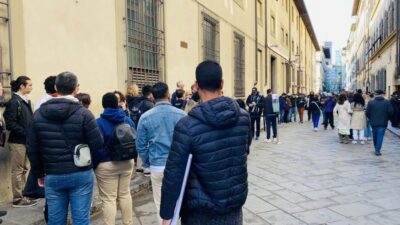 ★ 4.5Guided Walking TourFrom $313,334 reviews
 ★ 4.5Skip the line: Uffizi and Accademia Small Group Walking TourFrom $1483,135 reviews
★ 4.6Guided Walking TourFrom $271,602 reviews
★ 4.5Skip the line: Uffizi and Accademia Small Group Walking TourFrom $1483,135 reviews
★ 4.6Guided Walking TourFrom $271,602 reviews
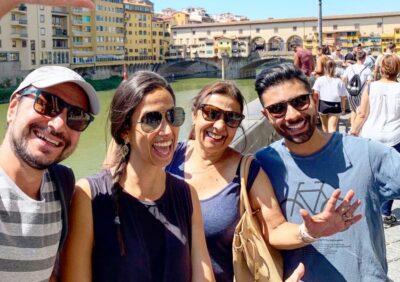 ★ 4.8Renaissance and Medici Tales Guided Walking TourFrom $21,549 reviews
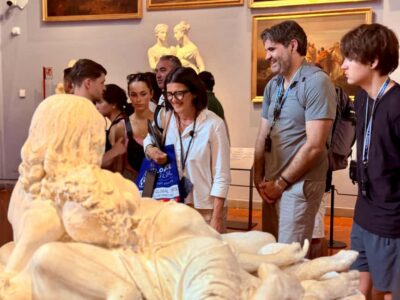 ★ 4.7Uffizi & Accademia Small Group Walking TourFrom $1481,380 reviews
 ★ 5.0Skip-the-Line Florence Highlights and David Walking TourFrom $1171,127 reviews
 ★ 4.6Dark Mysteries and Legends Guided Walking TourFrom $21,081 reviews
 ★ 4.5Florence in a Day: Michelangelo’s David, Uffizi and Guided City Walking TourFrom $1341,048 reviews
Find this experience in another shortlist