
Florence field review · WALKING TOURS
Florence Walking Tour with Audioguide on Your Smartphone
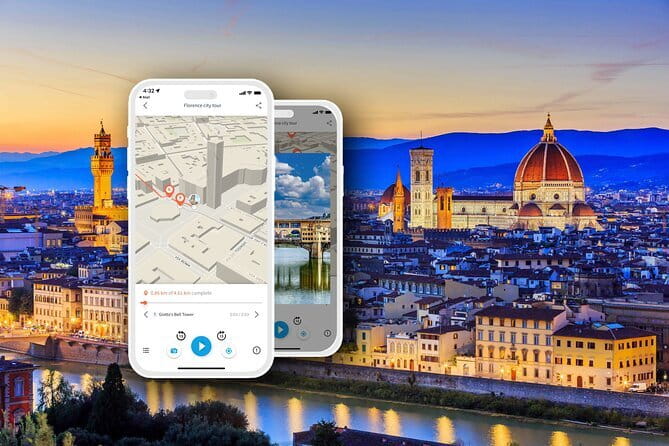
Florence by foot can feel endless, in the best way. This self-guided smartphone audio walk strings together major sights, from Santa Maria Novella to Ponte Vecchio, with a historian’s narration and illustrations so you can keep moving without hunting.
I like two things right away: the offline GPS map (so you are not stuck with spotty data), and the fact the audio is recorded by a professional historian, not generic chatter.
One consideration: this is not a human-led tour, so you must plan a little tech time (app download, headphones) and accept that GPS direction can occasionally act up in busy, built-up spots.
Key highlights you will feel on the walk
- Offline map with GPS navigation keeps the route usable even without data
- 30 historian narrated recordings help each stop make sense as you pass it
- Illustrations help you confirm you are at the right façade, door, or courtyard
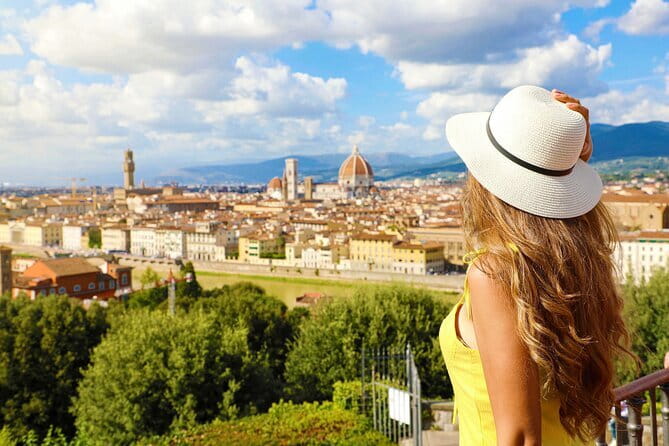
- Self-paced route lets you pause for photos or slow down near the big-ticket churches
- No entrance tickets included, so you choose what to go inside and how long to spend
Florence walks that make the stone streets tell the story
- Florence: Guided Walking Tour★ 4.5 · 3,334 reviews
- Skip the line: Uffizi and Accademia Small Group Walking Tour★ 4.5 · 3,135 reviews
- Florence: Guided Walking Tour★ 4.6 · 1,602 reviews
- Florence: Renaissance and Medici Tales Guided Walking Tour★ 4.8 · 1,549 reviews
How the smartphone audioguide keeps you moving through Florence
This tour is designed for a walking day where you want context but do not want to follow a group. You buy, download the app, activate your purchase, then follow the route on the mobile map with GPS navigation. The audio plays as you reach the numbered points, and there are 30 audio recordings by a professional historian to give you the why behind what you see.
What works well here is the mix of audio and visual aids. Florence is packed with look-alike church façades, plus small chapels and courtyards you would normally walk past. The included illustrations help you spot what the audio is referring to, so you spend less time guessing and more time actually looking.
Plan to bring your own headphones, and plan for a short setup window before you start walking. One simple way to do this is to download everything while you are still near your hotel or a cafe, then test audio once. If you wait until you are standing in front of the sights, the day can start with tech stress.
Also keep expectations realistic: the route is long on famous names, but the listed duration is about 2 hours 30 minutes. That means you will likely enjoy the highlights most, then decide on the spot if you want to add extra time inside major sites.
Starting at Santa Maria Novella, then moving to San Lorenzo and Medici Florence
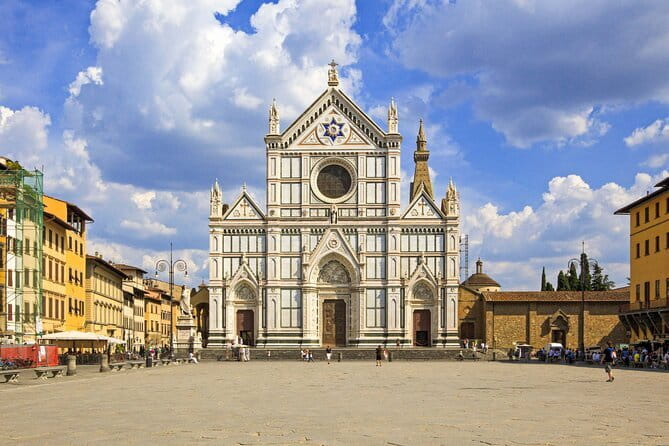
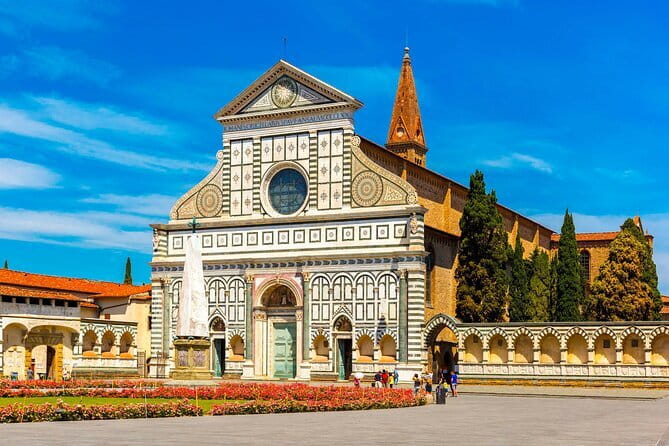
You start at Basilica of Santa Maria Novella, right by Piazza di Santa Maria Novella. This is a smart opener because it gives you a grounded look at Florence’s architectural style early in the walk. On the outside, focus on the striking façade and the rose window. Inside, the audio points you toward key artworks and the church’s spiritual calm, with mentions of works by artists such as Masaccio and Ghirlandaio.
From there, the route carries you to Basilica di San Lorenzo, including the connection to Renaissance design. The big story here is that it was founded centuries earlier, then reshaped by Filippo Brunelleschi in the 1400s. If you like architecture, pay attention to the columns and the balanced proportions the audio emphasizes. And if your interests lean toward power and patronage, the Medici Chapels are a must in this area, because they tie together Florence’s religion and its politics in one place.
Next comes Palazzo Medici, the opulent Medici residence closely linked with the Renaissance era. The façade with rusticated stonework and grand arches sets the tone. Inside, the audio has you look for frescoed rooms and the family’s taste for art and display, plus the standout detail to seek: the Chapel of the Magi.
Practical note: these Medici and church stops can be visually dense. The audio helps you choose what to focus on. You do not have to read every plaque or memorize dates. You just follow the point-and-listen approach and let the story land while you are standing where it happened.
Duomo day: Santa Maria del Fiore and Giotto’s Bell Tower
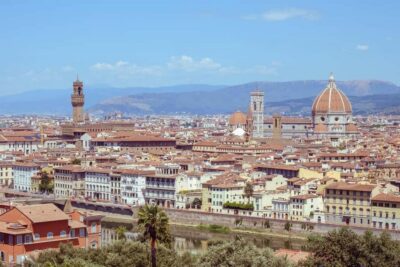
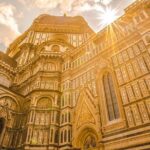
The tour’s centerpiece moment arrives at Cathedral of Santa Maria del Fiore. Even if you think you have already seen photos, the real thing hits differently. The dome, designed by Brunelleschi and recognized as the largest brick dome in the world, is the headline. When you are inside, look for the stained glass windows and the cathedral’s frescoes as your next visual “anchors.”
Then it is on to Giotto’s Bell Tower, attached nearby and a favorite for its views. The audio frames the bell tower as a masterpiece of Florentine Gothic design, with colorful marble and sculptural details. The route also highlights the climb, 414 steps, which is a huge commitment. If you do the ascent, start steady, take breaks if you need to, and save your energy for the view at the top.
This is where the self-guided format shines. If you hit a slow patch, you are not stuck waiting for a group to decide where to go. You can take the audio at your own pace, then decide if you want to push for the climb right then.
If you prefer to keep it comfortable, you can still enjoy the story from the ground level, then choose another route segment for your “big view” moment later, like the hillside fortresses described further on.
Republic, Strozzi and Piazza Signoria area without the stress
After the Duomo zone, the route swings you into the city’s more civic, streets-and-squares rhythm. You pass through Piazza della Repubblica, where the audio ties the space back to its Roman forum origins. The square feels like a transition point: cafes, shops, and historic buildings make it a good place to rest your feet and reset your attention.
From there, you go to Palazzo Strozzi, a Renaissance palace now used for rotating art exhibitions. The practical value here is that you can learn the architecture and courtyard proportions without needing to treat it like a full museum day. The audio helps you read the building itself, not just whatever temporary show might be on.
Another stop worth your attention is Palazzo di Parte Guelfa, a reminder that medieval Florence was intensely political. The audio context around the Guelf faction helps turn this from a pretty façade into a story about who held power and why.
Then you hit Mercato Nuovo in the San Lorenzo area. This is a great “break stop” because it shifts you from stone and marble back to everyday life. The audio guides you through the experience of a market space where you can browse fresh produce, local specialties, and artisanal cheeses. Even if you do not buy anything, it is a nice sensory reset.
Palazzo Vecchio, Loggia dei Lanzi, and Casa Museo di Dante for big-story Florence
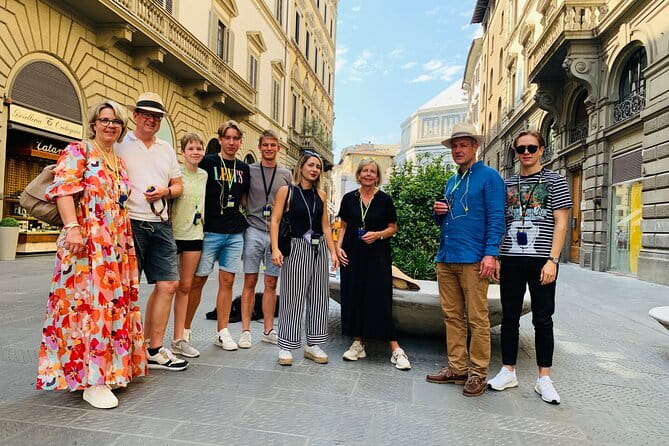
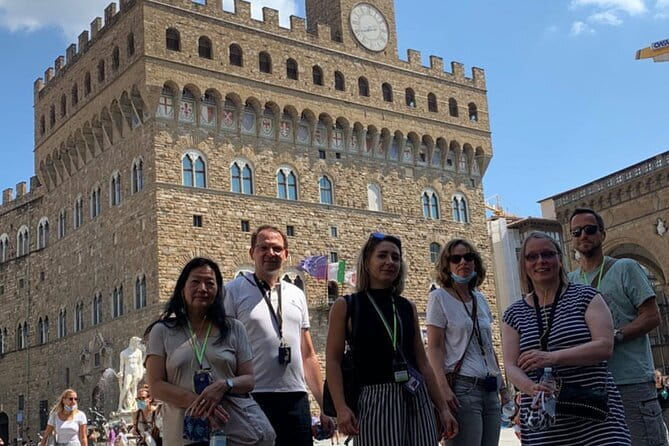
Now the walking tour leans into Florence’s political center and cultural memory. At Palazzo Vecchio, the fortress-like palace vibe is front and center. The audio points out the Florentine government link and nudges you toward the ornate spaces, especially the Salone dei Cinquecento and its frescoed grandeur. If you want city views, the audio also frames the tower climb as a payoff.
From Palazzo Vecchio, you move into Piazza della Signoria and the open-air art gallery called the Loggia dei Lanzi. This stop is a standout if you love sculpture. The audio calls out major works like Cellini’s Perseus and Giambologna’s Rape of the Sabine Women. The advantage of listening here is that you get help seeing the relationship between the statues and where you are standing in the square.
Then the route slows down in a smart way with Casa Museo di Dante. This museum is focused on Dante Alighieri’s life and works, bringing you into a more intimate 13th-century world that shaped his Divine Comedy. The audio emphasizes manuscripts, drawings, and related artifacts, which is ideal if you like literary context rather than only visual art.
If you are short on time, this is one stop where a thoughtful 20 minutes can feel like a full chapter. The small scale helps the audio story land without you feeling rushed.
Florence at your own pace, with the route in your pocket
Santa Croce, Museo Galileo, and where the Uffizi fits in your day
The tour heads toward Basilica di Santa Croce, known as the Temple of the Italian Glories and a key final resting place for figures such as Michelangelo, Galileo, and Machiavelli. The audio also points you toward Giotto-related fresco work and the cloisters and chapels that give you a quiet space to look closely. If you like museums where ideas matter, Santa Croce works because it links art to famous names tied to thought and influence.
Next is Museo Galileo, which is a refreshing shift from painting and sculpture. The audio frames it as a place where Renaissance science meets later discoveries, with scientific instruments and interactive exhibits. If you think science museums are only for kids, this one can surprise you because it is still very human and story-based.
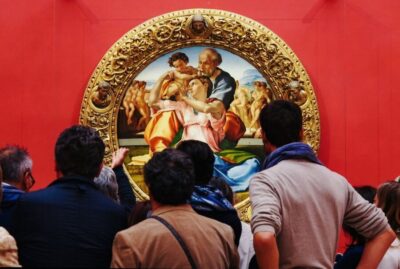
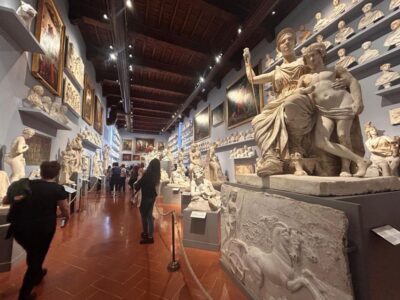
Then you reach Uffizi Gallery. This is the big art-museum magnet, with famous names like Botticelli, Michelangelo, Leonardo da Vinci, and Caravaggio. The audio also points out iconic works such as The Birth of Venus and Primavera. Here is the realistic planning piece: because the tour does not include entrance fees, you need to treat Uffizi as a choose-your-own-adventure. If you go inside for real, it can take more time than the walking route suggests.
My practical advice: use the audio to connect the themes outside and on your route, then decide whether you want a full museum visit or a quick look at what you came for. If you want one “big ticket” museum day, you might pair Uffizi with only a small number of other interior stops.
Ponte Vecchio, Vasari Corridor, and the Arno-side art of Florence
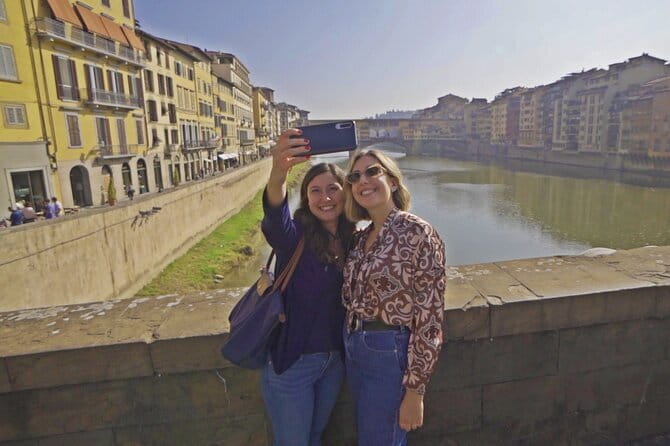
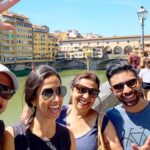
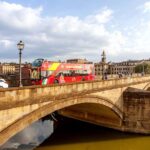
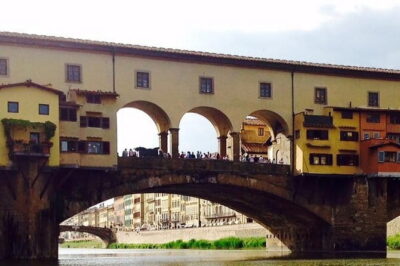
Crossing Ponte Vecchio is one of those Florence moments that feels like a movie still. The audio describes the bridge as Florence’s oldest crossing and highlights the goldsmith shops lined along it. Even if you have walked past bridges before, this one has a particular energy because the shops and stone structure stay in your frame as you move.
The route also connects you to the Vasari Corridor, the elevated passage designed by Giorgio Vasari that links Palazzo Vecchio to Palazzo Pitti, allowing Medici family movement discreetly. You might not always be able to access every corridor space depending on what is open on your day, but the audio story is still useful because it explains why Florence’s power figures needed controlled routes.
After the bridge, the walk moves toward another science connection with La Casa di Galileo Galilei, described as Galileo’s birthplace. The audio focuses on interactive exhibits and personal artifacts, including items like a telescope and celestial maps. This is a great pairing after Museo Galileo, because it can make the scientist feel less like a distant name and more like a person shaped by a place.
Galileo to hillside views: Casa di Galileo, Villa Bardini, and Forte Belvedere
The route keeps turning toward Florence from different angles. After the Galileo home museum, you reach Villa Bardini, a hillside villa with gardens, flowerbeds, and a terrace viewpoint over the city. The audio frames it as a 14th-century historical setting now used for art exhibitions, which makes it a nice change of pace if you have been in churches and galleries all morning.
Then comes the serious viewpoint stop: Forte di Belvedere, also known as Forte San Giorgio. The audio describes it as a hillside fortress built under Francesco I de’ Medici in the late 1500s, used as both a defensive stronghold and a royal residence. The practical payoff is the view over Florence and the surrounding Tuscan landscape. You can also expect cultural events and art exhibitions at times, since the audio notes it as a creative hub.
This is also a good moment to decide how much you want to push. The walk finishes back at the Santa Maria Novella meeting point, so do not plan to sprint. Bring water, wear shoes you trust, and take your time on the hillside sections because they can add a real strain compared to flat center-city streets.
Price and logistics: why $7.14 can make sense, and where it might not
At $7.14 per person, this is priced like an audio add-on rather than a full guided experience. That is exactly where the value comes from: you pay for story and navigation support, not for a human guide or entrance tickets. With 30 historian recordings plus an offline map, it can be a smart way to turn a simple stroll into a structured “learn as you go” day.
But you should also match the setup to your style. If you want someone to explain on the spot, manage crowds, and answer questions, this format cannot replace that. If your day is tech-friendly, though, you get the best of both worlds: self-paced sightseeing with enough structure to keep you oriented.
Also factor the “not included” reality. Entrance fees and tickets are not included, so if you want to go inside places like Uffizi or anything else that charges, you will need to buy those separately. The upside is flexibility. You can choose what to enter based on your energy, weather, and ticket lines.
Finally, bring your own headphones. The audio guide is for iPhone and Android, and your purchase includes 1 year access to the tour in your preferred language. Give yourself a little time to download the app and confirm your access before you start. It will save you from the most common frustration with smartphone tours.
Should you book this Florence audio walking tour?
Book it if you want an affordable way to connect major Florence sights into a single walk, without paying for a human guide. I would especially recommend it if you like history and art but prefer your own rhythm, since the offline map plus illustrations help you keep moving even if you stop often for photos.
Skip or think twice if you know you hate app-based navigation, or if you want a guide to handle logistics and questions. Also consider the pacing. This route includes a lot of famous stops across different neighborhoods, so you will get the most satisfaction by treating it as a curated highlight route, then spending extra time only where you care most.
If that matches your style, this is a solid value. For about the price of a quick coffee, you get historian-led storytelling, offline navigation, and a structured path through Florence’s biggest names.
FAQ
Is there a human guide on this Florence walking tour?
No. This is self-guided, so no person meets you at the start.
How do I access the audio guide?
You download the TouringBee mobile app for iOS or Android, activate your purchase, then follow the route in the app map.
Do I need to bring headphones?
Yes. Headphones and a smartphone are not included, so bring your own headphones.
Is there an offline map?
Yes. There is an offline map with the route and GPS navigation.
What language is the audio available in?
The tour is offered in English, and the tour is available in your preferred language for 1 year access.
Does the price include admission tickets?
No. Entrance fees and tickets are not included.
Where does the tour start and end?
It starts at Basilica of Santa Maria Novella, P.za di Santa Maria Novella, 18, 50123 Firenze FI, Italy, and it ends back at the same meeting point.
Can I cancel for free?
Yes, you can cancel for a full refund if you cancel at least 24 hours before the experience start time.
How long is the walk?
It is approximately 2 hours 30 minutes.
Florence at walking speed
More Florence tours to open next
- The Best tour in Florence: Renaissance & Medici Tales – guided by a STORYTELLER
★ 5.0 · 12,316 reviews
Every Florence review, in one place
- Tuscany Day Trip from Florence: Siena, San Gimignano, Pisa and Lunch at a Winery
★ 5.0 · 21,634 reviews - The Best tour in Florence: Renaissance & Medici Tales – guided by a STORYTELLER
★ 5.0 · 12,316 reviews

Florence picks that sit just beyond this itinerary
- Florence: Duomo Complex Private Guided Tour & Optional Dome Climb
★ 5.0 · 4 reviews - Private Tour of Florence Cathedral, Bell Tower & Baptistery
★ 5.0 · 4 reviews - Michelangelo’s David Tour in the Accademia (Tickets NOT included)
★ 4.0 · 4 reviews - Exclusive Pisa Tour from Florence: With Skip-the-Line Access
★ 4.0 · 4 reviews - Full-Day Tour of Tuscany from Florence-small group up 8 pax
★ 4.5 · 4 reviews - Florence: Inferno Private Walking Tour
★ 5.0 · 4 reviews
More Walking Tours worth comparing.
 ★ 4.5Guided Walking TourFrom $313,334 reviews
 ★ 4.5Skip the line: Uffizi and Accademia Small Group Walking TourFrom $1483,135 reviews
★ 4.6Guided Walking TourFrom $271,602 reviews
★ 4.5Skip the line: Uffizi and Accademia Small Group Walking TourFrom $1483,135 reviews
★ 4.6Guided Walking TourFrom $271,602 reviews
 ★ 4.8Renaissance and Medici Tales Guided Walking TourFrom $21,549 reviews
 ★ 4.7Uffizi & Accademia Small Group Walking TourFrom $1481,380 reviews
 ★ 5.0Skip-the-Line Florence Highlights and David Walking TourFrom $1171,127 reviews
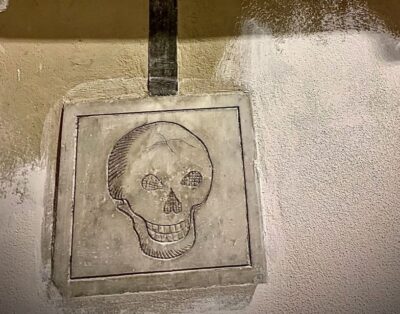 ★ 4.6Dark Mysteries and Legends Guided Walking TourFrom $21,081 reviews
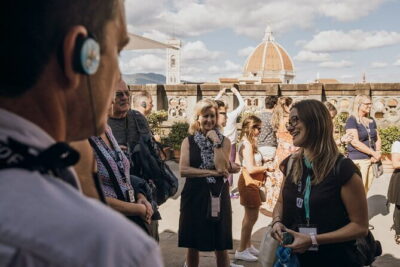 ★ 4.5Florence in a Day: Michelangelo’s David, Uffizi and Guided City Walking TourFrom $1341,048 reviews
Find this experience in another shortlist