
Florence field review · FLORENCE BIKE & E-BIKE RIDES
Florence Untold Bike Tour
Two wheels turn Florence into a fast story. I like how Roberto turns famous sights into a running narrative, and I love the 2-hour format that helps you cover Florence’s main landmarks without the usual stop-and-start. The main thing to consider is that you’re expected to be comfortable riding a bicycle, and there’s an extra €8 bike hire fee you pay on the day.
This is a small-group ride, capped at 20 people, and it runs in English with a mobile ticket. You can usually pick from multiple start times, which matters if you’re trying to balance Duomo crowds, museum hours, and dinner plans.
What really makes this tour feel different is the storytelling style and the weird-but-true details: Medici power plays, a plague-era corner legend, and humor tucked into everyday streets. You’ll get the big Florence hits like Ponte Vecchio, plus the little local characters that explain why these places look the way they do.
Key things that make this Florence bike tour worth it
- Roberto’s storytelling with humor, including names, dates, and the kind of “wait, really?” lore that sticks
- A tight 2-hour route that strings major sights together so you see more with less time
- Duomo, Medici, and Ponte Vecchio in one flow, so the city’s different eras feel connected
- Funny legend stops, from the Devil of Giambologna to La mucca del duomo
- Small group size (max 20) for a more personal vibe while you ride
- Multiple start times, including options that work for an evening in Florence
More Florence and hill-country routes on two wheels
- Tuscany Bike Tours Through the Chianti Hills with Wine Tasting★ 5.0 · 1,300 reviews
- Florence: E-Bike Tour with Michelangelo Square★ 4.5 · 1,035 reviews
- Florence: 2-Hour Guided Sightseeing Bike Tour★ 4.5 · 1,004 reviews
- Private Self-Guided E-Bike Ride in Tuscany with Vineyard Visit★ 5.0 · 775 reviews
Meeting at Via della Pergola, then rolling into the center
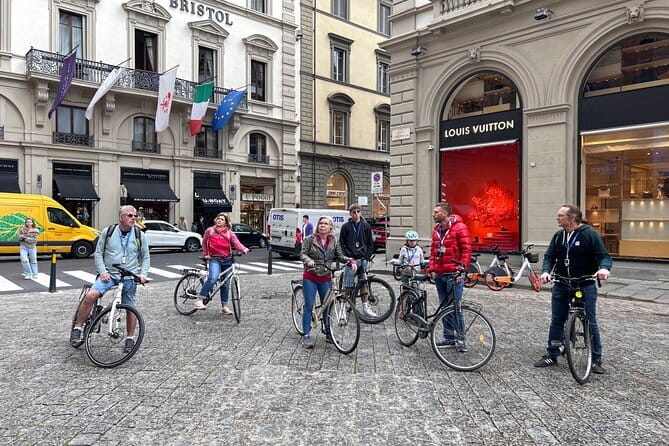
The tour starts at Via della Pergola 8 R, right in central Florence, and it returns you back to the same spot. That simple start-and-finish matters because you do not waste your limited time in town figuring out how to connect a bike route to the rest of your day.
You also get a mobile ticket, which is handy if you are moving fast between museums, lines, and meals. The tour runs in English, and it is near public transportation, so you are not totally dependent on taxis if plans shift.
One more practical point: the bicycle is not included in the base price. You pay the bike hire fee on the day, so make sure that €8 per person is ready in your budget when you show up.
The 2-hour pacing: seeing Florence without feeling like a sprint
This is an approx. 2-hour ride, which means you should think of it as a guided “greatest hits” tour, not a slow art-history crawl. You will cover a lot of ground on bike, but the goal is context, not deep museum time.
Multiple start times are a real advantage. If you want to beat the busiest daylight hours, an earlier or later departure can help you move through the city with fewer headaches. I also like that the group stays relatively small, with a maximum of 20 people, so the pace is easier to manage than bigger bus tours.
Because this is Florence, you should still expect tight streets and turning points. If you are a confident rider, the flow feels smooth. If you are rusty, you might spend more brainpower on balance than on the guide’s stories. This is the one consideration that can make or break the experience for you.
Oldest Hospital of the World stop, and the Leonardo and Michelangelo angle
One of the first thematic anchors is the Oldest Hospital of the world, tied to Florence’s medical and artistic education. The tour connects this place to the idea of an anatomy school linked with Leonardo and Michelangelo. Even if you already know those names, I like how this tour frames them in real places, not just as distant legends.
This stop also sets the tone for the rest of the ride. Instead of treating Florence like a photo checklist, the guide keeps asking a simple question: why does this location matter right here, at street level?
The upside for you is that you start understanding Florence as a living city, where art, power, and even science all shaped the same streets. The possible downside is that if you expect hands-on museum access, this is more about seeing and hearing than entering.
Duomo, Brunelleschi’s Dome, and San Giovanni Baptistery in one sweep
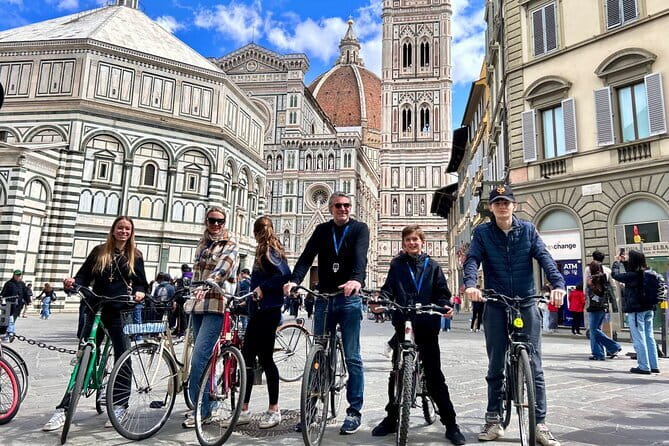
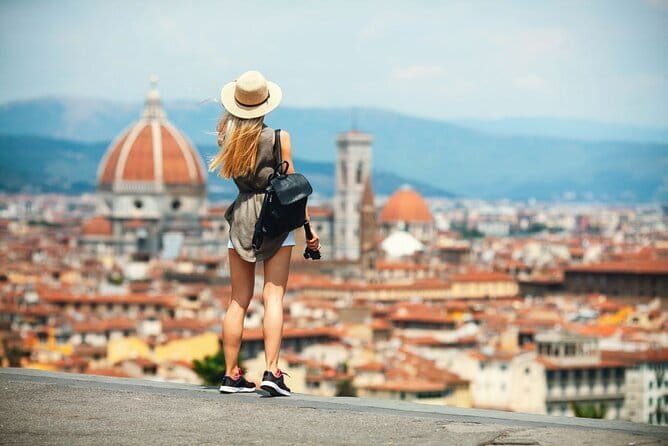
The tour hits the Cathedral complex area, including Brunelleschi’s Dome and Santa Maria del Fiore, plus the San Giovanni Baptistery. You do not just get the big architecture names. You get the sense of how these landmarks connect visually and spiritually, and why this area remains a gravitational center for the city.
A bike route helps here because you can angle yourself for views that are awkward on foot during peak hours. You are not standing in one spot for long stretches waiting for the perfect photo. Instead, you are moving, listening, and taking in the skyline.
If you care about details, this is a good moment to slow down your phone-photos routine and actually listen. With the guide’s context, even the familiar “I have seen it on postcards” scenes become more specific.
Roman Forum to Medici politics: abundance, conspiracies, and names you remember
After the Cathedral area, the tour shifts into political and cultural storytelling, moving toward the area described as the Roman Forum. This is where Florence stops feeling like “Renaissance art time” and starts feeling like a city with layers of power.
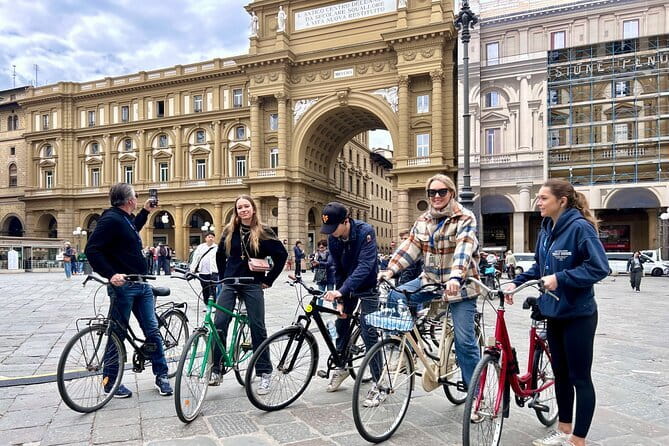
You also get stops tied to the column of Abundancy, and then a long arc through the Medici family. The guide brings in key figures like Lorenzo the Magnificent, Giuliano the Handsome, and the Pazzi Conspiracy, plus broader church and court names like the pope, duke, grand duke, and Cosimo the Elder. On a walking tour, this kind of family tree can turn into a blur. On bike, it stays organized because the guide is building a story as the streets change.
For you, the big value is clarity. You walk away knowing who’s who in the Medici drama, and you can start spotting the political subtext behind Florence’s artwork and buildings.
Keep the Florentine shortlist moving
Devil of Giambologna, San Zanobi, and the funny legends that explain the city
This is one of the most fun segments because it leans into the city’s legends. You will look for the Devil of Giambologna, described as a statue in a corner that references a plague-era Tuesday afternoon. That kind of local detail makes the tour feel less like a standard lecture and more like you are picking up secrets on the street.
The guide then talks about a miracle tied to the pillar of San Zanobi, followed by the Pisan buckets prank and the story of La mucca del duomo. These are not random “myths for kids.” They show how Florence used humor, warnings, and public stories to shape behavior long before social media existed.
If you love history but hate dry history, this is where the tour wins. If you hate legends and want only official facts, you might still enjoy it, but you may wish the guide spent more time on art or architecture specifics.
Wine Window and a medieval street story, then Tornabuoni and Palazzo Strozzi
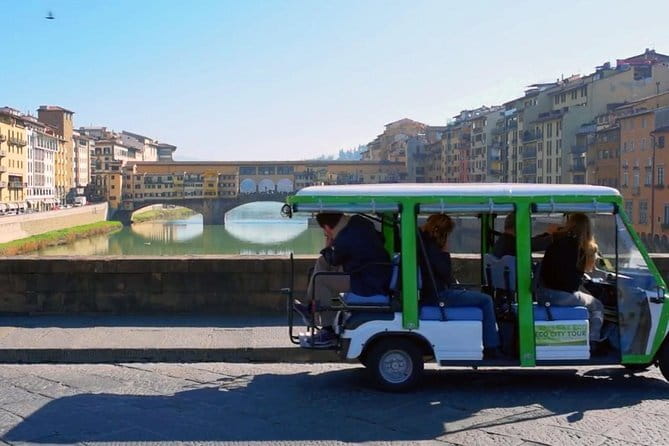
As the ride continues, the tour pulls in social history, including the Wine Window and a medieval street tied to prostitution lore. You should expect the guide to frame these details as part of how Florence’s daily life worked, not as shock value.
Then you roll into Tornabuoni Street, where you learn about Palazzo Strozzi and Palazzo Corsini. This is also where the tour mentions Bar GIACOSA, described as home of the Negroni cocktail. I like this moment because it connects the old-city setting to the modern Florence vibe, without turning the ride into a food tour.
Practical tip: if you plan to stop for a drink or snack after the ride, keep this segment in mind. The tour sets up the streets where it feels natural to take a break.
Ferragamo Museum area and the Justice Column
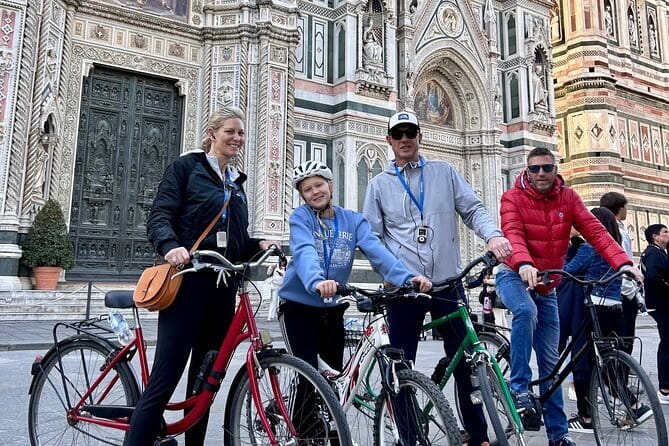
Next comes a combination of modern and classical signals. The itinerary references the Ferragamo Museum and the Justice Column. Even if you do not go into any museum here, the stop helps you understand Florence as a place where brands, civic identity, and historic symbolism coexist.
The Justice Column detail matters because it points to Florence as a city that cared about law and public order, not just artists and churches. That gives you more context for why certain squares and buildings carry authority in the way they are positioned.
If your ideal day is only museums and churches, this segment might feel like a short “orientation moment.” If your ideal day is learning how the city works as a whole, this helps.
Ponte Vecchio: why it became the jewelry bridge and what “oldest bridge” means
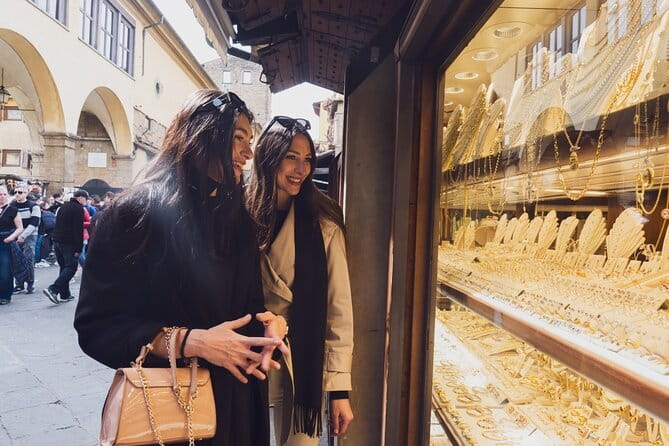
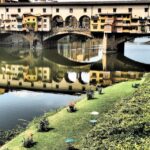
One of the strongest “wow” moments is Ponte Vecchio. The tour explains how it became the jewelry bridge and why it ended up being described as the oldest bridge in Florence. Even if you have visited Ponte Vecchio before, the explanation turns it from a scenic bridge into a story about commerce and survival.
Bike tours work well at Ponte Vecchio because you are not stuck behind tour groups in one narrow lane for too long. You move through the area with context, so you can see the shops and understand the architectural choices that shaped the bridge’s identity.
This is also a great stop for thinking about photos. If you take your photos during the explanation rather than before it, your picture choices often improve because you start looking for the details the guide points out.
Palazzo Vecchio and the Piazza lineup: government, Uffizi, David, Cellini, Cosimo
The ride then reaches Palazzo Vecchio, described as the home of government since 1299. This matters because Palazzo Vecchio is one of the clearest ways to feel Florence’s civic power in physical form.
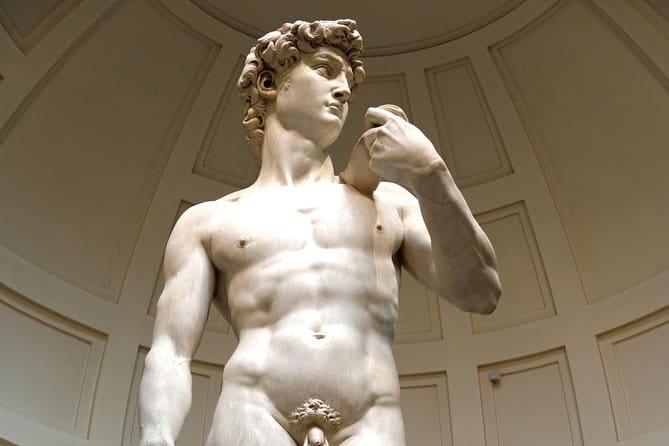
The tour also ties in the Uffizi Gallery and the surrounding artwork world, with mentions of Leonardo da Vinci, David of Michelangelo, and Benvenuto Cellini, plus Cosimo Primo. That mix can sound like a lot in a single stop, but the bike format helps because you are not just standing and memorizing. The guide uses the sights as anchors, which makes the names easier to place.
A quick reality check for you: this is not a timed entry to the Uffizi or a full museum visit. It is a guided “see the landmarks and understand why they matter here” experience. If you love art museums, you can pair this afterward with a museum day while you already feel oriented.
Corbizi and Donati Tower, Gemma Donati, and Dante’s connection
The tour ends with a themed look at the Tower of Corbizi and Donati, including Gemma Donati, described as the wife of Dante Alighieri. This is a smart way to close because it shifts from civic and family power into literature and personal story.
What I like about this ending is that it brings Florence’s Renaissance identity back to people. You stop thinking of Florence as stone and start thinking of it as a place where lives, writing, and politics tangled together.
Because the tour returns to the meeting point, it also makes a clean handoff to the rest of your itinerary. You can head off to dinner feeling like you actually connected the city’s different eras.
Price and value: $42.05 plus the €8 bike hire
The listed price is $42.05 per person, but you should plan for an additional €8 per person for the bicycle on the day. So the real question is value: are you paying for a guide story, a bike ride, and time saved?
In Florence, time has a price of its own. This tour is short enough to fit into almost any schedule, while still covering a large chunk of the center. You are not paying museum ticket prices, and you are not doing a slow walking crawl that drains your energy before dinner.
If you already know you want to see Duomo, Ponte Vecchio, and the Palazzo Vecchio area but you also want context beyond captions, the guide style is what you are buying. The extra bike fee is the trade-off, but the payoff is a ride that stays organized and fun.
Who should book this, and who should skip it
This Florence Untold bike tour is a great fit if you:
- want a 2-hour guided Florence hit list with stories that stick
- enjoy humor and street-level legends as part of history
- like moving between landmarks rather than spending the day walking
It might be less ideal if you:
- are not comfortable riding a bike, since the tour does not cater to people who cannot ride
- prefer museum entry time over guided viewpoints and storytelling
If you travel with teens or a mix of ages, this style often works well because the guide keeps the narrative engaging without losing the thread.
Should you book Florence Untold by Roberto?
I think you should book this if your goal is to leave Florence with names connected to places, and you want the Duomo to Ponte Vecchio story line explained in a lively way. Roberto’s storytelling is the big draw, and the route hits both the famous landmarks and the lesser-known corners where Florence’s legends live.
If you’re budgeting tight, remember the bike hire fee. If you’re a careful bike rider, this can be one of the best ways to feel oriented fast before you tackle museums and wandering on your own.
FAQ
How long is the Florence Untold bike tour?
The tour is about 2 hours.
Where does the tour start and end?
It starts at Via della Pergola, 8 R, 50121 Firenze FI, Italy, and it ends back at the same meeting point.
Do I need to pay extra for the bicycle?
Yes. The bicycle has an extra charge of €8 per person, paid on the day of the tour.
Is the tour offered in English?
Yes. The tour is offered in English.
Is this tour for people who can ride a bicycle?
It is not listed for people who do not know how to ride a bicycle. Most travelers can participate, but you should be comfortable riding.
What happens if the weather is bad?
The experience requires good weather. If it is canceled due to poor weather, you will be offered a different date or a full refund.
More Florence tours to open next
- The Best tour in Florence: Renaissance & Medici Tales – guided by a STORYTELLER
★ 5.0 · 12,316 reviews
Every Florence review, in one place
- Tuscany Day Trip from Florence: Siena, San Gimignano, Pisa and Lunch at a Winery
★ 5.0 · 21,634 reviews - The Best tour in Florence: Renaissance & Medici Tales – guided by a STORYTELLER
★ 5.0 · 12,316 reviews

Florence and the hills by bike

Florence picks that sit just beyond this itinerary
- One Hour Uffizi Guided Tour: Masterpieces of the Renaissance
★ 5.0 · 3 reviews - Sightseeing Tuscany by touring bike – 1 day rental
★ 5.0 · 3 reviews - Private Siena, S. Gimignano, Chianti Road and Wine Tasting
★ 5.0 · 3 reviews - Bargello Museum Private Tour: Michelangelo’s Bacchus & Donatello’s David
★ 5.0 · 3 reviews - Authentic Florence Cooking Class at Costanza’s 1839 Family Estate
★ 5.0 · 3 reviews - San Gimignano and Volterra private tour: etruscans, romans and middle age jewels
★ 5.0 · 3 reviews
More Florence Bike & E-Bike Rides worth comparing.
 ★ 5.0Tuscany Bike Tours Through the Chianti Hills with Wine TastingFrom $1451,300 reviews
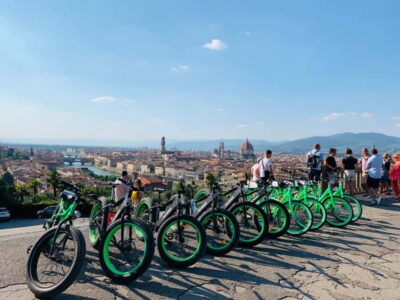 ★ 4.5E-Bike Tour with Michelangelo SquareFrom $431,035 reviews
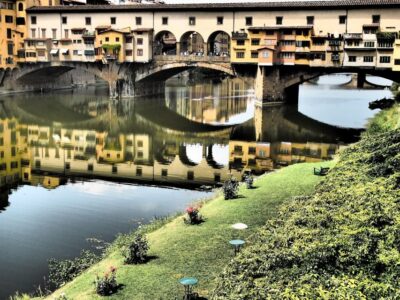 ★ 4.52-Hour Guided Sightseeing Bike TourFrom $231,004 reviews
 ★ 5.0Private Self-Guided E-Bike Ride in Tuscany with Vineyard VisitFrom $96775 reviews
 ★ 4.72-Hour Guided Bike TourFrom $41646 reviews
 ★ 4.5Florence Vintage Bike Tour–guided, small group or private optionFrom $42524 reviews
 ★ 4.6The Original City Bike Tour with a GuideFrom $30403 reviews
 ★ 5.0Private Highlights of Florence Bike TourFrom $211400 reviews
Find this experience in another shortlist