
Florence field review · MEDICI FLORENCE & RENAISSANCE STORIES
Florence: Renaissance City Walking Tour
Florence is best walked through. This 1.5-hour Renaissance city walking tour threads art, politics, and street-level architecture through key sights like the Uffizi and Piazza della Signoria. It’s the kind of route that helps the city feel logical, not like a random pile of landmarks.
I especially love how the tour turns big names into place-based stories. You follow the ideas behind Dante Alighieri and Michelangelo, and the Medici family’s influence shows up in how Florence functioned as a power center. With an expert guide and audio headset, the facts land without you craning your neck at group instructions.
One possible drawback is simple: there’s a fair amount of walking, and you can’t bring luggage or large bags. If you’re sensitive to hills and cobblestones, plan around it and wear your most forgiving shoes.
Key things to know before you go
- You start at the Uffizi courtyard and Piazza della Signoria, not at some random side street, so the context clicks fast.
- The route is built around Florence’s power and patronage, with Medici references tied to places you can actually see.
- Santa Croce is a major stop, including its role as a final resting place for figures like Dante Alighieri and Michelangelo.
- You pass toward Ponte Vecchio via the Vasari Corridor area, giving you a classic “Renaissance Florence from the street” perspective.
- Oltrarno and nearby neighborhoods (S. Frediano, Santo Spirito) bring you out of the postcard-only zone and into artisan-street Florence.
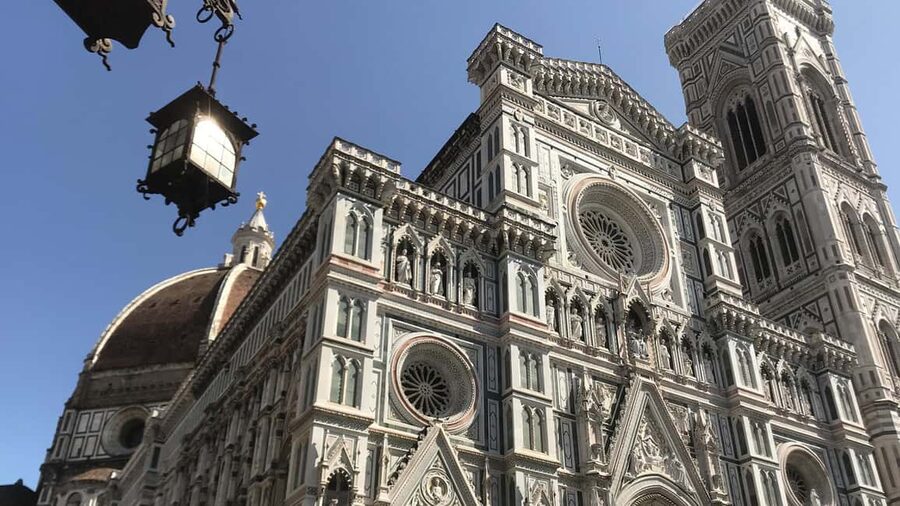
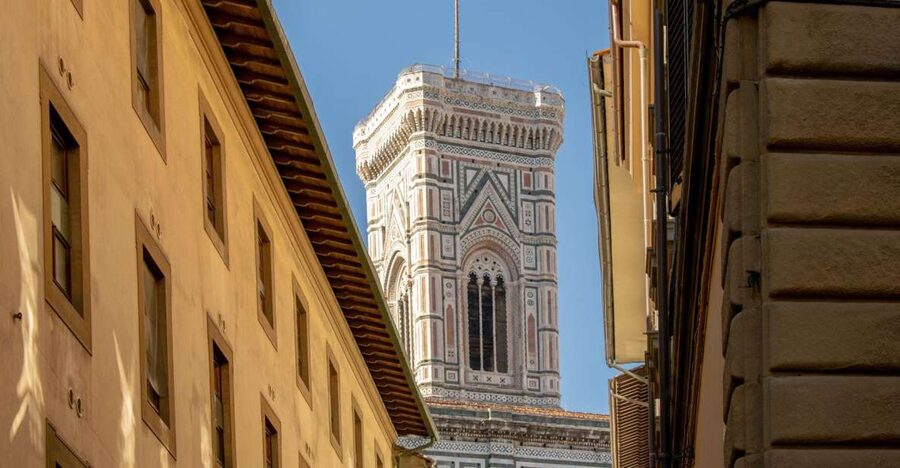
- It ends with the Duomo area, so you get a satisfying visual payoff near Santa Maria del Fiore.
More Medici stories behind the palaces, paintings and city streets
- The Best tour in Florence: Renaissance & Medici Tales – guided by a STORYTELLER★ 5.0 · 12,316 reviews
- Florence: Renaissance and Medici Tales Guided Walking Tour★ 4.8 · 1,549 reviews
- Florence: Mysteries of the Medici Guided Walking Tour★ 4.4 · 940 reviews
- Accademia Gallery: Michelangelo’s David and High Renaissance Art★ 4.0 · 872 reviews
From the Uffizi courtyard to Piazza della Signoria, you get orientation fast
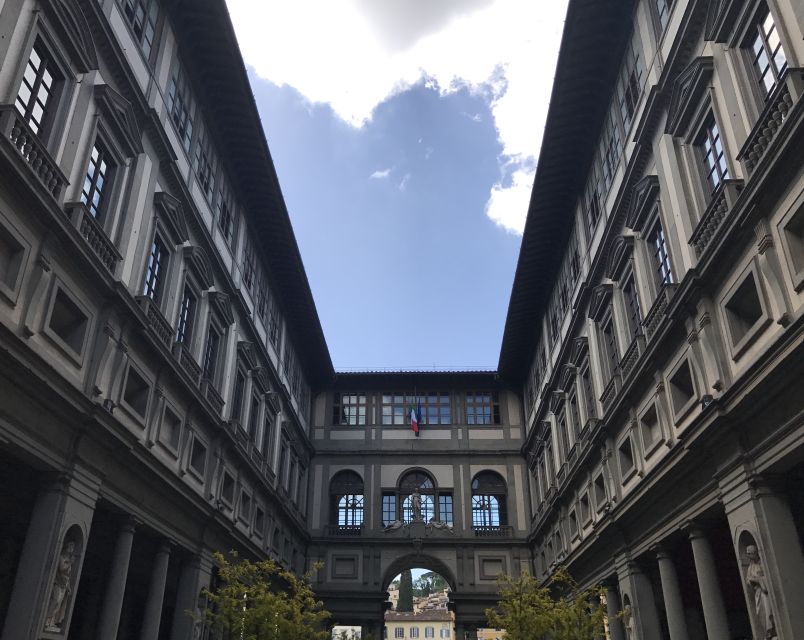
The tour begins in the courtyard area of the Uffizi Gallery and ties right into Piazza della Signoria. That pairing matters because it sets up what Florence does best: art and power sitting side by side.
From your first minutes, you’re not just looking at buildings. You’re learning what they were meant to communicate, and how people used these spaces to show status. If you’ve ever wandered Florence and thought, I like this city but I don’t know what I’m looking at, this start helps you get your bearings quickly.
You also get a built-in rhythm right away, which is one reason this can feel fun instead of tiring. You’re given a sequence, so the sights don’t blur together. And with an audio headset included, you can keep your attention on the guide’s explanation without constantly repeating a hand sign or leaning in.
Palazzo Vecchio and Loggia dei Lanzi: art you can actually read from street level
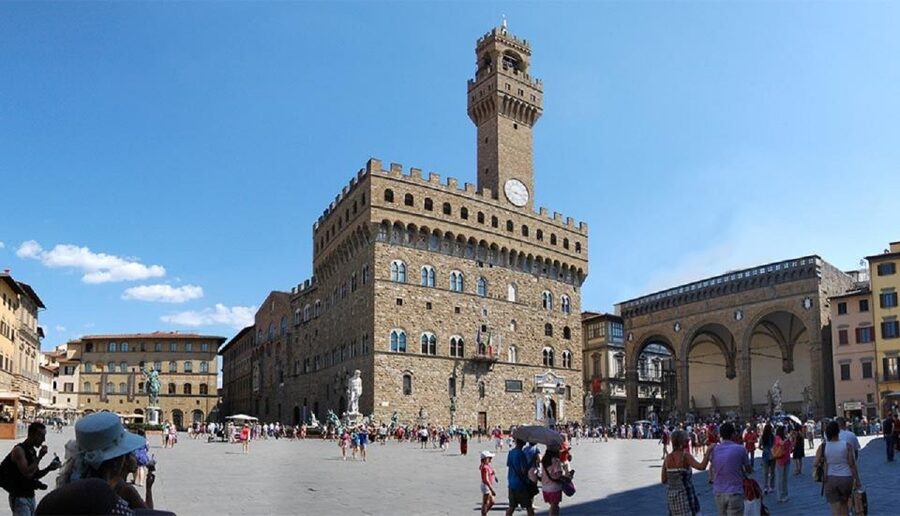
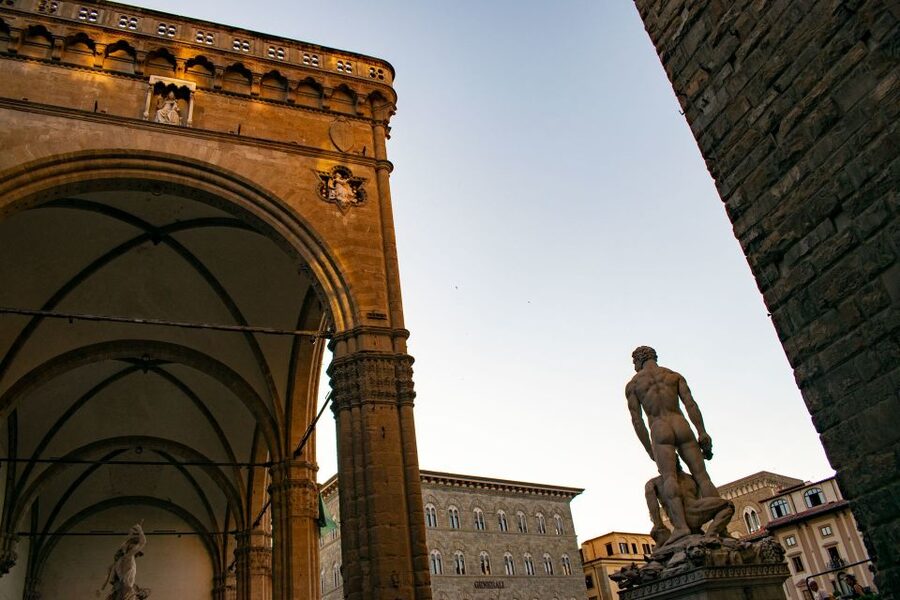
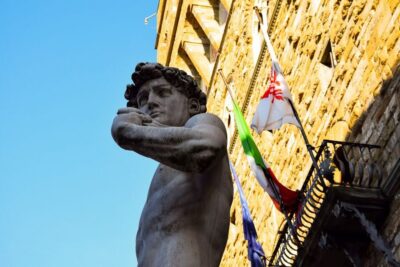
A highlight here is the focus on Piazza della Signoria and what’s around it, including Palazzo Vecchio and the Loggia dei Lanzi. These are big, impressive places, but what makes them work on a walk is the guide’s storytelling angle.
You’ll spend time looking up at the sculptures and architectural details while you learn their history and the role they played in Florence’s public image. That’s the advantage of doing this as a guided walk: the exterior art becomes more than decoration.
One thing I like is that the tour doesn’t treat art history like a lecture you have to survive. It connects the pieces to the people and moments who shaped Florence. Even if you’re not an art expert, you can follow along, because the explanation is anchored to what you see right there.
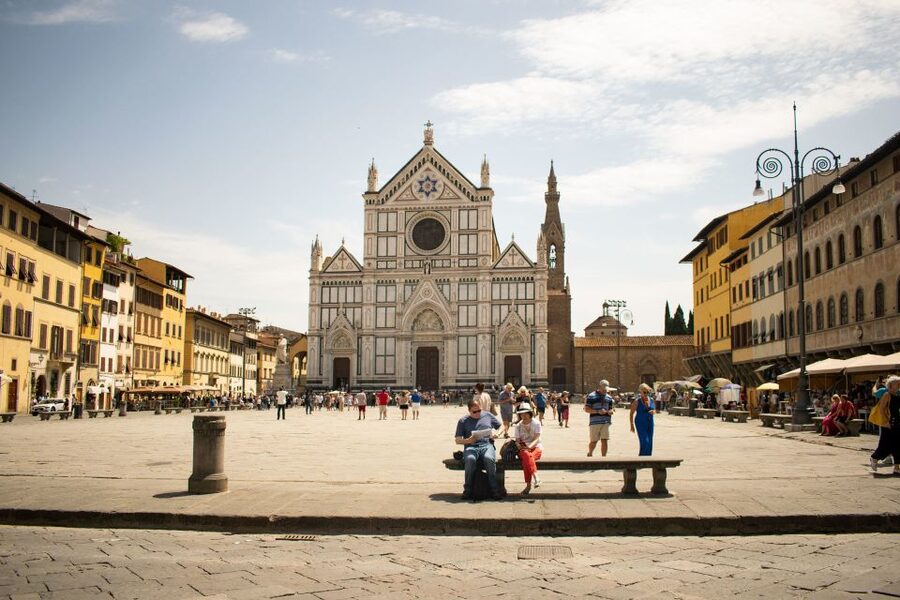
Piazza Santa Croce: Dante and Michelangelo in a church setting you can feel
Next, you move through narrow streets toward Piazza Santa Croce. The setting changes the mood right away, because Santa Croce isn’t just a landmark, it’s a stage for memory.
The church here is described as a smaller version of the Duomo, and the tour leans into the emotional weight of the place. Santa Croce is the final resting place of major Italian historical figures like Dante Alighieri and Michelangelo, so the visit becomes personal, even when you’re simply standing in the square with your guide’s direction.
This stop is also useful for first-time visitors. It gives you a handle on why Florence cares so much about authors, artists, and thinkers, not just architects and bankers. If you want to understand Renaissance Florence as a culture of ideas, Santa Croce is one of the best places to start.
As a consideration, churches and squares can get busy. You’ll still get value from the explanations, but go in expecting the atmosphere of a popular stop, not a quiet museum room.
Vasari Corridor sightlines and Ponte Vecchio: the walk becomes postcard-accurate
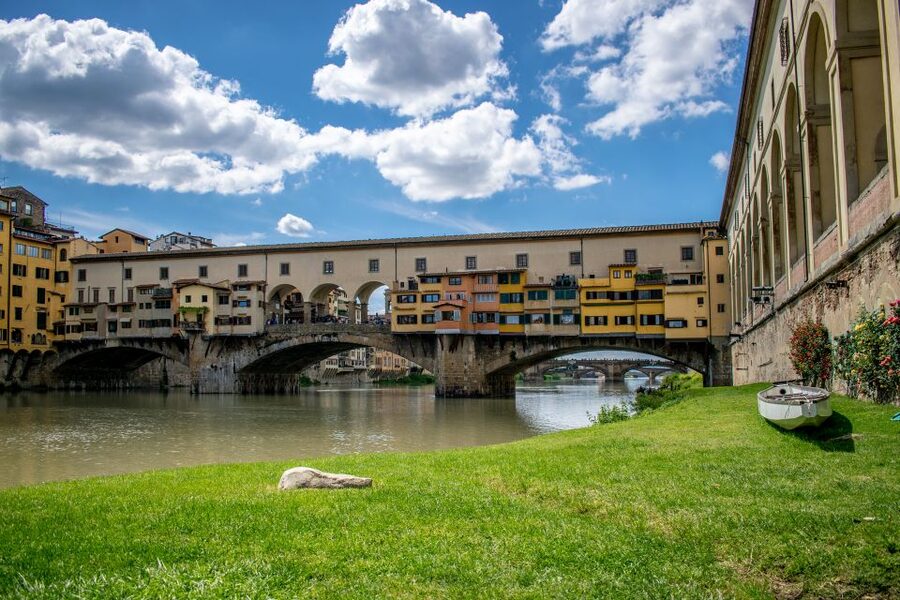
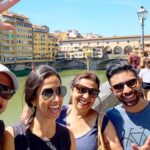
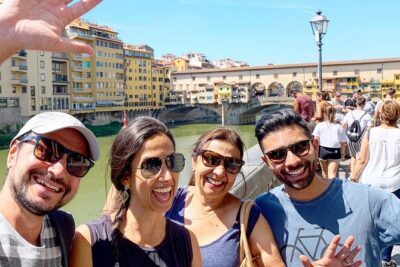
After Santa Croce, the tour heads toward the Vasari Corridor external path and then into the area of Ponte Vecchio. This is where Florence’s story becomes visual and immediate.
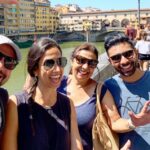
Ponte Vecchio is famous for its goldsmith shops, and you’ll get to experience that familiar scene from the right angle, while your guide connects it to what was happening socially and politically around the time those arts and commissions mattered. It helps to know what you’re looking at as a symbol, not just a photo stop.
One practical plus here is that the route is paced for looking. You aren’t sprinting from sight to sight. You get enough time to absorb the bridge setting and the guide’s framing before you move on.
The trade-off is that a bridge and busy riverfront areas can be crowded. If you’re traveling at a peak hour, keep expectations realistic and focus on the guide’s context, not your ability to get a clear shot.
Oltrarno, S. Frediano, and Santo Spirito: artisan streets with real local texture
A big reason this walk feels different from a basic highlights tour is the shift into Oltrarno and nearby neighborhoods like S. Frediano and Santo Spirito. Instead of repeating the same famous viewpoints, you get a look at Florence’s everyday craft side.
These areas are known for artisan shops and older tower house style buildings, and the guide uses that to show you another side of Renaissance Florence. It’s not just the grand patronage story. It’s also the city as a workshop culture, where art, trade, and local identity mix.
You’ll get an international feel here, but the tour’s emphasis is on local tradition, not generic street scenery. This is the part where the walking tour starts to feel like you’re getting a practical sense of how Florence lives day to day.
If you’re short on time and only want the famous monuments, this neighborhood section might feel like a detour. If you want more than postcards and you like the texture of real streets, you’ll likely love this portion.
Florence walks that make the stone streets tell the story
Via Tornabuoni to Piazza della Repubblica, then the Duomo reveal
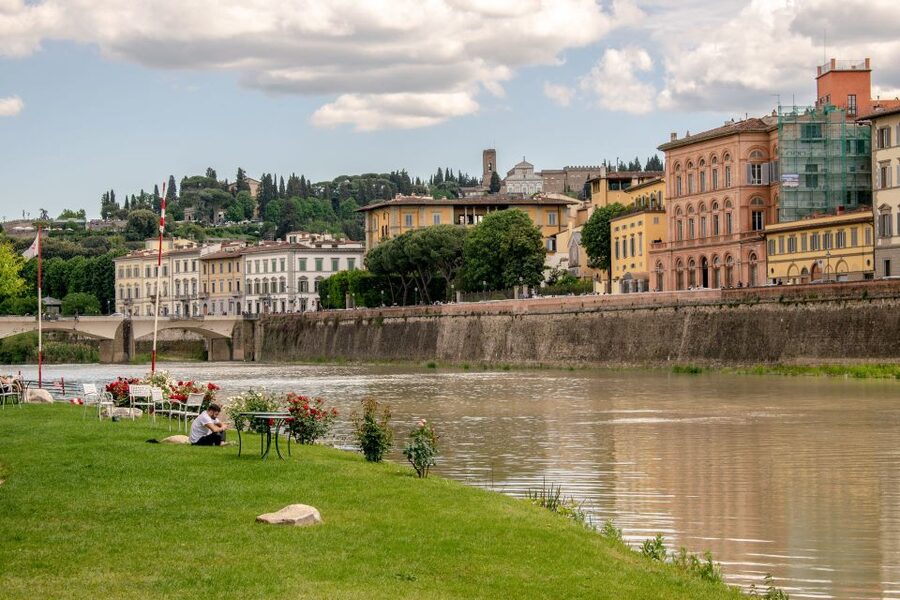
From Ponte Santa Trinita, the tour continues to Via Tornabuoni and then toward Piazza della Repubblica. This section helps you connect Florence’s quieter craft streets back to the city’s more formal, central energy.
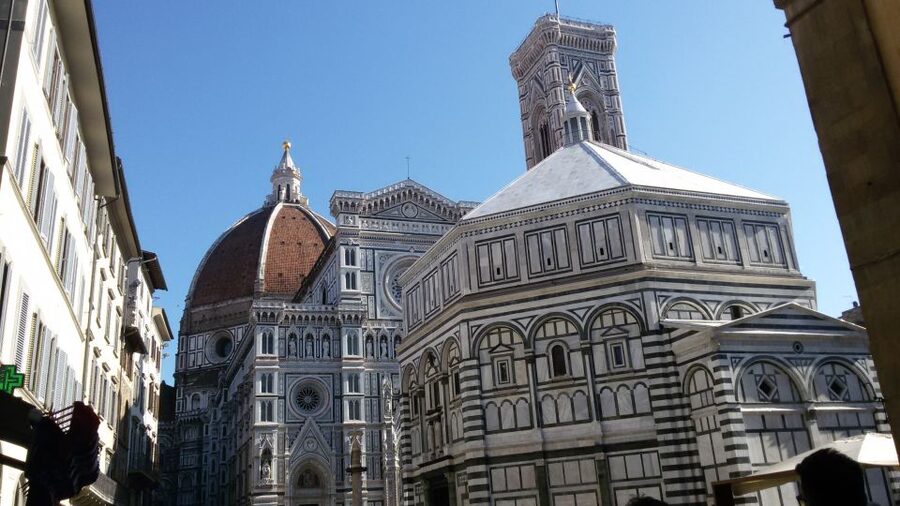
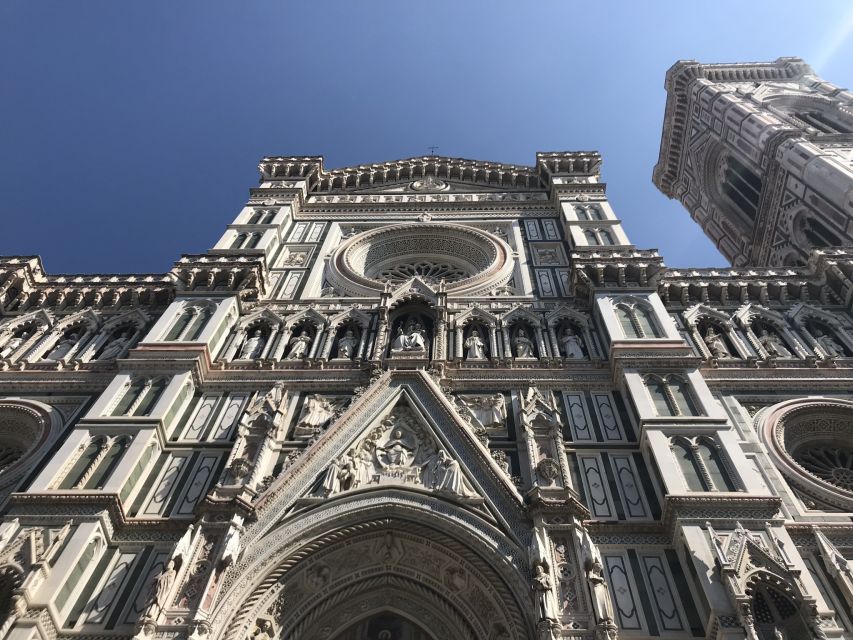
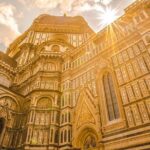
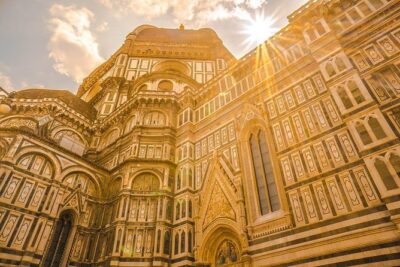
Then comes the payoff: you come face to face with Santa Maria del Fiore, Florence’s iconic cathedral. Even if you’ve seen photos, it hits harder when you approach it as part of a route that’s already taught you how the city developed and why these places matter.
This ending matters for your day planning too. If you want to keep exploring afterward, you’ll be positioned near one of the most useful hubs for navigating onward.
A small note to keep in mind: because it’s a walking route that ends near the cathedral area, you’ll want to stick with the timing of the group. Florence’s central streets are easy to get turned around in, especially if you stop for photos mid-route.
Why this guide approach works, and how Elisa keeps it engaging
The quality of a walking tour comes down to one thing, the guide. In this case, Elisa is singled out in positive feedback for doing exactly what you hope for: showing the sights clearly and answering questions as you go.
That kind of guide makes a difference for two reasons. First, it turns the route into a story you can follow. Second, it keeps the pace from feeling like effort, even when the walk is longer than you expect for 1.5 hours.
The best part is how the explanations seem to make the distance feel smaller. Instead of counting minutes until you rest, you’re listening for details and learning why the places look the way they do. When that clicks, you end up with a deeper understanding, not just a checklist.
If you’re the type who enjoys asking questions or you want your time to feel like more than scenery, this is the kind of tour that rewards you.
Price and value: $40 for a focused 1.5-hour Renaissance route
At $40 per person for about 1.5 hours, this isn’t a “cheap walk,” but it is good value for what you get. The included items, an expert guide and audio headset, matter in a city where explanations are hard to hear over street noise.
You’re also seeing major stops that are otherwise time-consuming to stitch together on your own, like the Uffizi/Piazza della Signoria area, Piazza Santa Croce, Ponte Vecchio, and the Duomo approach. This is a concentrated route, so the guide is doing the job of interpretation that you’d otherwise pay in time, confusion, or missed connections.
Also, since refreshments are not included, plan to handle that on your own. The plus side is that you can stay on pace and keep the walk feeling like a steady experience rather than a break-and-start routine.
My practical take: if you’re spending a day in Florence and you want to understand the Renaissance themes without building your own itinerary from scratch, this price looks fair.
Who should book this Florence walk, and who might want something else
This tour is a strong fit if you want a guided introduction to Renaissance Florence through big-name places and thoughtful connections to figures like Dante, Michelangelo, and Leonardo da Vinci, plus the Medici story. It’s also ideal if you like walking and you want to see both the famous monuments and the craft-focused streets of Oltrarno.
It may be less ideal if you have limited tolerance for walking, since the tour involves a fair amount of it. It also isn’t set up for carrying bulky items, because luggage or large bags are not allowed.
Wheelchair access is stated, so if you use a mobility device, this can be a possibility. Still, since it is a walking tour, it’s smart to come prepared for uneven surfaces and crowding.
Should you book this Florence Renaissance city walking tour?
I’d book this if you want a guided Florence that makes sense fast, and you care about learning what you’re seeing. The combination of Uffizi/Piazza della Signoria context, Santa Croce’s major names, Ponte Vecchio’s role in the city’s image, and the neighborhood change into Oltrarno creates a route with variety.
If your goal is only quick photos and you don’t want to listen to explanations, you might find it too structured. But if you like stories, you’ll likely appreciate the way the route stays engaging.
If you’re traveling with flexible plans, the tour offers free cancellation up to 24 hours in advance for a full refund, and there’s a reserve-and-pay-later option. That makes it easier to protect your schedule while you’re finalizing your Florence day.
FAQ
How long is the Florence Renaissance City Walking Tour?
The tour lasts 1.5 hours.
Where does the tour start?
It begins in the courtyard of the Uffizi Gallery and the Piazza della Signoria area.
What language is the live guide?
The live tour guide speaks English.
Is an audio headset included?
Yes. Audio headset use is included.
What major stops and areas does the tour cover?
The tour passes the Uffizi Gallery area, Piazza Santa Croce, the Vasari Corridor area, Ponte Vecchio, the Oltrarno district, and neighborhoods including S. Frediano and Santo Spirito, then heads toward Via Tornabuoni and Piazza della Repubblica before approaching Santa Maria del Fiore.
Is the tour wheelchair accessible?
Yes, the tour is wheelchair accessible.
What should I bring?
Bring comfortable shoes.
Are luggage or large bags allowed?
No. Luggage or large bags are not allowed.
Are refreshments included?
No. Refreshments are not included.
What is the cancellation policy?
Free cancellation is available up to 24 hours in advance for a full refund.
More Florence tours to open next
- The Best tour in Florence: Renaissance & Medici Tales – guided by a STORYTELLER
★ 5.0 · 12,316 reviews
Every Florence review, in one place
- Tuscany Day Trip from Florence: Siena, San Gimignano, Pisa and Lunch at a Winery
★ 5.0 · 21,634 reviews - The Best tour in Florence: Renaissance & Medici Tales – guided by a STORYTELLER
★ 5.0 · 12,316 reviews



The Medici thread through Florence
- The Best tour in Florence: Renaissance & Medici Tales – guided by a STORYTELLER
★ 5.0 · 12,316 reviews

Florence picks that sit just beyond this itinerary
- Florence: Duomo Complex Private Guided Tour & Optional Dome Climb
★ 5.0 · 4 reviews - Private Tour of Florence Cathedral, Bell Tower & Baptistery
★ 5.0 · 4 reviews - Michelangelo’s David Tour in the Accademia (Tickets NOT included)
★ 4.0 · 4 reviews - Exclusive Pisa Tour from Florence: With Skip-the-Line Access
★ 4.0 · 4 reviews - Full-Day Tour of Tuscany from Florence-small group up 8 pax
★ 4.5 · 4 reviews - Florence: Inferno Private Walking Tour
★ 5.0 · 4 reviews
More Medici Florence & Renaissance Stories worth comparing.
 ★ 5.0The Best tour in Florence: Renaissance & Medici Tales – guided by a STORYTELLERFrom $312,316 reviews
 ★ 5.0The Best Tour in Florence: Renaissance and Medici TalesFrom $310,810 reviews
 ★ 4.8Renaissance and Medici Tales Guided Walking TourFrom $21,549 reviews
 ★ 4.4Mysteries of the Medici Guided Walking TourFrom $31940 reviews
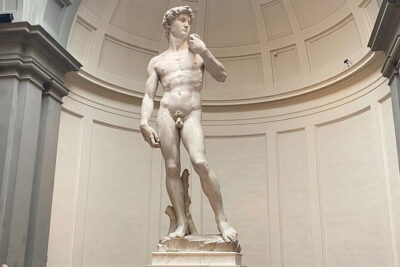 ★ 4.0Accademia Gallery: Michelangelo’s David and High Renaissance ArtFrom $43872 reviews
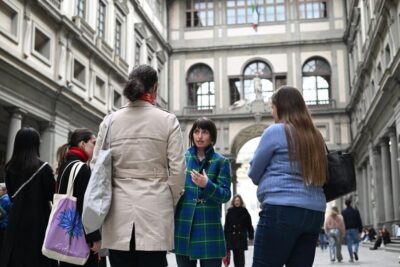 ★ 4.7Guided Tour of Medici Family Secrets and ChapelsFrom $93512 reviews
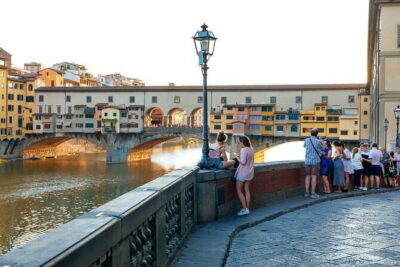 ★ 5.0Florence Private Tour: Renaissance, Famous Families & Hidden GemsFrom $199233 reviews
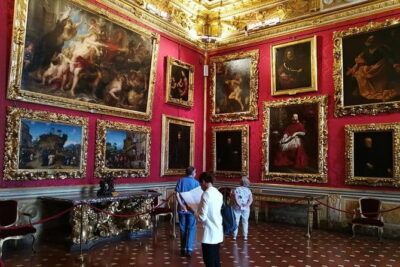 ★ 4.5Pitti Palace, Palatina Gallery and the Medici: Arts and Power in Florence.From $82223 reviews
Find this experience in another shortlist