
Florence field review · MEDICI FLORENCE & RENAISSANCE STORIES
Florence: LGBTQ Renaissance Walking Tour with Mila
Queer history in Florence hits different on foot. This 2-hour walk with Mila turns familiar sights into clues, from medieval punishments to Renaissance street life and the Medici family. You’ll cross key bridges, stand in the squares where laws were announced, and hear how a city can tell two stories at once.
I especially like how Mila keeps the tour human. You learn what people risked and what the rules were, not just big name dates. The second thing I love is the pacing, with a headset included so you can hear every detail while you move between stops.
One consideration: the subject matter gets heavy at points, including punishments and denunciation. If you want only light, feel-good stories, this tour may feel too honest in places.
Key highlights worth planning around
- Piazza della Repubblica meeting spot: you start right where Mila sets the legal and social context
- Santa Trinita bridge crossing: a built-in shift from law talk to street-level stories
- Medici focus in Pitti Palace Square: the last male Medici, Gian Gastone, gets explained in plain terms
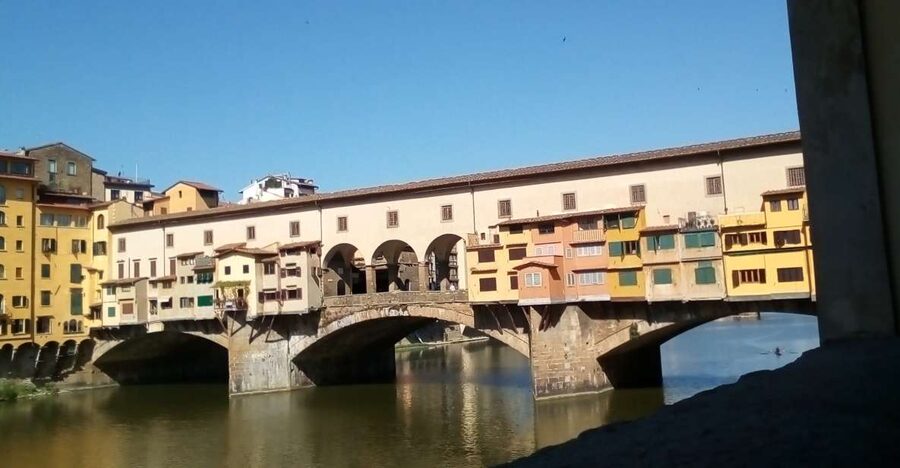
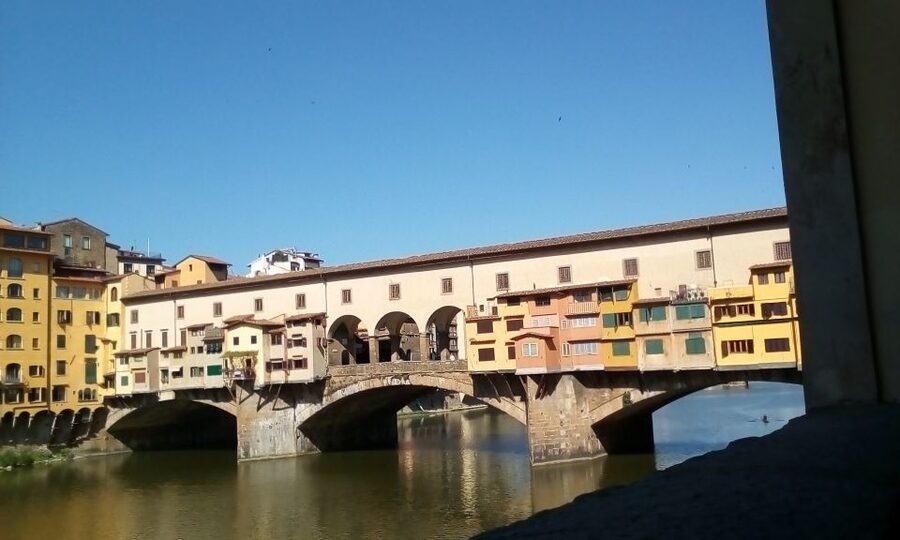
- Ponte Vecchio as a queer landmark: you’ll hear how it connected to cruising in medieval and Renaissance times
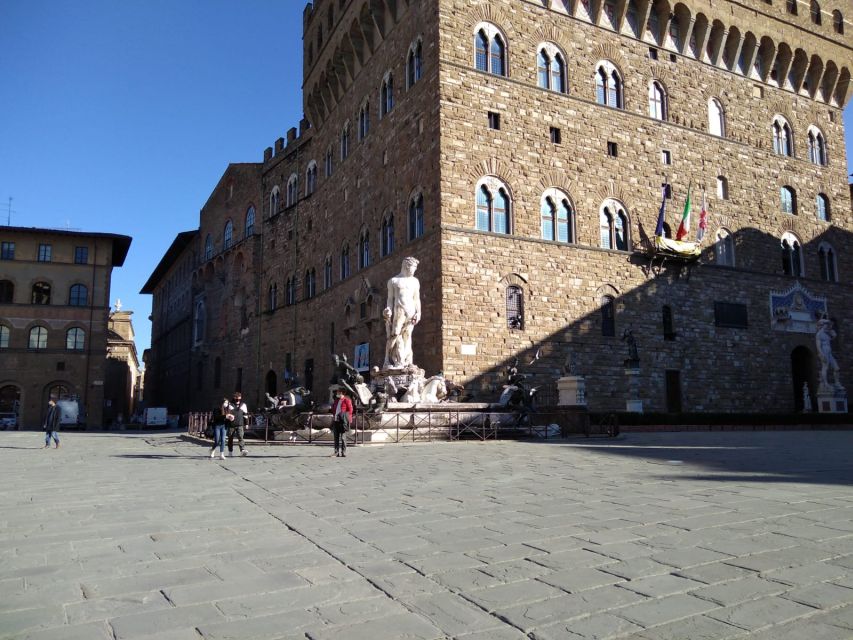
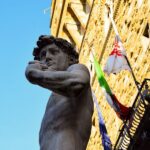
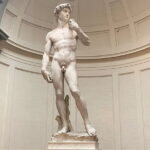
- Piazza dei Signori sculpture stop: Cellini’s Perseus with Medusa, plus a Michelangelo David copy
- Orsanmichele Church denunciation boxes: a chilling detail that gives the era real weight
More Medici stories behind the palaces, paintings and city streets
- The Best tour in Florence: Renaissance & Medici Tales – guided by a STORYTELLER★ 5.0 · 12,316 reviews
- The Best Tour in Florence: Renaissance and Medici Tales★ 5.0 · 10,810 reviews
- Florence: Renaissance and Medici Tales Guided Walking Tour★ 4.8 · 1,549 reviews
- Florence: Mysteries of the Medici Guided Walking Tour★ 4.4 · 940 reviews
Where the tour starts: Piazza della Repubblica and why it matters
Meet Mila at the Piazza della Repubblica, next to the Hard Rock Cafè under the Loggia, with a sign so you can spot her fast. This is a smart choice for a first stop because it instantly frames the whole walk: Florence isn’t just pretty facades here, it’s policy, punishment, and public life layered over centuries.
Once you gather, Mila sets the stage with Florence’s LGBTQ story in the middle ages and Renaissance. You’ll stand where laws were part of daily reality, and she explains how authorities treated same-sex acts through fines and punishments, including what people could be accused of. The mood is serious, but Mila’s tone stays approachable, with humor used carefully, not as a shield.
If you like tours that give you context before you chase landmarks, you’ll appreciate how this one starts at the “why” before it moves to the “where.” It also makes your later stops click, because you’re not just looking at beautiful points on a map.
Medieval punishments, shifting laws, and how to read Florence’s clues
A lot of Florence tours show you what survived. This one helps you understand what was enforced. You’ll hear about punishments and fines tied to sodomy laws, and you’ll learn how the legal landscape changed as politics and social attitudes evolved over time.
Here’s the practical value: you start noticing contrasts. For example, you’re in a place that feels open and social, yet the era Mila describes wasn’t always safe or tolerated. That tension explains why certain areas became associated with secrecy, looking for discretion rather than public romance.
Mila also talks about sources and how she verifies narratives. That matters, because queer history in older centuries can get distorted, simplified, or treated like folklore. When your guide points you toward what she’s using, you can trust the direction of the story, even when the details are uncomfortable.
Santa Trinita Bridge to Pitti Palace Square: the Medici story with a queer lens
After the Piazza della Repubblica, you head toward the Santa Trinita bridge. Crossing the bridge is more than a scenic pause. It signals a shift from public law to power at street level, because Florence’s ruling families shaped what people did, what people feared, and what they could get away with.
From there you reach Pitti Palace Square. This is where Mila brings in the Medici family, and she focuses on one person you’ll hear about elsewhere, but rarely explained with this kind of clear, story-driven context: Gian Gastone, the last male Medici.
Mila paints him as a controversial figure in European history, then ties that controversy back to what life looked like around elite circles. The point isn’t to reduce LGBTQ history to one dynasty, but to show how court power, politics, and culture were tangled together. That helps you connect why certain locations, buildings, and traditions became symbols over time.
If you’re the type of visitor who loves “who held power and what did it mean,” this section is a strong payoff. You come away understanding that Renaissance Florence wasn’t just art and banking, it was governance and control, sometimes expressed through who got protection and who didn’t.
Ponte Vecchio: from famous shops to a cruising connection
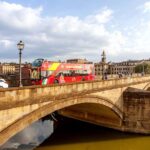
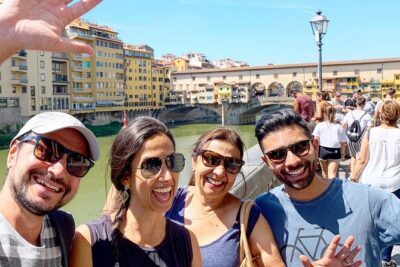
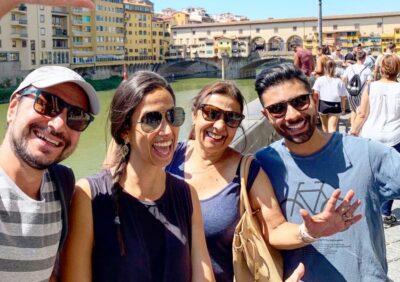
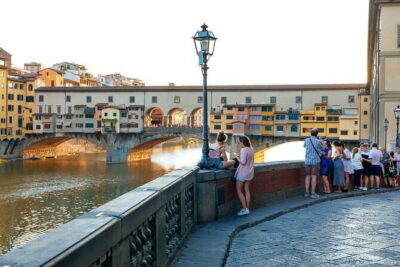
Then comes one of the most iconic segments of the route: the Ponte Vecchio. Mila walks you through the connection between this bridge and the queer community, including how Ponte Vecchio became one of the most popular places for cruising in medieval and Renaissance times.
This is the moment where the tour’s whole premise becomes real. You see the bridge the way postcards do, then you hear how it functioned in the era Mila describes, as a place where people could search for anonymous connection. It reframes what you’re looking at without making the explanation feel forced.
Also, listen closely to how Mila links the space to behavior. It’s not just a claim that something happened. She helps you understand the logic of why a location like this could attract attention, and why discretion mattered. Even if you’ve seen Ponte Vecchio dozens of times on social media, you’ll likely experience it differently once you’ve heard the queer-history angle.
And yes, you’ll probably take photos. Just remember the street life around the bridge is real, and the tour is moving, so keep your camera ready and your walking pace steady.
The ancient gay district near Piazza dei Signori
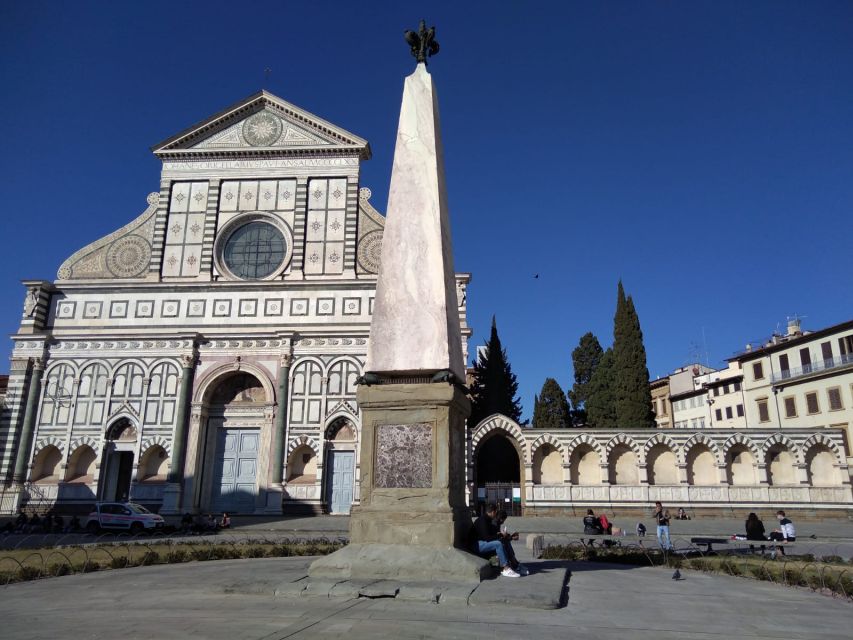
Next, you head toward the area often described as Florence’s ancient gay district, near Piazza dei Signori. This is where the tour becomes part sightseeing, part decoding the city.
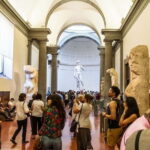
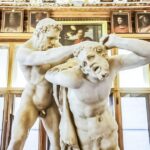
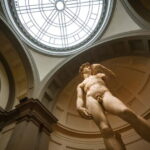
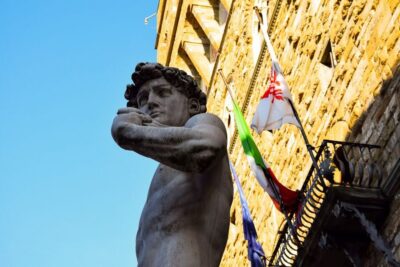
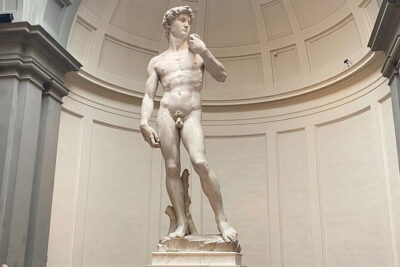
You’ll pause around a few striking art anchors. Mila helps you spot and interpret a copy of Michelangelo’s David, plus Cellini’s Perseus with the Head of Medusa. These statues are famous on their own, but the way Mila uses them is what makes the stop work.
The value here is interpretation. You’re not just admiring sculpture technique. You’re learning how Renaissance imagery, masculinity, beauty, and myth could exist alongside a society that still punished and surveilled LGBTQ people. That doesn’t make the art “about” queer life in a simplistic way, but it does place the art in the same cultural world as the rules and risks.
Mila also keeps space for questions, which is one reason this tour earns such high marks. If you want to ask how historians know what they know, or how laws were enforced, this is the time. Her answers feel grounded because she’s already signaling the boundaries of what can be proven.
Florence walks that make the stone streets tell the story
Orsanmichele Church and the denunciation boxes: the uncomfortable part that counts
One of the most serious stops comes at Orsanmichele Church. Mila explains that the church hung special boxes to denounce members of the LGBTQ community, especially gay men.
This is not a vague “bad things happened” moment. It’s a concrete detail that makes the era feel immediate. You’re standing in a church connected to civic life, and you’re hearing how religious institutions could participate in public pressure and reporting.
If you’re sensitive to darker history, this is the point to brace yourself. The tour handles it with care, mixing seriousness with a steady guiding voice so you don’t get swallowed by the topic. But it’s still heavy, and it should be.
At the same time, this stop is exactly why the tour is more than sightseeing. It’s giving you the context to understand why certain places and behaviors became associated with seeking safety in numbers, discretion, or coded signals.
How Mila’s storytelling makes the 2 hours feel right
A good walking tour is a balancing act. Too little context and you feel lost. Too much context and you get bored while standing in the sun. Mila hits a sweet spot.
Based on what I’ve learned from the guide style people talk about, she’s charming and funny without turning tragic topics into a joke. She also knows when to get serious, especially when discussing punishments, fines, and denunciation. That tone control matters. In a subject like this, respect is part of the job.
She also answers questions, and she’s thoughtful about sources. That’s a big deal for queer Renaissance history, where assumptions can spread easily. When your guide explains where her narratives come from, it helps you separate documented stories from convenient myths.
Don’t skip the headset either. It sounds small, but in Florence, street noise and distance can kill a guided story. The headset keeps you connected, so you can focus on what she’s saying instead of chasing her voice.
Value check: is $29 a good deal for this tour?
At $29 per person for a 2-hour walking tour, this one looks like strong value, especially because it includes a local guide and a headset. You’re paying for interpretation, pacing, and careful storytelling around sensitive themes. You’re not paying entrance fees, which means the cost mostly goes toward the guide.
Could you DIY Florence and read about queer history on your own? Sure. But you’d have to do the hard work of finding accurate material, then translating it into a route that connects specific places. Mila does that matching for you, and she does it in the exact places where the stories land.
If you’re trying to plan smart in a short time, this tour is also efficient. It’s long enough to give real context, but short enough that you can still fit it near other Florence highlights.
Who this tour fits best
This tour is a great match if you want:
- Florence sights with meaning, not just photo stops
- LGBTQ and queer history explained with context, laws, and social pressure
- A guide who can handle tough material with warmth and humor
- A walking route that connects multiple iconic locations, from bridges to squares to churches
It may feel less ideal if you want a strictly celebratory LGBTQ tour. This walk includes persecution and reporting, because that’s part of the historical record Mila shares. Also, the story largely centers on gay men, though Mila also includes context for lesbians and women in general. If your main goal is strictly lesbian history, you might want to ask questions in advance, or pair this with another Florence LGBTQ stop.
Quick practical tips before you go
- Wear comfortable walking shoes. You’ll be moving between squares, bridges, and church areas.
- Dress for weather. The tour runs rain or shine, so bring a light rain layer.
- Arrive a few minutes early at Piazza della Repubblica by the Hard Rock Cafè under the Loggia, look for Mila’s sign.
- Keep an open mind about tone. Expect humor at times, but also frank discussion of punishments and denunciation.
- If you get hot easily, plan for it. The tour keeps moving, and Mila’s guidance style includes handling the human side of long standing in the Italian sun.
Should you book the Florence LGBTQ Renaissance Walking Tour with Mila?
If you care about understanding Florence as a real place, where power, desire, and risk coexisted, I’d book this. It’s well-timed at 2 hours, it’s guided in English with a headset, and it uses famous landmarks like Ponte Vecchio and Piazza dei Signori as a gateway to the stories underneath.
Pick this tour early in your trip if you like using one strong experience to shape how you see the rest of the city. Mila’s approach also gives you a clearer “what else should I look for” lens, so your later self-guided wandering gets more satisfying.
If you want a light, carefree walking tour, this may not be your best choice. But if you want honesty, strong place connection, and a guide who treats the subject with both care and momentum, it’s a very easy recommendation.
FAQ
Where is the meeting point for the Florence LGBTQ Renaissance Walking Tour?
Meet Mila at the Piazza della Repubblica, next to the Hard Rock Cafè under the Loggia. Mila will have a sign.
How long is the tour?
The tour lasts 2 hours.
What language is the tour in?
The tour is conducted in English.
Does the tour run in bad weather?
Yes. The tour takes place rain or shine.
What is included in the price?
The included items are a local guide, a headset, and the walking tour.
Are entrance fees included?
No. Entrance fees are not included.
Is the tour wheelchair accessible?
Yes, the tour is wheelchair accessible.
Can I cancel or pay later?
You can cancel up to 24 hours in advance for a full refund. You can also reserve now and pay later.
More Florence tours to open next
- The Best tour in Florence: Renaissance & Medici Tales – guided by a STORYTELLER
★ 5.0 · 12,316 reviews
Every Florence review, in one place
- Tuscany Day Trip from Florence: Siena, San Gimignano, Pisa and Lunch at a Winery
★ 5.0 · 21,634 reviews - The Best tour in Florence: Renaissance & Medici Tales – guided by a STORYTELLER
★ 5.0 · 12,316 reviews

The Medici thread through Florence
- The Best tour in Florence: Renaissance & Medici Tales – guided by a STORYTELLER
★ 5.0 · 12,316 reviews
Florence picks that sit just beyond this itinerary
- One Hour Uffizi Guided Tour: Masterpieces of the Renaissance
★ 5.0 · 3 reviews - Sightseeing Tuscany by touring bike – 1 day rental
★ 5.0 · 3 reviews - Private Siena, S. Gimignano, Chianti Road and Wine Tasting
★ 5.0 · 3 reviews - Bargello Museum Private Tour: Michelangelo’s Bacchus & Donatello’s David
★ 5.0 · 3 reviews - Authentic Florence Cooking Class at Costanza’s 1839 Family Estate
★ 5.0 · 3 reviews - San Gimignano and Volterra private tour: etruscans, romans and middle age jewels
★ 5.0 · 3 reviews
More Medici Florence & Renaissance Stories worth comparing.
 ★ 5.0The Best tour in Florence: Renaissance & Medici Tales – guided by a STORYTELLERFrom $312,316 reviews
 ★ 5.0The Best Tour in Florence: Renaissance and Medici TalesFrom $310,810 reviews
 ★ 4.8Renaissance and Medici Tales Guided Walking TourFrom $21,549 reviews
 ★ 4.4Mysteries of the Medici Guided Walking TourFrom $31940 reviews
 ★ 4.0Accademia Gallery: Michelangelo’s David and High Renaissance ArtFrom $43872 reviews
 ★ 4.7Guided Tour of Medici Family Secrets and ChapelsFrom $93512 reviews
 ★ 5.0Florence Private Tour: Renaissance, Famous Families & Hidden GemsFrom $199233 reviews
 ★ 4.5Pitti Palace, Palatina Gallery and the Medici: Arts and Power in Florence.From $82223 reviews
Find this experience in another shortlist