
Florence field review · WALKING TOURS
Florence Highlights: Guided Walking Tour of the Historic Center
Florence is easier when someone helps you start. This guided walking tour threads together major landmarks with a self-guided feel, and you get a live English guide plus a multilingual audio app. I love the mix of iconic stops and quieter angles of the historic center, and I also like that you can use the app to keep moving even if you take a break. One thing to consider is that this is mostly an audio-and-walking experience, so if you want nonstop, detailed introductions the whole time, you might find it a bit less structured than a fully scripted tour.
What makes it practical is the flow: you meet in a central spot, the guide leads for the core segment, and the app helps you keep your bearings. The route includes Florence touchpoints tied to the Medici, the cathedral complex, and several older churches and palaces, which means you’ll see both power and art in one loop. With a group capped at 30 and a typical 90 minutes, it’s the kind of “get oriented fast” outing that works well when you have limited time. The main drawback is you’ll need your own phone and headphones to use the audio.
Key points before you go
- Live English guide with multilingual audio so you can switch languages on the app (English, French, German, Italian, Spanish, Chinese).
- Hop-on, hop-off style flexibility using the app to locate the guide if you step away to eat or linger.
- A tight 90-minute walk that still hits big sights and several lesser-noticed corners.
- Small group size with a maximum of 30 people, which helps the walk feel manageable.
- Central meeting spot at Cafè Firenze on Via de’ Martelli, easy to find on foot.
Florence walks that make the stone streets tell the story
- Florence: Guided Walking Tour★ 4.5 · 3,334 reviews
- Skip the line: Uffizi and Accademia Small Group Walking Tour★ 4.5 · 3,135 reviews
- Florence: Guided Walking Tour★ 4.6 · 1,602 reviews
- Florence: Renaissance and Medici Tales Guided Walking Tour★ 4.8 · 1,549 reviews
How the guided and app-led format works in Florence
This tour is built around a smart hybrid model. You get a guided walking tour for about 90 minutes with live commentary in English, and you also get a pre-recorded audio guide through a sightseeing app. That matters because Florence is full of “look up” moments, and the audio helps you make sense of what you’re seeing without waiting for the guide to get to your spot in the group.
The multilingual element is a big value add. You can listen in English, French, German, Italian, Spanish, and Chinese, which means you can keep the experience comfortable even if your group members speak different languages. I also like that the audio can support you during the parts where you’re moving under your own pace, so you’re not stuck with awkward silences.
There’s also a real-world flexibility angle. The experience is designed so you can pause the walking, step off for a snack, and then reconnect with the guide by using the app. In practice, that lets you pace the tour to your body and your appetite, rather than forcing you to march straight through every stop.
One practical note: the tour gives you the audio, but it doesn’t provide the playback gear. You’ll need your own mobile device and headphones to hear it well. If you forget them, you can still walk with the group, but you’ll lose a major part of the experience.
Meet at Cafe Firenze, download the audio, and keep your phone ready
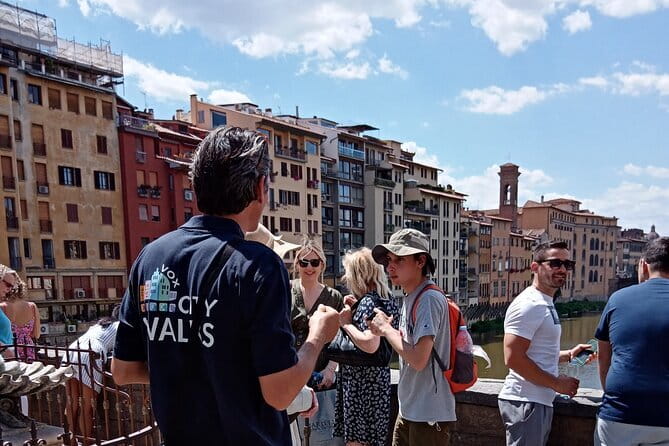
The meeting point is Via de’ Martelli, 50, at the Cafè Firenze on the corner of via de’ Pucci. Your guide meets you there in a dark blue Vox City uniform. If you can, arrive about 5 minutes early. That small buffer helps you avoid the stress of finding the correct corner and getting your phone ready.
Before you go, scan the QR code on your voucher to download the audio guide. This isn’t just a nice-to-have. You’re in one of Europe’s busiest visual cities, and having the audio ready in advance helps you start smoothly instead of fumbling with signal and settings. The tour uses a mobile ticket, so have your confirmation ready on your phone.
At the end, the tour loops back to the meeting point. That’s helpful for two reasons. First, you’re not guessing how to get back to your hotel after a long walk. Second, it makes it easier to plan a late lunch right after the route finishes.
Landmark run: from Donatello art to the piglet fountain
Once you start, the tour keeps your eyes busy with a mix of art, architecture, and everyday Florentine texture. Early on, you’ll admire a 700-year-old church built on the site of a monastery, including art by Donatello. That’s a great way to start because it immediately grounds you in Florence’s habit of building over older layers. You’ll also get a sense of how Renaissance art didn’t arrive in a vacuum. It grew inside long-standing sacred spaces.
Next comes a food-and-market moment. You’ll spend time in a covered market area with Renaissance-style arches and a piglet fountain. I like this stop because it slows the tour down emotionally. You get a breather from monuments, and you see the city as people actually use it, not just as a photo backdrop.
Then the route shifts back to Florence’s public power spaces. You’ll walk through a main square known for its political importance, and you’ll spot a distinctive W shape tied to the square’s layout. This is exactly the kind of detail that makes Florence feel oddly specific. It’s not just “there’s a square,” it’s “here’s a feature you’ll notice if you’re paying attention.”
Political Florence and the Medici power trail

From there, the tour leans into civic identity. You’ll look up at the town hall of Florence, described as a famous symbol of the city’s heritage and its influence on the Renaissance era. This stop is more than a “nice building.” It’s a reminder that Renaissance Florence wasn’t only painters and architects. It was also institutions, decisions, and public face.
After that, you’ll take photos of a major fountain created by the Medici family nearly 500 years ago. Even if you’re not a fountain fanatic, this is a smart moment to pause. Florence’s water features often function like social meeting points, and the Medici connection ties a pretty scene to real historic power.
You’ll also visit an arched gallery featuring a collection of historic statues. The advantage of doing this while you’re still in guided mode is pacing. The guide can point you toward what to notice so you don’t miss the “why” behind the carvings and figures.
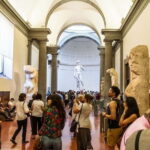
Then you’ll reach the iconic art gallery stop, where you’ll see a world-class collection of Italian Renaissance sculptures, paintings, and more. The tour doesn’t spell out ticket access for the gallery, so treat this as a sightseeing moment rather than an included entry. If you want to go inside specific museums, plan separately.
From a viewpoint of strategy, this section works well because it connects the civic story to the art story. You see how Florence used both public spaces and collections to project authority and taste.
Arches, galleries, and the oldest church stops

The route doesn’t stay in the “big obvious” zones. You’ll admire one of Florence’s oldest churches, focusing on its Romanesque style architecture. Romanesque buildings in Italy have a particular solidity to them, and it’s a good counterbalance after the Renaissance emphasis. It’s also one of those stops where the audio can help you identify the main architectural cues while you keep walking.
You’ll then stroll through a triangular piazza lined with stunning Gothic and Renaissance palaces. A triangular layout is already unusual, and Florence loves to cram visual drama into odd geometry. This is where the tour’s off-the-tourist-track promise matters, because the architecture is concentrated and the space feels like a room rather than a postcard.
Next comes a High Renaissance palace designed by architect Baccio d’Agnolo. That specific name is gold for history nerds, but even if you’re not one, the stop gives you a clear anchor for the era. You’ll also see a palace constructed by the Strozzi family, Florence’s long-standing rivals of the Medici family. Placing those two power blocs near each other on a walk is a smart way to understand how art and buildings reflected competition.
When a guide is worth having beside you in Florence
From the Fountain of the Naiads to Medici tomb views

You’ll walk through another popular square and take a photo of the Fountain of the Naiads, famous for its statues. Statues can blur together in Florence if you don’t have a guide cueing you. This stop gives you a clear “focus point,” so your photos have meaning and your eyes know where to land.
Then comes a taller, more dramatic religious finale within this stretch: you’ll look up at a towering church described as the final resting place of several Medici family members. Again, the key is the vertical emphasis. In Florence, the skyline is part of the story, and this stop helps you connect the Medici theme to stone and memorial design.
Santa Maria del Fiore, plus baptism and the bell tower

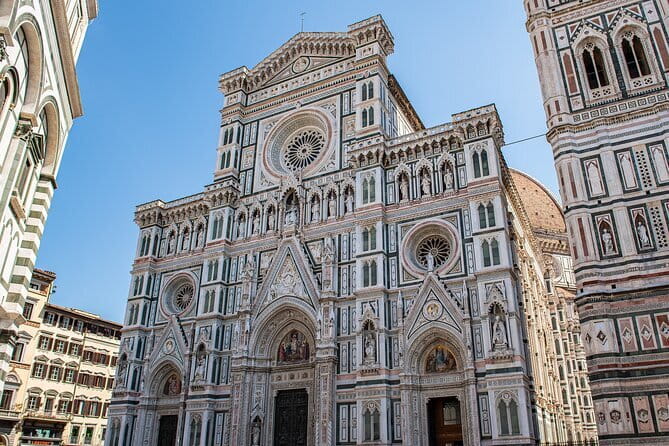
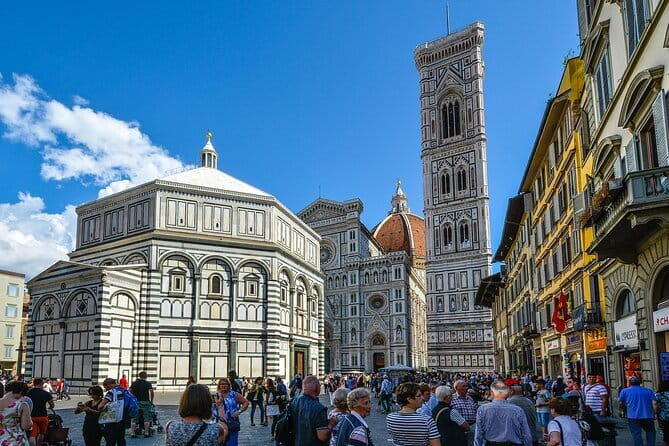
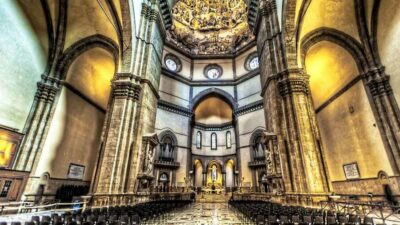
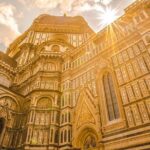
If you’re in Florence, you have to deal with the Cathedral of Santa Maria del Fiore complex, and this tour does it in a way that helps you understand the parts. You’ll be ready to take snaps of the cathedral, with its dome designed by Filippo Brunelleschi and its UNESCO World Heritage status. The dome dominates the skyline for a reason, and it’s hard to absorb Florence’s identity without seeing it at street level.
You’ll then see the striking octagonal building used as the exclusive place for baptism in Florence for centuries. This is a good pairing with the cathedral because it shows the sacred calendar: baptism as a foundational life moment, followed by worship in the grand cathedral complex.
After that, you’ll look up at the free-standing bell tower built almost 700 years ago, described as over 80 meters tall. That height matters on the walk because you’ll naturally tilt your head upward as you move. The audio helps you understand what you’re looking at while your feet keep going.
Roman roots, Dante, and the Chestnut Tower
The final sections move into layers that feel different from the big monuments. You’ll see one of the oldest buildings still standing in Florence’s historic center. Origins are uncertain, but foundations date back to the Roman era. This is the kind of stop that makes you feel the city is alive with time travel, without any need for special effects.
Then you’ll walk by a museum dedicated to Dante Alighieri, known for the Divine Comedy poem. Even if you do not enter, seeing the museum location helps you connect the author to the city’s cultural identity. Dante is woven through Florence, and the tour gives you a straightforward way to notice that link.
You’ll also spot one of the best preserved towers in the historic center, often called the Chestnut Tower. Towers in Florence are visual anchors. They help you orient yourself when the streets start to look similar and when you realize you’ve walked far more than you thought.
The route ends with references to the City of Lilies and its magnificent landmarks. That phrase is more than a nickname reminder. It’s a gentle nudge to look at the city as a whole, not just a sequence of individual photos.
Price and timing: why $30.12 can be a smart value
At $30.12 per person for an experience that runs about 1 to 2 hours, this can be good value if you want structure plus flexibility. The main reason is what you’re getting alongside the walk: live English commentary, plus a downloadable, multilingual audio guide you can use on your phone.
It’s not a “museum entry included” kind of deal, and the tour data does not claim attraction tickets are included. So if your goal is to step inside every major site, you’ll likely need extra planning and separate tickets.
Timing-wise, it’s also an efficient hit. You’ll see a lot of landmark material without committing to a full half-day guided program. It’s a solid choice when you’re new to Florence and need a first-pass orientation, and it’s also a good option when you want a planned route but still prefer to control breaks with your own pace.
One more small factor: the experience has a maximum of 30 travelers. That usually keeps the group moving and keeps you from feeling like you’re in a crowded conga line.
Should you book this Florence Highlights walk?
Yes, I think it’s worth booking if you want a smart orientation walk that blends a live guide with audio you can control. It’s especially good for first-time Florence visitors, people who enjoy learning while walking, and anyone who appreciates flexibility, since you can leave the tour and reconnect using the app.
Book it if you like the idea of seeing the cathedral area, the Medici-linked highlights, and a sweep of palaces and churches in one outing. Also book it if your group includes different language speakers, because the audio support is built in.
Skip it or consider a different style if you need constant, detailed introductions from the guide from the first minute to the last. One downside that can happen on walking tours is occasional start delays or a more low-key delivery style, so if you want a tightly narrated experience with big backstory at every step, you may be happier with a more fully guided format.
If you do book, bring headphones, charge your phone, and give yourself a little time to download the audio before you meet. Then walk tall, look up often, and treat the route like a guided tour plus your own self-guided Florence playlist.
FAQ
How much does the Florence highlights walking tour cost?
The price is $30.12 per person.
How long is the tour?
The tour lasts about 1 to 2 hours, and the guided walking portion is listed as 90 minutes.
Is the tour offered in English?
Yes. The live commentary is in English, and the pre-recorded audio guide is available in English, French, German, Italian, Spanish, and Chinese.
Where do I meet the guide?
Meet at Cafè Firenze, Via de’ Martelli, 50/r, on the corner of via de’ Pucci in Florence.
Is entry to attractions included?
No. Entry to attractions is not included.
What do I need to use the audio guide?
The tour data says headphones and a mobile device are not included, so you should bring them. You can download the audio by scanning the QR code on your voucher before arrival.
Can I use the voucher on another date?
Yes. Walking tour passes are valid for 12 months from your selected travel date, so you can use your voucher at another time if your plans change.
Florence at walking speed



More Florence tours to open next
- The Best tour in Florence: Renaissance & Medici Tales – guided by a STORYTELLER
★ 5.0 · 12,316 reviews


Every Florence review, in one place
- Tuscany Day Trip from Florence: Siena, San Gimignano, Pisa and Lunch at a Winery
★ 5.0 · 21,634 reviews - The Best tour in Florence: Renaissance & Medici Tales – guided by a STORYTELLER
★ 5.0 · 12,316 reviews




Florence picks that sit just beyond this itinerary
- Florence: Duomo Complex Private Guided Tour & Optional Dome Climb
★ 5.0 · 4 reviews - Private Tour of Florence Cathedral, Bell Tower & Baptistery
★ 5.0 · 4 reviews - Michelangelo’s David Tour in the Accademia (Tickets NOT included)
★ 4.0 · 4 reviews - Exclusive Pisa Tour from Florence: With Skip-the-Line Access
★ 4.0 · 4 reviews - Full-Day Tour of Tuscany from Florence-small group up 8 pax
★ 4.5 · 4 reviews - Florence: Inferno Private Walking Tour
★ 5.0 · 4 reviews
More Walking Tours worth comparing.
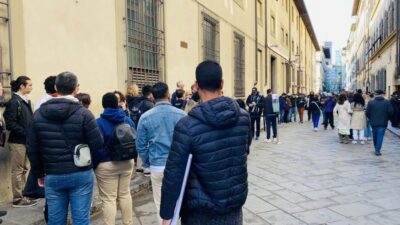 ★ 4.5Guided Walking TourFrom $313,334 reviews
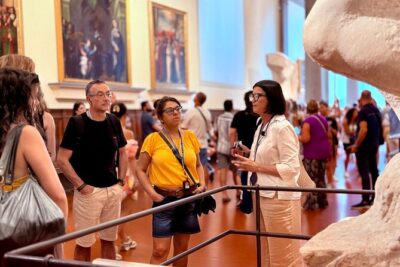 ★ 4.5Skip the line: Uffizi and Accademia Small Group Walking TourFrom $1483,135 reviews
★ 4.6Guided Walking TourFrom $271,602 reviews
★ 4.5Skip the line: Uffizi and Accademia Small Group Walking TourFrom $1483,135 reviews
★ 4.6Guided Walking TourFrom $271,602 reviews
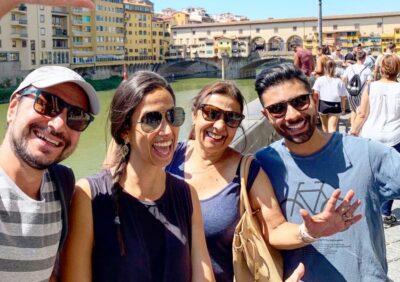 ★ 4.8Renaissance and Medici Tales Guided Walking TourFrom $21,549 reviews
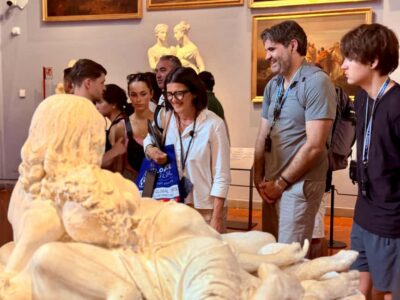 ★ 4.7Uffizi & Accademia Small Group Walking TourFrom $1481,380 reviews
 ★ 5.0Skip-the-Line Florence Highlights and David Walking TourFrom $1171,127 reviews
 ★ 4.6Dark Mysteries and Legends Guided Walking TourFrom $21,081 reviews
 ★ 4.5Florence in a Day: Michelangelo’s David, Uffizi and Guided City Walking TourFrom $1341,048 reviews
Find this experience in another shortlist