
Florence field review · EVENING EXPERIENCES
Florence by night with aperitivo
Florence looks different after dark, and that is the point of this tour. You get a guided loop through the main squares, with time to enjoy the night vibe and then settle into a classic aperitivo scene. I like that the pace feels unhurried and you get real context as you move from stop to stop.
Two things I especially appreciate are the small group size (10 max) and the way the guide turns famous sights into something you actually remember. Guides can be upbeat and fun, and I’ve seen examples like Anastasiia and Francesca delivering history with energy while keeping things easy to follow.
One possible drawback: the timing is tight. Most stops are around 5 to 15 minutes, so if you want long photo sessions, a lot of museum time, or extra time inside the big sites, you’ll need to plan that separately.
Key things to know before you go
- Max 10 people means more interaction and a calmer walk
- One included drink plus snacks makes the evening feel complete
- Duomo area details like the wine windows help you see more than postcards
- Ponte Vecchio and Porcellino bring folklore and Medici-era stories into the night
- Tour ends in Piazza Santa Croce so you can keep going on your own
Keep the Florentine shortlist moving
- Winner 2025 Florence Sunset Food & Wine Tour by Eating Europe★ 5.0 · 5,015 reviews
- Florence: Evening Classical Music Concert★ 4.6 · 574 reviews
- Florence: Statue of David Evening Tour★ 4.6 · 442 reviews
- Florence Evening Food Tour with Florentine Steak & Tuscan Wine★ 4.5 · 376 reviews
Florence at night, 6:45 pm, then a real aperitivo break
This is a 3-hour evening walking tour in Florence that starts at 6:45 pm near Piazza di Santa Maria Novella and finishes around Piazza Santa Croce. The best part is how the night changes what these landmarks feel like. During the day, everything can blur into a sightseeing checklist. At night, the same streets feel slower, warmer, and more social, which pairs perfectly with aperitivo culture.
You’ll also get a structured route instead of wandering. The stops are spaced so you can see big sights without sprinting, and the schedule leaves room for the bar moment at the end, not just a quick stop-and-go.
Small group pace, plus a guide you can actually find
The tour caps at 10 travelers, and there’s a minimum of 4. If the minimum isn’t met, you’re offered a private option with a supplement. In practice, that small size tends to be what makes the difference between a tour that feels like a lecture and one that feels like a friendly walk.
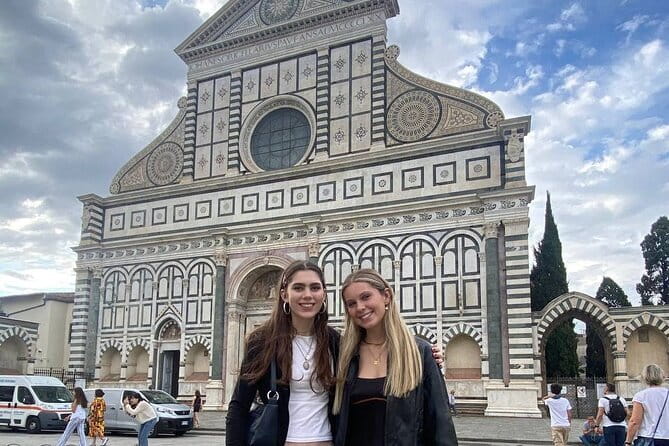
There’s also an easy start: you meet in front of the Basilica Santa Maria Novella, next to the obelisk, and your guide is easy to spot in a purple T-shirt with the logo. That sounds minor, but it matters on an evening tour when you don’t want to play group-search in the dark.
Stop-by-stop: Santa Maria Novella to the Duomo complex (and why it works at night)
The tour’s first phase is all about getting your bearings. You start at Santa Maria Novella, then move into the cathedral area and nearby squares. Each stop is relatively short, but that is also what keeps the pace relaxed.
Basilica of Santa Maria Novella: the late-afternoon kickoff
You begin in the late afternoon in front of the Basilica Santa Maria Novella facade. The timing helps, because the light shifts in a way that makes the architecture feel more dramatic before full night settles in. Admission is listed as free, so this portion is about the exterior and the storytelling around the square.
If you like tours that help you understand where you are in the city first, this start does that job.
Wine windows near the cathedral: Cosimo de Medici’s unusual trick
Next, you head through the Duomo area and learn about the wine windows, a 16th-century creation associated with Cosimo de Medici. The concept is simple, but the story is not: the windows allowed safer, more regulated transactions, and the explanation connects how locals adapted during periods like the plague. Today, 285 preserved windows remain, and some are still active.
This is the kind of detail that is easy to miss if you’re just passing through. Even if you’ve seen photos of Florence’s cathedral complex, these windows give you something specific to look for while you’re in the area.
What to consider: you’ll have about 15 minutes here, so you should be ready to absorb the story and then move on quickly.
The Florence Cathedral complex: Gothic beginnings and UNESCO context
You then spend more time in the cathedral complex area, including the broader context of the Cattedrale di Santa Maria del Fiore and the surrounding landmark buildings. Work began in 1296 in a Gothic style, and the design is tied to Arnolfo di Cambio. The tour frames the cathedral complex, along with the Baptistery and Giotto’s Campanile, as part of the UNESCO historic center.
Again, this is mostly about exterior views and your guide’s explanations. It is a smart way to get the big picture without committing to a longer, separate cathedral visit.
Cupola del Brunelleschi: seeing the dome’s scale without climbing
From there, you admire the Dome of Brunelleschi (Cupola del Brunelleschi) from the square area, along with the Baptistery and the surrounding views. The tour notes the dome’s size, described as the third largest in the world after St. Peter’s in Rome and St. Paul’s in London.
At night, this is a great stop for atmosphere. You’re not trying to squeeze in a long climb or interior time, and you can still appreciate the scale and layout that make this complex so important.
Piazza della Repubblica and Fontana del Porcellino: folklore with a night soundtrack

After the Duomo area, the route drops you into Florence’s everyday squares. This is where the tour starts to feel more local than postcard.
Piazza della Repubblica: Roman roots, Medici-era shifts, and a later redesign
You stop at Piazza della Repubblica, and the guide connects multiple eras in a way that feels practical. The square began as a location associated with Roman life, then became a market after 1000. In the 1600s, Cosimo I established a Jewish ghetto there. The version you see today was designed between 1865 and 1871, when Florence was the capital of Italy, during a major redevelopment called Il Risanamento.
What I like about this stop is that the square is not just “pretty.” It becomes a timeline you can walk across.
Fontana del Porcellino: rub the nose, toss the coin
Next is Fontana del Porcellino, the wild boar statue where the nose is shiny from countless touches. The ritual is simple: rub the nose for a return to Florence, and toss a coin into the grid between its legs with one smooth motion.
This is a fun breather stop, about 15 minutes, and it’s ideal when you want something light and easy after heavier history.
One note: the statue is popular, so expect normal evening crowd energy.
Piazza della Signoria and Ponte Vecchio: the Medici city in human form
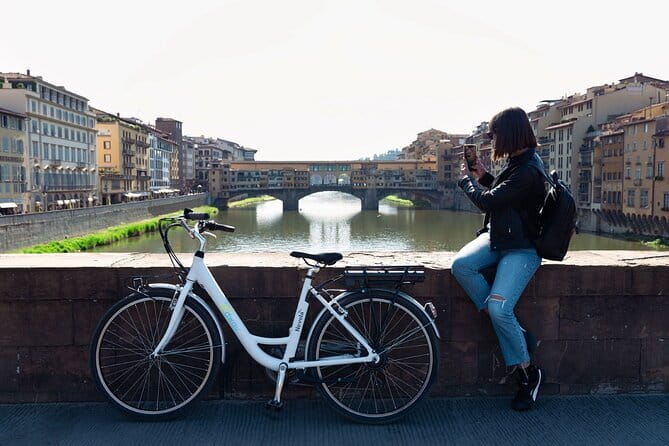
These two stops turn the tour into the Florence most people actually picture.
Piazza della Signoria: government square meets open-air sculpture museum
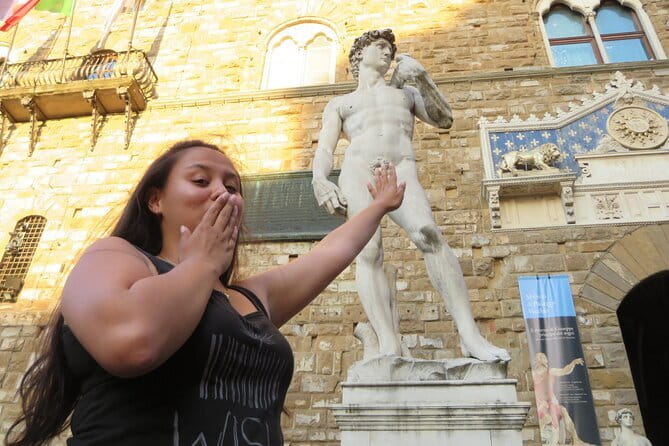
You arrive at Piazza della Signoria, originally tied to the city council meeting place in the early 1330s. Today, it’s anchored by the Palazzo Vecchio and functions like an open-air museum, with Italian Renaissance statuary displayed in the square.
At night, this space can feel like a stage. Even with short time on the ground, you get a strong sense of civic power and artistic display.
Ponte Vecchio: from butchers to jewelry shops
Then comes Ponte Vecchio, the old bridge that practically defines Florence. The tour highlights how the bridge changed over centuries. Jewelry shops appeared around 1593 to 1594 at the request of Ferdinando I de’ Medici. Before that, the bridge held butcher shops, and those businesses were required to operate away from the city center buildings. Waste could be discarded directly into the river.
The contrast makes the bridge story feel real. It’s not just “cute bridge photos,” it’s a lesson in how cities and economies shift.
Santa Croce at night, then the included aperitivo that ties it all together
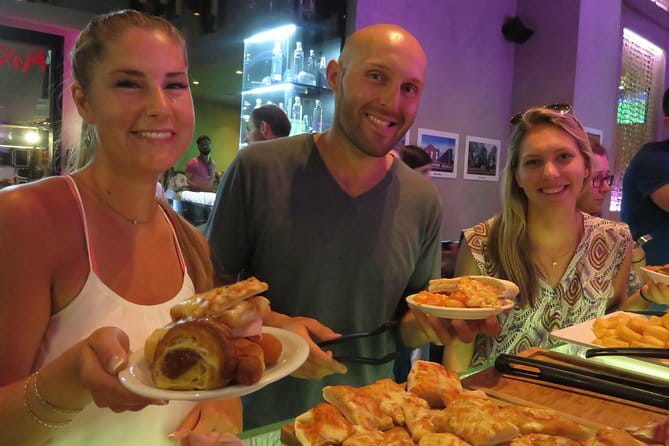
You end the tour in the Piazza Santa Croce area, then move to a bar for aperitivo.
Piazza Santa Croce: major basilica, major names
Piazza Santa Croce is linked to the basilica of the same name, a large Franciscan church. The tour points out what makes it famous, including frescoes by Giotto, sculptures by Benedetto da Maiano, Desiderio da Settignano, and Canova. It also notes the resting places of prominent figures including Galileo, Foscolo, Michelangelo, and Machiavelli.
The key is how that list helps you look at Santa Croce as more than a square you pass. Even if you don’t go deep inside on this specific tour, you finish with a mental map of what matters here.
Aperitivo stop: one drink plus snacks, shared and relaxed
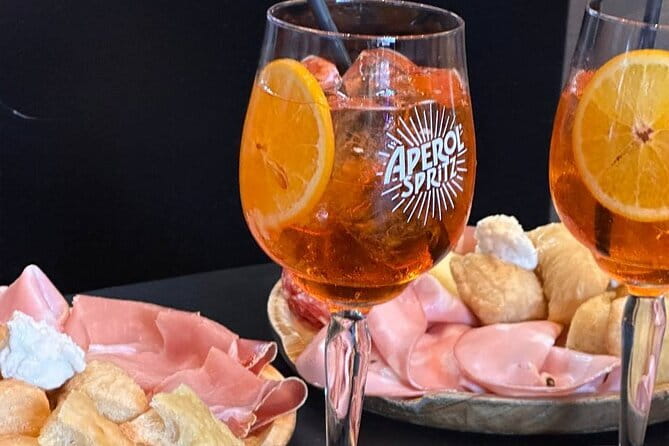
The final step is the bar with one of the best-rated aperitivos in town. This is where the tour fully earns its title: you get aperitivo time with one drink and tasty Italian snacks included.
This matters for value and for mood. You’re not left searching for a place on your own at the end of a long walk. You also get a built-in social moment with the group, which is often the hardest part of enjoying an evening in Florence solo.
What you should expect: extra drinks aren’t included, so if you want to keep ordering, plan to pay more at the bar. Still, the included drink keeps you from feeling like you must spend beyond the ticket price right away.
Price and value: what $60.08 buys in real experience time
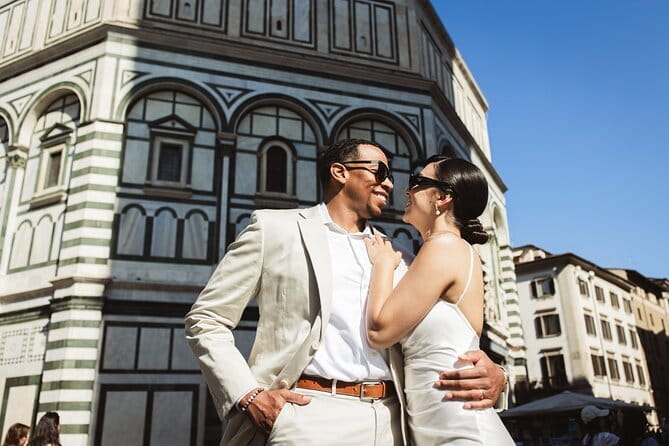
At about $60.08 per person for roughly 3 hours, you’re paying for three things: a guide, structured nighttime sightseeing, and the included aperitivo.
The guide matters because it’s not only locations. It’s details like the wine windows and the way Ponte Vecchio’s business history shifted under the Medici. Those are exactly the kinds of facts that are hard to pull from a quick guidebook glance, especially at night when you’re trying to stay oriented.
The included aperitivo is the other big value piece. You’re getting one drink plus snacks, and that is a cost you’d likely incur anyway once you find a bar. The tour’s small-group limit also supports your comfort, especially if you dislike feeling herded.
Weather, walking, and small practical tips that make this smoother

This tour operates in all weather, so dress for rain or chilly evenings. You’ll be walking between central sights, and the fitness level is listed as moderate, with a minimum age of 15.
A few practical moves:
- Wear shoes you can walk in on cobblestones, especially in the dark.
- If you care about photos, plan for quick snapshots at each stop, not extended sessions. The schedule keeps the flow moving.
- You’ll be free after the tour ends around Piazza Santa Croce, so decide in advance if you want to keep wandering or head back.
Who this Florence night tour suits best
I think this works best if you want:
- an easy evening introduction to Florence’s center
- a way to connect big landmarks to specific stories
- a social aperitivo moment without hunting for a bar first
- a small group pace, not a crowded mass tour
If you’re the type who loves slow museum time, long cathedral interiors, or spending hours in one place, this may feel like too much “moving and viewing” in a single evening. But if you want an efficient route that ends with a real local tradition, it fits nicely.
Should you book it?
Yes, if you want a well-paced Florence evening with aperitivo included and guided stops that go beyond the obvious. The highlights are the guide-led stories, the small-group feel, and finishing the night with one drink and snacks in the right setting.
If you want a lot of time inside major sites, or you prefer to set your own walking rhythm without strict stop times, you might be better served by mixing self-guided exploration in the cathedral area with a separate, flexible aperitivo stop.
FAQ
What time does the tour start?
It starts at 6:45 pm.
How long is the Florence by night with aperitivo tour?
The duration is about 3 hours.
Is aperitivo included, or do I pay at the bar?
Aperitivo is included. You get one drink plus Italian snacks. Extra drinks can be purchased on site.
What language is the tour offered in?
The tour is offered in English.
How big is the group?
The tour has a maximum of 10 travelers, and it requires a minimum of 4 participants.
What happens if it rains?
The tour operates in all weather conditions, so you should dress appropriately for the conditions.
More Evening Experiences in Florence


Every Florence review, in one place
- Tuscany Day Trip from Florence: Siena, San Gimignano, Pisa and Lunch at a Winery
★ 5.0 · 21,634 reviews - The Best tour in Florence: Renaissance & Medici Tales – guided by a STORYTELLER
★ 5.0 · 12,316 reviews

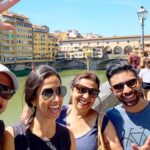
Florence picks that sit just beyond this itinerary
- One Hour Uffizi Guided Tour: Masterpieces of the Renaissance
★ 5.0 · 3 reviews - Sightseeing Tuscany by touring bike – 1 day rental
★ 5.0 · 3 reviews - Private Siena, S. Gimignano, Chianti Road and Wine Tasting
★ 5.0 · 3 reviews - Bargello Museum Private Tour: Michelangelo’s Bacchus & Donatello’s David
★ 5.0 · 3 reviews - Authentic Florence Cooking Class at Costanza’s 1839 Family Estate
★ 5.0 · 3 reviews - San Gimignano and Volterra private tour: etruscans, romans and middle age jewels
★ 5.0 · 3 reviews
More Evening Experiences worth comparing.
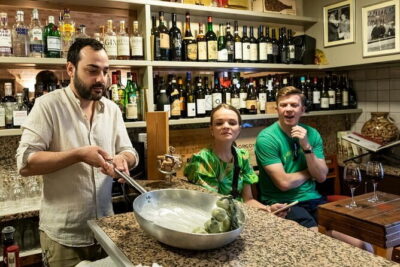 ★ 5.0Winner 2025 Florence Sunset Food & Wine Tour by Eating EuropeFrom $1495,015 reviews
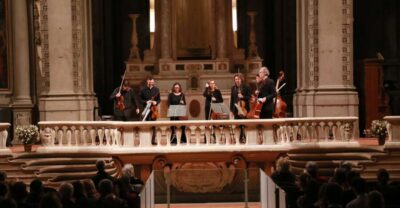 ★ 4.6Evening Classical Music ConcertFrom $41574 reviews
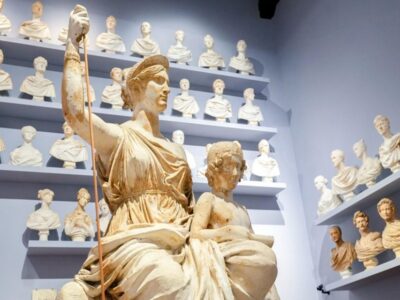 ★ 4.6Statue of David Evening TourFrom $41442 reviews
 ★ 4.5Florence Evening Food Tour with Florentine Steak & Tuscan WineFrom $79376 reviews
 ★ 4.7From Florence: Chianti Wine Tastings at Sunset Day TripFrom $151274 reviews
 ★ 5.0Florence Sunset Food Tour with Wine & Dine at a Tuscan farmhouseFrom $140194 reviews
 ★ 4.5Academia Gallery: Statue of David Evening TourFrom $45181 reviews
 ★ 4.5Chianti Wine Tastings Day Trip at Sunset from FlorenceFrom $155171 reviews
Find this experience in another shortlist