
Florence field review · WORKSHOPS
Florence: Artisanal Crafts and Workshops Guided Tour
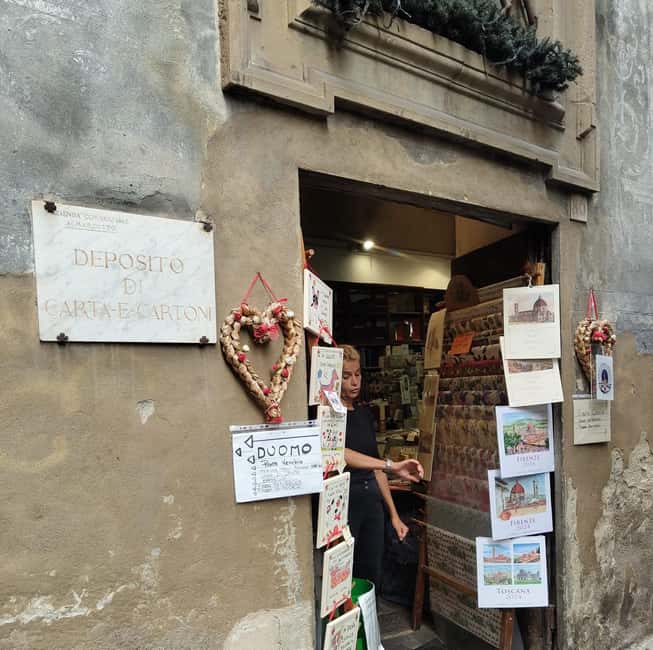
Florence turns ordinary objects into art. This 3-hour artisanal crafts tour is a smart way to see how Florentines make jewelry, leather goods, books, perfume, and carved frames with workshop access. I especially like the focus on watching artisans work in places that still feel working, not staged. There is also a lot of practical context, so you are not just looking at pretty things, you understand what makes them Florentine.
The one real drawback is logistics: expect a moderate amount of walking, and the historic workshop locations are not suitable for wheelchairs or guests with mobility impairments. Also note that food and drinks are not allowed inside the workshops, so plan to keep snacks for outside.
Key highlights and why they matter
- Workshop access that feels current, not museum-only, with artisans demonstrating real processes
- Goldsmithing and semi-precious stone setting at workshops tied to Florentine techniques like commesso
- Santa Croce leather training, including the Scuola del Cuoio experience inside the historic complex
- Santa Maria Novella pharmacy, founded in 1221, plus perfume culture with purchase opportunities
- Carving at Bottega d’Arte Maselli, where frame craftsmanship connects to masters like Da Vinci
- Martina Cappello’s guided style, with a comfortable pace and explanations built around your interests
When a guide is worth having beside you in Florence
- The Best tour in Florence: Renaissance & Medici Tales – guided by a STORYTELLER★ 5.0 · 12,316 reviews
- Florence: Duomo Cathedral Guided Tour★ 3.9 · 5,970 reviews
- Uffizi Gallery Small Group Tour with Guide★ 4.5 · 4,923 reviews
- Florence: Accademia Gallery Guided Tour★ 4.6 · 4,156 reviews
A 3-hour walk through Florence’s real craft scene
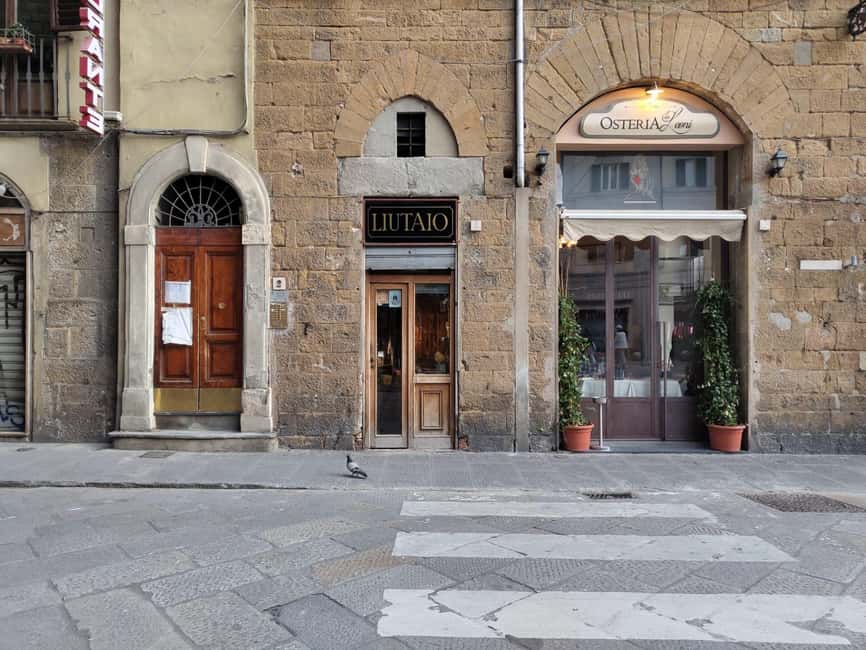
This tour is built for people who want the “other side” of Florence, beyond paintings and stone landmarks. In just 3 hours, you cover multiple craft disciplines that normally require separate trips or guesswork. The format is a guided workshop crawl, with entry to key places and time to look closely at materials and finished details.
You also get hotel pickup and drop-off, which matters in Florence. Meeting at Piazza Repubblica, next to the obelisk is handy if you are on foot, but pickup reduces the stress of timing. The group is private, so the pacing feels less like a line and more like a conversation that stays on schedule.
What I like most is that you are not stuck with only one craft. Instead, you see the whole ecosystem: stones and metals, leather and dyes, bindings and paper craft, fragrance-making, then carving and frames. It helps you understand why Florence became a powerhouse of artisan goods in the first place.
Martina Cappello, and how the tour stays personal
Your guide matters on tours like this, because workshop stops can get technical fast. The tour is led by Martina Cappello, and the standout detail in her approach is how she sets the tone. She takes an interest in what you care about before you even start, then she steers the explanations toward those topics.
That personal prep shows up in the way she talks through each craft. You get context about how artisans think and work today, not just a lecture about names and dates. Several craft-focused stops also come with time to ask questions and listen to the craftpeople, which turns the tour from sightseeing into something more practical.
Language is also clearly handled. The tour runs in Spanish and English, and it is a live guide format, not audio-only. Add in the fact that guests report a comfortable pace, and you get a tour that is active but not rushed.
Goldsmithing and semi-precious stones, where Florence gets precise
If you like objects you can hold, this is one of the best sections. Florence goldsmithing is famous for a reason: the work is small-scale and exact, and the results are meant to look effortless. On this tour, you get to see how artisans treat metals and stones as materials with rules, not decoration.
One stop is Arlo Haisek’s small workshop, where you focus on goldsmithing and the feel of semi-precious stones as part of the design. Another key visit is to the Lastrucci family workshop, one of the few places in the world where work is made using the Florentine commesso technique, inside the ancient Spedale di San Francesco.
What commesso looks like in real life
You might hear the word commesso and think it is just a fancy style. In practice, you are looking at a method that requires careful planning of stone pieces, then assembling them so lines, tones, and shapes read correctly as one image. That attention to fit and finish is exactly why this craft became so Florentine. The result is decorative, but the process is engineering-level patience.
In a workshop setting, you can see why this tour is worth doing with a guide. Without one, you may spot a beautiful piece but miss the logic behind the layout and material choices.
What to watch for while you look
Pay attention to how artisans handle stones and how they position details. Even if you cannot follow every step, you can often tell which parts are “structural” and which are “finishing.” That mental map helps when you compare different items later in the shops.
Keep the Florentine shortlist moving
Leather work inside Santa Croce, the art of using time well
Florence leather craftsmanship is one of those traditions that feels deeply local. You can buy leather goods almost anywhere, but you do not see the training and methods unless you step into the right spaces.
This tour highlights the Scuola del Cuoio inside the Santa Croce complex, tied to the broader leather world around it. Depending on the stop, you may also connect with leather work shown through the premises of Il Bisonte or a refined visit connected to Stefano Bemer’s boutique. The point is not just shopping. It is witnessing how leather is treated, shaped, and finished so it holds up beautifully.
Why Santa Croce matters here
Santa Croce is not only a landmark. The surrounding craft ecosystem is part of the cultural engine of the city. Seeing leather work in this setting helps you connect the dots between historic buildings and the working artisan culture that still lives in Florence.
Practical tips for this stop
Leather can look different in person than in photos, especially once you see how surface texture catches light. If you are shopping later, take your time here, because you will understand quality clues faster after you have watched the craft process.
And remember, the tour notes that photography is usually allowed, but workshop etiquette matters. Keep your phone ready, but do not block the artisan’s hands.
Santa Maria Novella pharmacy, age-old perfume culture in action
Next comes a stop that mixes craft with chemistry and tradition. You visit Santa Maria Novella, described as the oldest pharmacy in the world, founded in 1221 by Dominican friars. That age matters, because it frames perfume and medicinal products as part of a long-running science of ingredients and formulation.
You also get a story that makes the fragrance culture feel real: it was from Santa Maria Novella that Renato Bianco, master perfumer to Catherine de’ Medici, departed for the French court with the fragrance called Aqua della Regina.
Even if you never buy perfume, I love this stop because it gives you a lens. The fragrance is not just a scent, it is a tradition of recipes, precision, and reputation.
Buying room fragrances at Aquaflor
The tour includes a chance to purchase room fragrances at the Aquaflor store. This is a practical souvenir category. It is easy to pack, it does not take up airport liquid rules like some personal fragrance might, and it is very “Florence” in the sense that it connects directly to the city’s perfume legacy.
Tip: if you plan to gift, pay attention to what the store labels as room fragrance and how it is meant to be used. The goal is to choose something that smells good in a real living space, not just in a shop.
Bookbinding and perfumery, the “small luxury” section
Some of the most satisfying crafts are the ones that affect daily life. This tour includes learning about bookbinding and perfumery in Florence, and that combination makes sense. One is about preserving content and structure, the other about preserving scent and mood.
You might notice how artisans talk about materials in both crafts. In bookbinding, the core is how paper, fabric, glue, and binding methods hold over time. In perfumery, the core is how ingredients behave and how the finished fragrance carries its character.
Even though the tour does not spell out every technical detail in advance, the guided context helps you see what would otherwise look like a simple product. This is where the tour feels most “useful,” because it teaches you what to look for if you ever buy a bound book, a journal, or a fragrance product in Florence.
If you are the kind of person who likes gifts that look personal rather than generic, this section is a good match.
Carving at Bottega d’Arte Maselli, frames with artist-level prestige
The carving stop is at Bottega d’Arte Maselli, described as world-renowned for its frames. What makes this visit especially interesting is the link to major artists: the craftsmen have had the honor of framing works by Da Vinci and Rosso Fiorentino.
A frame is not just decoration. It is an optical and material decision. It changes how a work of art feels by controlling contrast, color temperature, and how the eye reads details. When you see carving done with that in mind, you stop treating frames as an afterthought.
How to get more from the carving time
Go slow and look at the edges and relief. Carving often has multiple layers of detail, and up close you can spot where artisans prioritized texture and where they prioritized line. Even if you are not planning to buy, this is a craft that rewards attention.
This is also a nice “capstone” stop after the smaller crafts earlier in the tour. You finish with a big visual impact, the kind of object that screams Florence even from across the room.
Price and value: what $116 buys you in 3 hours
At $116 per person for 3 hours, this tour is not a budget add-on, but it also is not trying to be. The value is in three things you would struggle to recreate on your own:
First, you get admission to key stops, including the Scuola del Cuoio and the Lastrucci family workshop. Second, you get guided access in historic spaces where a self-directed walk might mean you only see the storefront, not the working craft. Third, hotel pickup and drop-off saves time and mental energy in a city where locations are close, but navigation still costs time.
If you are the type who buys small handmade items during trips, this tour is also a “training session” for your eye. You see enough real process that your shopping decisions get sharper. And because you are visiting multiple crafts, you get cross-category comparisons, which helps you avoid impulse buys that are all looks and no quality.
One cost note: the tour does not include food and drinks, and personal shopping is not included. You will likely want to keep that in mind when you plan your day and your budget.
Practical tips to keep your feet and your photos happy
This is a walk-based tour, with a moderate amount of walking across historic locations. Wear comfortable walking shoes. That sounds basic, but Florence stone streets and workshop floors can turn an easy day into a sore-foot day if you show up in the wrong footwear.
A few other practical reminders from the tour notes:
- Food and drinks are not allowed inside the workshops, so keep snacks and beverages for outside.
- Photography is usually allowed, but be respectful of the artisans and give them space.
- The tour is not suitable for wheelchair users or guests with mobility impairments due to the nature of the historic workshop locations.
Also, because it is a private group, you can often ask small questions that you might not get on a huge bus tour. If you are curious about what to buy and what to avoid, this is the time to ask.
Who this tour suits best, and who should skip it
This tour fits best if you like crafts, small details, and products that have a process behind them. It also works if you want a different angle on Florence, one that focuses on how things are made, not just how things look.
You will likely enjoy it if you:
- Care about goldsmithing, leather, bookbinding, perfume, or carving
- Like shop floors where you can see the craft happening, not just finished inventory
- Want a guided day that makes you better at choosing quality souvenirs
You should skip it if you:
- Need wheelchair access or have mobility limitations, because the historic sites are not set up for it
- Want a “sit down, minimal walking” experience, since the tour is designed around workshop viewing and movement between locations
Should you book Florence Artisanal Crafts and Workshops?
I recommend booking if your idea of a great Florence day is watching hands at work. This tour gives you multiple disciplines in one go, plus the chance to visit places like Santa Maria Novella and a leather stop inside Santa Croce. The guidance from Martina Cappello also matters, because she seems to tailor the explanations and keep the pace comfortable.
Think twice if mobility is an issue, because the workshop locations are historic and the tour is not built for wheelchair access. Also be realistic about shopping. The crafts are beautiful, and it is easy to get tempted. Set a budget ahead of time, because the tour naturally puts you near premium items.
If you want a Florence experience that feels grounded in making things, not just looking at them, this is a strong choice.
Florence with someone who knows the room
- The Best tour in Florence: Renaissance & Medici Tales – guided by a STORYTELLER
★ 5.0 · 12,316 reviews
More Florence tours to open next
- The Best tour in Florence: Renaissance & Medici Tales – guided by a STORYTELLER
★ 5.0 · 12,316 reviews
Every Florence review, in one place
- Tuscany Day Trip from Florence: Siena, San Gimignano, Pisa and Lunch at a Winery
★ 5.0 · 21,634 reviews - The Best tour in Florence: Renaissance & Medici Tales – guided by a STORYTELLER
★ 5.0 · 12,316 reviews


Florence picks that sit just beyond this itinerary
- One Hour Uffizi Guided Tour: Masterpieces of the Renaissance
★ 5.0 · 3 reviews - Sightseeing Tuscany by touring bike – 1 day rental
★ 5.0 · 3 reviews - Private Siena, S. Gimignano, Chianti Road and Wine Tasting
★ 5.0 · 3 reviews - Bargello Museum Private Tour: Michelangelo’s Bacchus & Donatello’s David
★ 5.0 · 3 reviews - Authentic Florence Cooking Class at Costanza’s 1839 Family Estate
★ 5.0 · 3 reviews - San Gimignano and Volterra private tour: etruscans, romans and middle age jewels
★ 5.0 · 3 reviews
More Workshops worth comparing.
 ★ 4.9Pasta Cooking Class with Unlimited WineFrom $2110,285 reviews
 ★ 5.0Florence Pizza or Pasta Class with Gelato Making at a Tuscan FarmFrom $1456,801 reviews
 ★ 4.9Pasta & Tiramisu Cooking Class with Unlimited WineFrom $566,708 reviews
★ 5.0Pasta Cooking Class with Unlimited Wine6,413 reviews
★ 4.9Pasta & Tiramisu Cooking Class with Unlimited WineFrom $566,708 reviews
★ 5.0Pasta Cooking Class with Unlimited Wine6,413 reviews
 ★ 5.0Cooking Class and Lunch at a Tuscan Farmhouse with Local Market Tour from FlorenceFrom $1454,831 reviews
 ★ 5.0Pastamania – Florence Pasta Making ClassFrom $493,050 reviews
 ★ 5.0Cooking Class Pasta & Tiramisu Making Unlimited WineFrom $892,234 reviews
 ★ 5.0Florence Cooking Class The Art of Making Gelato & Authentic PizzaFrom $642,053 reviews
Find this experience in another shortlist