
Florence field review · ACCADEMIA & DAVID EXPERIENCES
Afternoon Access to Accademia Gallery: David & Stradivarius
Skip-the-line changes the whole afternoon. With small-group attention and Accademia skip-the-line entry, you get a smoother route to Michelangelo’s David and the museum’s standout musical treasures. I especially like the way this tour mixes famous sculpture with unexpected instruments, so the Accademia feels bigger than one room. One thing to keep in mind is that if you are visiting on the first Sunday of the month, free entry exists but entry can be unpredictable.
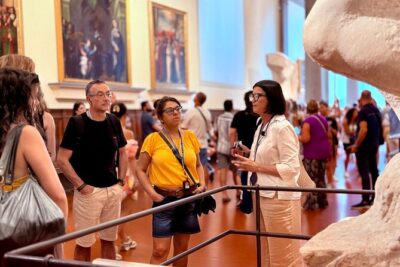
You’ll meet in front of the Accademia at 3:00 PM and start promptly at 3:15 PM, which helps you avoid that awkward “waiting around, deciding what to do” feeling. I also like that the group stays limited to 9 people, so the guide can actually guide. The only real drawback is simple: it is only 70 minutes, so you should be ready to see the highlights, not chase every corner.
Key things to know about David and Stradivarius at Accademia
- Skip-the-line access gets you into the Accademia faster, so your time goes straight to the highlights.
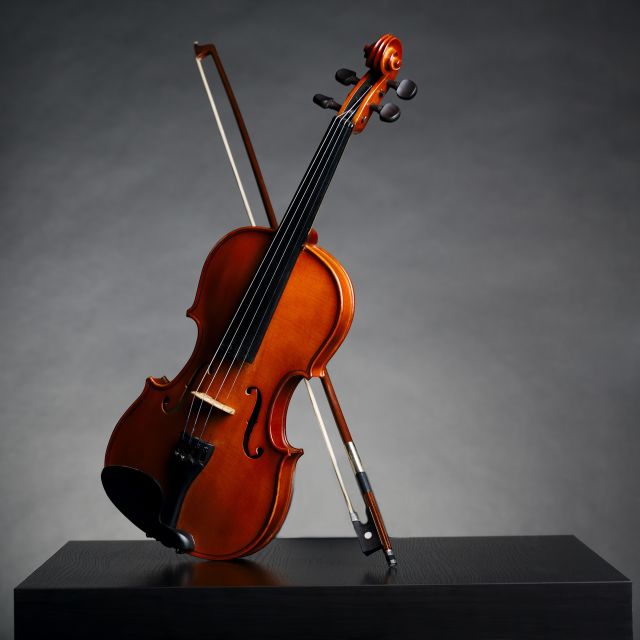
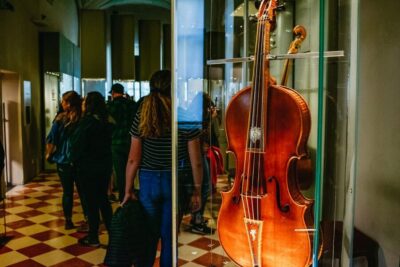
- Stradivarius violin from 1690 and the museum’s musical-instrument collection are part of the main route, not an afterthought.
- First modern piano is shown in the same conversation as the Stradivarius, tying Florence’s musical innovation to what you see on the wall.
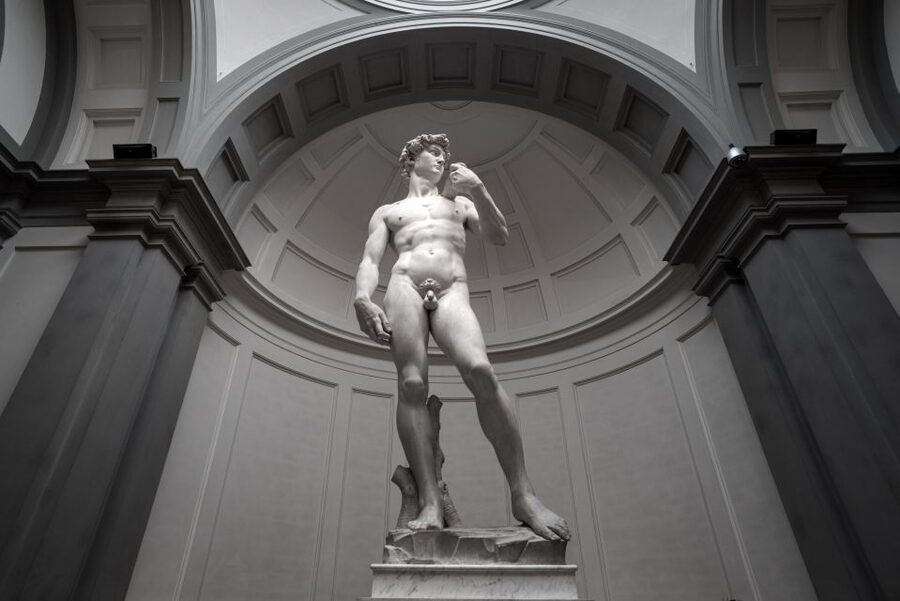
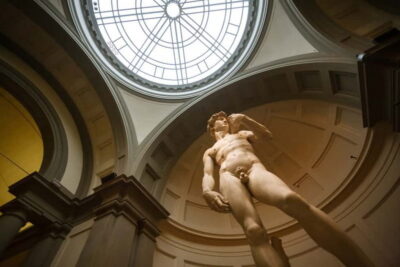
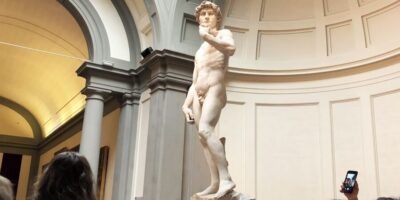
- Michelangelo’s David is the centerpiece, with guide-led context and anecdotes that help you read the sculpture.
- Small-group pacing (limited to 9) makes it easier to look closely without constantly shuffling sideways.
Compare the Accademia visits built around the original David
- Florence: Timed Entrance Ticket to Michelangelo’s David★ 4.6 · 16,983 reviews
- Florence: Michelangelo’s David Skip-the-Line Entry Ticket★ 4.5 · 12,764 reviews
- Florence Accademia Gallery Tour with Entrance Ticket Included★ 4.5 · 6,148 reviews
- Florence: Accademia Gallery Guided Tour★ 4.6 · 4,156 reviews
Afternoon Access to Accademia, David, Stradivarius: A Tour With a Real Point of View
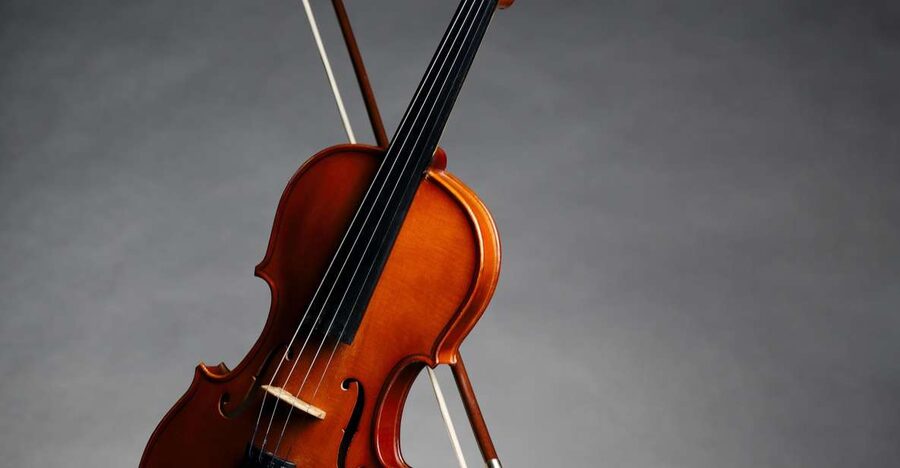
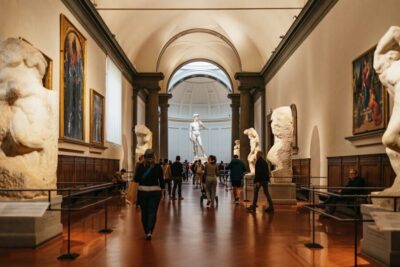
The Accademia is famous for one statue, but this tour is smart about the order. You do not just march toward David and call it a day. Instead, you start with the museum’s instrument collection, including a Stradivarius violin from 1690 and the first modern piano invented in Florence. That shift matters because it changes how you experience the building, from “one checklist item” into “a place where Florence crafted art in more than one form.”
I like that the tour is designed with help from specialists in art history. That typically means you get more than random facts. You get context that helps you understand why certain pieces were kept here, and why some areas get overlooked when everyone is fixated on the statue everyone recognizes from posters.
The schedule is also practical. You meet at 3:00 PM and start at 3:15 PM sharp, which gives you a clean flow for the afternoon. If you are juggling other reservations in Florence, a set start time helps you plan without guessing.
Meeting at 3:00 PM, Starting at 3:15 PM, and What to Look For
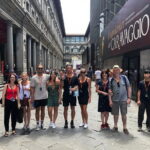
This is a guided experience with a strict start time, so you will want to show up early. The meeting point is in front of the main entrance to the Accademia Gallery, beside the ticket office, building number 47, in blue. Your guide will hold a KEYS of ITALY sign, which makes it easier to spot the right group without wandering.
Once you are inside the rhythm of the tour, it moves steadily. At 3:15 PM sharp, you begin, and the total duration is 70 minutes. That time includes the guided walking and the viewing. It is not a “wander and interpret on your own” setup.
If you are the type who likes to photograph first and ask questions later, plan to do your photos during the stops, not while the group is transitioning. With a small group, the viewing windows are tight enough that you will enjoy it more if you follow the guide’s cues.
Skip-the-Line at the Accademia: What It Really Buys You
Skip-the-line here is not a magic cloak, but it is still valuable. The Accademia can get crowded, and lines can swallow a big chunk of your afternoon. Getting skip-the-line entrance helps you protect your time for the parts that actually matter to your ticket.
More importantly, it changes your energy level. Arriving at a museum when you are already annoyed by waiting makes it harder to pay attention. When you walk in and start with intention, you are more likely to notice the small details that make the highlights hit harder.
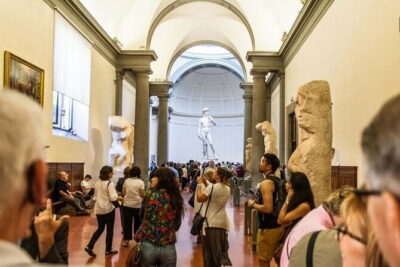
This tour also stays small, limited to 9 participants. That size matters at busy museums like this. You can usually get a clearer view and hold your position without getting constantly pushed along by tour traffic.
Conservatorio Luigi Cherubini: Stradivarius (1690) and the First Modern Piano
This is the reason I think the tour feels different from the average Accademia experience. Instead of jumping straight to the best-known statue, you head into the museum’s musical-instrument area, tied to the Conservatorio Luigi Cherubini collection.
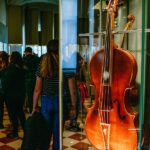
You will see an original Stradivarius violin from 1690. Even if you are not a musician, you can still appreciate why a violin like this deserves a museum spotlight. Instruments from master makers carry craft details you cannot fake. And because it is not a replica, the “this was real” factor hits harder.
You will also see the first modern piano, invented in Florence. That is an unexpected pivot, and it makes the Accademia feel like more than sculpture and paintings. Florence is often framed as visual art and fashion in guidebooks, but this adds a different angle: the city also shaped the tools of music.
Here is how I’d think about this stop before you go. The instrument room does not just add variety, it changes your attention. When you move from looking at shapes and textures in marble to thinking about sound-making objects, your brain slows down in a good way. It becomes easier to appreciate the care behind every object, whether it is carved or built.
Michelangelo’s David: How the Guide Helps You Look Past the Postcard
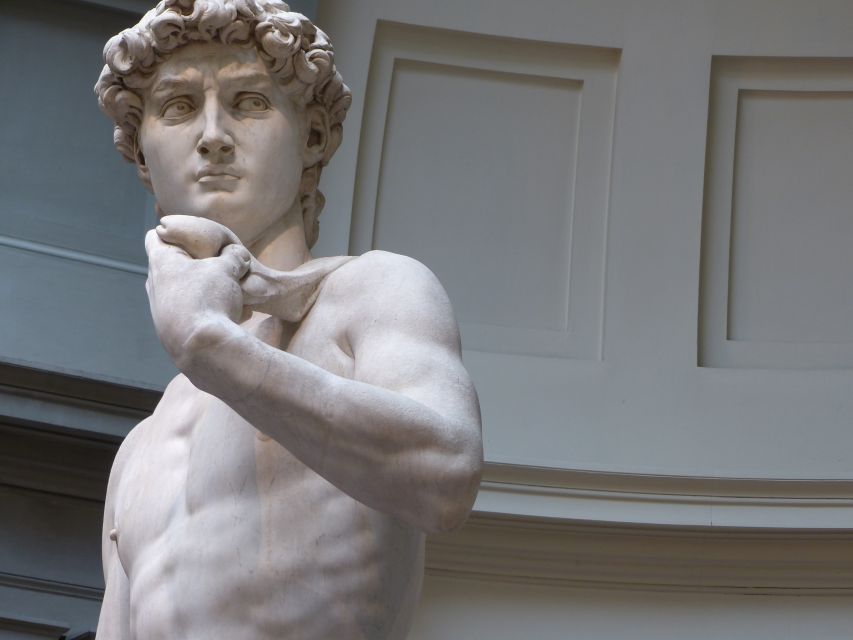
David is the star, but the best part is not just seeing it. It is seeing it with a guide who can help you interpret what you are looking at.
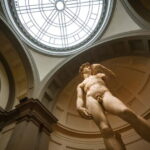
The tour moves on to a room filled with Michaelangelo’s works, then focuses on David, the symbol of Florence. The guide provides entertaining anecdotes and secrets, but the practical value is that you get to understand what makes David such a defining moment in Western sculpture. You are not just staring at a familiar image. You are learning what to notice: the attitude, the proportion, the intent behind the pose.
Because this tour is only 70 minutes, you should expect a tight highlight route. You will not have unlimited time to linger from angle to angle the way you might on a self-guided day. The trade-off is that you get a guided “greatest hits” arc, and David remains the emotional peak.
If you care about photography, plan for the fact that David is viewed from multiple angles and the room can be busy. A guide can help you time your shots so you are not waiting for a gap with no plan.
More Florence museums with the visit format already compared
The Guide Matters: Elisabetta and Leonardo’s Style of Storytelling
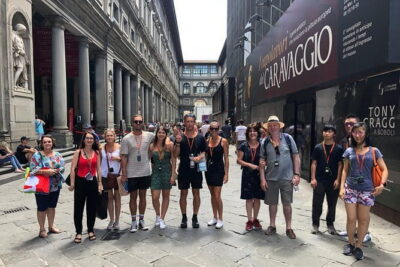
This tour’s reviews consistently point to the guide as the difference-maker. Elisabetta is mentioned as wonderfully engaged, with history brought to life and an almost nonstop flow of commentary. That matters because Accademia can feel overwhelming if you only know the headlines.
Another guide, Leonardo, is described as passionate about Florence, bringing facts to interesting points and delivering with clarity. In one review, the tour is noted as entering on time, and the guide took a picture when asked. That small detail is not about the museum itself, but it signals good group management.
So what should you do as a participant? Ask one question when the guide pauses. If you are stuck, bring a simple one like what you should look for first on David. When the guide is strong, those questions get answered in a way that makes the next minute of viewing better.
How to Plan Your 70 Minutes So You Feel It, Not Rush It
Seventy minutes sounds short, and it is short, but it is also enough time to get a meaningful flow when the guide keeps you moving in the right order. The idea is to protect your attention, not stretch the day until you are tired.
A good way to plan is to treat this as an anchor activity in the afternoon. Since the tour starts at 3:15 PM, you can schedule lunch earlier and keep your late afternoon less overloaded. If you stack too many timed tickets back-to-back, the strict start time can become stressful.
Also think about your personal pace. If you love reading and staring, you may want to spend a bit more time afterward on your own, especially if you still want to revisit David from different angles. This tour will give you the guided framework first, then you can return if you want.
Price and Value: Why $80 Can Make Sense Here
At $80 per person, this is not the cheapest way to see the Accademia. The value is in what you get for that money: skip-the-line access, an English-speaking professional guide, a small group limited to 9, and a highlight route that includes more than just David.
Here is the practical math behind it. If you are paying for skip-the-line and a guide anyway, you are buying time plus interpretation. Without a guide, David can turn into a quick look and a photo. With this format, you also see the Stradivarius violin from 1690 and the first modern piano, guided as part of the same story. That combination is unusual, and it makes the ticket feel more “specialized” than a basic museum entry.
For $80, you should only book if you genuinely care about both sculpture and the instrument collection. If you only care about David, you may decide a cheaper self-guided ticket works. But if you like surprise stops and you want someone to point out what matters, the price can feel fair.
Who This Tour Suits Best (And Who Might Prefer Something Else)
This afternoon tour is best for you if:
- You want skip-the-line entrance and a structured route.
- You are curious about the Accademia beyond David.
- You enjoy learning with an English-speaking guide in a group of up to 9.
It may not be ideal if you prefer a long, slow museum day with plenty of unstructured time. The tour is 70 minutes, and it is focused on the key rooms. You will see the highlights, not every work on every wall.
It is also a good fit for people who want a friendly, manageably sized group. The small number helps reduce the “mob shuffle” effect that can happen with bigger tours.
First Sunday Free Entry: A Key Consideration
One important timing note. On the first Sunday of each month, entrance is free of charge. But tickets cannot be reserved ahead of time, so entry is not guaranteed.
If you are visiting on that day, you should plan for potential uncertainty. This tour’s format centers on reserved skip-the-line entrance for the scheduled time, so it can offer more predictability than relying on free entry that cannot be reserved.
Should You Book Afternoon Access to Accademia Gallery, David & Stradivarius?
I think you should book this tour if you want the best parts of the Accademia in one guided session, especially if the Stradivarius and the first modern piano sound as interesting to you as David does. The value comes from the combination: skip-the-line entry, a small group, and a guide who connects the museum’s famous sculpture to lesser-visited treasures in the Conservatorio Luigi Cherubini collection.
If you only want the statue and you are comfortable building your own route, you might find another option works cheaper. But if you like being guided through the “why” as much as the “what,” this one is a strong match.
FAQ
Where is the meeting point for the 3:15 PM tour?
Meet in front of the main entrance to the Accademia Gallery, beside the ticket office at building number 47 blue. Your guide will be holding a KEYS of ITALY sign.
What time should I arrive?
You meet at 3:00 PM. The tour starts at 3:15 PM sharp.
How long is the tour?
The tour lasts 70 minutes (about 1.5 hours).
How many people are in the group?
This is a small-group tour limited to 9 participants.
What will I see during the tour?
You will see Michaelangelo’s David, the Conservatorio Luigi Cherubini musical instruments section, including a Stradivarius violin from 1690, and the first modern piano invented in Florence.
Is the tour in English?
Yes, the tour is offered in English with a live English-speaking guide.
Does the ticket include skip-the-line entry?
Yes, admission ticket with skip-the-line entrance is included.
What is the price?
The price is $80 per person.
What happens if I visit on the first Sunday of the month?
Entrance is free on the first Sunday of each month, but tickets cannot be reserved ahead of time, so entry is not guaranteed.
Another Florence museum door
Every Florence review, in one place
- Tuscany Day Trip from Florence: Siena, San Gimignano, Pisa and Lunch at a Winery
★ 5.0 · 21,634 reviews - The Best tour in Florence: Renaissance & Medici Tales – guided by a STORYTELLER
★ 5.0 · 12,316 reviews

David and the Accademia, compared
Florence picks that sit just beyond this itinerary
- One Hour Uffizi Guided Tour: Masterpieces of the Renaissance
★ 5.0 · 3 reviews - Sightseeing Tuscany by touring bike – 1 day rental
★ 5.0 · 3 reviews - Private Siena, S. Gimignano, Chianti Road and Wine Tasting
★ 5.0 · 3 reviews - Bargello Museum Private Tour: Michelangelo’s Bacchus & Donatello’s David
★ 5.0 · 3 reviews - Authentic Florence Cooking Class at Costanza’s 1839 Family Estate
★ 5.0 · 3 reviews - San Gimignano and Volterra private tour: etruscans, romans and middle age jewels
★ 5.0 · 3 reviews
More Accademia & David Experiences worth comparing.
 ★ 4.6Timed Entrance Ticket to Michelangelo’s DavidFrom $2616,983 reviews
 ★ 4.5Michelangelo’s David Skip-the-Line Entry TicketFrom $4512,764 reviews
 ★ 4.5Florence Accademia Gallery Tour with Entrance Ticket IncludedFrom $456,148 reviews
Accademia Gallery Guided TourFrom $534,156 reviews
★ 4.5Florence Accademia Gallery Tour with Entrance Ticket IncludedFrom $456,148 reviews
Accademia Gallery Guided TourFrom $534,156 reviews
 ★ 4.6Timed Entry Ticket to Michelangelo’s David & eBookFrom $374,049 reviews
 ★ 4.5Skip the line: Uffizi and Accademia Small Group Walking TourFrom $1483,135 reviews
 ★ 4.5Skip-the-Line Accademia Guided TourFrom $432,327 reviews
 ★ 4.6Accademia Gallery Guided Tour with Entry TicketFrom $492,253 reviews
Find this experience in another shortlist