
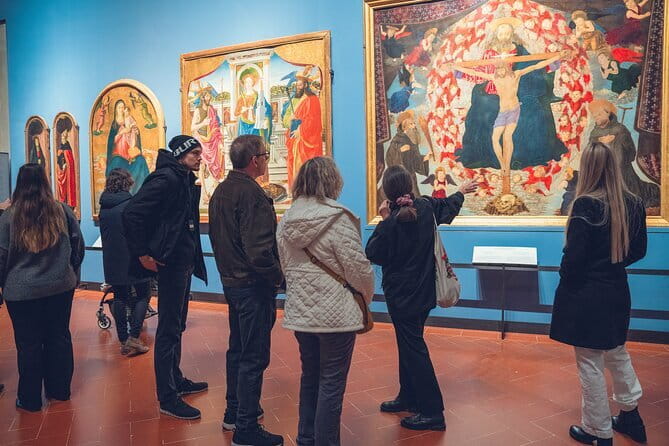
Florence field review · ACCADEMIA & DAVID EXPERIENCES
Accademia Gallery: Michelangelo’s David, A Symbol of Strength.
David is bigger than you think.
This Accademia Gallery guided visit is built for real-time understanding of Michelangelo’s David, with reserved skip-the-line tickets and a guide you can clearly hear via a radio headset.
I love the fast access inside, because the hardest part of visiting the Accademia is usually the waiting. I also love how the route is timed so you get the key highlights, including David up close, without feeling dragged through the museum for hours.
My main caution is simple: the meeting point is specific (Via Ricasoli, 57), and if you arrive after the tour start time you cannot join, and you will not be refunded.
Key things you’ll love about this Accademia tour
- Guaranteed skip-the-line access with pre-reserved entry, even in peak season
- Headsets provided, so you don’t miss the guide’s explanation
- A tight highlight route in about 1 hour, with time to revisit afterward
- David plus major companion works, including Giambologna and Ghirlandaio
- Unfinished Michelangelo studies, the Slaves, and how ideas spread in Florence
- Gipsoteca Bartolini plaster casts, a smart add-on for art geeks and beginners
Compare the Accademia visits built around the original David
- Florence: Timed Entrance Ticket to Michelangelo’s David★ 4.6 · 16,983 reviews
- Florence: Michelangelo’s David Skip-the-Line Entry Ticket★ 4.5 · 12,764 reviews
- Florence Accademia Gallery Tour with Entrance Ticket Included★ 4.5 · 6,148 reviews
- Florence: Accademia Gallery Guided Tour★ 4.6 · 4,156 reviews
Florence’s Accademia, done the smart way in about 1 hour
The Accademia Gallery is the kind of place where time vanishes fast. This tour is designed around a practical goal: get you to the statues that matter most, explain why they matter, then hand you back time to wander at your own pace.
What makes it work is the pacing. You spend roughly an hour on a curated walkthrough, and the structure keeps you from getting lost in the museum’s sheer number of rooms and objects. You’re not stuck waiting on the next group photo moment. You’re moving, listening, and then stopping long enough to really see.
The tour is also capped at a maximum of 19 travelers, which helps the flow. And since you’ll have a radio system, you can keep your eyes on the art instead of constantly scanning for the guide.
Starting at Via Ricasoli, 57 and beating the queue
You meet at Via Ricasoli, 57, 50121 Firenze FI, Italy, and the tour ends back at the same spot. That back-to-the-start setup is a small detail, but it matters in Florence. You can plan your next stop without guessing how far you’ll be walked.
The real value is the skip-the-line part. With reserved admission tickets, you’re not relying on luck during busy periods. The tour operator notes skip-the-line is guaranteed, except if museum management delays or strikes disrupt things.
One thing to respect: arrive on time. If you show up after the start, you cannot join and you won’t be able to reschedule under the tour rules provided. I’d rather show up early, get your bearings, and relax than risk losing the whole ticket.
Stop one: Galleria dell’Accademia, where the guide builds the story of David
Your visit starts inside the Galleria dell’Accademia, with a locally qualified certified guide who sets context before you reach the signature sculpture. The guide’s job here is not just describing the surface. They explain the thinking behind the works, and how Michelangelo’s approach connects to other artists and local traditions.
A big benefit of this kind of guided highlight route is that it changes how you look at David. Instead of treating the statue as a single famous object, you see it as the result of process, unfinished ideas, and artistic networks.
You’ll also get a route that moves through several rooms in sequence, which helps you avoid the feeling of wandering from one major artwork to another with no thread connecting them. And after the guided part, you can return to what you want to see again.
The Hall of the Colossus: Giambologna, Ghirlandaio, and the art around Michelangelo
Before you settle into David, you’ll pass through the Hall of the Colossus. This is a smart move. It gives you a visual and artistic “frame” so David lands with more meaning.
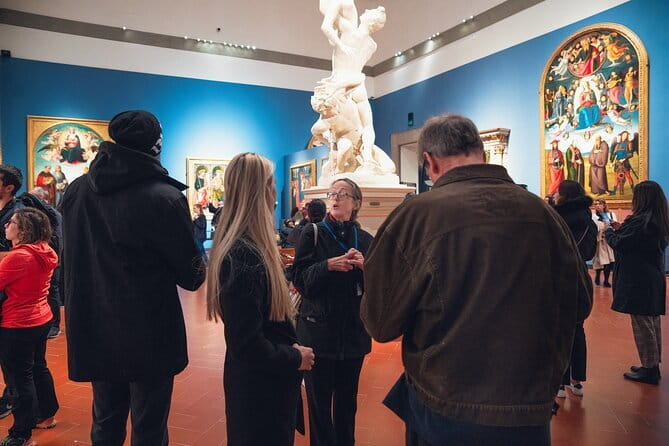
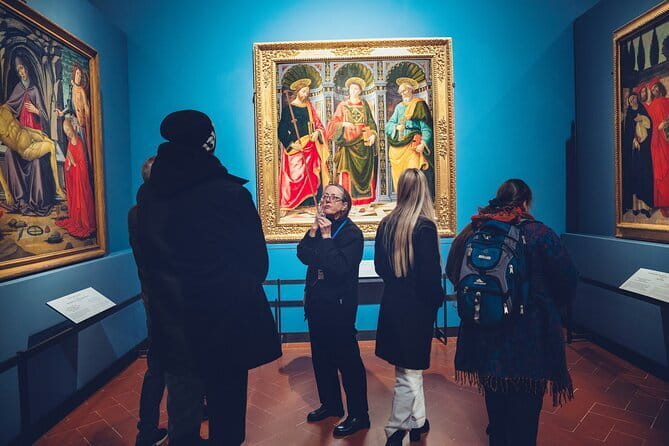
In this section, you’ll see works including Giambologna’s Rape of the Sabines and then Cassone Adimari, plus Domenico Ghirlandaio’s solemn St. Stephen between St. James and St. Peter. The guide links what you’re looking at to the broader environment of Florentine art, so you can feel the city’s artistic conversation rather than viewing everything as isolated masterpieces.
One quiet win here: you’re not spending your entire hour staring only at the statue everyone came for. You’re learning to notice differences in style, subject, and sculptural storytelling. Even if David is your one must-see, this “warming-up” section makes the main event stronger.
The Hall of the Prisoners: Michelangelo’s unfinished Slaves and the real work behind genius
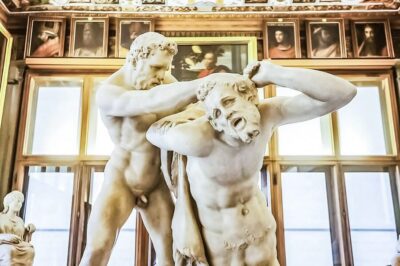
Next is the main Hall of the Prisoners, where you’ll focus on Michelangelo’s Slaves series of unfinished statues. This stop is worth your attention because it shifts the story from finished perfection to the human side of making art.
The Slaves are not just decorative. They show study and experimentation. The guide explains more about the statues’ unfinished character and what you can learn from that raw stage of carving and planning.
This is also where the tour brings in artistic relationships. You’ll get discussion about friendship and mutual influence with artists such as Fra’ Bartolomeo, Pontormo, and Granacci, among others. That matters because it helps you understand Florence as an interconnected workshop culture, not a museum of lone geniuses.
If you’re someone who likes seeing process, this stop is the “aha” moment in the hour. It’s also a good antidote if you worry the tour will just rush you past famous items.
More Florence museums with the visit format already compared
The Tribune: David in the spotlight and Allori’s Coronation on the wings
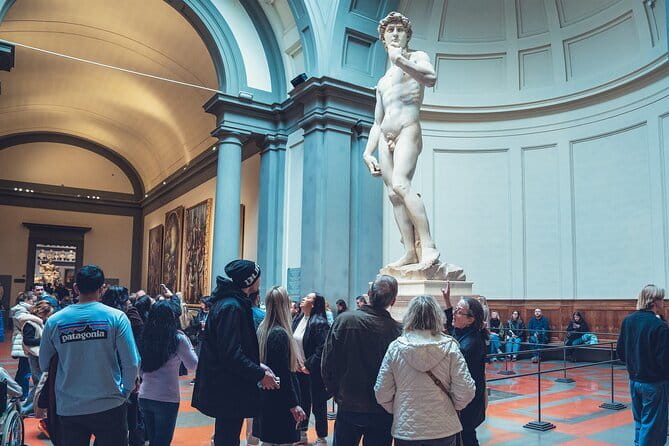
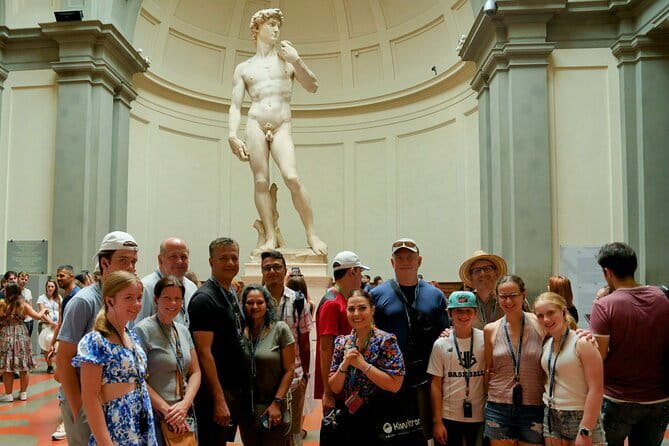
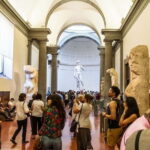
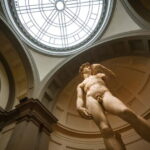
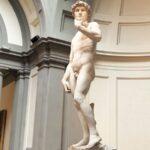
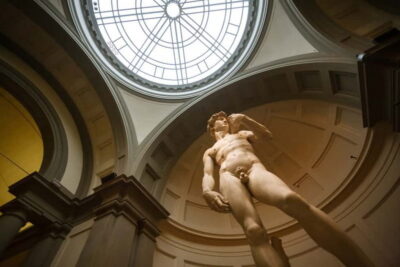
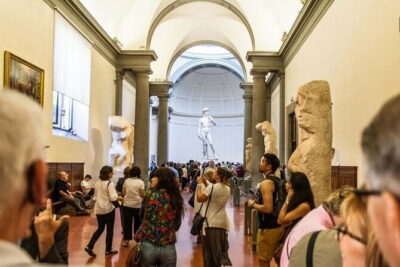
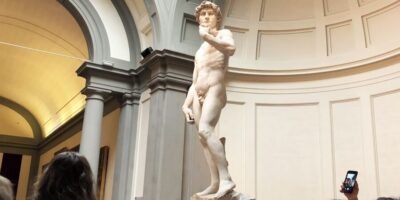
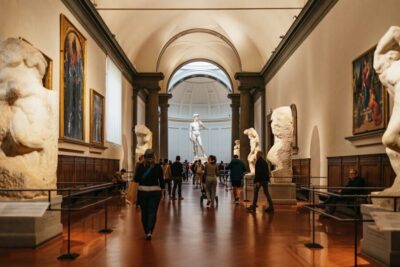
Then you move to the Tribune, where Michelangelo’s David becomes the clear focal point. This is the room people talk about, but the guide helps you see it with a better question in mind: not only what it looks like, but how it’s built to communicate strength and tension.
In the same area, you’ll also learn about the Tribune Left Wing, Allori’s Coronation of the Virgin Mary. Seeing David and then having the discussion expand to related works around it gives you a fuller sense of how the gallery organizes major art and how visitors are meant to process it.
This is where the radio system earns its keep. In a room packed with other people, you can keep your head up, listen closely, and avoid straining to understand the guide over noise and crowd movement.
And after the guided part ends, you can return to anything you want. That’s a practical feature, because David is one of those artworks where your first look is rarely your last.
Gipsoteca Bartolini: plaster casts that change how you study sculpture
The final stop is the Gipsoteca Bartolini, with plaster casts and a documentation center on the first floor. Here, the tour adds a different kind of value. You’re not just seeing the art as final objects. You’re seeing copies and studies that help explain how sculpture can be learned, measured, and reconstructed.
You’ll encounter plaster casts including the Reclining Venus and casts connected to artists and figures such as Arnolfo, Brunelleschi, and Lorenzo Monaco. Even if you’re not a sculpture specialist, this section helps you realize that art history is not only about originals. It’s also about learning methods, models, and documentation.
A practical note: this part can feel more “educational” than “wow.” That’s a good balance after the emotional impact of David and the drama of the unfinished Slaves. If you like structure and context, you’ll appreciate this as a thoughtful landing for the tour.
Value check: what you get for $55.63 and why it can be worth it
At $55.63 per person for about 1 hour, the price isn’t just for entering a museum. You’re paying for four key items bundled together:
- Reserved admission that helps you avoid the longest waits
- A certified guide who explains the big pieces in a tight route
- A radio system, so you can hear without crowd headaches
- A set structure that covers multiple major artworks you might otherwise miss or misunderstand
If you’re visiting for the first time, this is the part that pays off. The Accademia is famous, but fame doesn’t automatically tell you what you’re looking at. You can read placards on your own, sure, and English descriptions are often available. But in a one-hour window, a strong guide can shape what you remember.
If you’re traveling as a family, the value rises again when the guide keeps things moving. In the experiences that people describe, guides like Matteo, Rosie, Pamela, and Francesco show up as names tied to engaging explanations and kid-friendly pacing. You might not know which guide you’ll get, but the point is that the format tends to work for mixed ages.
Who should book this Michelangelo’s David tour
This tour fits best if you want the Accademia highlights without turning it into an all-day project.
You’ll especially like it if:
- You’re a first-timer who wants the fastest path to the biggest Michelangelo moments
- You’re short on time and also want a guided thread connecting David to other key sculptures
- You’re visiting with kids or family and want a set pace rather than a free-for-all
- You want to hear explanations clearly, thanks to the headsets provided
I’d skip it if you’re the type who wants to wander slowly room by room, reading everything, or if you’re planning to spend hours on one single artwork. This is a highlights tour with momentum. It’s not a long academic seminar.
Where this tour fits in your Florence day
Because the tour ends back at the meeting point, it’s easier to build your day around it. You can pair the Accademia with other major sights nearby and keep your afternoon flexible.
Also, plan a little buffer afterward. The tour is about an hour, and then you’ll likely want extra time in front of David or to revisit something that clicked during the talk. This tour gives you permission to do exactly that.
If you’re doing other big museums, treat this one as your “sculpture anchor” stop. The combination of David, the Slaves, and the Gipsoteca casts gives you a stronger sense of how sculpture was studied and transformed in Florence.
Should you book it or choose a DIY approach?
Book this tour if you care about max value per hour and you want Michelangelo’s David explained in context. The reserved skip-the-line access and the radio headset are practical perks, and the route covers enough major works that you leave feeling oriented, not just impressed.
Choose a DIY ticket instead if you already know what you’re looking for and you prefer silent museum time. Also choose DIY if you know you’ll spend long stretches reading everything at your own speed, because a guided highlights hour will feel tight.
My quick decision rule: if David is your top priority and you want the museum to make sense fast, this is a smart booking.
FAQ
How long is the Accademia Gallery tour?
The tour lasts about 1 hour.
Is admission to the Accademia Gallery included?
Yes. Your entrance ticket with reservation to the Accademia Gallery is included.
Do I get a headset to hear the guide?
Yes. A radio system is provided so you can hear your guide.
Is skip-the-line access guaranteed?
Skip-the-line access is guaranteed with the reserved tickets, except in the event of delays or strikes by museum management.
Where do I meet the tour and where does it end?
You meet at Via Ricasoli, 57, 50121 Firenze FI, Italy, and the tour ends back at the same meeting point.
What happens if I arrive after the tour starts?
If you arrive after the tour start time, you cannot join and you will not be refunded or rescheduled.
Another Florence museum door
Every Florence review, in one place
- Tuscany Day Trip from Florence: Siena, San Gimignano, Pisa and Lunch at a Winery
★ 5.0 · 21,634 reviews - The Best tour in Florence: Renaissance & Medici Tales – guided by a STORYTELLER
★ 5.0 · 12,316 reviews

David and the Accademia, compared
Florence picks that sit just beyond this itinerary
- Florence: Duomo Complex Private Guided Tour & Optional Dome Climb
★ 5.0 · 4 reviews - Private Tour of Florence Cathedral, Bell Tower & Baptistery
★ 5.0 · 4 reviews - Michelangelo’s David Tour in the Accademia (Tickets NOT included)
★ 4.0 · 4 reviews - Exclusive Pisa Tour from Florence: With Skip-the-Line Access
★ 4.0 · 4 reviews - Full-Day Tour of Tuscany from Florence-small group up 8 pax
★ 4.5 · 4 reviews - Florence: Inferno Private Walking Tour
★ 5.0 · 4 reviews
More Accademia & David Experiences worth comparing.
 ★ 4.6Timed Entrance Ticket to Michelangelo’s DavidFrom $2616,983 reviews
 ★ 4.5Michelangelo’s David Skip-the-Line Entry TicketFrom $4512,764 reviews
 ★ 4.5Florence Accademia Gallery Tour with Entrance Ticket IncludedFrom $456,148 reviews
Accademia Gallery Guided TourFrom $534,156 reviews
★ 4.5Florence Accademia Gallery Tour with Entrance Ticket IncludedFrom $456,148 reviews
Accademia Gallery Guided TourFrom $534,156 reviews
 ★ 4.6Timed Entry Ticket to Michelangelo’s David & eBookFrom $374,049 reviews
 ★ 4.5Skip the line: Uffizi and Accademia Small Group Walking TourFrom $1483,135 reviews
 ★ 4.5Skip-the-Line Accademia Guided TourFrom $432,327 reviews
 ★ 4.6Accademia Gallery Guided Tour with Entry TicketFrom $492,253 reviews
Find this experience in another shortlist