
Florence field review · ACCADEMIA & DAVID EXPERIENCES
Florence: Accademia Gallery Skip the Line Small Group Tour
David is worth the fuss. This Accademia Gallery tour pairs timed entry with radio headsets for clear, guided art history in just one hour. It keeps the group small, so you are not shouting over museum noise or getting lost in the flow.
One thing to consider: you will be on your feet and walking through multiple parts of the museum, plus you will need to use the cloakroom for larger bags. If you want a slow, sit-down museum day, this format may feel a bit brisk.
Key things that make this Accademia tour worth your time
- Timed entry that actually helps, with express access through security so you spend more of your hour inside
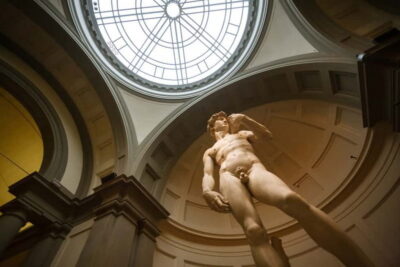
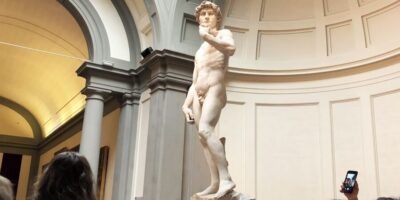
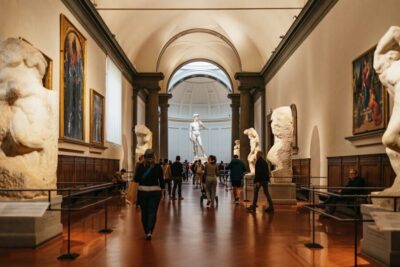
- David first, in context, following a chronological route that leads you to Michelangelo’s 5-metre statue under a domed skylight
- Radio headsets for good audio, so you can hear the guide clearly in English, Italian, German, Spanish, or French
- More than David, with stops that include the Hall of Colossus and the Florentine Gothic painting section
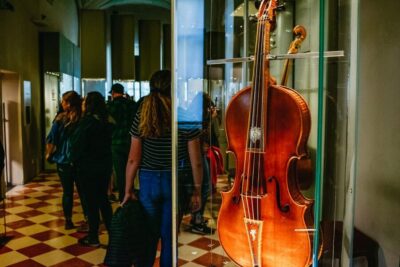
- A musical-instruments finale, including the oldest surviving upright piano and a Stradivarius violin
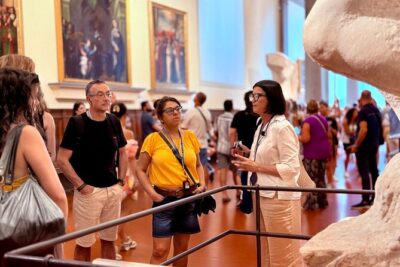
- Small-group energy, max 19 people, with guides who answer questions and sometimes build in short seating breaks for seniors
Compare the Accademia visits built around the original David
- Florence: Timed Entrance Ticket to Michelangelo’s David★ 4.6 · 16,983 reviews
- Florence: Michelangelo’s David Skip-the-Line Entry Ticket★ 4.5 · 12,764 reviews
- Florence Accademia Gallery Tour with Entrance Ticket Included★ 4.5 · 6,148 reviews
- Florence: Accademia Gallery Guided Tour★ 4.6 · 4,156 reviews
Accademia Gallery in 1 hour, with a David-first game plan
Florence has a way of luring you into long lines and long days. This tour is built to prevent that. With a 1-hour schedule and timed entry, you get a focused route through the Accademia Gallery, ending at the sculpture everyone came for.
I like this approach for first-timers because it does not ask you to figure out what matters most while you are standing in a crowd. Instead, you follow a chronological storyline through Renaissance art, so Michelangelo’s David lands with more impact.
The pacing is tight, but that can be a plus in a city where you have limited time. You do get to see the big works, plus a couple of side sections that many people miss when they rush in on their own.
Meet at Via Camillo Cavour 19, then get walking
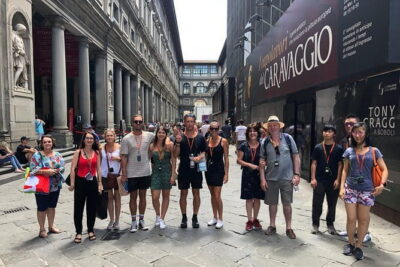
Your meeting point is the tourist office at Via Camillo Cavour 19. Plan to arrive about 15 minutes early, since the tour starts from there and you do not want to be the person still locating the correct street.
From the moment you meet the guide, the tour feels organized. That matters because Accademia can be confusing when you are new, and you do not want to waste your timed ticket getting oriented.
If you like a little context before you enter, this is a good match. Guides often use the walk to set the stage about Florence and what you are about to see, so you step into the gallery already knowing what to look for.
Skip-the-line access, express security, and why headsets change everything
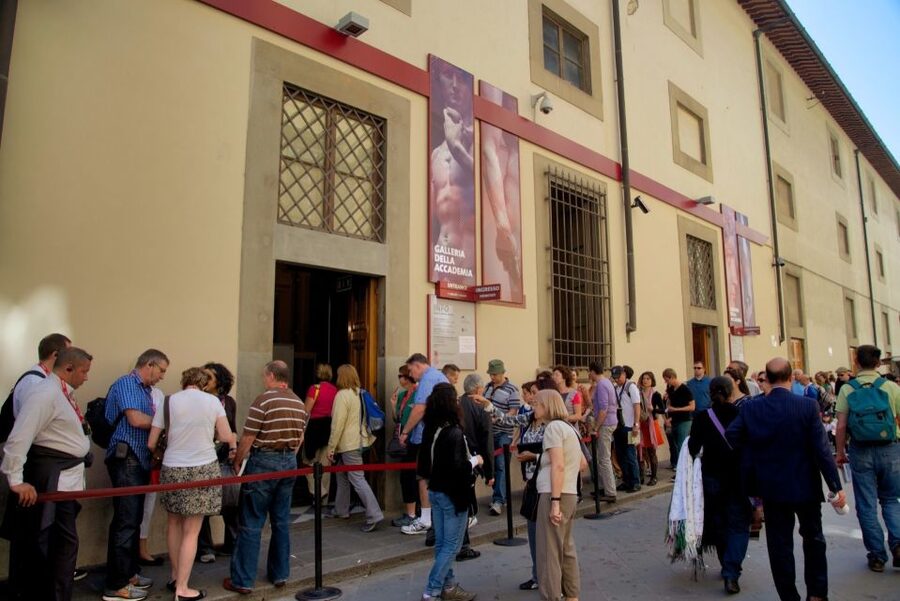
The tour includes fast-track entrance tickets and radio headsets. In practical terms, it means you avoid the most frustrating part of the day, the waiting and the herding. It also means you can hear your guide even when you are standing in busy rooms.
Radio headsets are not a luxury here. The Accademia has lots of people, lots of stone surfaces, and lots of echo. Without a headset, you end up lip-reading. With one, you actually get the story behind what you are seeing.
Another smart detail is that the skip-the-line is tied to an express security check. That helps you keep momentum, especially during peak periods when security lines can balloon.
Hall of Colossus and Giambologna’s works before you reach David
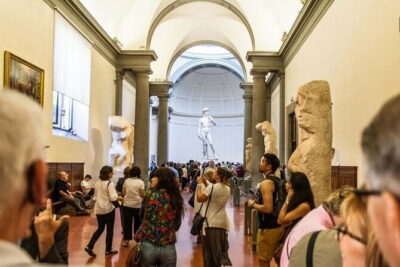
Inside the Accademia, you start with the Hall of Colossus. The name is not poetic. It comes from the scale of the sculptures you encounter there.
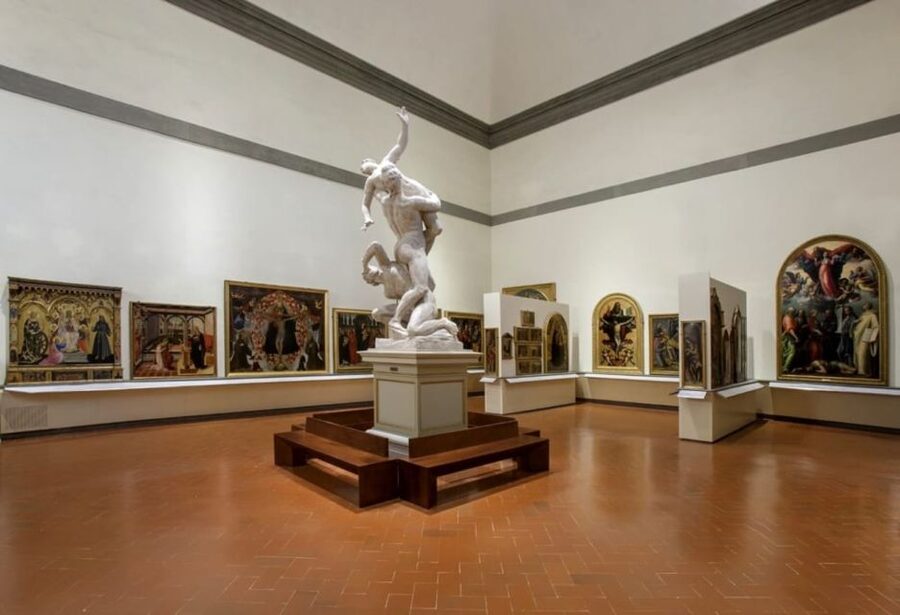
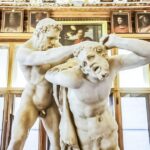
One highlight in this area is Giambologna’s Rape of the Sabines. Seeing that work early does something subtle: it shows you how Renaissance and early modern sculptors thought about bodies, movement, and drama. By the time you reach David, you are not just looking at one famous statue. You are comparing approaches.
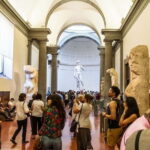
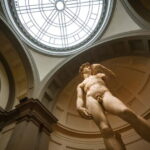
As you continue along the long corridor, your attention is directed toward David at the end, positioned under a domed skylight. That layout matters. The dome and the light help create that “spotlight” feeling, and the guide’s route ensures you reach the moment when you are ready to appreciate the details.
Michelangelo’s David, 5 metres tall, with anatomy that makes sense
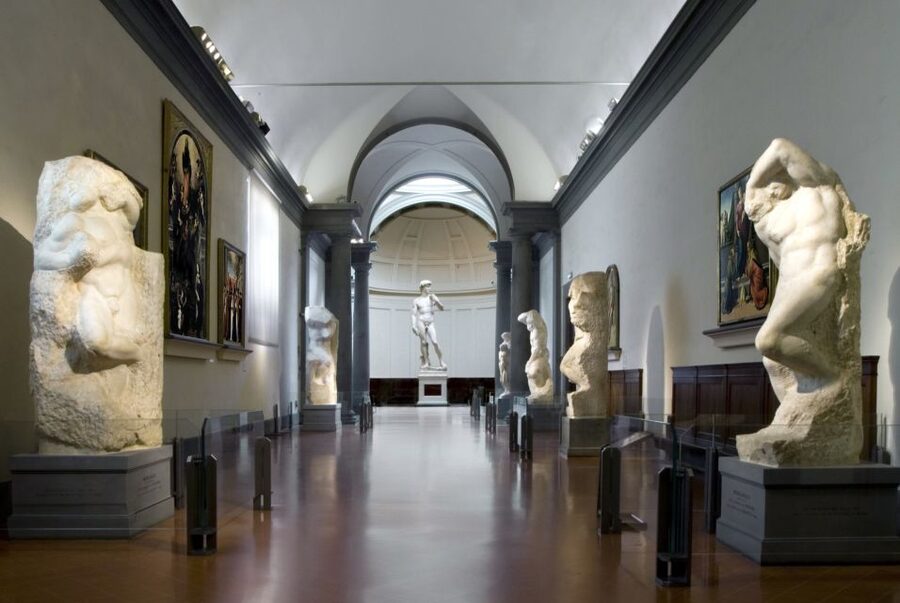
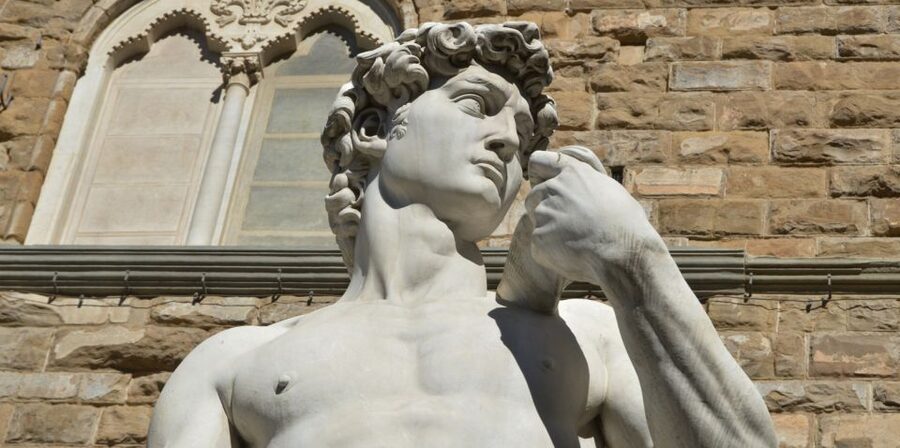
David is the headline, but the guide’s job is to help your eyes catch what your brain might miss at first glance. You will look at Michelangelo’s 5-metre tall marble statue from multiple angles, not just from one crowd-friendly spot.
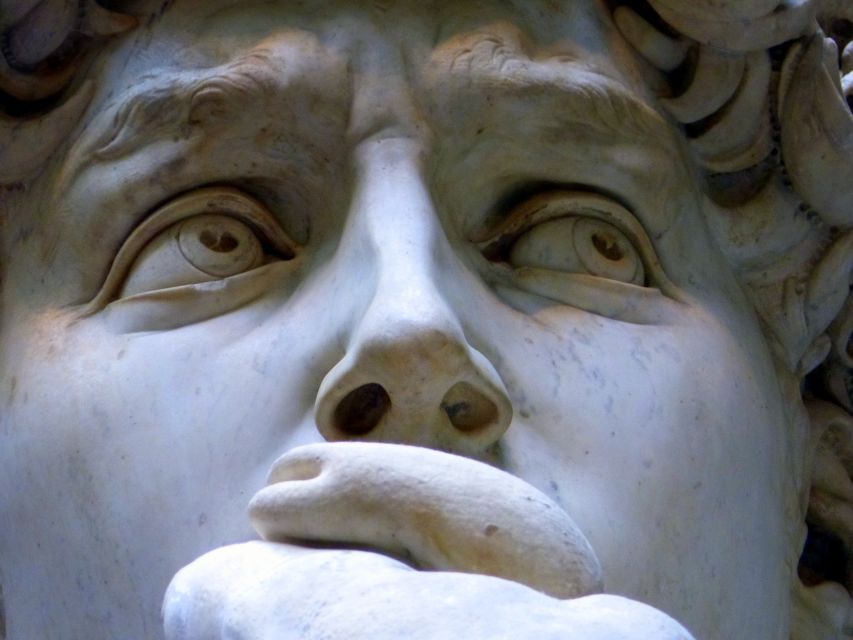
What you should listen for is the focus on anatomy and lifelike posture. Michelangelo’s command shows up in musculature, veins, and the controlled tension of the figure. Even if you think you know David from photos, being close in person gives you a totally different scale of realism.
The guide also explains the making of the statue and the influence it had on art that came after. That is where a tour earns its price. You are not only standing in front of an object. You are learning why it became a symbol, and why artists kept returning to the ideas Michelangelo expressed.
If you get the chance, ask questions here. With a max group size of 19 and personal headsets, it is easier to get answers without feeling like you are interrupting a machine.
More Florence museums with the visit format already compared
Beyond the dome: Florentine Gothic paintings and the medieval-to-Renaissance shift
After David, the route continues into a dedicated section of paintings, including Florentine Gothic works. This is a useful detour because it shows the transition period that led into the Renaissance style.
You will see works by artists such as Giotto, Lorenzo Monaco, and Bernardo Daddi. The point is not to memorize names like a quiz. It is to understand how artistic priorities changed over time, from medieval approaches toward more human-centered Renaissance perspectives.
I appreciate that this part of the tour gives your brain a second track. After sculpture, painting can feel like a different museum entirely. The guide’s chronological path helps those paintings connect to the larger Florence story, instead of reading like random gallery stops.
If you only have limited time in Florence, this combination of art forms is a smart use of an hour. You get the museum’s visual variety without needing to plan a full day.
Museum of Musical Instruments: the upright piano and the Stradivarius violin
The tour ends in the Museum of Musical Instruments, which is often a pleasant surprise. Instead of another room of paintings, you get instruments with real personality and historical weight.
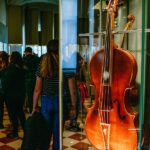
Two standout items are specifically highlighted: the oldest surviving upright piano and a Stradivarius violin. Seeing these in person changes how you think about music history in Florence. It is not just a trivia stop, it is a reminder that Renaissance culture included sound, craft, and performance.
If you have ever wondered how art and music shared techniques and status, this section gives you a tangible answer. The guide ties the instrument story to broader cultural details and anecdotes, so the room does not feel like a side quest.
If music is your thing, this part can be the moment you did not know you needed.
How the guides make the hour feel worth it
The tour’s quality depends heavily on the guide, and the better guides bring Florence to life in small, practical ways. You can feel it when someone explains symbolism clearly, points out what to notice up close, and keeps you moving without rushing past the good parts.
From the examples you might encounter, names like Galya, Francesco, Pam, Maria Christina, Mirella, Martina, Marco, Ivano, and Giacomo come up because their approach hits the same notes. They stay engaging, they connect sculpture details to the bigger story, and they encourage questions.
One particularly helpful technique is tailoring the pace. For instance, Francesco has handled tours with seniors by giving seating breaks. That is a big deal in a museum where your legs do most of the learning.
Another strong move is adding street context before entry. Marco, for example, has pointed out buildings while walking to the gallery, so you start linking what you see on the street to what you see inside.
Cloakroom, walking time, and what to bring so you are comfortable
This is a standing and walking tour. Even though it lasts 1 hour, you will still move between rooms and spend time viewing works up close. Comfortable footwear is the simple upgrade that keeps the experience enjoyable.
Large bags and backpacks go to the cloakroom. That is normal, but it can affect how light you want to travel. If you can, travel with a small bag and keep your essentials easy to grab when you return.
You should also plan for all-weather operation. Dress for the day, because you will be outside around the meeting point and in between transitions. Florence weather changes its mind often, and your tour does not pause for drama.
Finally, bring your passport or ID card. Entry in Italy can be strict, and this tour asks for it explicitly.
If you have mobility concerns, check carefully. The information provided lists wheelchair accessibility, but it also says the tour is not suitable for people with mobility impairments. That contradiction is worth taking seriously. If you want a tour that is fully comfortable for your needs, verify before you commit.
Price and value: is $58 fair for a David-focused guided visit?
At $58 per person, this tour is not a budget gamble, but it also is not priced like a luxury experience. For me, the value comes from what you get in that hour: timed entry plus fast-track tickets, radio headsets, and a guide who focuses the route around Michelangelo’s David and the surrounding art context.
If you were to do it on your own, you would still pay admission, but you would lose the time-saving advantage of timed entry and the clarity of headsets. You might also miss the “what am I looking at and why” layer that turns David from a famous statue into a piece of Renaissance thinking.
The small-group cap of 19 people matters too. It is easier to hear your guide, easier to ask questions, and easier to keep a smooth flow inside galleries that can get crowded fast.
If your schedule is tight and you want David without spending half your day fighting logistics, this price is easier to justify.
Should you book the Florence Accademia Gallery Skip-the-Line tour?
Book it if you want a structured hour that gets you to Michelangelo’s David with real guidance, plus added value from the Hall of Colossus, Florentine Gothic painting section, and the Museum of Musical Instruments.
Skip it (or consider another option) if you prefer a slow museum pace, need lots of sitting time, or expect a very relaxed walk through galleries. The tour is built for movement and focus, not lingering.
If you are the kind of person who likes learning what you are seeing before you look away, this fits well. And with guides like Galya, Mirella, and Francesco repeatedly highlighted for engagement and clear explanations, you have a good chance of getting the kind of narration that makes David hit harder than any postcard.
FAQ
How long is the Florence Accademia Gallery skip-the-line small group tour?
The tour lasts 1 hour.
Where do we meet the tour guide?
You meet at the tourist office located at Via Camillo Cavour 19 in Florence. Arrive about 15 minutes before the scheduled time.
What does skip the line include on this tour?
It includes fast-track entrance tickets and skip-the-line access through an express security check.
How big is the small group?
The group is kept small, with a maximum of 19 participants.
What should I bring for entry?
Bring your passport or ID card.
Is the tour wheelchair accessible?
The tour information lists wheelchair accessible. At the same time, it also says it is not suitable for people with mobility impairments. If mobility is a factor for you, it is smart to verify before booking.
More Florence tours to open next
- The Best tour in Florence: Renaissance & Medici Tales – guided by a STORYTELLER
★ 5.0 · 12,316 reviews
Every Florence review, in one place
- Tuscany Day Trip from Florence: Siena, San Gimignano, Pisa and Lunch at a Winery
★ 5.0 · 21,634 reviews - The Best tour in Florence: Renaissance & Medici Tales – guided by a STORYTELLER
★ 5.0 · 12,316 reviews

David and the Accademia, compared
Florence picks that sit just beyond this itinerary
- One Hour Uffizi Guided Tour: Masterpieces of the Renaissance
★ 5.0 · 3 reviews - Sightseeing Tuscany by touring bike – 1 day rental
★ 5.0 · 3 reviews - Private Siena, S. Gimignano, Chianti Road and Wine Tasting
★ 5.0 · 3 reviews - Bargello Museum Private Tour: Michelangelo’s Bacchus & Donatello’s David
★ 5.0 · 3 reviews - Authentic Florence Cooking Class at Costanza’s 1839 Family Estate
★ 5.0 · 3 reviews - San Gimignano and Volterra private tour: etruscans, romans and middle age jewels
★ 5.0 · 3 reviews
More Accademia & David Experiences worth comparing.
 ★ 4.6Timed Entrance Ticket to Michelangelo’s DavidFrom $2616,983 reviews
 ★ 4.5Michelangelo’s David Skip-the-Line Entry TicketFrom $4512,764 reviews
 ★ 4.5Florence Accademia Gallery Tour with Entrance Ticket IncludedFrom $456,148 reviews
Accademia Gallery Guided TourFrom $534,156 reviews
★ 4.5Florence Accademia Gallery Tour with Entrance Ticket IncludedFrom $456,148 reviews
Accademia Gallery Guided TourFrom $534,156 reviews
 ★ 4.6Timed Entry Ticket to Michelangelo’s David & eBookFrom $374,049 reviews
 ★ 4.5Skip the line: Uffizi and Accademia Small Group Walking TourFrom $1483,135 reviews
 ★ 4.5Skip-the-Line Accademia Guided TourFrom $432,327 reviews
 ★ 4.6Accademia Gallery Guided Tour with Entry TicketFrom $492,253 reviews
Find this experience in another shortlist