
Florence field review · MEDICI FLORENCE & RENAISSANCE STORIES
Florence: Renaissance and Medici Tales Guided Walking Tour
Florence feels like a novel when someone narrates. This 2-hour guided walking tour gives you a clear storyline for the city’s Renaissance rise, with Medici power and intrigue as the thread. It also helps you spot what you are looking at, so places like the Duomo complex stop being random postcard points.
I especially like the way the guide turns stone and statues into meaning, not just facts. Guides such as Chiara and Michele are singled out for memorable storytelling and practical Florence advice, so you finish with both context and a game plan. One drawback to consider: it is a walking, mostly exterior sightseeing route, so if you want lots of museum time inside big-ticket sites, you may feel slightly unfinished.
Key Takeaways Before You Go
- Medici tales that connect across centuries so the city feels less like disconnected sights
- Duomo moments explained in plain language including why Brunelleschi’s dome is such a big deal
- Exterior views with symbol reading so you know what to look for as you pass by
- Local food, drink, and shopping tips from a guide who knows where to send you
- A pace that works for first-timers and even gets noted as teen-friendly in the feedback
- Rain or shine touring, meaning you should plan for streets, wind, and crowds regardless
More Medici stories behind the palaces, paintings and city streets
- The Best tour in Florence: Renaissance & Medici Tales – guided by a STORYTELLER★ 5.0 · 12,316 reviews
- Florence: Renaissance and Medici Tales Guided Walking Tour★ 4.8 · 1,549 reviews
- Florence: Mysteries of the Medici Guided Walking Tour★ 4.4 · 940 reviews
- Accademia Gallery: Michelangelo’s David and High Renaissance Art★ 4.0 · 872 reviews
Florence in 2 Hours, with Medici Power Tales That Make Sights Click
Florence can overwhelm you fast. Too many domes, too many palaces, too many names that sound important but blur together. This tour gives you a simple through-line, starting with the Medici and building toward the civic and artistic identity that defined the Renaissance.
What makes it useful is how the guide links your walking route to cause and effect. The Medici were not just rich patrons in the abstract, they were political operators who shaped what got built and what messages the city sent. When you understand that, even a quick glance at a facade starts to feel like you are reading the city’s résumé.
The value here is time. In just 2 hours, you get orientation in the historic center, a sense of how the Duomo and the government buildings relate, and a handful of “stop and look” moments that most self-guided strolls skip. You also end at the Uffizi area with guidance on where to go next.
Meeting Near San Lorenzo and Getting Your Bearings Fast
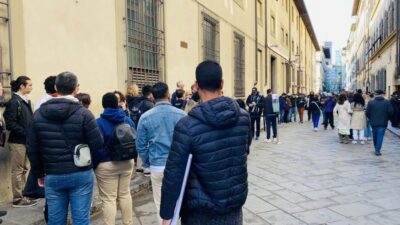
You start close to San Lorenzo, meeting at Florence Free Tour-Tale, by the stairs leading to the main entrance of the San Lorenzo church. If you are searching for your group, look for the green umbrella in front of those stairs.
From the start, you get an architectural quick lesson. The meeting area is set up to show the mix of Romanesque and Renaissance elements around the Basilica of San Lorenzo, which is a smart way to begin. Florence’s look changed over time, and that is easier to understand when your first visual examples are right there at your feet.
Practical note: because the tour is walking-focused and rain or shine, you will want comfortable shoes right from the first minute. You will be moving through narrow streets where stopping to take photos can slow the group, so the guide’s “watch here, then move” rhythm matters.
Basilica of San Lorenzo: A Strong First Scene for the Renaissance Story
The Basilica of San Lorenzo is a good kickoff because it lets you see the Renaissance in conversation with older styles. You are not just hearing that Florence “became Renaissance,” you are seeing the transition in the built environment.
The guide’s job here is key: you are meant to understand what makes this church area special before you zoom off to bigger landmarks. If you only chase the headline sights later, you miss how the city’s identity forms at street level, not just on grand stages.
If you are traveling with a camera, this is where you start collecting the “before and after” angles. You will likely pass viewpoints where the dome and civic buildings later create the larger picture. Starting here makes those future moments more satisfying.
Palazzo Medici Riccardi: The Medici Behind the Marble
Next comes Palazzo Medici Riccardi, one of the places that turns Medici “myth” into something concrete. The Medici were powerful enough to affect art choices, civic messaging, and the city’s direction. You can feel that when the tour slows down and frames what you are seeing as strategy, not just decoration.
The tour also aims to explain how Medici influence shows up across generations, not as a single flash of patronage. That matters because it stops the story from becoming “a rich family funded artists,” and instead becomes “a dynasty shaped Florence’s power structure.”
From a practical viewpoint, this stop is also a good reality check. Florence is full of palaces where the outside is the story, since interiors may require separate tickets and schedules. This is why an exterior-focused approach works well: you get the meaning without getting stuck in long lines that break your momentum.
Duomo Complex, Giotto’s Bell Tower, and Brunelleschi’s Dome Explained
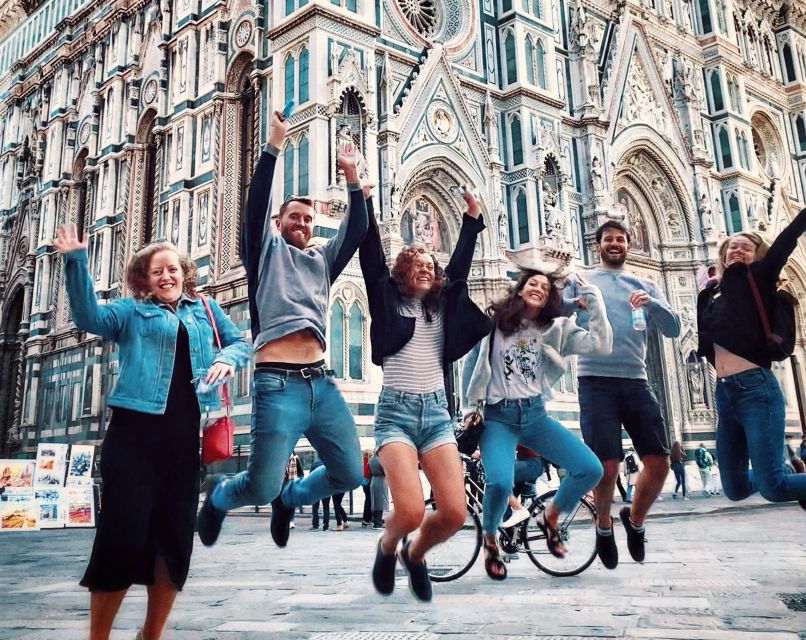
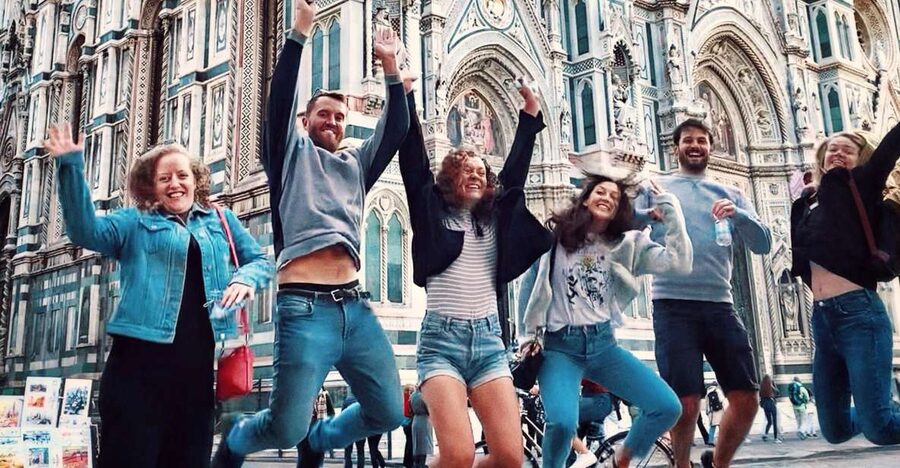
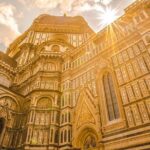
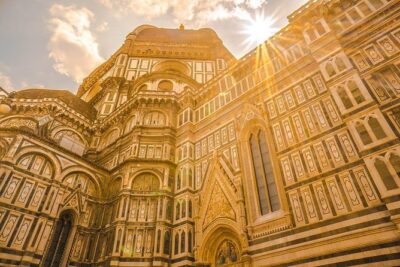
The tour then shifts into the Duomo complex zone, and this is where the “look closer” advice pays off. You see the area in a way most people never manage on their own, with Giotto’s bell tower and the larger Duomo area tied to the Renaissance problem of design, engineering, and symbolism.
Brunelleschi’s Dome gets special attention. The dome is iconic, but many first-time visitors still treat it like a single image rather than an achievement with logic behind it. Here, you are guided to understand what you are looking at and why it became a signature of Florence’s ambition.
Why this is valuable for you: if you plan to visit the Duomo later on your own, this tour gives you the “what to notice” list in advance. That means your time inside or around the cathedral area tends to feel more productive, not just photo-heavy.
If you are sensitive to crowds, keep expectations realistic. Even on the best day, this area gets busy. The guide’s pacing helps you move through the busiest moments efficiently, but you should still expect close quarters.
Florence walks that make the stone streets tell the story
House of Dante: Why Literature Belongs in the City’s Map
You then move toward the House of Dante, which is a smart pivot. Florence is not only architecture and politics, it is also ideas that spread through words as much as stone.
The tour connects Dante to the city’s identity, placing him in the broader Renaissance mindset. You do not need to be a scholar to get value here. The guide’s job is to make the city’s intellectual life feel like part of the same story as the Medici and the civic buildings you are seeing.
This is also a calmer segment compared with the Duomo crush, so it is a good time to step back, absorb the street scale, and reset your brain before you hit the major government and statue-heavy stops.
Palazzo Vecchio and Piazza della Signoria: Civic Power in Full Display
The tour’s civic section is where Florence stops feeling like a museum and starts feeling like a lived political stage. Palazzo Vecchio and Piazza della Signoria put you in front of the city’s power center, and the guide helps you read the symbolism of a place built to project authority.
This is also where the Renaissance story turns personal. You start to see how art, leadership, and public image connect. It is not just “big buildings exist,” it is “Florence used architecture and public display to communicate who mattered.”
You also get to see the relationship between buildings and the open space around them. That matters because Piazza della Signoria is often photographed without context. With the guide’s explanations, it becomes easier to understand why these squares were designed the way they were.
Loggia dei Lanzi and Ponte Vecchio: Art, Public Space, and Real Florence Views
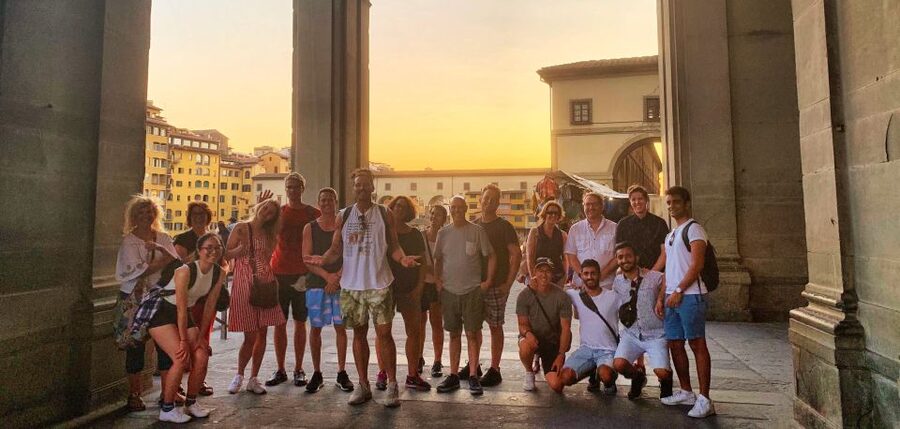
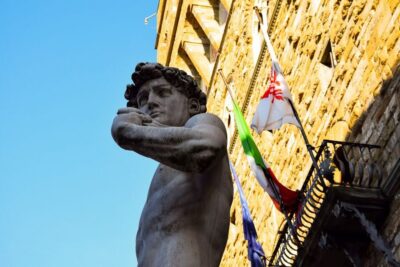
Loggia dei Lanzi is a highlight because it sits right in the flow of the city’s public life. It helps you understand how Florence used sculpture and covered spaces as a kind of outdoor gallery, with messages you can catch from street level.
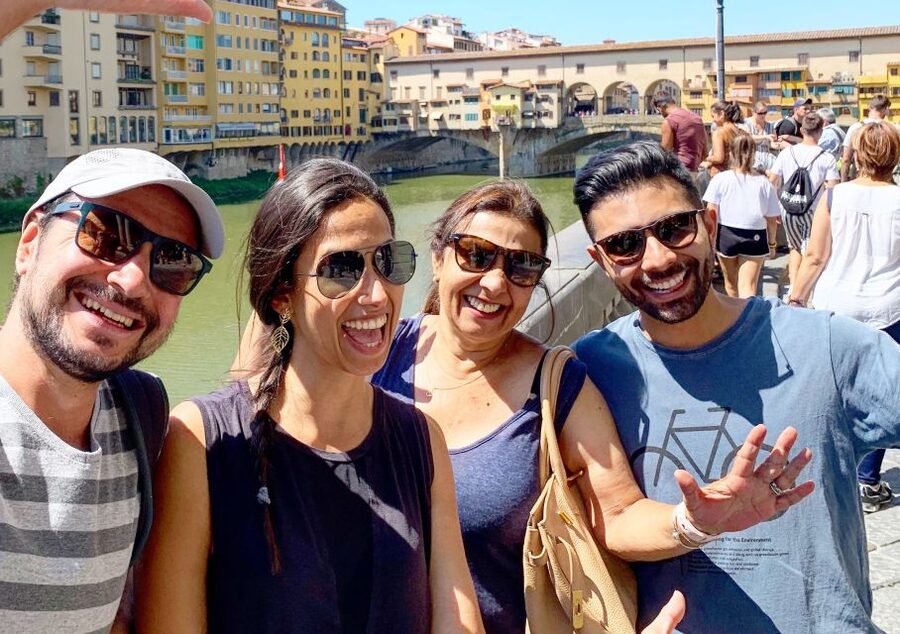
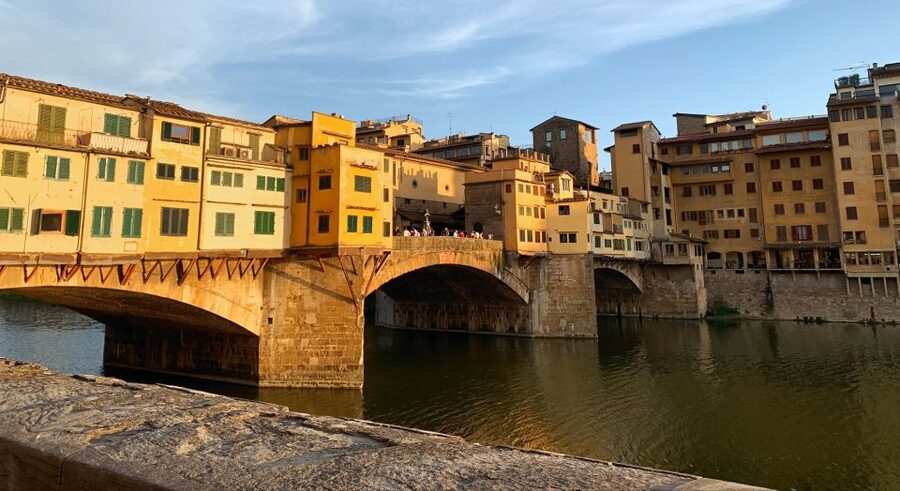
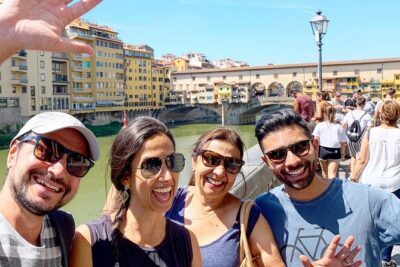
Then you walk toward Ponte Vecchio, one of the city’s most famous bridges. This is not just a “look at the scenery” moment. It is a practical finishing point because it anchors your tour in a place that still feels like a real market and crossing, not a staged photo backdrop.
What you will enjoy most here is the contrast. Earlier, you worked through major power and symbolism. At Ponte Vecchio, the city becomes sensory again: crowds, movement, and the sense that Florence still operates in the same historic corridor even after all the Renaissance drama.
Ending at the Uffizi Area: Use the Tour to Plan Your Next Move
The tour finishes outside the Uffizi Gallery and gives you tips on how to eat, shop, and drink like a local. That ending is smart because the Uffizi is a common next stop, and you avoid the common first-day mistake of wandering into the most touristy options without a guide-level filter.
You are not only leaving with monument context. You are leaving with practical recommendations that help you spend the rest of your day more smoothly. This is especially helpful if it is your first visit, or if you are trying to fit Florence into a short schedule.
If you are going to the Uffizi next, treat this ending like a warm-up. You now know which symbols and political themes to keep an eye out for once you are inside the museum space.
Price, Walking Time, and Why This Is Actually Good Value
The listed price is extremely low, around $2.36 per person for a 2-hour guided experience. Even if you have to add a typical tip amount, the value math tends to work because you are getting both orientation and interpretation, not just a “walk and point” guide.
You are also paying for efficiency. With this route, you compress a lot of Florence’s identity into a short span. If you were to try to piece together Medici context and Renaissance meaning on your own, it is doable, but it takes time you might not have.
The other “value” angle is that the pacing seems tuned for real humans. In the feedback, the tour is described as never rushed and well paced, which matters when you want answers to questions instead of just listening to a monologue while everyone strains to keep up.
Who This Tour Fits Best, and Who Should Think Twice
This tour is ideal if you want a structured introduction. It is great for first-time Florence visitors, people who are interested in the Medici and Renaissance politics, and anyone who wants to understand what symbols and buildings mean while they walk.
It is also a good choice if you like storytelling. The guides mentioned in the feedback, such as Chiara, Michele, and Glenda, are consistently described as engaging and memorable, with a focus on making history understandable rather than dry.
Think twice if your main goal is inside-the-building time. Since the route is largely about exterior views and city highlights, you will likely want to pair it with separate museum tickets and time for deeper viewing if you are a hardcore art fan.
Comfort and Weather Tips for Rain or Shine Days
This tour runs rain or shine, so plan like a Florentine meteorologist is on duty. Bring comfortable shoes, water, and weather-appropriate clothing. A camera is useful, but keep it secondary to staying upright on slick streets.
If you are in a busy crowd situation, you might find it easier if the guide uses a microphone and earpieces. One account specifically mentions microphone support and earpieces, which is helpful when you are in tight spaces and wind affects sound.
Also bring a bit of cash if you plan to tip. Multiple accounts suggest tipping with cash, and the general vibe is that you should budget for it even if the tour is marketed as a free-style experience.
Should You Book This Florence Medici and Renaissance Walk?
If you are trying to get your bearings fast and understand why Florence looks the way it does, I think this is a strong booking. The Medici thread gives your visit structure, and the mix of major sights plus practical local tips makes it a good first-day move.
I would book it if you like learning through stories, want Duomo context before you go deeper, and value a guide who points out symbols rather than just naming places. If your schedule is tight or your group is a mix of ages, the 2-hour format is also a big advantage.
If you only want museum time, or you already know the Medici story well, you might feel this is more orientation than revelation. But for most people, a short guided walk that turns Florence into an understandable narrative is time well spent.
FAQ
How long is the Florence Renaissance and Medici Tales walking tour?
The tour lasts about 2 hours.
Where do I meet the guide?
Meet at Florence Free Tour-Tale, look for the green umbrella in front of the stairs that lead to the main entrance of San Lorenzo Church.
What languages are available for the live guide?
The live tour guide is available in Spanish and English.
Is the tour wheelchair accessible?
Yes, it is wheelchair accessible.
Does the tour run in bad weather?
Yes, the tour takes place rain or shine.
What should I bring?
Bring comfortable shoes, a camera, water, and weather-appropriate clothing.
More Florence tours to open next
- The Best tour in Florence: Renaissance & Medici Tales – guided by a STORYTELLER
★ 5.0 · 12,316 reviews
Every Florence review, in one place
- Tuscany Day Trip from Florence: Siena, San Gimignano, Pisa and Lunch at a Winery
★ 5.0 · 21,634 reviews - The Best tour in Florence: Renaissance & Medici Tales – guided by a STORYTELLER
★ 5.0 · 12,316 reviews

The Medici thread through Florence
- The Best tour in Florence: Renaissance & Medici Tales – guided by a STORYTELLER
★ 5.0 · 12,316 reviews


Florence picks that sit just beyond this itinerary
- Florence: Duomo Complex Private Guided Tour & Optional Dome Climb
★ 5.0 · 4 reviews - Private Tour of Florence Cathedral, Bell Tower & Baptistery
★ 5.0 · 4 reviews - Michelangelo’s David Tour in the Accademia (Tickets NOT included)
★ 4.0 · 4 reviews - Exclusive Pisa Tour from Florence: With Skip-the-Line Access
★ 4.0 · 4 reviews - Full-Day Tour of Tuscany from Florence-small group up 8 pax
★ 4.5 · 4 reviews - Florence: Inferno Private Walking Tour
★ 5.0 · 4 reviews
More Medici Florence & Renaissance Stories worth comparing.
 ★ 5.0The Best tour in Florence: Renaissance & Medici Tales – guided by a STORYTELLERFrom $312,316 reviews
 ★ 5.0The Best Tour in Florence: Renaissance and Medici TalesFrom $310,810 reviews
 ★ 4.4Mysteries of the Medici Guided Walking TourFrom $31940 reviews
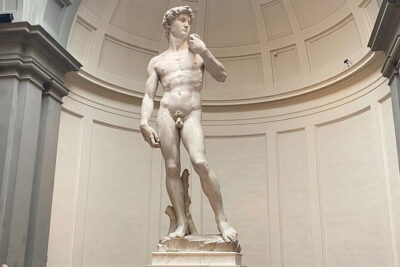 ★ 4.0Accademia Gallery: Michelangelo’s David and High Renaissance ArtFrom $43872 reviews
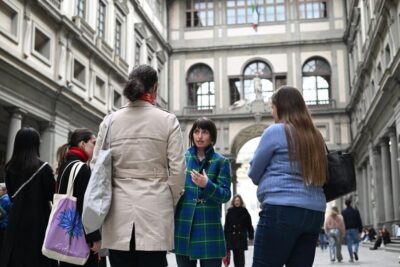 ★ 4.7Guided Tour of Medici Family Secrets and ChapelsFrom $93512 reviews
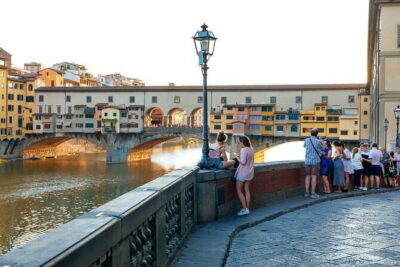 ★ 5.0Florence Private Tour: Renaissance, Famous Families & Hidden GemsFrom $199233 reviews
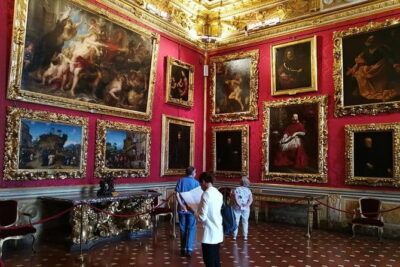 ★ 4.5Pitti Palace, Palatina Gallery and the Medici: Arts and Power in Florence.From $82223 reviews
 ★ 4.8Medici Chapels Guided TourFrom $50217 reviews
Find this experience in another shortlist