
Florence field review · UFFIZI GALLERY TICKETS & TOURS
Florence: Walking Tour with Accademia & Uffizi Galleries
Florence is a museum day with street-level payoff. This tour strings together Accademia Gallery and the Uffizi Gallery with a guided walk past the Duomo Complex, Piazza Signoria, and Ponte Vecchio, so you get art and the city in one flow. I especially liked seeing Michelangelo’s David with expert context, and I also loved how the walking guide helped you connect spots like San Lorenzo and Orsanmichele to the bigger story of Florence. One real consideration: the pace is full, and if meeting-point instructions are misunderstood, you can lose part of the walking portion.
The best version of this day is for you if you want major art highlights without the stress of hunting tickets or fighting lines. The museums are where the guide really matters, and the small group format helps keep explanations on track. Just come with comfortable shoes, be on time, and double-check the exact meeting location for your day.
Key things to know before you go
- Reserved museum entry time cuts the stress and helps you avoid long ticket lines.
- Accademia first, Uffizi after keeps David from feeling rushed and makes the afternoon art feel lighter.
- A guided walk through Florence’s center ties landmarks together, from Medici connections to Piazza Signoria.
- Earphones inside the museums make it easier to hear the guide in crowded rooms.
- Optional Tuscan lunch is a nice mid-day reset, with drinks typically paid on the spot.
- Uffizi terrace at the end gives you a city-view moment before you decide whether to stay longer.
More ways through the Uffizi, with the queue and guide choice made clear
- Florence: Skip-The-Line Uffizi Gallery Timed Entry Ticket★ 4.5 · 27,832 reviews
- Florence: Uffizi Priority Ticket & Masterpieces Audio App★ 4.2 · 6,402 reviews
- Florence: Skip-the-Line Uffizi Small Group Tour★ 4.6 · 5,926 reviews
- Uffizi Gallery Small Group Tour with Guide★ 4.5 · 4,923 reviews
Why this Florence combo works in one 6-hour pass
This is not a “just drop you at museums” plan. It’s built as a guided art day plus a guided streets day, with museum time front-loaded so you’re not walking around hungry and stuck in long queues.
You start with the Accademia Gallery, where Michelangelo’s David sets the tone. Then you walk through Florence’s historic core, hitting big-name sights like the Duomo Complex and Piazza Signoria, plus smaller stops like Orsanmichele and the Straw Market area. After a lunch break if you opted in, you head to the Uffizi Gallery for a guided highlights route that covers major artists including Botticelli, Michelangelo, and Leonardo da Vinci. The tour ends at the Uffizi Terrace, and if you want, you can stay inside the museum afterward.
For me, the value is in the sequencing: David first, Florence landmarks in the middle, and the Uffizi in the afternoon when you’re ready to slow down and look closely. If you prefer a more flexible day, you can still use the reserved entry and then keep your own pace after the guided portions.
Accademia Gallery: getting David into focus
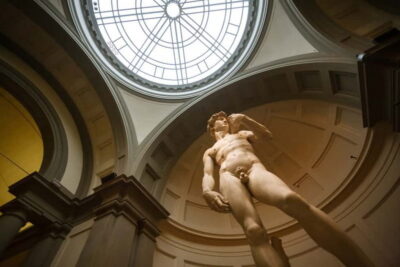
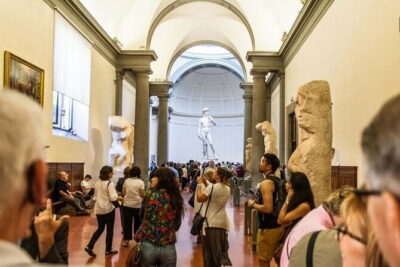
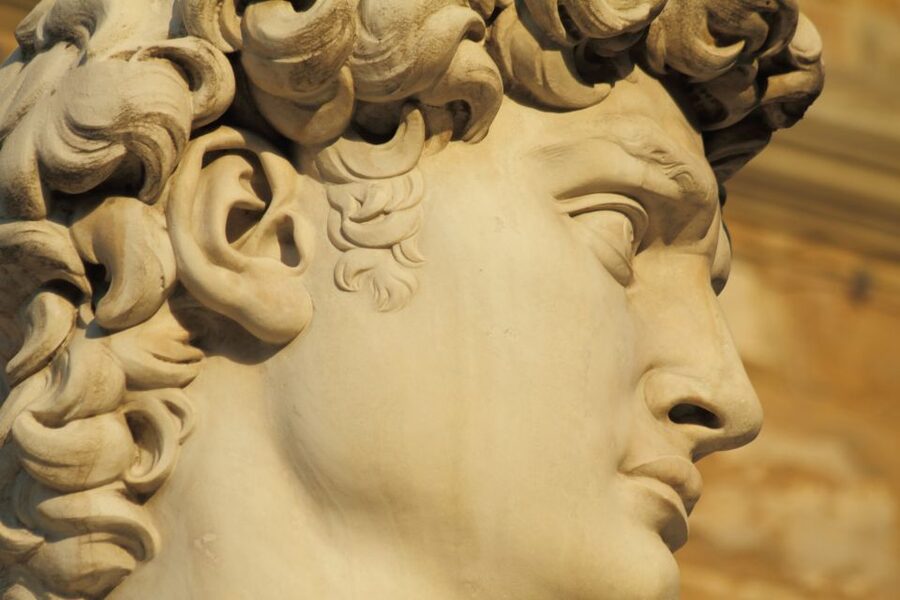
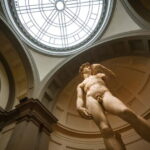
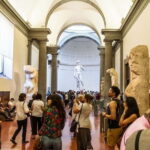
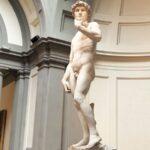
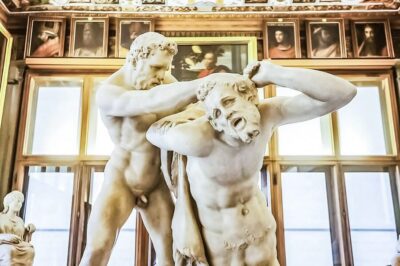
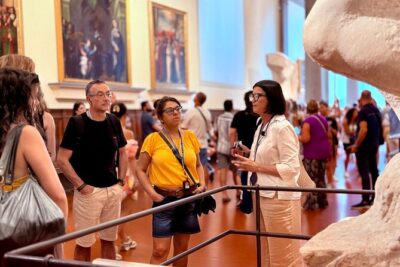
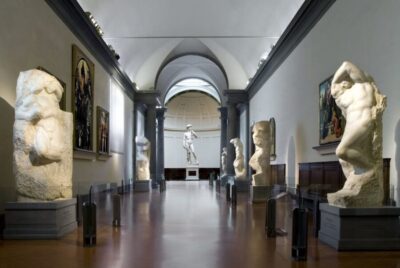
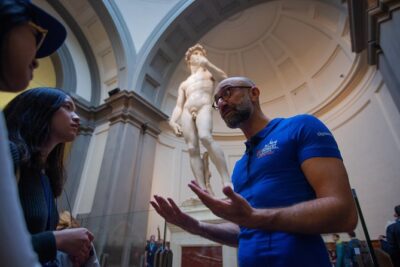
The Accademia Gallery is the main reason most people choose this tour, and it delivers. You get a guided visit centered on Michelangelo’s David, plus other works like I Prigioni and San Matteo. What makes the guide’s role matter here is that David is not just a famous statue. It’s also a story about craft, timing, and political symbolism in Renaissance Florence.
You’ll hear how Michelangelo’s carving took years, and how the final figure was meant to represent strength, courage, and the power of the Florentine Republic. That kind of context changes how you look. Instead of seeing a single icon, you start noticing choices Michelangelo made, from scale to expression, and why the statue mattered to people back then.
This is also where you benefit from guaranteed museum entry time. The Accademia is popular, and getting in smoothly helps you actually enjoy the gallery, not just “survive” it.
The Medici district walk: history you can feel in the streets
After the Accademia, the day shifts to walking Florence. You begin around the Medici area, picking up key anchors like the Medici palace connections and San Lorenzo Church. This is a smart move because it puts the Renaissance people back into their real neighborhood.
The walk is designed to help you connect dots. You’re not only seeing a list of famous buildings, you’re getting a guided sense of where power sat, how families shaped the city, and why certain churches and streets matter. That turns a “pretty stroll” into a route that teaches you how Florence works.
You’ll also pass through medieval street sections, which is where Florence feels most lived-in. Even if you’ve seen photos, the street angles, shopfronts, and sudden views over rooftops do something pictures can’t.
Duomo Complex: seeing the Cathedral area as a whole
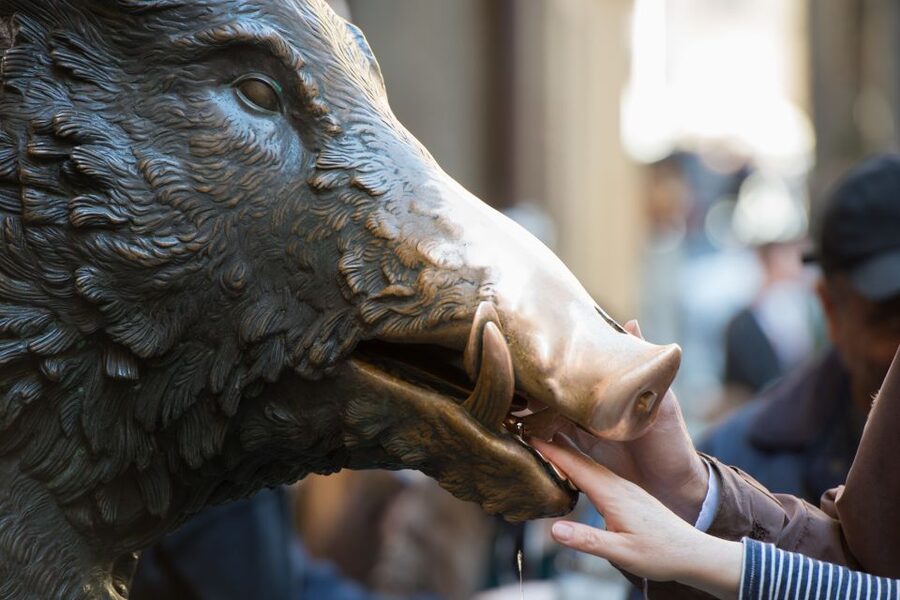
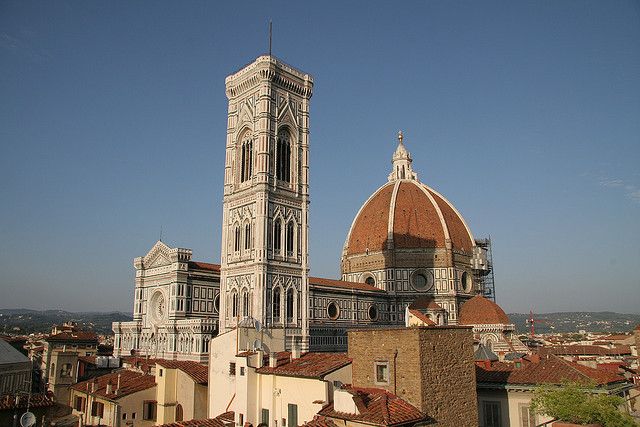
One of the strongest parts of the walking segment is the time you spend around the Florence Cathedral area, often referred to as the Duomo Complex. You’ll admire the Florence Cathedral and the complex around it, which gives you a better sense of the space than if you only look at one façade.
Why this is valuable: the Duomo area is a cluster of buildings and ideas, not a single stop. From the outside, it’s all about scale, materials, and positioning. A guide helps you notice what to look for, like the way the buildings relate to each other and how the square area functions as a gathering place.
Practical note: this part of the day is outdoors. Wear shoes that handle cobblestones and expect some stairs or uneven pavement depending on the exact route.
Orsanmichele and the Straw Market area: the Florence you miss fast

Not every Florence itinerary includes Orsanmichele and the Straw Market area, but this one does. Orsanmichele is distinctive, and it stands out because it does not feel like a generic “must-see.” It feels specific to Florence.
This is also one of those stops where your guide can make the difference. If you only look at the exterior, you might miss what makes it special. With guided context, you understand why this kind of building matters inside the broader Renaissance story.
The Straw Market area is also useful as a sensory break. It gives you a quick look at the city’s market life and the tourist bustle around it without pretending you’re doing anything as serious as a food tour.
Compare the Accademia visits built around the original David
Piazza Signoria and Palazzo Vecchio: Florence’s outdoor political theater
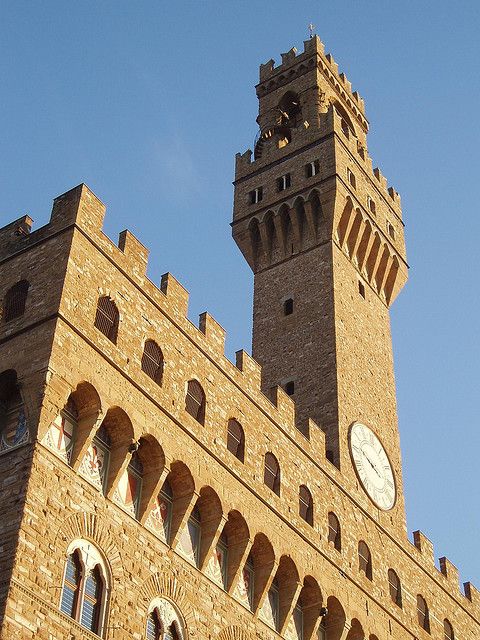
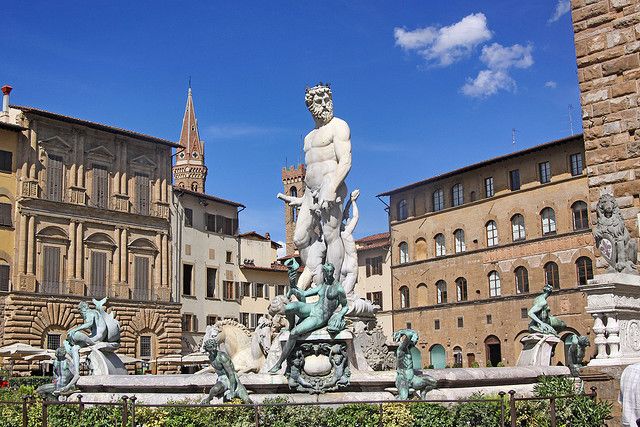
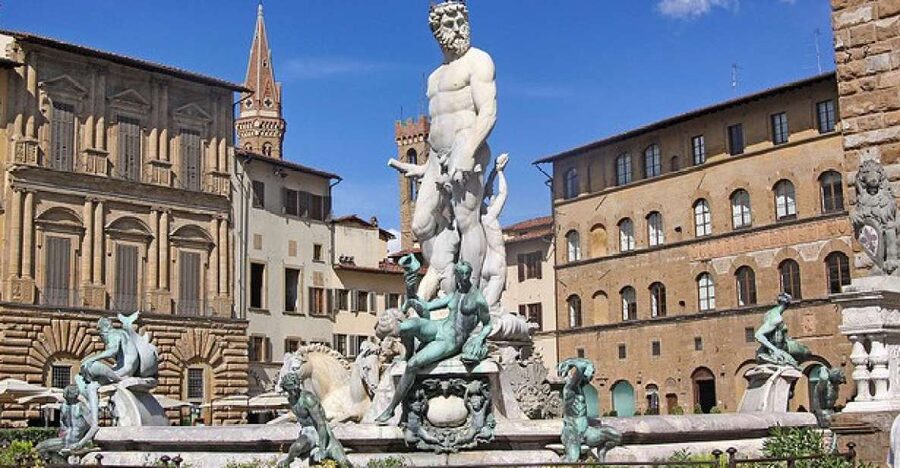
Then you reach Piazza Signoria, the stage where civic life and art energy overlap. You’ll see the imposing Palazzo Vecchio and take in the atmosphere around Piazza Signoria.
This area is great because it feels like a living museum. Even if you do not go inside Palazzo Vecchio on this tour, the exterior setting gives you context. You can understand why Florence put power in public spaces and why art and politics were connected.
If you like people-watching, this is also a good time to slow your pace a bit. The square tends to fill with activity, and the guide’s narration helps you interpret what you’re seeing instead of just getting swept along.
Walking toward Ponte Vecchio via the Vasari Corridor area
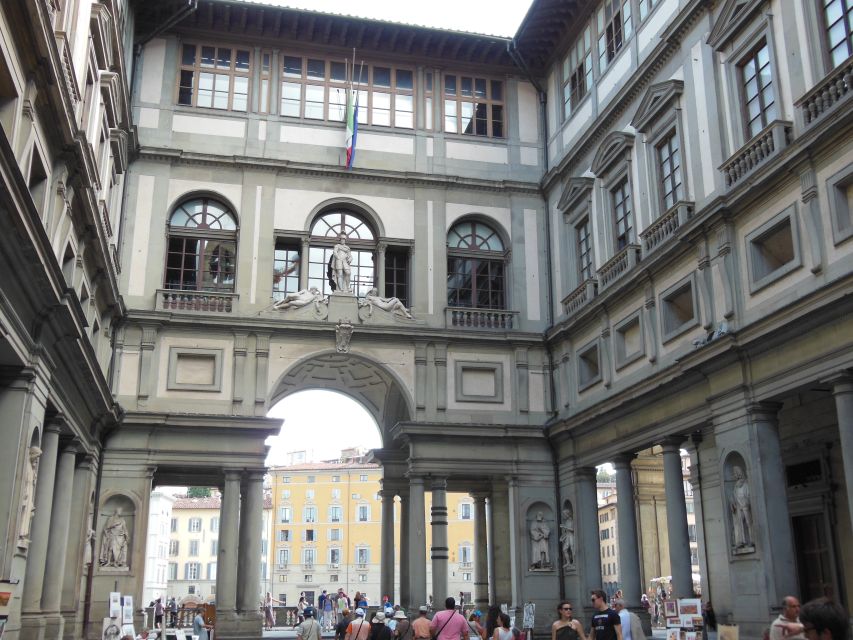
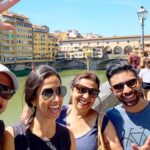
The route continues along the Vasari Corridor to Ponte Vecchio, ending at the jewelry-shop zone. This is one of those Florence moments that’s both photogenic and emotionally recognizable. Even if you have seen Ponte Vecchio pictures a hundred times, the street-level walk gives you a better sense of scale and how the riverfront fits into the city.
The guide’s job here is to connect the corridor and the riverfront to the broader idea of power, art, and elite movement. That makes the stop feel more purposeful, less like a checkbox.
If you’re sensitive to crowds, keep your expectations realistic. This is a famous area, and the afternoon can get busy.
Optional Tuscan lunch: a reset that keeps the afternoon enjoyable
A typical Tuscan lunch is offered in the old city if you selected the lunch option. This matters because the day starts early in your brain and ends with more museum focus. Lunch gives you a clean break so the Uffizi does not feel like punishment.
You’ll be in a restaurant in Florence old town, and drinks are typically paid on the spot. That’s helpful to plan for, because it keeps the tour price from feeling like a black box.
If you do not choose lunch, you still keep the walking and museum flow. Either way, do not overpack your day with other plans. This tour already fills the important sight time.
Uffizi Gallery: Botticelli, Renaissance giants, and a guided path
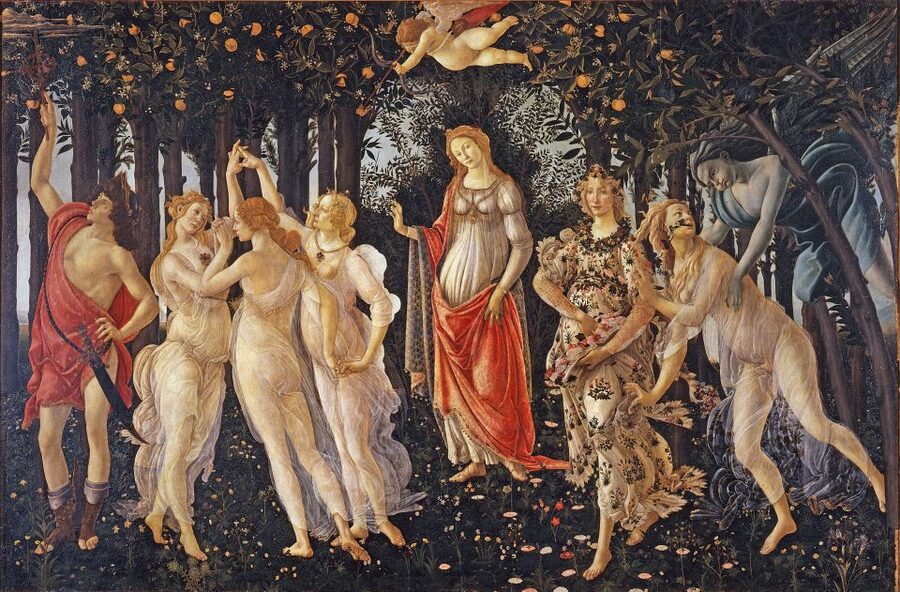
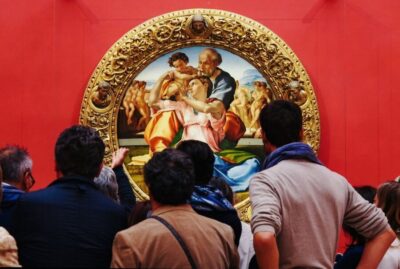
The Uffizi is where the tour turns into a real art lesson. You get a guided visit that highlights works by Botticelli, Michelangelo, Leonardo da Vinci, and more. Botticelli’s Primavera and the Birth of Venus are key stops, and the guide’s explanations help you see why these paintings became cultural touchstones.
What I like about this style of Uffizi tour is that it does not try to be everything. It picks major works and uses the guide to connect themes across artists. That makes the Uffizi feel coherent instead of like 50 rooms of sensory overload.
At the end, the tour concludes at the Uffizi Terrace, which gives you a view of city landmarks. Then you can choose to stay longer inside the museum if you want more time with the paintings that hooked you.
Headsets and hearing your guide
Earphones are included inside the museums. That helps in rooms where lots of people are standing close together. One important practical detail: the headsets can sometimes be a little unreliable when a company tests new equipment. If you notice distortion or low volume, ask for help right away so you can hear properly for the rest of the tour.
Small group feel, and why meeting points matter
This is a small group tour, and that tends to improve the listening experience in both museums and on the walk. The meeting point can vary depending on the option you booked, so you’ll want to read your confirmation carefully.
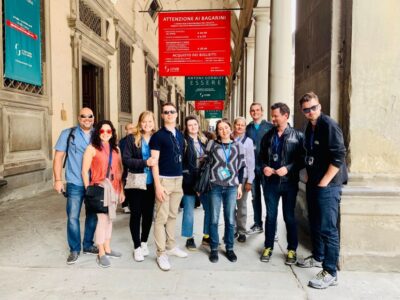
There’s also a practical advantage: an assistant delivers your entrance ticket directly at the meeting point in front of the museum, so you’re not wasting time at the ticket office. That’s one of the most underrated parts of a Florence museum day.
Language coverage is listed as English and Spanish, but there’s also a note that from April to October the tour can be monolingual. In practice, this means you should expect your guide’s language to be stable for your group.
One logistics tip that’s worth taking seriously: the walk portion depends on everyone starting together. If meeting information is unclear or you arrive late, you can lose the guided walk even if you still make the museum portion.
Seasonal Uffizi meeting detail (winter planning)
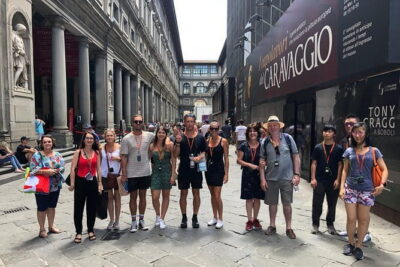
From November 1 to March 31, the Uffizi meeting point is on the Uffizi Gallery Piazzale, in front of the Dante Alighieri statue near door 1. An assistant waits wearing blue clothing with Caf Tour and Gray Line logos. If you’re traveling in winter, treat this as a “show up early and look for the sign” situation.
Price and value: is $164.26 worth it?
At $164.26 per person for a 6-hour experience, you’re paying for three things: (1) reserved museum entry for Accademia and Uffizi, (2) guided interpretation by a local professional guide for the walking tour and museum visits, and (3) small-group handling plus earphones in the museums.
If you try to piece this together on your own, the cost of two museum tickets plus the time it takes to line up and coordinate can add up quickly. The real value is not only the savings, it’s the mental energy you keep. You’re spending the day watching art and learning, not staring at a ticket machine.
That said, value depends on guide quality and the day’s flow. One critique you should take seriously is that explanations can feel thin if the guide’s style or headset setup is not working well. I also saw feedback pointing to a quality-price mismatch, which often happens when the service feels rushed or when audio gear fails.
My advice: if your top priority is David plus the Uffizi highlights, and you want them guided with minimal hassle, the price is in the right zone for what’s included. If you already plan to study these museums independently and you dislike structured routes, you may prefer a lower-cost self-guided approach.
What could throw off your day, and how to fix it
Here are the common friction points you can avoid:
- Meeting-point confusion: if your confirmation doesn’t clearly tell you where to meet, it’s worth messaging or checking again before you go. Arrive a few minutes early and look for the assistant.
- Hearing the guide: earphones are included. If they sound bad, switch them or ask for a replacement quickly. You’re paying for the listening experience.
- Explanations quality: some people prefer long, analytical commentary and others want a faster, more visual approach. This tour is guided and interpretation-heavy, so you’ll do best if you like that style.
- Full schedule energy: this is a packed 6 hours. If you want quiet roaming time, save that for later in the week.
A good sign from real experience: one guide named Giulia handled the Uffizi portion exceptionally well, with lots of detail and quick answers, and helped someone recover after a walking-part mix-up. That’s a reminder that guide performance can make a noticeable difference, especially in the Uffizi.
Who this tour is best for
This is a strong fit for you if:
- You want major art highlights in a single day, especially David and the Uffizi big names.
- You like your Florence tours with a storyline that connects neighborhoods and artworks.
- You’d rather pay for reserved entry and a guide than spend half your day managing logistics.
It might not be the best fit if:
- You want a slower day with lots of free time.
- You dislike group pacing and want to choose your own museum order.
- You are highly sensitive to crowd noise and prefer fully quiet visits.
Should you book this Florence walking tour with Accademia and Uffizi?
I’d book it if your goal is a high-value art-and-city combo with reserved entry and guided context. The format makes sense: David first, Florence streets in the middle, Uffizi afternoons when you’re ready to look closely. Add the optional Tuscan lunch and you get a day that feels like you’re seeing Florence, not just passing through it.
But if you’re the type who needs extra flexibility, or if your schedule is tight enough that being late could be a problem, you should think twice. Make sure you understand the exact meeting point for your date, show up early, and bring comfortable shoes. Do that, and you’ll likely leave with both great art memories and a better sense of how the city fits together.
FAQ
How long is the Florence Walking Tour with Accademia & Uffizi Galleries?
The total duration is 6 hours.
Does the tour include skip-the-line entry?
Yes. Your entrance ticket and reservation fee are included, and you get a guaranteed museum entry time, delivered at the meeting point.
Which languages are offered for the live guide?
The tour is listed with English and Spanish, and there is also a note that from April to October the tour can be monolingual.
What will I see at the Accademia Gallery?
You’ll focus on Michelangelo’s David, plus other notable works mentioned include I Prigioni and San Matteo.
What landmarks are part of the walking tour in Florence?
The walking portion includes the Medici district and San Lorenzo Church, the Duomo Complex, Orsanmichele, the Straw Market area, Piazza Signoria, Palazzo Vecchio, and the route toward Ponte Vecchio.
Is lunch included?
A typical Tuscan lunch is optional. If you selected it, it’s served in a restaurant in Florence old town, and drinks are paid on the spot.
What will I see at the Uffizi Gallery?
You’ll see highlights including works by Botticelli, Michelangelo, Leonardo da Vinci, and others, with key stops such as Botticelli’s Primavera and Birth of Venus.
Where does the tour end after the Uffizi?
The guided portion ends at the Uffizi Terrace. After the guided visit, you can choose to stay longer in the museum.
Are earphones provided during the museum visits?
Yes. Earphones are included inside the museums.
Where is the Uffizi meeting point in winter (Nov 1 to Mar 31)?
It’s at the Uffizi Gallery Piazzale, in front of the Dante Alighieri statue near door 1, with an assistant in blue clothing with Caf Tour and Gray Line logos.
What happens on the first Sunday of each month?
Entrance is free, but tickets cannot be reserved ahead of time, so entry is not guaranteed.
Every Florence review, in one place
- Tuscany Day Trip from Florence: Siena, San Gimignano, Pisa and Lunch at a Winery
★ 5.0 · 21,634 reviews - The Best tour in Florence: Renaissance & Medici Tales – guided by a STORYTELLER
★ 5.0 · 12,316 reviews

David and the Accademia, compared
The Uffizi, another way
Florence picks that sit just beyond this itinerary
- One Hour Uffizi Guided Tour: Masterpieces of the Renaissance
★ 5.0 · 3 reviews - Sightseeing Tuscany by touring bike – 1 day rental
★ 5.0 · 3 reviews - Private Siena, S. Gimignano, Chianti Road and Wine Tasting
★ 5.0 · 3 reviews - Bargello Museum Private Tour: Michelangelo’s Bacchus & Donatello’s David
★ 5.0 · 3 reviews - Authentic Florence Cooking Class at Costanza’s 1839 Family Estate
★ 5.0 · 3 reviews - San Gimignano and Volterra private tour: etruscans, romans and middle age jewels
★ 5.0 · 3 reviews
More Uffizi Gallery Tickets & Tours worth comparing.
 ★ 4.5Skip-The-Line Uffizi Gallery Timed Entry TicketFrom $3027,832 reviews
 ★ 4.2Uffizi Priority Ticket & Masterpieces Audio AppFrom $316,402 reviews
 ★ 4.6Skip-the-Line Uffizi Small Group TourFrom $715,926 reviews
 ★ 4.5Uffizi Gallery Small Group Tour with GuideFrom $764,923 reviews
 ★ 4.5Skip the line: Uffizi and Accademia Small Group Walking TourFrom $1483,135 reviews
 ★ 4.8Uffizi Gallery and Accademia Gallery Guided TourFrom $1402,028 reviews
 ★ 4.7Uffizi Gallery Small-Group Guided Tour with TicketFrom $762,003 reviews
 ★ 4.5Michelangelo’s David, Accademia & Uffizi Small Group TourFrom $471,986 reviews
Find this experience in another shortlist