
One building, and suddenly science feels human. The Museo Galileo ticket gets you into Florence’s standout collection of historic instruments tied to Galileo Galilei. I especially love the mix of original instruments and smart visual storytelling that turns old measurements into something you can understand right away.
I also like the sheer room count: 18 thematic rooms that keep the visit moving without turning it into a blur of cases. One possible drawback is that the on-site experience is self-guided, so if you want more help, the app guidance and labeling can feel uneven.
If you come with curiosity, you’ll do well. You’ll show a voucher at the entrance and then wander at your pace through Medici and Lorraine science, plus Galileo’s era of tools for astronomy, medicine, and weather.
Key things to know before you go
- 18 thematic rooms: First floor focuses on the Medici collection, second floor leans Lorraine instruments and applications.
- Galileo’s original instruments: You can see items tied to his world, including instruments for heat, sight, and atmospheric conditions.
- A Medici math-to-astronomy thread: Many displays trace to the same kind of scholarly thinking that once lived in the Stanzino delle Matematiche at the Uffizi.
- Audio is part of the experience: Plan to bring earphones for the audio set-up, and know you can ask if you get stuck.
- Go early for breathing room: The museum often feels less crowded than other Florence stops, and that matters for a self-paced visit.
Compare Florence entry tickets before choosing a time slot
- Florence: Skip-The-Line Uffizi Gallery Timed Entry Ticket★ 4.5 · 27,832 reviews
- Florence: Timed Entrance Ticket to Michelangelo’s David★ 4.6 · 16,983 reviews
- Florence: Michelangelo’s David Skip-the-Line Entry Ticket★ 4.5 · 12,764 reviews
- Florence: Leonardo Interactive Museum Entry Ticket★ 4.5 · 11,763 reviews
Museo Galileo in Florence: What Your Ticket Really Gets You
This is a ticket for the Museo Galileo entry in Florence, Tuscany. You pay about $20 per person (plus the booking fee) and you get admission for a 1-day visit. No guided tour is included, so your “tour” is the museum itself, organized into rooms that make it easy to follow the story of how instruments changed over time.
What you’re buying is access to one of the world’s major collections of scientific instruments. The museum is named after Galileo Galilei, but it does not feel like a one-note Galileo museum. It’s closer to a timeline of measurement tools and the people behind them, with Galileo’s work placed inside a wider chain of experiments, navigation needs, and practical science.
I like that the ticket fits real schedules. You can pre-book, show your confirmation voucher at the museum, and walk in for your self-guided visit. If you want a Florence activity that is quieter than the big-name art crowd, this often delivers that calm.
How the 18 Thematic Rooms Flow, and How to Navigate Them
The museum is laid out across multiple floors in thematic sections, not just random galleries. The key is to plan your route so you get the logic, not just the objects.
On the first floor you’ll find 11 rooms tied to the Medici collections. Expect instruments like quadrants, astrolabes, meridians, dials, compasses, armillary spheres, and other real scientific devices plus artworks connected to the same intellectual world. These rooms are good if you want astronomy and measurement tools that helped people map the sky and navigate the world.
Then you move to the second floor with 10 rooms that focus mostly on the Lorraine family instruments. These lean more toward mechanical and applied science, including mechanical clocks plus tools used for electrostatic and pneumatic applications. You’ll also run into sections for sextants and octans, as well as pharmaceutical and chemical apparatus, and weights and measures.
Here’s the practical part: don’t try to “finish” in 45 minutes. You can rush, but the museum is built for reading, comparing, and mentally placing instruments into their job. Many people end up staying 2 or more hours, and if you enjoy science and how devices evolved, 3 hours can disappear fast.
Galileo’s original instruments and the magic of measurement
Galileo’s name is the hook, but the real payoff is seeing how his world measured. The museum highlights Galileo’s original instruments, including examples like thermometers, microscopes, and meteorological instruments. Even if you know the basics of Galileo, seeing the tools makes the history click in a new way.
One of my favorite things about this setup is how it helps you connect concepts you’ve heard before. A good example from the experience: you can encounter model or copy-style tools that help explain the relationship of motion and mass. That turns “Galileo the name” into “Galileo the experiments.”
Also, don’t skip the small details. The museum includes things like astronomic measurement devices and instrument parts that are meant to show technique, not just display. It’s less about museum glamour and more about the craft of making instruments work.
Medici and Lorraine collections: why the museum feels intentional
The museum’s structure makes the Medici and Lorraine stories feel connected, not separate.
The Medici rooms link to displays first shown in the Stanzino delle Matematiche in the Uffizi Gallery, the Mathematics Room. That matters because it explains why these objects were treated as more than curiosity. They were part of a serious culture of research in science and art at the highest levels.
In the Medici section, the instrument list reads like a toolkit for seeing and measuring the universe: quadrants, astrolabes, meridians, dials, compasses, and armillary spheres. You’re looking at how people transformed sky observation into numbers, angles, and navigation methods.
On the Lorraine side, the instrument focus broadens. You’ll see clocks and tools connected to mechanical, electrostatic, and pneumatic applications. This is a nice change of pace if you only think of Galileo as astronomy. It shows that instrument-making served medicine, weather study, mechanics, and even the everyday systems of measurement.
Audio guide on your phone: useful, but prepare for setup
Because there’s no included guided tour, audio support becomes more important. Some audio is linked to your phone experience, and you should be ready to use earphones.
One clear tip: bring your ear buds. If you show up without them, you might be able to buy them on site, but you don’t want to waste time mid-visit.
There’s also a trade-off. The audio or app guidance can be helpful, but at least one person found the app flow not super easy to follow and preferred more explanation at the front desk or better labeling. My advice is simple: if you get lost, stop and ask right away. The museum is small enough that you can correct course without feeling stuck.
One other practical note from real experience: seating can feel limited in some areas. If you plan to take your time, pace yourself and expect standing and slow walking for much of the visit.

Timing, crowds, and the best order for your visit
Museo Galileo is a great choice when you want something calmer in Florence. Many people report it as less crowded than other Florence museums, and that makes sense. It’s more specific, and it’s not a long line magnet.
I’d still plan timing based on your energy. A smart approach is to go earlier in your visit day, when your brain still has room for detail. Also, set expectations on time needed. One-hour visits are possible, but you’ll get more from 2 hours, and science-minded folks often end up closer to 3.
There’s one schedule detail you should respect: on Tuesdays, Museo Galileo is only open until 1:00 PM. If your trip lands on a Tuesday, you need to go earlier than you might plan for other days.
Bathroom cleanliness gets mentioned in the feedback, so if you’re sensitive to that, just factor in one quick pause and keep moving.
Price and value: is the $20 ticket worth it?
At around $20 per person plus a booking fee, this ticket is priced for serious museum time, not a quick stroll. The value comes from three things you actually can see:
1) A lot of rooms that cover multiple branches of science
2) Historic instruments tied to Galileo’s era and the Medici and Lorraine collections
3) A self-paced format that lets you spend time where you care most, without paying extra for a guide
If you’re into STEM, astronomy, engineering, or the history of how devices work, this is a strong value. It’s also a good “change of pace” choice if you want something different from Florence’s art-only pattern.
If you hate reading labels, hate audio, or want hands-on activities only, you might feel a gap. The museum is heavy on objects and explanations, not interactive labs. Still, if you like to study how things were built and why, you’ll likely enjoy it.
Also, the museum is wheelchair accessible, so it’s a viable choice for people who want a science-focused stop without giving up mobility.
Who should book this Museo Galileo entry ticket
This is a good match for:
- Science and astronomy fans, including people who love how instruments made discoveries possible
- Families with kids who enjoy STEM and want a museum that isn’t just about paintings
- Anyone who is already planning a morning around other Florence sights and needs a calmer, quieter counterpart
It’s also a good pick if you’re curious but not a die-hard science person. The museum explains the progression of instruments and how breakthroughs built on earlier tools, and you can go at your own speed. That self-guided structure matters in a place where you might be tempted to rush.
Should you book this Museo Galileo ticket?
Book it if you want a Florence museum that mixes historic instruments with real scientific thinking, and you’re happy to explore self-guided for at least 2 hours. The ticket price feels fair for what you get: 18 rooms, Galileo-related originals, and the Medici and Lorraine collections presented as a connected story.
Skip it or reconsider if you only want art and architecture, or if you get annoyed by phone-based audio setup and prefer a full guided explanation. Since no guided tour is included, your experience depends on how much you enjoy reading and listening on your own.
If you’re on the fence, I’d decide based on your schedule and curiosity level. This museum rewards interest in how measurement, navigation, weather study, optics, and clockwork shaped the modern world.
FAQ
Is the Museo Galileo ticket a one-day admission?
Yes. The ticket is valid for 1 day, and you use your voucher to enter on the day of your visit.
Do I need a guided tour to visit Museo Galileo?
No. This entry ticket includes admission, but a guided tour is not included.
What is included with the ticket price?
Your ticket includes entry to Museo Galileo and the booking fee.
How do I use my voucher when I arrive?
You show your confirmation voucher at the museum the day of your visit to get in.
Is there a time limit for entering?
You can use the ticket for your visit day. The booking information points to availability and starting times, so check what time slots are offered for your date, and plan around museum opening hours.
Is Museo Galileo wheelchair accessible?
Yes, the museum is wheelchair accessible.
Are there any special opening hours I should know about?
Yes. On Tuesdays, Museo Galileo is only open until 1:00 PM.
Can I cancel for a refund?
Yes. Free cancellation is offered up to 24 hours in advance for a full refund.
Can I reserve and pay later?
Yes. You can reserve now and pay later to keep your plans flexible.
Florence tickets and timed entries





Every Florence review, in one place
- Tuscany Day Trip from Florence: Siena, San Gimignano, Pisa and Lunch at a Winery
★ 5.0 · 21,634 reviews - The Best tour in Florence: Renaissance & Medici Tales – guided by a STORYTELLER
★ 5.0 · 12,316 reviews


Florence picks that sit just beyond this itinerary
- One Hour Uffizi Guided Tour: Masterpieces of the Renaissance
★ 5.0 · 3 reviews - Sightseeing Tuscany by touring bike – 1 day rental
★ 5.0 · 3 reviews - Private Siena, S. Gimignano, Chianti Road and Wine Tasting
★ 5.0 · 3 reviews - Bargello Museum Private Tour: Michelangelo’s Bacchus & Donatello’s David
★ 5.0 · 3 reviews - Authentic Florence Cooking Class at Costanza’s 1839 Family Estate
★ 5.0 · 3 reviews - San Gimignano and Volterra private tour: etruscans, romans and middle age jewels
★ 5.0 · 3 reviews
More Tickets worth comparing.
 ★ 4.5Skip-The-Line Uffizi Gallery Timed Entry TicketFrom $3027,832 reviews
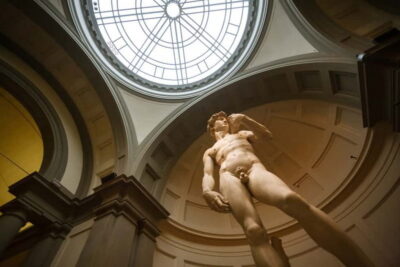 ★ 4.6Timed Entrance Ticket to Michelangelo’s DavidFrom $2616,983 reviews
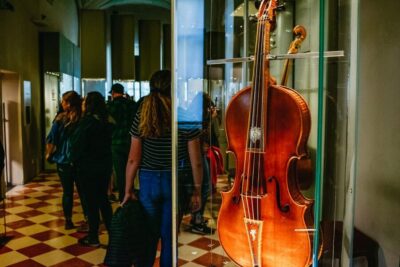 ★ 4.5Michelangelo’s David Skip-the-Line Entry TicketFrom $4512,764 reviews
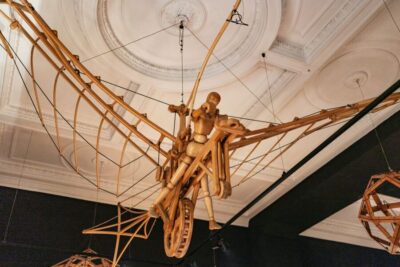 ★ 4.5Leonardo Interactive Museum Entry TicketFrom $911,763 reviews
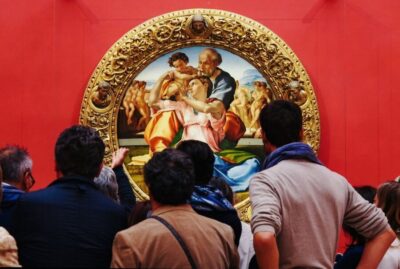 ★ 4.2Uffizi Priority Ticket & Masterpieces Audio AppFrom $316,402 reviews
 ★ 4.0Hop-on Hop-off Bus Tour: 24, 48 or 72-Hour TicketFrom $246,283 reviews
 ★ 4.5Florence Accademia Gallery Tour with Entrance Ticket IncludedFrom $456,148 reviews
 ★ 4.4Palazzo Vecchio Entrance Ticket & AudioguideFrom $374,822 reviews