
Florence field review · ACCADEMIA & DAVID EXPERIENCES
Florence: Michelangelo’s David and Accademia Gallery Tour
David looks different after this. A native Florentine guide leads you through the David and the Accademia’s gallery with a spiritual, question-based approach, including a red-thread connection to the Sistine Chapel.
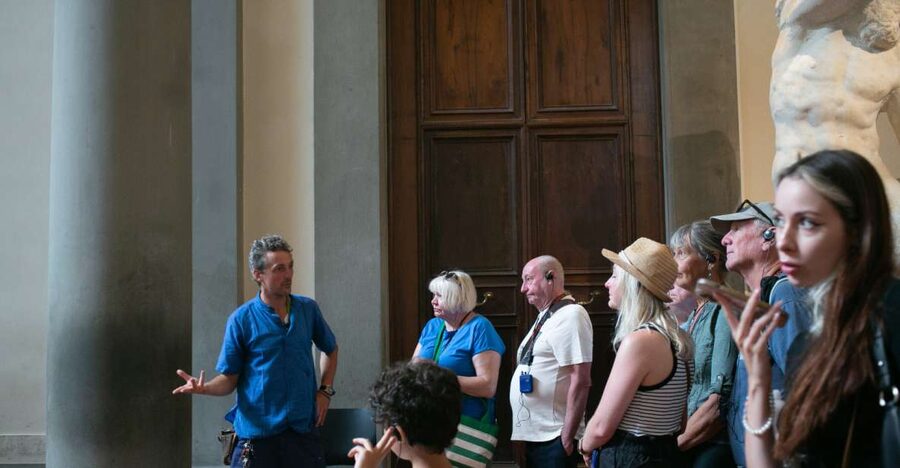
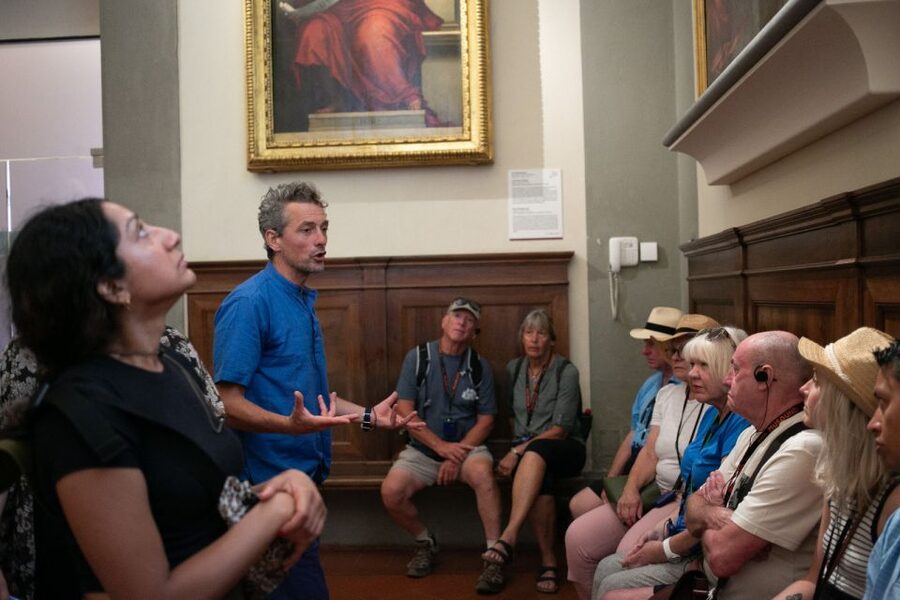
I like the way you get pulled in, not just talked at. You get interactive inquiry as the guide uses metaphors and invites questions, and you also get practical headsets so you can hear clearly without craning your neck.
One consideration: if you want a straight, facts-first walkthrough, the tour leans more into meaning and spiritual framing than a simple commentary, which can feel a little metaphors heavy for some people.
Key things you will notice right away
- A red thread from David to the Sistine Chapel that connects ideas across Michelangelo’s work
- David first, then the Prisoners, showing how Michelangelo’s style matures nearby in the same visit
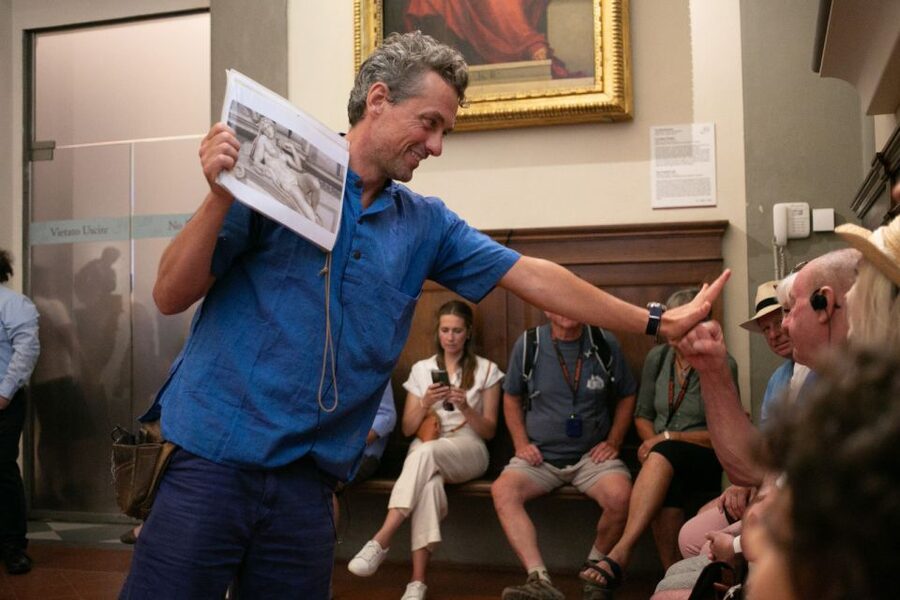
- Question-friendly delivery where the guide asks you to think, not just listen
- Accessible even for children, with images and metaphors that keep the discussion understandable
- Exclusive insights tied to Michelangelo’s creative process, guided by Florentine historical researcher Mario Gesu
- Finish with free time in the museum, so you can see the rest at your own pace
Compare the Accademia visits built around the original David
- Florence: Timed Entrance Ticket to Michelangelo’s David★ 4.6 · 16,983 reviews
- Florence: Michelangelo’s David Skip-the-Line Entry Ticket★ 4.5 · 12,764 reviews
- Florence Accademia Gallery Tour with Entrance Ticket Included★ 4.5 · 6,148 reviews
- Florence: Accademia Gallery Guided Tour★ 4.6 · 4,156 reviews
Skip-the-line to Accademia, then slow down on David
The Accademia Gallery is one of those Florence stops where most people race in for the photos and then race out. This tour flips that script. You still get the advantage of skip-the-line entry, but the real point is what happens once you’re inside: you spend your time with the statues in a way that makes them feel like part of a bigger message.
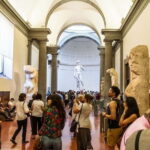
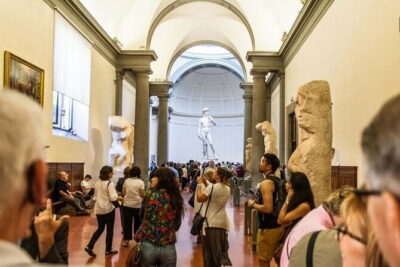
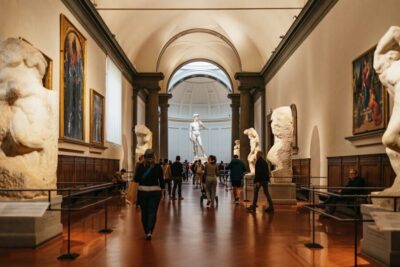
The guided portion is 75 minutes, and the focus is narrow on purpose. You start with Michelangelo’s David as the pinnacle of his early work, then you shift attention to the Prisoners, which sit just a few meters away. The guide frames it as a progression, not two random sculptures in a room.
I also like the tone. The guide is a Florentine historical researcher, and his style mixes scholarship with a storyteller’s pacing. You end up not only looking at the marble, but thinking about why Michelangelo made it the way he did, and what it might be saying to a human life.
Meeting point at Libreria Evangelica: find the ATM, then wait like a pro
Logistics matter here because you are entering one of the most booked museums in Florence. Your meeting spot is straightforward: the ATM machine of Libreria evangelica, just in front of the Accademia museum entrance.
You’re told the guide meets you 15 minutes before the scheduled start time, so build in enough buffer to actually get there on time. Florence streets can be confusing, and “close” is not always “easy.” If you show up right on time, you might spend your first minutes stressed instead of settling in.
You’ll also want to bring what the experience asks for, especially if you’re traveling with children. The tour notes passport or ID for children, cash, and a disability card if applicable. Headsets are included so you can hear the guide, and the “what to bring” list also includes headphones, so plan to have them on hand.
Mario Gesu’s role: native Florentine plus performer energy
The guide for this experience is Mario Gesu, and the key detail is not just that he’s local. He’s also known in Florence for performance work, including performing Dante’s Divine Comedy in city and restaurant events.
That matters because it matches the way the tour is delivered. You’ll see it in the cadence and the emphasis. Rather than listing background and moving on, he uses metaphors, asks questions, and builds toward a final moment where the guide connects the work to Michelangelo’s message about life.
In practice, this tour feels like a conversation with an expert, not a lecture. The guide’s style is high-profile, aimed at couples, families with children, and friends, which is why he keeps the discussion understandable across ages.
David as the first chapter: early peak, visible tension, human meaning
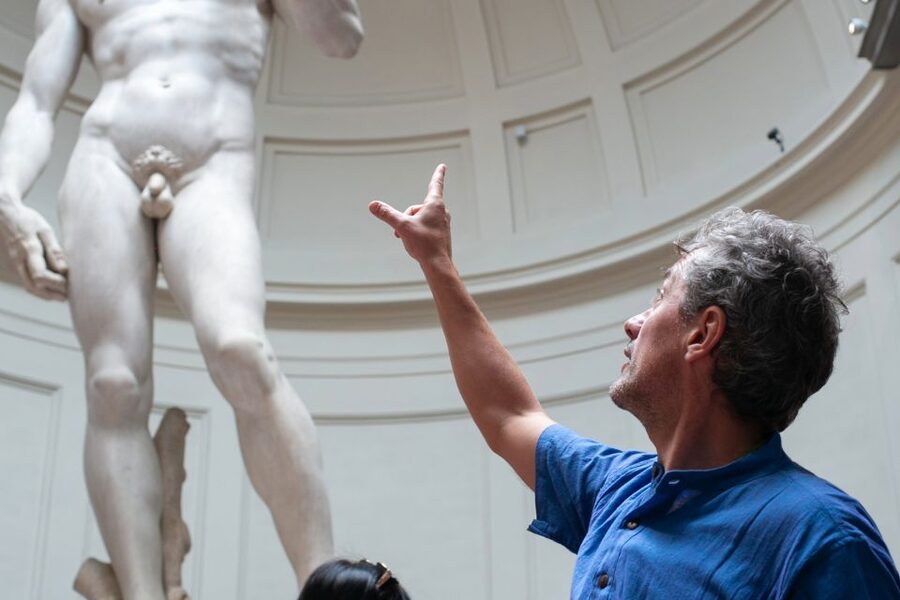
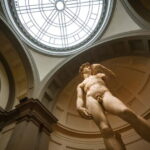
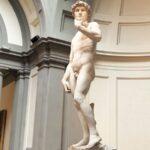
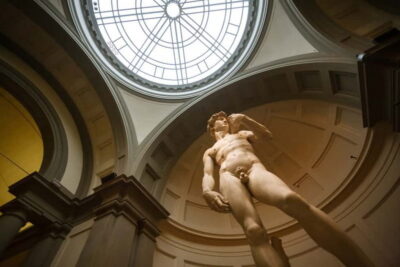
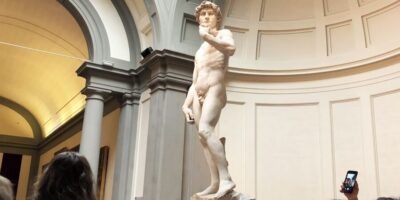
Your visit begins with David, and the guide treats this statue like a starting point in a larger creative journey. You’re not only looking at the famous pose. You’re being guided to see David as a “pinnacle” of Michelangelo’s early work, and to understand why that early brilliance still carries a deeper meaning.
Here’s what I think makes this first section valuable: you learn to read the statue as communication. The guide talks about meaning, then turns you toward questions and simple frameworks you can use while you’re looking. It’s not just, “notice this detail.” It’s more like, “What might Michelangelo be trying to say through the body?”
If you normally struggle with art, this is a good way to start. David is already the star of the room. The guide simply gives you a way to focus your eyes and your thoughts without needing a background in Renaissance art.
The Prisoners right nearby: mature style and the power of the unfinished
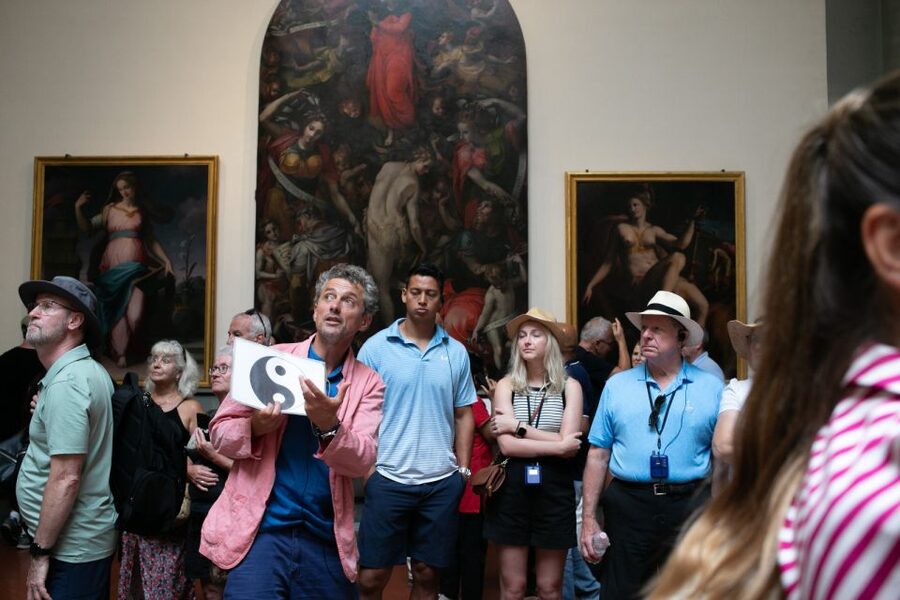
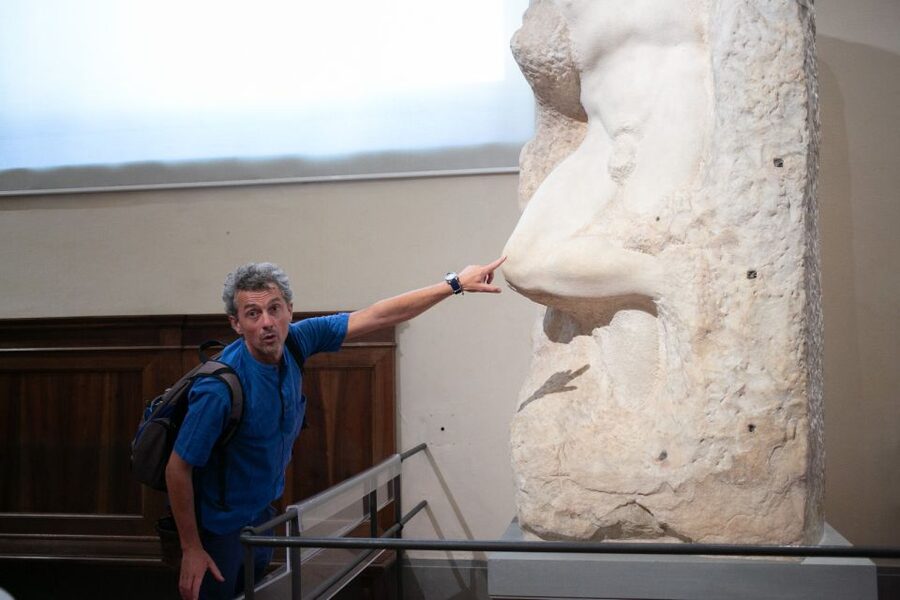
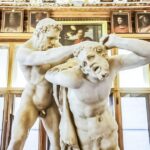
Then you move a few steps away to the Prisoners, and the tour reframes what you’re seeing. Instead of treating them as a second stop, the guide positions them as Michelangelo “surpassing” David, moving from a young style into a mature one.
The Prisoners are often discussed because of the “unfinished” look. This experience leans into that. You’re guided to consider the so-called unfinished method as part of the message, not a defect. The guide uses images and metaphors to help you connect the idea of incompletion with human struggle, growth, or transformation.
This is the section where you’re likely to feel the biggest shift. David can feel like resolution. The Prisoners feel like tension. The guide helps you hold both at once, so you understand the creative logic that links them. It’s also where the interactive approach really works, because the statues are easier to question and interpret than a more straightforward scene.
More Florence museums with the visit format already compared
The red thread to the Sistine Chapel: why David connects to Creation
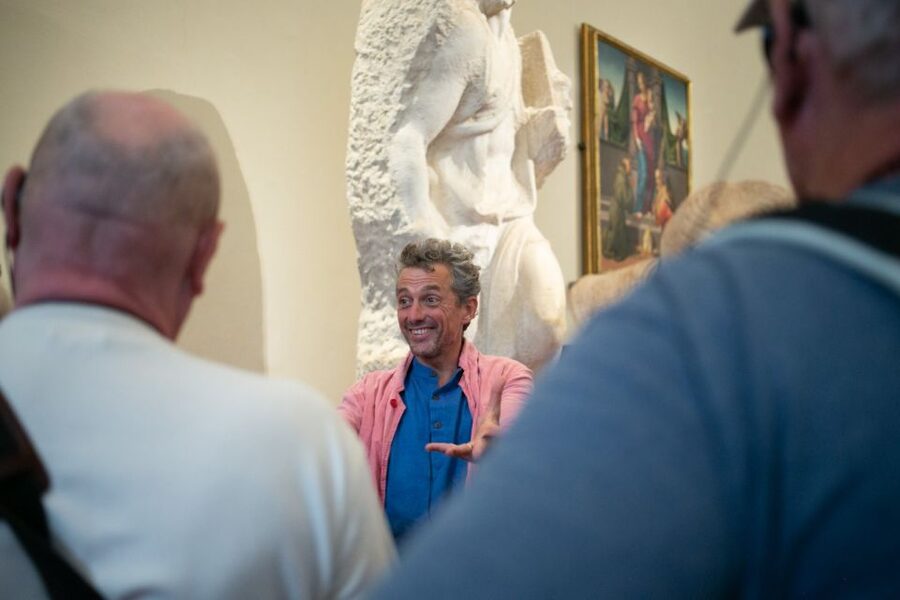
One standout promise in this experience is the red thread linking David to the Sistine Chapel. That connection is not treated as trivia. The guide uses it as a way to show Michelangelo’s thinking across time.
You’ll also hear links to the Sistine Chapel’s Creation of Man idea, which is especially helpful if you’ve already visited (or plan to visit) that chapel. When you can connect the Sistine imagery to what you just saw in the Accademia, it changes how you remember both places.
What you take away is a framework: Michelangelo’s themes are recurring, but his expression evolves. David represents an early high point, the Prisoners show maturation and process, and the Sistine Chapel connects those ideas to a larger spiritual conversation.
This “red thread” concept is why the tour feels different from a standard walkthrough. Instead of treating each artwork as a one-off masterpiece, you experience it as a single line of thought across a lifetime.
How the interactive inquiry works in real time
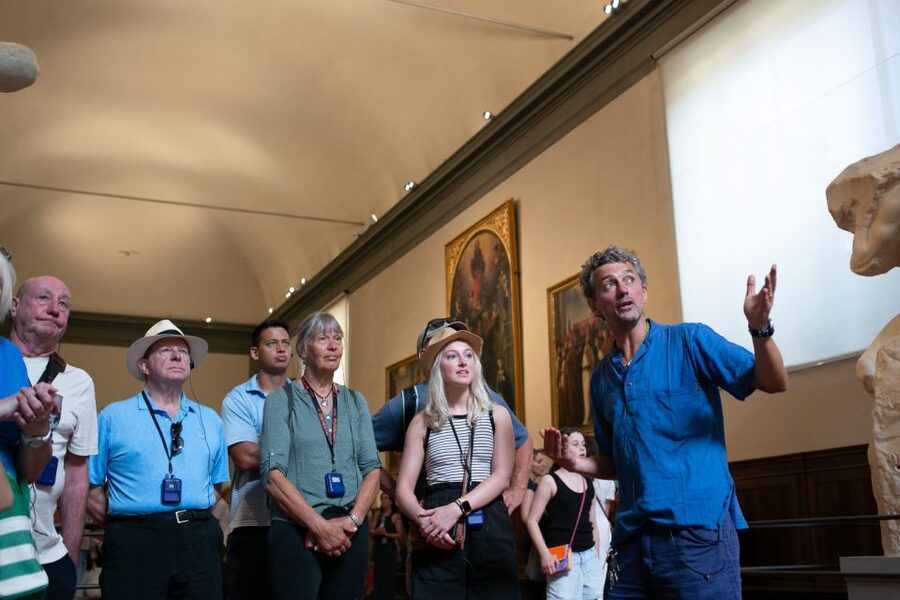
This tour is designed around participation. The guide uses an inquiry approach, encouraging you to think through metaphors and ask questions for deeper understanding.
In a museum, it’s easy to become a passive observer. You watch a statue, nod politely, then forget the details when you hit the gift shop. Here, the guide structures the story so you practice noticing and interpreting while you’re still standing in front of the marble.
It’s also built to be understandable even for children. That comes through in the guide’s use of logical discussion that can follow a simple path. You might not leave with a dictionary of art terms, but you will leave with a personal way to look at the work and explain what you think Michelangelo is communicating.
That might be the most practical benefit for you: you’ll be able to re-enter the museum on your own after the guided part and actually see more than what a rushed scan captures.
Finishing with independent museum time: use it to test what you learned
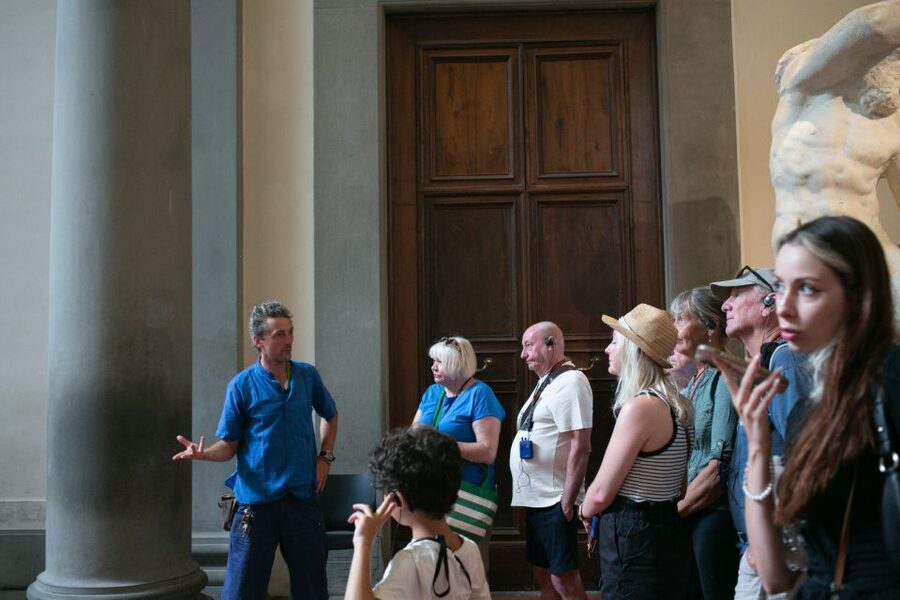
After the guided portion, you can continue visiting independently. That ending matters because it lets you turn the guide’s framework into your own observations.
So don’t immediately speed to the next room just because you can. Instead, take a short pause. Re-find David or the Prisoners from a new angle. Ask yourself what changed in your understanding since the guide prompted you.
Then roam with purpose. The point is not to see every item in the fastest possible way. The point is to see more in line with what you now understand about Michelangelo’s process and message.
If you’ve only got a half-day in Florence, this kind of end time can be the difference between feeling like you “checked off” Accademia and feeling like you actually experienced it.
Price and value: $57 for meaning, tickets, and a guide who teaches
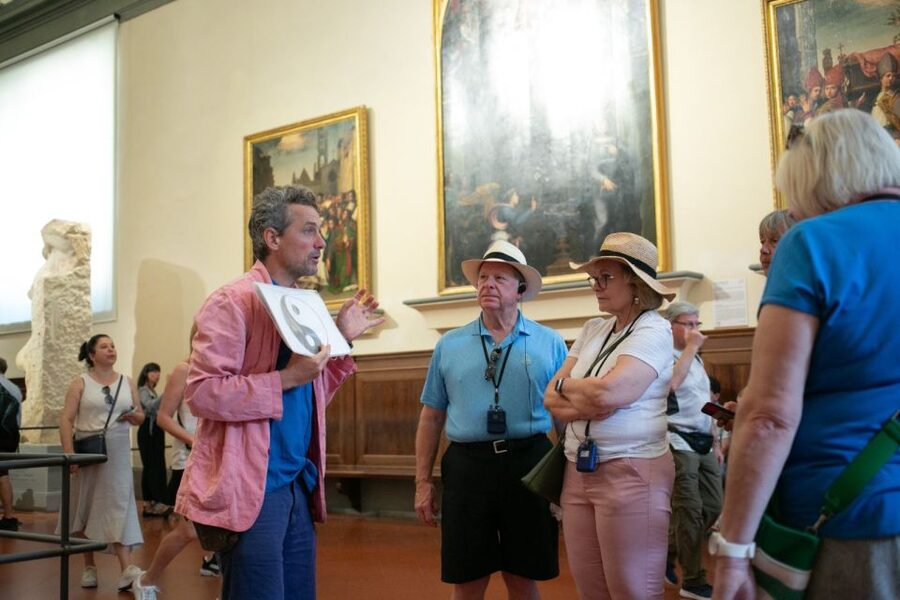
At $57 per person for a 75-minute guided experience, value comes down to what’s included and how the time is used.
Here, the tour includes:
- Accademia Gallery tour
- Museum tickets
- Local guide
- Headsets to hear the guide
For Florence, the value logic is simple. If you’re going to pay for entry anyway, paying for the guide is what turns the museum visit from a photo stop into a structured experience. This tour leans into that payoff. The guide’s delivery is not meant to be a quick overview you could skim online. It’s a guided interpretation built around a red thread theme and a progression from David to the Prisoners.
The other value factor is time quality. Because the guided portion is about meaning and process, you’re less likely to waste your attention on background facts that don’t stick. You’re also set up with independent time afterward, so the hour doesn’t end with the guide leaving and your understanding fading with him.
One note to keep your expectations right: one person’s experience suggested there can still be some waiting during time-grouped entry, even with skip-the-line wording. To stay calm, plan for a short queue for your group timing, not a magically empty museum entrance.
Who this tour is best for in Florence
This is a great fit if you:
- Want an art visit that works through meaning, not just descriptions of what you see
- Prefer a guide who teaches you how to look, with questions and metaphors
- Are traveling with children and want them included in the discussion instead of stuck behind you during a lecture
- Plan to see the Sistine Chapel later and want a connection that makes the Chapel feel less distant
It may be less ideal if you:
- Only want straightforward fact delivery and no philosophical framing
- Get impatient with discussions that feel more interpretive than technical
And if you’re on your last day in Florence and want one “high impact” museum moment, this guide-style is exactly the kind of experience that can make a museum feel personal.
Should you book this Accademia David and Prisoners tour?
Book it if you want David to feel like more than the world’s most famous statue. The big reason to choose this experience is the way it links David and the Prisoners into a single story, then ties that story to a red thread connection to the Sistine Chapel. The guide’s interactive method can make the visit stick, even if you’re not an art expert.
Skip it if you want a quick, neutral walk-through with minimal interpretation. This tour asks you to think, and it uses spiritual and life-message framing as part of the explanation.
If you fall somewhere in the middle, that’s actually the sweet spot. You get structure, you get time to breathe in the museum, and you leave with a way to look at Michelangelo that goes beyond the first impression.
FAQ
How long is the Florence Accademia tour?
The tour duration is 75 minutes.
What is included with the tour price?
It includes Accademia Gallery tour, museum tickets, a local guide, and headsets to hear the guide.
Where do we meet for the tour?
You meet at the ATM machine of Libreria evangelica, just in front of the Accademia museum entrance.
What language is the tour in?
The tour is in English.
Is the experience wheelchair accessible?
Yes, it is wheelchair accessible.
What should I bring with me?
You should bring a passport or ID card for children, headphones, cash, and a disability card if applicable.
More Florence tours to open next
- The Best tour in Florence: Renaissance & Medici Tales – guided by a STORYTELLER
★ 5.0 · 12,316 reviews

Every Florence review, in one place
- Tuscany Day Trip from Florence: Siena, San Gimignano, Pisa and Lunch at a Winery
★ 5.0 · 21,634 reviews - The Best tour in Florence: Renaissance & Medici Tales – guided by a STORYTELLER
★ 5.0 · 12,316 reviews

David and the Accademia, compared
Florence picks that sit just beyond this itinerary
- One Hour Uffizi Guided Tour: Masterpieces of the Renaissance
★ 5.0 · 3 reviews - Sightseeing Tuscany by touring bike – 1 day rental
★ 5.0 · 3 reviews - Private Siena, S. Gimignano, Chianti Road and Wine Tasting
★ 5.0 · 3 reviews - Bargello Museum Private Tour: Michelangelo’s Bacchus & Donatello’s David
★ 5.0 · 3 reviews - Authentic Florence Cooking Class at Costanza’s 1839 Family Estate
★ 5.0 · 3 reviews - San Gimignano and Volterra private tour: etruscans, romans and middle age jewels
★ 5.0 · 3 reviews
More Accademia & David Experiences worth comparing.
 ★ 4.6Timed Entrance Ticket to Michelangelo’s DavidFrom $2616,983 reviews
 ★ 4.5Michelangelo’s David Skip-the-Line Entry TicketFrom $4512,764 reviews
 ★ 4.5Florence Accademia Gallery Tour with Entrance Ticket IncludedFrom $456,148 reviews
Accademia Gallery Guided TourFrom $534,156 reviews
★ 4.5Florence Accademia Gallery Tour with Entrance Ticket IncludedFrom $456,148 reviews
Accademia Gallery Guided TourFrom $534,156 reviews
 ★ 4.6Timed Entry Ticket to Michelangelo’s David & eBookFrom $374,049 reviews
 ★ 4.5Skip the line: Uffizi and Accademia Small Group Walking TourFrom $1483,135 reviews
 ★ 4.5Skip-the-Line Accademia Guided TourFrom $432,327 reviews
 ★ 4.6Accademia Gallery Guided Tour with Entry TicketFrom $492,253 reviews
Find this experience in another shortlist