
Dante meets Florence’s Jubilee spirit. This Jubilee special edition guided tour turns an outdoor stroll into a story of pilgrimage, hope, and medieval thinking. You start in the Duomo area and move through spots tied to Dante’s life, with the guide weaving in anecdotes and curiosities as you go.
I love the way the tour frames the Jubilee itself, starting with Pope Boniface VIII, and then connects it directly to Dante and The Divine Comedy. I also really like the practical setup, the guide provides radio and earphones, so you can follow along without constantly craning your neck in a crowded square. A third thing that stands out in the feedback is the quality of the guidance, Emanuela is repeatedly described as prepared, passionate, and calming.
One possible drawback is that the tour is Italian only, so if you do not feel comfortable with Italian explanations, you may find some parts harder to fully enjoy. Also, since it runs only on the occasion of the Jubilee, you need to align your dates with the available starting times.
Key reasons this Dante and Jubilee tour feels worth it
- Jubilee theme tied to Dante, with the guide explaining why pilgrimage and hope mattered to the story behind The Divine Comedy
- A medieval city walk, designed to help you see Florence through a 1300s mindset
- Short, focused stops at major locations connected to Dante’s world and inspiration
- Radio and earphones included, which makes listening easier during an outdoor tour
- Emanuela-style storytelling, praised as competent, passionate, and confidence-building
When a guide is worth having beside you in Florence
- The Best tour in Florence: Renaissance & Medici Tales – guided by a STORYTELLER★ 5.0 · 12,316 reviews
- Florence: Duomo Cathedral Guided Tour★ 3.9 · 5,970 reviews
- Uffizi Gallery Small Group Tour with Guide★ 4.5 · 4,923 reviews
- Florence: Accademia Gallery Guided Tour★ 4.6 · 4,156 reviews
Jubilee and Dante in Florence, why this theme works on the street
If you have ever tried reading Dante and felt like you were missing the emotional “why,” this tour gives you a path in. It starts from the Jubilee tradition and treats it as more than a religious calendar event, it’s presented as a message of liberation, spiritual pilgrimage, and hope in a new world.
Then the guide connects that idea to the 1300s world that surrounded Dante Alighieri. The tour’s through-line is simple and useful: it helps you understand why Dante would want salvation and redemption to feel real, like something you can walk toward.
The result is not a lecture about books. It’s Florence mapped to a mindset, where you look at streets and landmarks and try to imagine the Middle Ages thinking in real time.
Starting near the Duomo, then walking Florence through Dante’s life
The tour begins at Cattedrale di Santa Maria del Fiore, but the meeting point is at the Campanile di Giotto (baptistery side). You are meant to look for the guide with the Itinerantour sign, so you can get oriented fast in the Duomo area.
This is an outdoor walk, so you are moving through Florence while the guide keeps the story flowing. That matters because Dante’s Florence is not just about buildings, it is about how a city feels when you picture daily life and faith close together.
In the tour framing, you are heading toward the neighborhood where Dante was born and grew up. Even without going deep into details you might read elsewhere, the value here is the mental map, you come away with a more personal sense of place.
The Jubilee backstory you will actually use while you walk
The guide starts by discussing the Jubilee tradition linked to Pope Boniface VIII. You also hear how the Jubilee is described as carrying a biblical message, with pilgrimage as a spiritual act rather than a tourist activity.
What I appreciate is that the tour does not treat this as generic background. It directly ties the Jubilee idea to Dante’s intentions for The Divine Comedy, then returns to that connection when you stand in different parts of the city.
So as you walk, you are not just passing sights. You are interpreting what you see through a theme of liberation and hope, which is exactly what makes the stops feel connected.
Stop-by-stop: Santa Maria del Fiore to the House of Dante
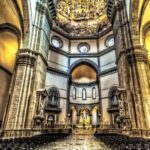
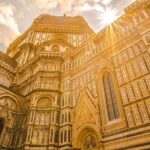
Cattedrale di Santa Maria del Fiore, your story begins
Your first guided portion is built around the Duomo area. The tour uses this opening moment to set the tone, it is where the guide links Florence’s physical space to the spiritual and cultural ideas they are about to explain.
Even if you are not a museum person, starting here works well. You get a big, recognizable reference point, then the tour narrows into Dante’s world step by step.

House of Dante, a short visit with a bigger purpose
Next comes the House of Dante, with a guided time of about 10 minutes. The stop is brief on purpose, because the tour is about ideas and connections, not racing through a long interior visit.
Think of this as a “reset button.” The guide brings you back to Dante’s personal life and explains where inspiration fits into the wider story of faith and hope.
If you like tours that make the text feel less abstract, this stop is one of the places where you may feel that shift most clearly.
Santa Croce and Piazza della Signoria, where medieval Florence starts to feel real
Basilica of Santa Croce, a 15-minute stop with story context
The tour continues to the Basilica of Santa Croce for about 15 minutes of guided time. This is a moment for slow listening, the guide can connect themes to the broader city picture instead of rushing forward.
Even without going inside for anything specific during the stop, you still benefit from the guide’s framing. You learn how to read these locations as part of Dante’s world, not just as famous city landmarks.
Piazza della Signoria, 15 minutes of medieval atmosphere
Then you head to Piazza della Signoria for another 15 minutes. This is the type of stop where you can look around and understand why the tour emphasizes medieval mentality.
The guide’s job here is key: they turn a public square into a context for curiosity and anecdotes. You start to notice how the city’s layout and energy can help you imagine the 1300s mindset the tour is aiming for.
If you enjoy tours that mix “what you see” with “why it mattered,” this is one of the strongest segments.
Orsanmichele and the walk back, a compact ending that still lands
Orsanmichele, a quick but meaningful 5 minutes
The final major stop is Orsanmichele, with guided time of about 5 minutes. Short stops can feel rushed on other tours, but here the purpose seems to be to wrap the theme back around Dante and the Jubilee frame.
If you are the type who likes a tour that does not drag on, this ending timing makes sense. You get a final anchor point before the group returns.
Return to the Duomo area
The tour ends back at the Duomo area, with the itinerary indicating arrival back at Cattedrale di Santa Maria del Fiore. Since the meeting point is at Campanile di Giotto (baptistery side), you can treat the finish as staying in the same central zone.
This is handy for planning your next step in Florence. You do not feel forced to cross town to recover from the walk, you can keep your day compact.
Listening comfort matters, and the radios help
One of the most practical strengths of this tour is that radio and earphones are included. That sounds like a small thing until you are in an outdoor space with changing crowds, shifting positions, and wind.
With the audio support, you can keep your attention on the guide rather than constantly searching for the next sentence. It also makes a difference for anyone who does not want to stand right next to the speaker.
Language note is important here. The live tour guide is Italian, so the radios help you hear clearly, but they do not translate meaning.
Guide-led storytelling: why Emanuela gets named again and again
From the feedback, Emanuela comes up as a standout guide. People specifically highlight her competence and passion, and how her way of leading makes the experience feel easy to follow and increasingly engaging.
That matters because this tour is built on connections, Dante plus Jubilee plus medieval city thinking. If the guide’s pacing and explanation are solid, those connections click. If not, it can feel like a list of famous places.
The good news is that Emanuela is described as prepared and able to guide you through a route that builds momentum. That matches the tour’s structure, starting broad near Santa Maria del Fiore, then tightening into Dante-linked stops.
Price and value: what $51.24 buys you in 1.5 hours
At $51.24 per person, this is not a throwaway add-on, but it also does not pretend to be a half-day epic. For a 1.5-hour guided walk, the value comes from three things: the Jubilee-specific theme, the guided stop durations, and the audio system.
First, this is a Jubilee-only special edition. If you care about experiencing that particular context in Florence, the date alignment itself is part of the value.
Second, the itinerary gives you a defined flow of stops: Duomo area, House of Dante, Santa Croce, Piazza della Signoria, and Orsanmichele. The times are short but deliberate, so you spend your limited time understanding rather than just moving.
Third, radios and earphones reduce friction. You are paying for comfort and clarity, not just a person talking in the open air.
Who this Dante and Jubilee walk suits best
This is a strong fit if you:
- want a Dante-focused Florence tour that connects literature to place
- like guided anecdotes and curiosities, not just landmark spotting
- enjoy outdoor walking tours with a clear route and defined stops
It is also a decent choice if you are traveling solo or you prefer a structured experience. The route is compact, and the central meeting point keeps the day simple.
If you do not speak Italian, the tour is still possible, but your enjoyment depends on your comfort level. The listening support helps hearing, but the content itself is in Italian.
Quick practical tips before you go
Bring something you can comfortably use for outdoor walking, since the tour is designed as a walk through medieval Florence. Wear shoes that work on city streets, because the experience is built on staying in motion between stops.
If you are a Dante reader, this tour can help you translate what you know into something you can picture. If you are not a reader, the Jubilee framing gives you a starting point that does not assume prior knowledge.
Also plan your timing with Jubilee availability in mind. Since it is only conducted on Jubilee occasion days, you will want to check starting times that match your schedule.
Should you book the Florence Dante and The Jubilee Guided Tour?
I would book this if you want a guided Dante experience that does not treat Florence as a backdrop. The Jubilee theme gives the walk a clear emotional logic, and the route keeps you moving through key places that support the story.
It is also a good choice if you value listening comfort. Radio and earphones plus a guide like Emanuela, described as competent and passionate, make it easier to follow the connections without frustration.
The main reason not to book is the Italian-only language and the Jubilee-only timing. If you can handle Italian and your dates line up, this is a smart, focused way to see Florence through Dante’s eyes while the Jubilee context is alive.
FAQ
How long is the Florence Dante and The Jubilee guided tour?
The tour lasts about 1.5 hours.
Where does the tour meet?
You meet at the Campanile di Giotto (baptistery side). Look for the guide with the Itinerantour sign.
What are the main stops on the itinerary?
The guided stops include Cattedrale di Santa Maria del Fiore, the House of Dante, Basilica of Santa Croce, Piazza della Signoria, and Orsanmichele.
Is the tour wheelchair accessible?
Yes, the activity is wheelchair accessible.
What language is the live guide?
The live tour guide speaks Italian.
Are radios and earphones provided?
Yes, the tour includes radio and earphones.
Florence with someone who knows the room
- The Best tour in Florence: Renaissance & Medici Tales – guided by a STORYTELLER
★ 5.0 · 12,316 reviews
More Florence tours to open next
- The Best tour in Florence: Renaissance & Medici Tales – guided by a STORYTELLER
★ 5.0 · 12,316 reviews
Every Florence review, in one place
- Tuscany Day Trip from Florence: Siena, San Gimignano, Pisa and Lunch at a Winery
★ 5.0 · 21,634 reviews - The Best tour in Florence: Renaissance & Medici Tales – guided by a STORYTELLER
★ 5.0 · 12,316 reviews

Florence picks that sit just beyond this itinerary
- One Hour Uffizi Guided Tour: Masterpieces of the Renaissance
★ 5.0 · 3 reviews - Sightseeing Tuscany by touring bike – 1 day rental
★ 5.0 · 3 reviews - Private Siena, S. Gimignano, Chianti Road and Wine Tasting
★ 5.0 · 3 reviews - Bargello Museum Private Tour: Michelangelo’s Bacchus & Donatello’s David
★ 5.0 · 3 reviews - Authentic Florence Cooking Class at Costanza’s 1839 Family Estate
★ 5.0 · 3 reviews - San Gimignano and Volterra private tour: etruscans, romans and middle age jewels
★ 5.0 · 3 reviews
More Guided worth comparing.
 ★ 5.0The Best tour in Florence: Renaissance & Medici Tales – guided by a STORYTELLERFrom $312,316 reviews
 ★ 3.9Duomo Cathedral Guided TourFrom $155,970 reviews
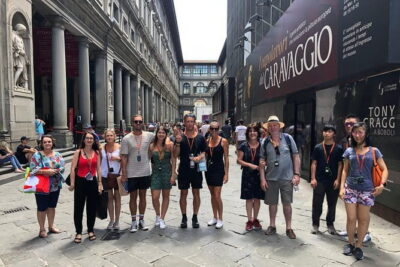 ★ 4.5Uffizi Gallery Small Group Tour with GuideFrom $764,923 reviews
Accademia Gallery Guided TourFrom $534,156 reviews
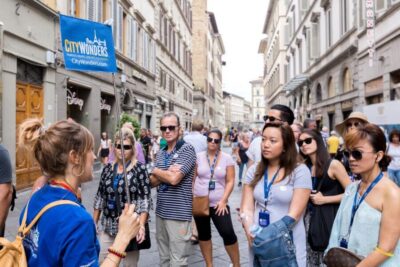 ★ 4.1Duomo Guided Tour with Optional Dome Climb UpgradeFrom $253,706 reviews
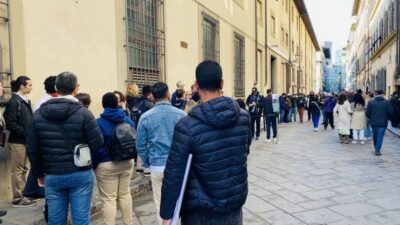 ★ 4.5Guided Walking TourFrom $313,334 reviews
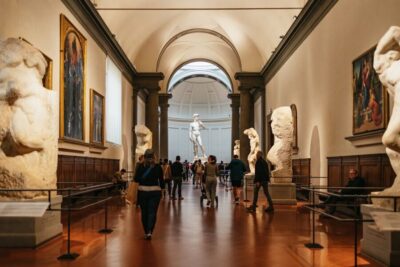 ★ 4.5Skip-the-Line Accademia Guided TourFrom $432,327 reviews
 ★ 4.6Accademia Gallery Guided Tour with Entry TicketFrom $492,253 reviews