
Florence field review · UFFIZI GALLERY TICKETS & TOURS
Uffizi Gallery Guided Tour: Masterpieces of the Renaissance
Florence can be overwhelming, but this Uffizi tour gives you a clear path. I like how it includes timed-entry admission so you spend less time in entry chaos, and more time looking hard. I also like that an official certified guide sets the story, with a radio system so you are not craning your neck to catch every word.
One thing to keep in mind is the audio headsets. A few people have reported that the headset quality can be unreliable, so I recommend checking yours right away and staying near the guide if sound is fading.
Key highlights that make this tour worth your time
- Timed entry included, so you are not waiting out in the long lines before you even start.
- Small group size, capped at 15, which makes it easier to hear and follow along.
- Medici story first, so the museum feels less random and more like a worked-out plan.
- A tight art-hit list, featuring major names like Giotto, Filippo Lippi, Raphael, and Caravaggio.
- Radio system for the guide, designed to keep explanations clear while you walk.
- You can return afterward, so the tour does not force you to decide on the spot.
More ways through the Uffizi, with the queue and guide choice made clear
- Florence: Skip-The-Line Uffizi Gallery Timed Entry Ticket★ 4.5 · 27,832 reviews
- Florence: Uffizi Priority Ticket & Masterpieces Audio App★ 4.2 · 6,402 reviews
- Florence: Skip-the-Line Uffizi Small Group Tour★ 4.6 · 5,926 reviews
- Uffizi Gallery Small Group Tour with Guide★ 4.5 · 4,923 reviews
Entering the Uffizi without wasting your best energy
This is a smart format if your time in Florence is limited, because it is designed for focus. You get a guided circuit through key rooms, with context on what you are looking at and why it mattered. The museum is huge, so a guided plan helps you avoid wandering room to room like you are doing a random art scavenger hunt.
The tour runs about 1 hour 30 minutes. In that window, you are not meant to see everything. Instead, you learn how to see more once you are inside on your own. That matters at the Uffizi because the collection is dense, and a little structure helps your brain connect the dots.
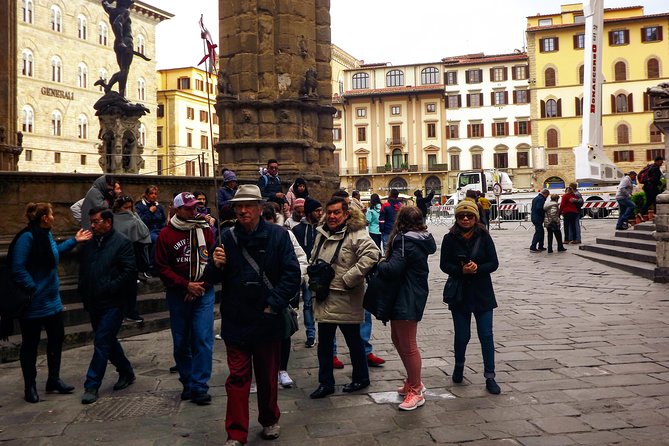
You start at a very literal reference point: the Statue of Leonardo da Vinci in Piazzale degli Uffizi, 209, 50122 Firenze FI, Italy. Arrive early, because if you are late you cannot join, and you will not get a refund or reschedule. I treat this as a “be on time, not early-ish” situation.
Meeting at the Da Vinci statue, then getting room-by-room context
The first minutes set the tone. You gather at the Da Vinci statue, you get your bearings, and then you move into the museum with your guide leading the way. That is a big deal at the Uffizi, where people often pile in, stop abruptly for a photo, and suddenly you are stuck behind a human traffic jam.
From the start, the guide frames the Uffizi as more than a gallery of famous names. You are walking through the Medici legacy, including the idea that Florence’s patrons shaped what art got made and how it got collected. That context changes your viewing. Even if you only know a few artists, the museum starts to feel like an intentional project, not a random storage site for masterpieces.
Also, note that the end of the activity returns you back to the meeting point. You are not left stranded across town. After the tour, you are free to revisit any works that captured you, which is where the Uffizi really rewards you.
Medici palace backstory, from Anna Maria Luisa to the grand staircase
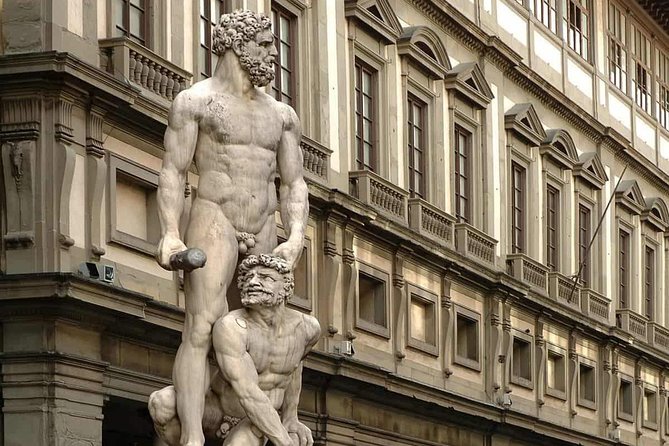
One of the most useful things this tour does is build a story before the artwork hits you. You begin with the history of the Uffizi as a Medici palace, and then shift to how the collection became a civic treasure.
You will see the portrait of Anna Maria Luisa de’ Medici, the key figure who gifted the family’s collection to the city. That detail is helpful because it answers a question you might not ask yet, who decided these paintings and objects belonged to the public? Having that early in the visit makes later rooms feel connected, not disconnected.
Then you ascend the grand staircase, and the guide uses that space to point out architectural and hidden stories behind the masterpieces. Even if stairs sound like a pause button, it is actually a good moment to reset. It gives you a visual rhythm, and your brain starts classifying what you see next: patrons, artists, styles, and themes.
The masterworks you will focus on, and what to watch for
This tour is curated, so you will not see every single highlight. But you do get a strong selection, with names that anchor the Renaissance timeline.
Expect the guide to bring the period to life through major works and artists, including Botticelli, Leonardo da Vinci, and Michelangelo. In the Botticelli lane, pay attention to the famous scene commonly discussed as Venus de Milo, because the tour context corrects the title to The Birth of Venus. That kind of correction is surprisingly useful while you are there, because the Uffizi has enough famous works that mixing them up is easy.
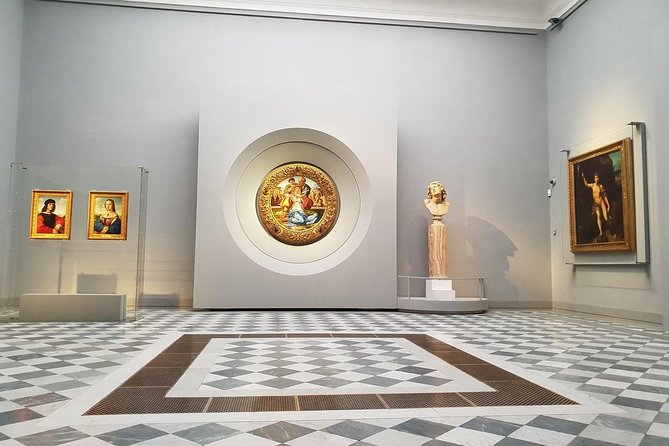
For Leonardo, you focus on Annunciation. With Leonardo, the guide’s job is to help you notice the small choices that create drama on a flat surface, like figure positioning and the way narrative tension is staged. For Michelangelo, you will be shown the only panel painting in the world credited to him, as presented in this tour format. Even if you already think you know Michelangelo, the takeaway here is how different media and formats shaped the kind of impact he could make.
Beyond those headline artists, the tour also sets up you to appreciate a wider chain of influence, including Giotto, Filippo Lippi, Raphael, and Caravaggio. In a short guided visit, you usually cannot linger long in every room, so you want the guide to point you toward what changes from artist to artist: technique, emotion, composition, and the cultural push behind the work.
The radio headset and guide pace: how to make it work
The tour includes a radio system, meaning you should be able to hear the guide with headsets rather than relying on your proximity. That is exactly what you want in a museum like this, where groups naturally spread out and people stop to take photos.
That said, audio quality can be a weak link. Some visitors have flagged that the headsets provided can be low quality and may stop working early. Your best move is practical: test audio immediately after receiving it, and if it fails, raise the issue right away so you can get a replacement. Do not wait until you are halfway through the route.
Also, pay attention to positioning. In at least one instance, a handheld microphone style has made hearing harder when it was not held consistently toward the guide. If you sense that you are not catching key points, shift closer to the guide and ask for clearer audio if needed. It sounds obvious, but at the Uffizi it can mean the difference between a meaningful talk and a frustrating blur.
More Medici stories behind the palaces, paintings and city streets


Admission ticket included, and why the value math actually works
At $90.50 per person, you are not buying a cheap museum entry. But this price is not just about access. It bundles the official ticket and a reservation, which helps you enter smoothly at a timed slot. The ticket you would otherwise buy directly is around €29, and the reservation is what prevents you from losing the start of your day to the entry line.
So the value is really two things:
- You get the ticket and timing handled for you.
- You pay for guided context in the 90-minute window, then still have time afterward to re-check your favorite pieces.
That combo is worth it when you care about understanding art, not just checking boxes. If you are someone who likes to read a little, follow themes, and get oriented fast, this format often beats a do-it-alone visit because the guide gives you the “who, what, and why” while you are standing in front of the paintings.
If you are the type who wants total freedom to wander without stopping, you might find the schedule a constraint. But for many first-timers, guided meaning is exactly what you paid for, and then your self-guided revisits feel smarter.
Timing and group size, the practical Florence details
This tour caps at 15 travelers, which helps a lot. Smaller groups are easier for the guide to manage, and you spend less time pressed against strangers when you want to actually look at the work instead of staring at shoulders.
Also, book with enough lead time. This is commonly booked around 45 days in advance. That is not surprising at the Uffizi, where timed entry rules mean your planning has to be proactive.
Bring a valid passport or ID document that matches the name used for booking. The museum ticket office checks this before entry, and mismatches can mean denied entry with no refund. That is one of those annoying rules you only want to hear about once, so make it easy on yourself: use your exact legal name.
Who this Uffizi guided tour is best for
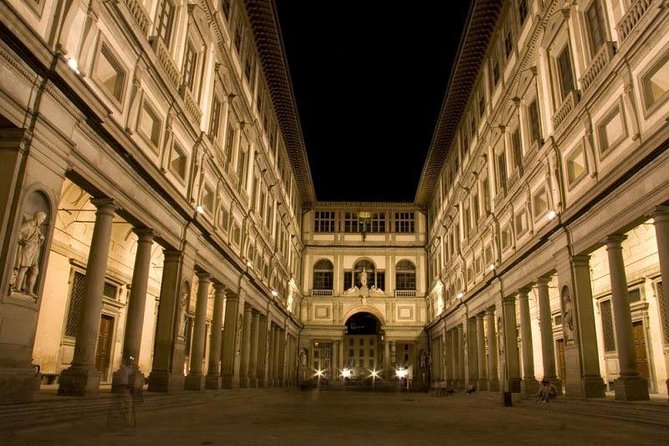
This tour fits best if you want structure and context more than you want marathon viewing. You get a curated Renaissance storyline through major names and key works, then you earn the freedom to go back to anything that hits you.
It is also a good match if you are visiting with mixed art interest. Even if someone in your group does not feel “art museum ready,” the guide’s explanations can keep the experience moving. The small group size helps here too.
If your top priority is spending lots of quiet time at one painting for long stretches, you might feel slightly rushed. But the tour gives you that second phase after the tour, when you can slow down and linger where you want.
Should you book this Uffizi guided tour?
I think this is a good booking if you are visiting the Uffizi for the first time and you want to leave understanding what you saw, not just remembering that you saw it. The timed-entry admission included, the official guide, and the ability to revisit favorites afterward create a solid one-two plan.
I would only hesitate if audio matters a lot to you and you know you get easily frustrated when sound quality drops. In that case, I would still book, but arrive early, confirm your headset works right away, and position yourself where you can hear the guide cleanly.
If you want a focused Renaissance introduction that saves time and improves your viewing, this one is worth your spot on the calendar.
Every Florence review, in one place
- Tuscany Day Trip from Florence: Siena, San Gimignano, Pisa and Lunch at a Winery
★ 5.0 · 21,634 reviews - The Best tour in Florence: Renaissance & Medici Tales – guided by a STORYTELLER
★ 5.0 · 12,316 reviews

The Medici thread through Florence
- The Best tour in Florence: Renaissance & Medici Tales – guided by a STORYTELLER
★ 5.0 · 12,316 reviews



The Uffizi, another way



Florence picks that sit just beyond this itinerary
- One Hour Uffizi Guided Tour: Masterpieces of the Renaissance
★ 5.0 · 3 reviews - Sightseeing Tuscany by touring bike – 1 day rental
★ 5.0 · 3 reviews - Private Siena, S. Gimignano, Chianti Road and Wine Tasting
★ 5.0 · 3 reviews - Bargello Museum Private Tour: Michelangelo’s Bacchus & Donatello’s David
★ 5.0 · 3 reviews - Authentic Florence Cooking Class at Costanza’s 1839 Family Estate
★ 5.0 · 3 reviews - San Gimignano and Volterra private tour: etruscans, romans and middle age jewels
★ 5.0 · 3 reviews
More Uffizi Gallery Tickets & Tours worth comparing.
 ★ 4.5Skip-The-Line Uffizi Gallery Timed Entry TicketFrom $3027,832 reviews
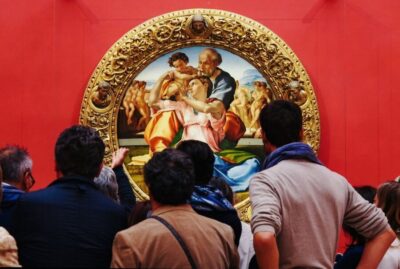 ★ 4.2Uffizi Priority Ticket & Masterpieces Audio AppFrom $316,402 reviews
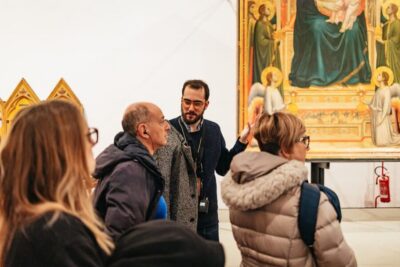 ★ 4.6Skip-the-Line Uffizi Small Group TourFrom $715,926 reviews
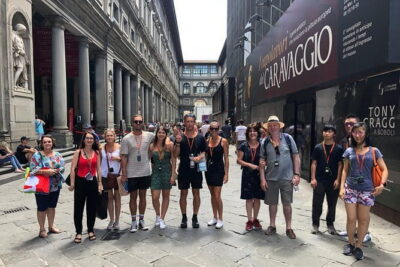 ★ 4.5Uffizi Gallery Small Group Tour with GuideFrom $764,923 reviews
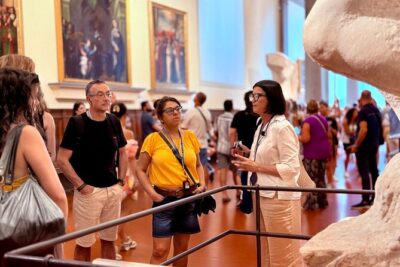 ★ 4.5Skip the line: Uffizi and Accademia Small Group Walking TourFrom $1483,135 reviews
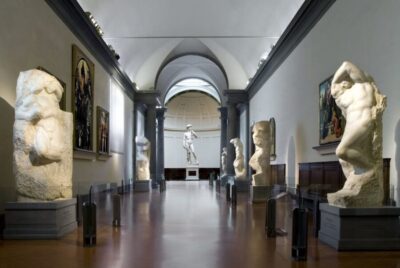 ★ 4.8Uffizi Gallery and Accademia Gallery Guided TourFrom $1402,028 reviews
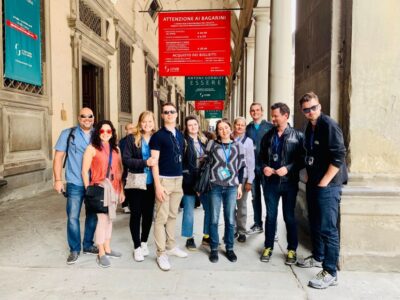 ★ 4.7Uffizi Gallery Small-Group Guided Tour with TicketFrom $762,003 reviews
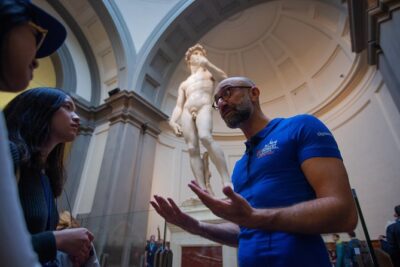 ★ 4.5Michelangelo’s David, Accademia & Uffizi Small Group TourFrom $471,986 reviews
Find this experience in another shortlist