
Florence field review · MEDICI FLORENCE & RENAISSANCE STORIES
The Medici Family in Florence: a history of money, power and gossip!
Money and gossip, in Florence. That is the vibe of this 2-hour walk that traces Medici money and influence through the city’s key squares and landmark exteriors. I like how the route gives you real orientation fast, starting at Piazza della Santissima Annunziata and ending near Palazzo Pitti, so you stop feeling like Florence is just one big blur of stone.
My second favorite part is the guide-led storytelling and Q and A. In one great experience, guide Antonio Bencista helped bring the family to life with detailed background, and he was happy to answer broad questions about the Medici and how Italy fits into world history. One drawback to keep in mind: several stops do not include admission, so you may want to budget extra if you think you will also want interiors, not just the exteriors.
Key highlights you will feel right away
- A tight 2-hour loop that covers both the Medici’s built environment and the political-religious stage
- Real place names and architecture cues, including Filippo Brunelleschi’s work at San Lorenzo
- Mix of free views and paid-entry stops, so you can plan your spending without surprises
- Private tour for your group with an English-speaking guide and plenty of room for questions
- Ending at Palazzo Pitti, which helps you understand how power wanted to look
- Piazza della Signoria as the political open-air “set” for Florence, not just another photo stop
More Medici stories behind the palaces, paintings and city streets
- The Best tour in Florence: Renaissance & Medici Tales – guided by a STORYTELLER★ 5.0 · 12,316 reviews
- The Best Tour in Florence: Renaissance and Medici Tales★ 5.0 · 10,810 reviews
- Florence: Renaissance and Medici Tales Guided Walking Tour★ 4.8 · 1,549 reviews
- Florence: Mysteries of the Medici Guided Walking Tour★ 4.4 · 940 reviews
Walking the Medici route in 2 hours, from Santissima Annunziata to Pitti
This tour is built for people who want the story without getting lost in it. You will spend about 2 hours moving through central Florence, with a route that makes geography feel logical. The meet-up is in Piazza della SS. Annunziata (address shown as 3488, 50122 Firenze FI), and the walk ends at Piazza de’ Pitti.
The stop pattern matters because it mirrors how the Medici actually operated. They were not only patrons of art, they were also operators of influence. So you get a route that moves from major religious and public squares into the palaces tied to their rise.
If you are the kind of person who likes to understand why a place matters before you photograph it, this pacing helps. You do not get stuck on one monument for too long. Instead, you build a mental map, then the city starts making sense when you keep walking on your own afterward.
Practical note: this is offered with pickup, and it is also near public transportation. That is helpful when you are trying to fit Florence logistics into a travel day rather than treating them as the main event.
Why “money, power, and gossip” works as a theme here
The theme is not just marketing. The Medici story is basically a loop: wealth becomes leverage, leverage becomes institutions, and institutions create the room for rumor to travel fast. Florence is ideal for this because the city itself is laid out like a political diagram, with squares acting like stages and palaces acting like branding.
What I like about this format is that it does not demand museum time to deliver the concept. Even when you are outside, you are looking at the Medici’s chosen backdrops. You see the kind of spaces where status was performed, where alliances were made in public, and where civic power had a physical address.
This is also a “good value” theme. At $131.06 per person, you are paying for guide time plus a curated walk that connects the dots. You are not paying for hours in lines or for a heavy interior-only itinerary. If you use the guide well, the cost feels easier to justify because you get context that you might otherwise spend your afternoon trying to piece together from guidebooks.
Stop 1: Piazza della Santissima Annunziata, your Renaissance starting point
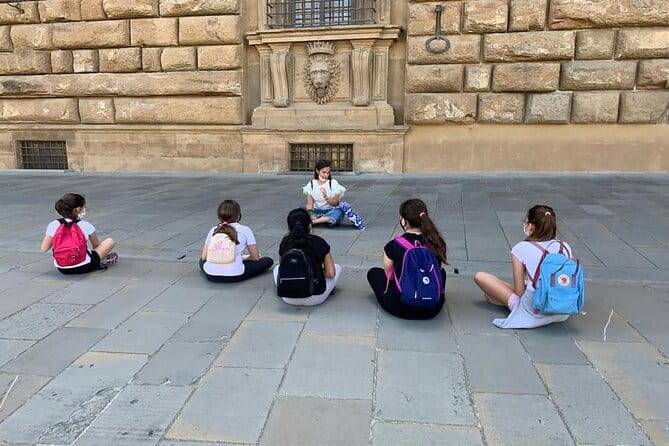
You begin at Piazza della Santissima Annunziata, a square that sets the tone quickly. The tour starts with a 10-minute stop and this one is free. That is smart for the first few minutes, because you can get oriented before you spend time and energy later figuring out ticketing.
What you should expect here is a quick way to read the city’s Renaissance language. Squares like this are not just open space. They are planning tools. They are where people gather, where views are framed, and where the feel of the city becomes part of the story.
If you arrive a little early, you can take a moment to watch how the square works in real life. Florence squares are still used the way they were designed to be used, and that makes the later political and religious stops land harder.
Stop 2: Palazzo Medici Riccardi, the first Medici palace in Florence
Next up is Palazzo Medici Riccardi, the tour’s stop that signals, this is where the Medici moved from influence to visibility. You get about 10 minutes here, and admission is not included.
Even if you do not go inside, this stop helps because it anchors the family in architecture. A palace is not neutral. It is a statement, and it is also a machine for social access. This is the kind of building where your understanding of power shifts. Instead of thinking of the Medici as names in a textbook, you start seeing them as people buying legitimacy through stone.
Downside to plan for: because admission is not included, your time window for this stop is likely focused on exterior viewing and context. If you specifically want deep interior details, you will want to pair this tour with separate ticketed visits later.
Stop 3: Basilica di San Lorenzo (outside), and why Brunelleschi matters
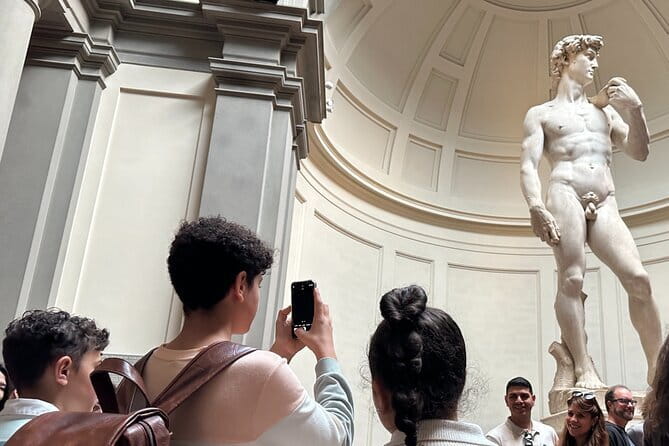
Then you head to Basilica di San Lorenzo, focusing on the exterior of the church connected to the Medici family. The tour frames it as designed and built by Filippo Brunelleschi, and again you are looking at this in a 10-minute slot with no admission included.
This is one of those stops where knowing the architect name helps your brain connect dots. Brunelleschi is not just a trivia point. He represents a Renaissance shift: geometry, proportion, and a new confidence in design. Seeing how that thinking shows up in a major religious setting tied to the Medici gives you a clearer picture of how patronage, faith, and power could overlap.
Because it is exterior-focused, this stop works well even if you are tired. You still get a high-value architecture beat without requiring extra ticket time.
Keep the Florentine shortlist moving


Stop 4: Piazza San Giovanni, Florence’s religious center
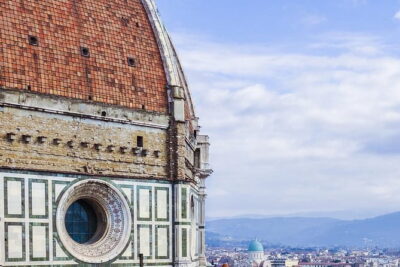
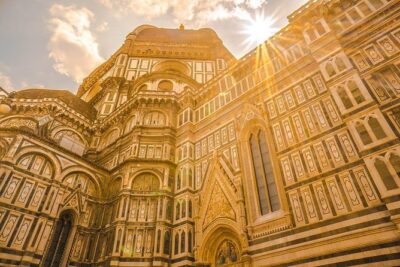
The next stop is Piazza San Giovanni, described as the religious center of the city, with the Cathedral and the Baptistery. You get about 30 minutes here, and admission is not included.
This longer time makes sense. When you hit a space that serves as Florence’s religious gravity, you want a little room to breathe. It is also where you can do your own quick “where am I?” check. You can look around and identify the landmarks the guide pointed out earlier in the walk, then watch how the squares connect visually.
If you want to make this stop more useful, take a slow lap around your viewing angles. Religious centers often have sightlines built into the design. Even from outside, you can usually spot how the city wanted people to approach and gather.
A consideration: since admission is not included, you will need to decide whether to add paid entries yourself. If you have a limited budget, the best move is often to enjoy the piazza and save money for later monuments that truly require it.
Stop 5: Piazza della Signoria, the political open-air museum
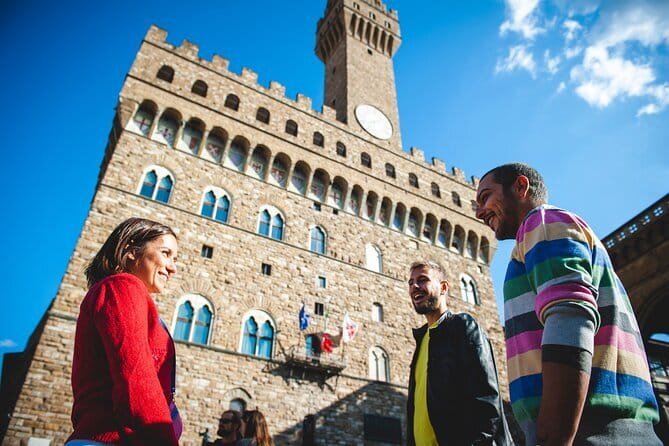
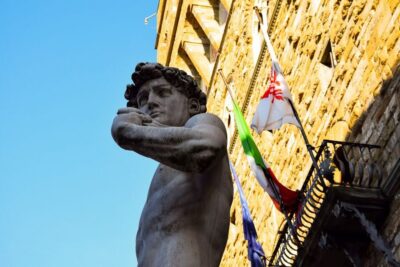
Now you shift to Piazza della Signoria, the tour’s political center and an open-air museum. This stop runs about 30 minutes, and it is free to enjoy.
This is where the Medici theme really clicks. Politics in Florence was not hidden. It happened in public. You are effectively walking through the stage where civic status was displayed and negotiated.
I like this stop for how it changes your sense of scale. You go from the religious center to a place that reads like governance made visible. Even when you are just standing and listening, you can feel why the Medici needed both worlds. Faith influenced legitimacy. Civic space shaped control.
Since it is free, it is also a relief. If your itinerary includes several ticketed monuments, this gives your day a clean budget win.
Stop 6: Palazzo Pitti, the ending that points forward

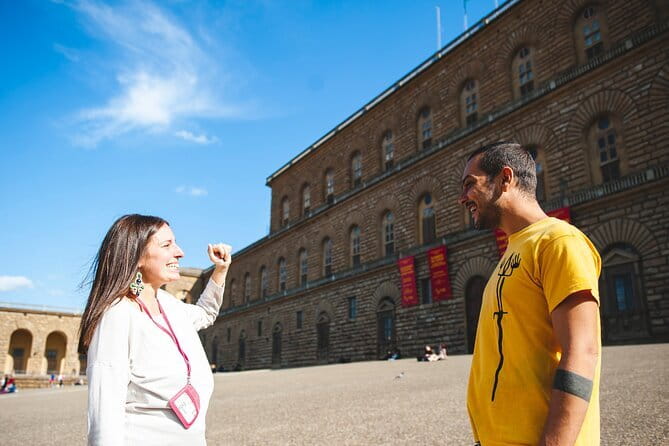
The tour ends at Palazzo Pitti, with about 20 minutes at the final stop. Admission is not included.
Ending here is a strong choice because it helps you understand the Medici arc over time. The Pitti Palace area connects to the bigger idea that the family’s power wanted to keep growing and keep showing. It is an exit point that feels like you have reached a new chapter, not just wrapped up a walking circuit.
If you want to continue your day, this ending location is practical. You finish in the middle of an area where it is easy to keep exploring on foot. Think of this as the tour giving you a launching pad rather than locking you in.
Guide impact, and how Antonio Bencista sets a high bar
One reason this experience earns such strong marks is the guide style. In at least one reported case, guide Antonio Bencista was praised for detailed Medici history and for being able to answer any questions the group asked. The same review also highlighted that the guides provided strong support when travel plans were disrupted by a rail strike, including changing dates without extra penalties from the local provider side.
I cannot promise which guide you will get, but I can tell you what you should look for in this kind of tour: you want someone who can connect architecture to motives, and who can explain why Florence mattered far beyond its city limits.
If your own curiosity is broad, you will likely appreciate the format. This tour does not force you into silence. Use the time. Ask things like how banking translated into political influence, or how religious institutions shaped power. If your guide is good, those questions become part of the story.
Price and value for a 2-hour Medici walk at $131.06
Let’s talk value with real eyes. At $131.06 per person for about 2 hours, you are paying for a guided walk that covers multiple major locations and ties them together into one narrative.
Where the price can feel especially fair:
- You get a guided route that helps you connect Florence geography to the Medici story.
- You get mobile ticket support and pickup options.
- You are on a private tour for your group, so the experience is not diluted by random drop-ins.
- You hit multiple major squares and palace exteriors in a short window, which is ideal if your Florence days are packed.
Where it might feel less fair:
- Since several stops do not include admission, you may still spend money later if you want interiors.
- If you already know Medici history well and you only want photo stops, a guided storyteller might not add as much for you.
My practical suggestion: treat this as a context tour. If you want interiors, plan separate museum or church tickets. This walk is best when it gives you a framework that you can use for the rest of your trip.
Also, plan ahead. The tour is booked on average 24 days in advance, which is a sign of demand. If you are traveling in a busy season, earlier booking is usually your friend.
Who should book, and who might want a different option
This is a good fit if you:
- Want the Medici story told through the places where it unfolded.
- Like walking tours that build orientation fast.
- Appreciate architecture context, especially Renaissance design.
- Want to ask questions and get answers, not just follow a script.
This might be less ideal if you:
- Want a heavy museum-style itinerary with lots of interior time.
- Prefer to only visit ticketed monuments where you are guaranteed entry details.
- Are traveling on a tight budget and do not want to add any extra admissions later.
Good news for pets: the tour data states dogs are admitted, and service animals are allowed. So you can feel more comfortable planning with your companions.
Should you book the Florence Medici history and gossip tour?
If you want a smart, efficient introduction to the Medici through Florence’s most meaningful public spaces, I think this one is a strong choice. The route covers the right kind of mix, free squares plus key palace and church exteriors that explain power in physical form. The standout value is the guide-led story work, and the reviews point to guides who do more than recite dates.
Book it if you can use a guide to turn sightseeing into understanding. Skip it or pair it differently if you only want interior access or you already know the story so well you mostly want photos.
If your trip is time-sensitive, one more reason to like this option is that the experience is listed as free cancellation up to 24 hours in advance for a full refund, so you have some flexibility if schedules shift.
FAQ
Where does the tour start and end?
You start at P.za della SS. Annunziata, 3488, 50122 Firenze FI, Italy, and you end at Piazza de’ Pitti, 50125 Firenze FI, Italy.
How long is the Medici family history tour?
The duration is listed as approximately 2 hours.
How much does the tour cost?
The price is $131.06 per person.
Is pickup offered, and is it near public transportation?
Pickup is offered, and the tour is also listed as near public transportation.
What language is the tour in, and do I get a mobile ticket?
The tour is offered in English, and you receive a mobile ticket.
Is the tour private, and can I bring a service animal or dog?
Yes, it is a private tour/activity, and service animals are allowed. Dogs are admitted as well.
Do I need admission tickets at each stop, and what about cancellation?
Admission ticket requirements vary by stop: some stops are free to view, while others list admission tickets as not included. For refunds, you can cancel up to 24 hours in advance for a full refund.
More Historical Tours in Florence



Every Florence review, in one place
- Tuscany Day Trip from Florence: Siena, San Gimignano, Pisa and Lunch at a Winery
★ 5.0 · 21,634 reviews - The Best tour in Florence: Renaissance & Medici Tales – guided by a STORYTELLER
★ 5.0 · 12,316 reviews

The Medici thread through Florence
- The Best tour in Florence: Renaissance & Medici Tales – guided by a STORYTELLER
★ 5.0 · 12,316 reviews
Florence picks that sit just beyond this itinerary
- One Hour Uffizi Guided Tour: Masterpieces of the Renaissance
★ 5.0 · 3 reviews - Sightseeing Tuscany by touring bike – 1 day rental
★ 5.0 · 3 reviews - Private Siena, S. Gimignano, Chianti Road and Wine Tasting
★ 5.0 · 3 reviews - Bargello Museum Private Tour: Michelangelo’s Bacchus & Donatello’s David
★ 5.0 · 3 reviews - Authentic Florence Cooking Class at Costanza’s 1839 Family Estate
★ 5.0 · 3 reviews - San Gimignano and Volterra private tour: etruscans, romans and middle age jewels
★ 5.0 · 3 reviews
More Medici Florence & Renaissance Stories worth comparing.
 ★ 5.0The Best tour in Florence: Renaissance & Medici Tales – guided by a STORYTELLERFrom $312,316 reviews
 ★ 5.0The Best Tour in Florence: Renaissance and Medici TalesFrom $310,810 reviews
 ★ 4.8Renaissance and Medici Tales Guided Walking TourFrom $21,549 reviews
 ★ 4.4Mysteries of the Medici Guided Walking TourFrom $31940 reviews
 ★ 4.0Accademia Gallery: Michelangelo’s David and High Renaissance ArtFrom $43872 reviews
 ★ 4.7Guided Tour of Medici Family Secrets and ChapelsFrom $93512 reviews
 ★ 5.0Florence Private Tour: Renaissance, Famous Families & Hidden GemsFrom $199233 reviews
 ★ 4.5Pitti Palace, Palatina Gallery and the Medici: Arts and Power in Florence.From $82223 reviews
Find this experience in another shortlist