
Florence field review · MEDICI FLORENCE & RENAISSANCE STORIES
The Best Tour in Florence: Renaissance and Medici Tales
Florence gets much clearer fast. This 2-hour walking tour connects the big sights to the Medici story, with a guide who keeps the city feeling human and current, not like a textbook. You start at San Lorenzo and end near the Piazza della Signoria, so you leave with both context and an easy next stop for more exploring.
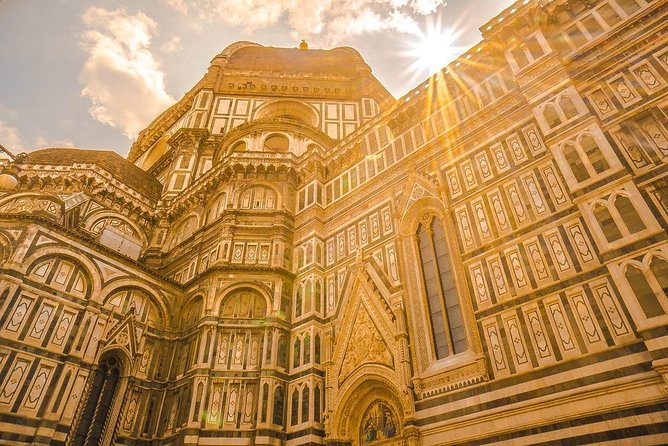
What I like most is the way the tour stitches together power, art, and everyday streets. You get the Medici background, then you see key monuments like the Baptistery, the Duomo complex, and the Palazzo Vecchio, with just enough time at each place to notice details and know what matters. The second big win is the pacing and variety, from grand architecture to literary Florence with the Museo Casa di Dante. A fair consideration: you are moving on foot with short stops, so it is not the tour for deep museum time or long lines.
One more thing to know up front. This is a donation-supported tour experience, so the listed price is only part of the equation, and you will choose what to compensate the guide for at the end.
Key highlights worth your attention
- Medici story thread: You learn how Florence’s ruling family shaped art, power, and the city layout.
- Top sights plus clever side stops: Big monuments are paired with lesser-known context so you understand what you are seeing.
- Guides who tell the story well: Named guides like Aurora, Manuel, Deborah, Camilla, and Simona are repeatedly praised for making Florence click.
- Perfect “first day” shape: It ends by the Uffizi area, so you can build the rest of your itinerary without backtracking.
- A manageable group size: Up to 30 people means you usually do not feel swallowed by a crowd.
- Short, focused timing: Expect quick moments (around 5 to 10 minutes) at each stop, then move on.
More Medici stories behind the palaces, paintings and city streets
- The Best tour in Florence: Renaissance & Medici Tales – guided by a STORYTELLER★ 5.0 · 12,316 reviews
- The Best Tour in Florence: Renaissance and Medici Tales★ 5.0 · 10,810 reviews
- Florence: Renaissance and Medici Tales Guided Walking Tour★ 4.8 · 1,549 reviews
- Florence: Mysteries of the Medici Guided Walking Tour★ 4.4 · 940 reviews
Starting in San Lorenzo, where the Medici begin
Your walk starts in the heart of Florence at Piazza di San Lorenzo, 35R. The meeting point is near a statue of Giovanni de’ Medici sitting on a throne, which is a nice clue that the tour’s theme is not random sightseeing. It is about family power and how it shows up in stone, patronage, and public spaces.
From the first moments, you get the idea that Florence is a stage. The guide sets the tone with the Medici rise and why Renaissance Florence looked the way it did. If you want a tour that helps you read the city instead of just walking past it, this one is designed for that.
Also, the structure is built for your schedule. The tour runs about 2 hours, and with a group size capped at 30, it tends to feel efficient rather than rushed like a bus tour.
Basilica di San Lorenzo: the family church, not just a pretty stop
The first major stop is the Basilica di San Lorenzo. This is not only a landmark in the San Lorenzo market area, it is a central piece of Medici identity. The basilica is the burial place of principal Medici family members, from Cosimo il Vecchio to Cosimo III, which instantly gives the place more weight than a standard church visit.
Even with a short stop, you can do something useful here: look for how the Medici influence is woven into what Florence built and preserved. If you are the type who likes to understand why certain names keep popping up around the city, this opening lands well.
One practical note: admission tickets are not included for this stop, so plan on either passing details through the outside views or paying if you want to go in.
Palazzo Medici Riccardi: the Renaissance in a power-building
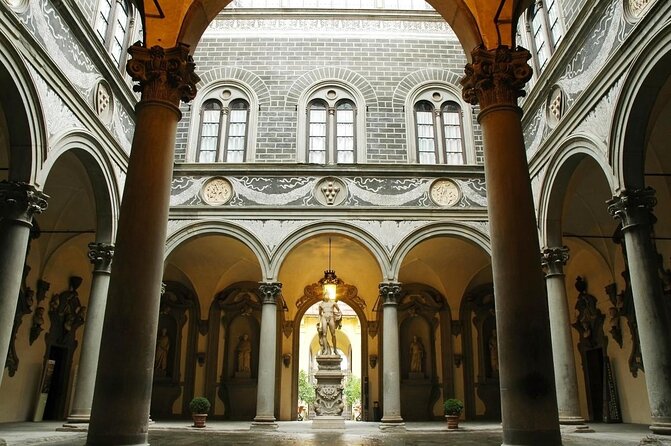
Next comes Palazzo Medici Riccardi, designed for Cosimo de’ Medici and built between 1444 and 1484. This is where the Renaissance idea turns into real estate, literally. You are looking at how banking power becomes political presence and cultural influence, and the guide’s commentary is what makes that connection feel clear.
The value here is that the tour does not treat the Medici like distant museum labels. You see how they used architecture to send messages. When a guide explains the why behind the walls, even quick exterior stops start to feel worthwhile.
As with San Lorenzo, admission tickets are not included, so keep your expectations aligned with a walk-and-learn format.
Baptistery of St. John: one of Florence’s oldest anchors
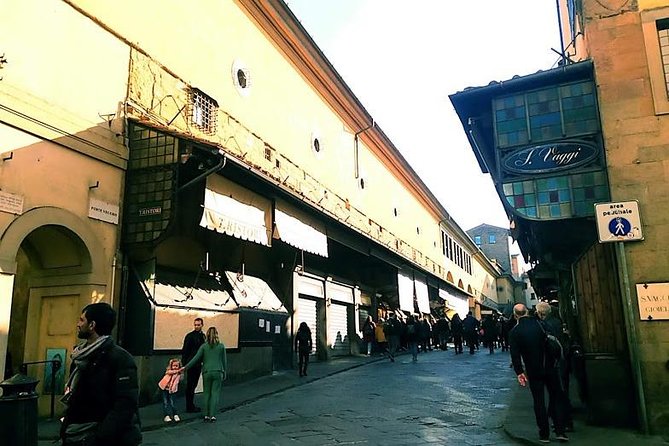
The walk then reaches the Battistero di San Giovanni, the Baptistery of Saint John. It sits across from the cathedral area and is among the oldest buildings in Florence, constructed between 1059 and 1128 in the Florentine Romanesque style.
This stop is a smart pairing with what comes next. It helps you see Florence as layered, not one era on repeat. Even if you only get a brief moment, the guide’s framing makes the Baptistery feel like an anchor point in the city’s timeline, before the Duomo complex and the Renaissance breakthroughs steal the spotlight.
Admission for this stop is not included, so you may choose to focus on what you can see from outside during the tour.
The Duomo complex: what you should notice when time is short
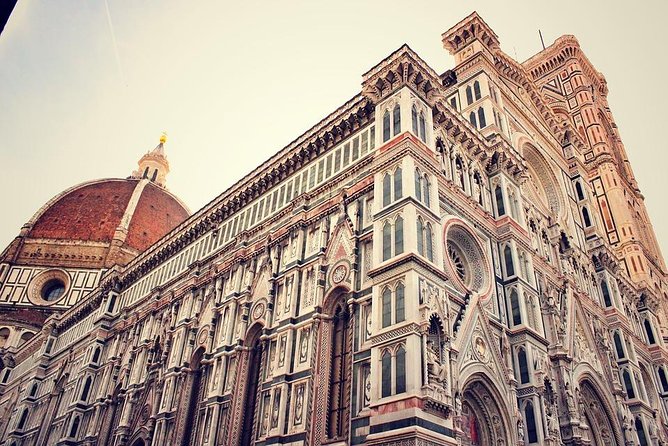
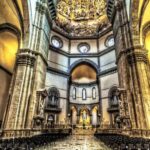
Then you hit the big one, the Duomo, formally the Cattedrale di Santa Maria del Fiore. The cathedral complex sits in Piazza del Duomo and includes the Baptistery and Giotto’s Campanile. These three buildings are part of a UNESCO World Heritage Site, so it is a lot of significance packed into one square.
The tour lists the Duomo admission as free, which matters for your planning. Still, because the stop is short (around 10 minutes), you will want to arrive with a simple goal: identify what kind of Gothic start this cathedral project had and why Florence later needed a dome that could become a symbol.
If you are the kind of traveler who feels overwhelmed by famous monuments, this is where the guide earns their pay. You learn how the pieces connect instead of just seeing a crowd of selfies.
Giotto’s Campanile: Florence’s Gothic showpiece
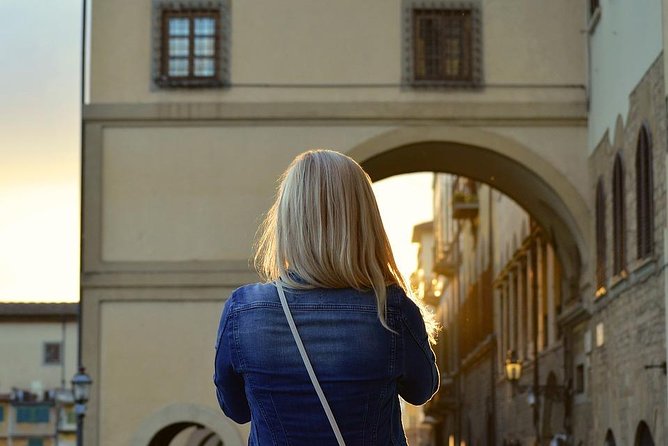
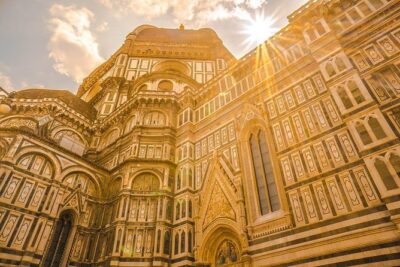
Beside the cathedral is Campanile di Giotto, one of the signature achievements of Florentine Gothic architecture. The tower’s value is not only the look, it is the design by Giotto plus the rich sculptural decoration and polychrome marble encrustations.
You do not need a long time here to get something out of it. In 10 minutes, you can start noticing how ornament turns into storytelling. The guide can help you sort what is decoration, what is symbolism, and what is a Renaissance-era obsession with craftsmanship.
Admission at this stop is not included, so think of this as a close-up orientation stop, and then decide later if you want more.
Cupola del Brunelleschi: the dome that still feels like a question
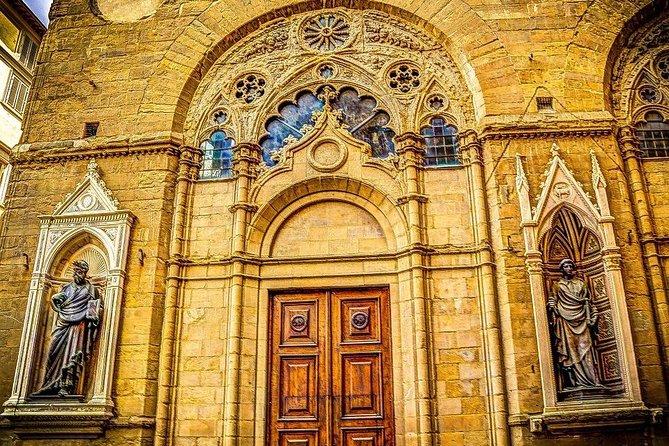
After Giotto’s Campanile, you come to the Cupola del Brunelleschi, the dome that is often described as one of the great mysteries in art and architecture. It was the largest brick dome in the world at the time, and even today it reads as a technical miracle.
This stop is ideal for travelers who love engineering as much as art. When you understand that the dome is not only beautiful but also an architectural problem that gets solved in brick, the Duomo complex stops being just iconic and starts being impressive in a practical way.
Again, the tour’s format keeps it moving, and admission is not included for this stop. Still, you can leave with a much better mental picture of why Brunelleschi’s dome mattered.
Museo Casa di Dante: why the Renaissance was also a writers’ city
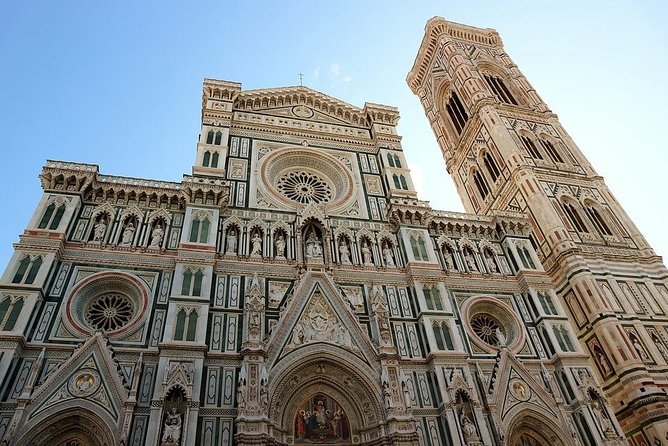
Next is Museo Casa di Dante, a shorter stop at about 5 minutes. This is a breather from the big architectural hits, and it changes the story from patronage and power to literature and ideas.
Dante Alighieri wrote the Divine Comedy, widely considered one of the most important poems of the Middle Ages and a foundational work in the Italian language. Even if you do not go deep into exhibits during the tour window, the guide helps you place Dante in Florence’s Renaissance identity.
Admission is listed as free here, which makes this stop easier to say yes to if you want a quick inside moment.
Piazza della Signoria and Palazzo Vecchio: politics in public space
You then reach Piazza della Signoria, an L-shaped square in front of Palazzo Vecchio. It functions as a meeting place for locals and a magnet for tourists, but the tour angle makes it more than a photo stop. It helps you understand how Florence turned politics into visible theater.
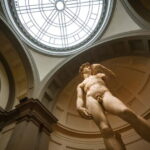
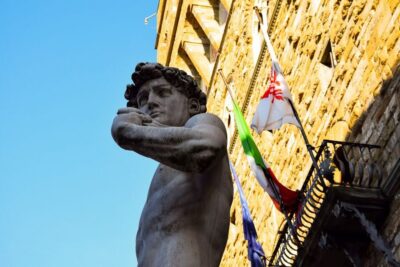
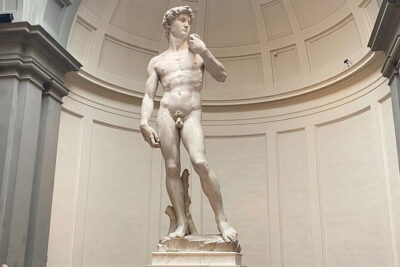
The nearby Palazzo Vecchio is the town hall of Florence, a fortress-palace that dominates the square. It also overlooks the square with a copy of Michelangelo’s David statue and connects to the statuary area in the adjacent Loggia dei Lanzi.
Admission for Palazzo Vecchio is not included, so you are mostly absorbing the setting and the meanings tied to the place. For many people, this is where the Medici theme clicks most clearly, because Florence’s civic power is visible right where you stand.
The stop duration is about 10 minutes, which is enough for the big picture and a few key takeaways.
Finishing near the Uffizi: a smarter way to plan the rest
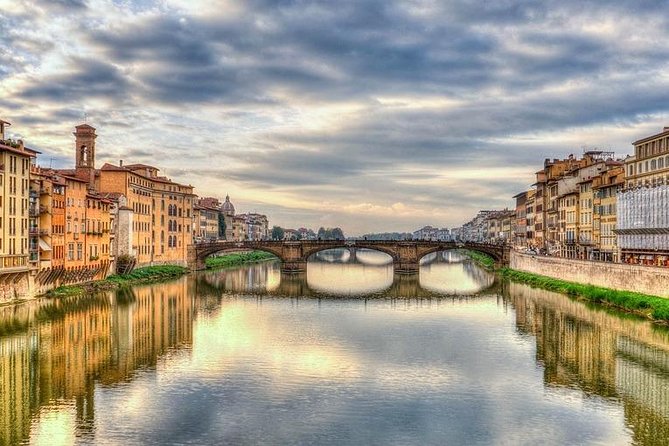
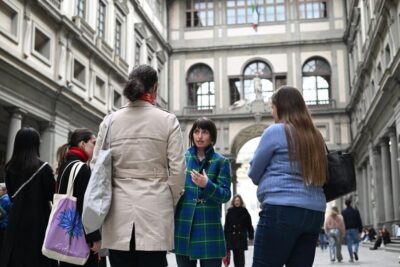
The tour ends near Piazza della Signoria, in the area of the Uffizi Gallery. That finish point is practical. You can follow the story you just learned directly into more art viewing, without needing to fight cross-town logistics.
If you were already thinking about the Uffizi, this ending helps you arrive with a context mindset. You also have a nice option to keep exploring on foot while your brain is still primed for Renaissance themes.
Your exact endpoint can vary slightly in the area, but the general location stays convenient for continuing your day.
Donation-based pricing: a bargain if you tip like you mean it
The tour is listed at $3.62 per person, which is shockingly low for a guided walking experience. But the important detail is that it is supported through donations, and at the end you decide what amount to compensate the licensed guide.
So how do you judge value fairly? I look at three things:
- You get a licensed guide and a structured walk that hits a cluster of Florence’s core monuments.
- You get story-led context that helps you make sense of the city while you still have time to act on it.
- You avoid paying separate costs for every single stop, because some sites listed are free, like the Duomo and Museo Casa di Dante.
One more detail from the practical world: some people specifically suggest budgeting a meaningful tip, and one common advice figure was at least €20 per person. Even if you choose a different amount, the donation model means you should plan on tipping in a way that feels respectful for the work.
What the guide actually adds to the monuments
This is the tour’s secret strength. The landmarks are famous, yes, but you do not get a lecture that feels like a museum label. You get short, connected storytelling that explains why Florence’s Renaissance looks the way it does.
Guides named in people’s experiences include Aurora, Manuel, Alberto, Deborah, Camilla, Marco, Simona, Elizabeth, and Elisabetta. The common thread across different guide names is that they keep the walk moving, answer questions clearly, and sprinkle in humor and perspective so the Medici story does not feel dry.
If you like tours where you can ask, and you get answers, this fits that style. If you prefer quiet, wander-alone sightseeing, you might find the constant commentary a bit much. But for most first-timers, the guide talk is exactly what makes Florence click.
Timing, weather, and ticket realities
The tour is about 2 hours, with most stops around 10 minutes and one shorter stop around 5 minutes. That means you do not linger. It also means you should use each stop with intention. Pick one thing to look for each time, like the Baptistery’s Romanesque identity, the Duomo complex’s Gothic roots, or the dome’s scale and engineering.
This experience also depends on good weather. If conditions are poor, you can be offered a different date or a full refund. That matters in Florence, where weather changes fast.
As for entry costs, it is mixed:
- Some stops show free admission in the schedule, including the Duomo and Museo Casa di Dante.
- Others say admission ticket not included, including places like San Lorenzo, Palazzo Medici Riccardi, and Campanile di Giotto.
So come ready for a combo day: you will get plenty by just looking, and you may choose to pay for a deeper inside moment where it fits your interests.
Who should book this Renaissance and Medici walk
This tour is a strong match if you:
- Want a first-day orientation that makes Florence’s main sights coherent.
- Like your history tied to real people and real power, not just dates.
- Enjoy walking between monuments and getting context along the route.
It is also a solid choice if you plan to spend more time later at places like the Uffizi. The tour ends near there for a reason.
A consideration for you if you:
- Want a slow pace with lots of time inside museums and chapels.
- Hate short stops or prefer long, uninterrupted sightseeing sessions.
In those cases, you might pair this with a second, more time-heavy activity later.
Good news: most travelers can participate, and service animals are allowed. It is also near public transportation, which helps if you are hopping between neighborhoods.
Should you book this Florence walking tour?
Yes, if you want an efficient, story-led introduction to Renaissance Florence with the Medici at the center. The route hits major monuments like San Lorenzo, the Duomo complex, and Palazzo Vecchio, and it finishes in a great location to keep exploring.
If you are on a tight schedule, the 2-hour format is exactly what you need. If you care about value, the low listed price combined with a guide-driven experience can feel like a smart deal, as long as you remember it is donation-supported and tip accordingly.
If you want, I can also suggest a simple follow-on plan for your afternoon based on whether you are more interested in art, architecture, or literature.
More Florence tours to open next
- The Best tour in Florence: Renaissance & Medici Tales – guided by a STORYTELLER
★ 5.0 · 12,316 reviews
Every Florence review, in one place
- Tuscany Day Trip from Florence: Siena, San Gimignano, Pisa and Lunch at a Winery
★ 5.0 · 21,634 reviews - The Best tour in Florence: Renaissance & Medici Tales – guided by a STORYTELLER
★ 5.0 · 12,316 reviews

The Medici thread through Florence
- The Best tour in Florence: Renaissance & Medici Tales – guided by a STORYTELLER
★ 5.0 · 12,316 reviews


Florence picks that sit just beyond this itinerary
- One Hour Uffizi Guided Tour: Masterpieces of the Renaissance
★ 5.0 · 3 reviews - Sightseeing Tuscany by touring bike – 1 day rental
★ 5.0 · 3 reviews - Private Siena, S. Gimignano, Chianti Road and Wine Tasting
★ 5.0 · 3 reviews - Bargello Museum Private Tour: Michelangelo’s Bacchus & Donatello’s David
★ 5.0 · 3 reviews - Authentic Florence Cooking Class at Costanza’s 1839 Family Estate
★ 5.0 · 3 reviews - San Gimignano and Volterra private tour: etruscans, romans and middle age jewels
★ 5.0 · 3 reviews
More Medici Florence & Renaissance Stories worth comparing.
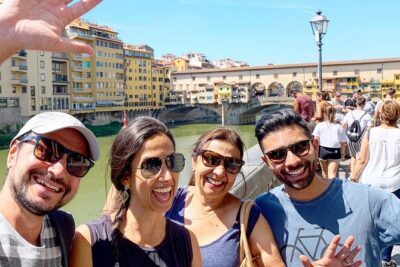 ★ 5.0The Best tour in Florence: Renaissance & Medici Tales – guided by a STORYTELLERFrom $312,316 reviews
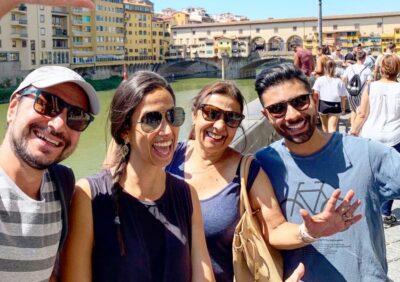 ★ 4.8Renaissance and Medici Tales Guided Walking TourFrom $21,549 reviews
 ★ 4.4Mysteries of the Medici Guided Walking TourFrom $31940 reviews
 ★ 4.0Accademia Gallery: Michelangelo’s David and High Renaissance ArtFrom $43872 reviews
 ★ 4.7Guided Tour of Medici Family Secrets and ChapelsFrom $93512 reviews
 ★ 5.0Florence Private Tour: Renaissance, Famous Families & Hidden GemsFrom $199233 reviews
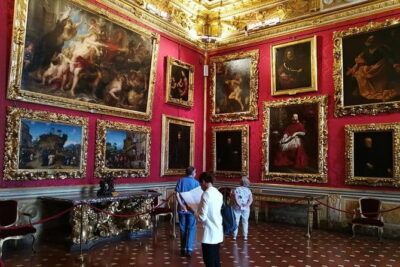 ★ 4.5Pitti Palace, Palatina Gallery and the Medici: Arts and Power in Florence.From $82223 reviews
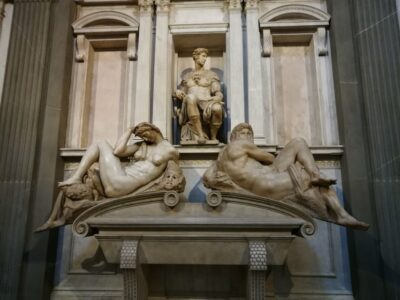 ★ 4.8Medici Chapels Guided TourFrom $50217 reviews
Find this experience in another shortlist