
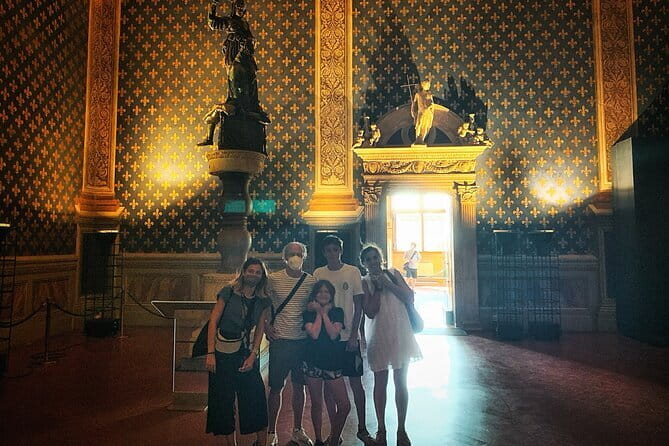
Florence field review · PALAZZO VECCHIO & CIVIC FLORENCE
Palazzo Vecchio Tales – into Medici’s secrets and mythology simbols
Florence keeps its secrets in plain sight. This Palazzo Vecchio tour uses Medici mythology symbols and big, political rooms to explain how power was displayed and managed inside one palace. You start with the famous courtyards and frescoes, then move room by room through art that is half propaganda, half storytelling.
Two things I really like are the chance to see the palace through a licensed guide’s story logic (not just dates), and the included radios/headphones that make it easy to hear in a museum with lots of echoes. One practical catch: in cooler months, the museum can feel unheated, and you may stand for long stretches while the guide talks.
Key points to know before you go
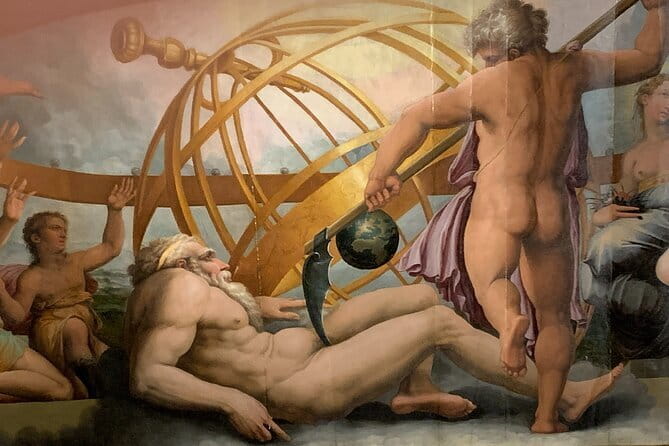
- Michelozzo courtyard frescoes with unusual Austrian scenery that begs for context
- Salone del Cinquecento and how its meaning shifted over time
- Medici rooms packed with portraits, historical scenes, and myth symbols
- Donatello’s Judith and Oloferne as a standout art moment
- Niccolò Machiavelli’s personal office tied to European political thought
- Skip-the-line reservation plus radios so you can follow the guide without straining
Keep following Florence from republic to Medici court
- Florence: Palazzo Vecchio Entrance Ticket & Audioguide★ 4.4 · 4,822 reviews
- Florence: Palazzo Vecchio Guided Tour★ 4.8 · 1,260 reviews
- Florence: Palazzo Vecchio Skip-the-Line Entry Ticket★ 4.2 · 349 reviews
- Palazzo Vecchio guided experience with entrance ticket★ 4.5 · 249 reviews
Piazza della Signoria meet-up, and what to expect in 1 hour 45

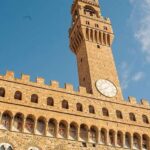
The tour starts right at Piazza della Signoria, one of Florence’s best places to orient yourself fast. Even if you have not memorized every statue in the square, you are in the right mindset: this is where Florence’s civic pride meets Medici-era power.
Plan for about 1 hour 45 minutes of focused viewing. This is not a casual wander. You get a guided circuit through major rooms and key artworks, with a pace designed for listening. Because the experience includes radios and headphones, you can keep your eyes on the art instead of constantly craning toward the guide.
It is also run as a private tour for your group only, so the experience is less about blending into a crowd and more about staying together. If you like asking questions, this format usually makes it easier.
Michelozzo courtyard frescoes and the Austrian scenery puzzle
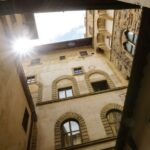
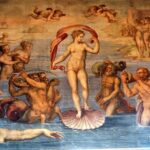
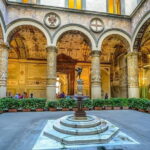
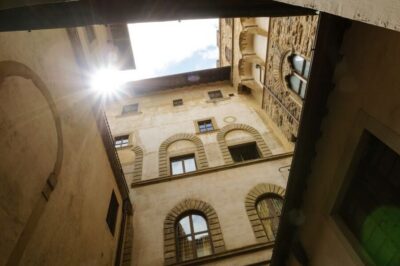
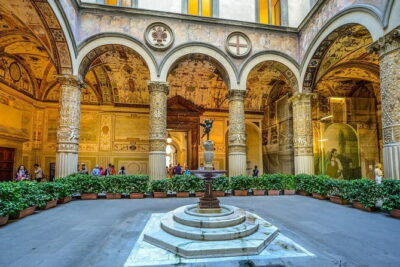
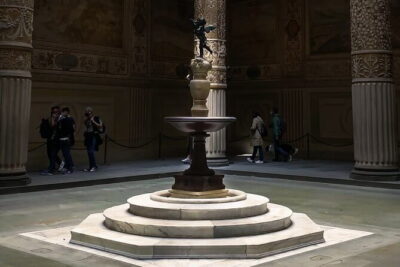
The first big stop is Michelozzo’s courtyard, a space covered with 1500s frescoes. What makes this courtyard more interesting than a pretty picture is the theme behind the images: you are meant to notice why there are Austrian scenery elements showing up on frescoes in Florence.
A good way to think about this is that art was never just art. In a Medici context, imagery could signal connections, prestige, and ideas about the wider world. The guide’s job here is to connect the dots so the courtyard feels like a message, not a mystery you have to guess at.
If you enjoy “why did they do that” moments, this is one of the best parts of the whole tour. It is the kind of scene where a good storyteller helps you see symbols you would normally skip.
Salone del Cinquecento: a room with changing political meaning
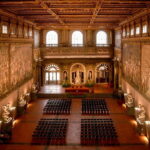
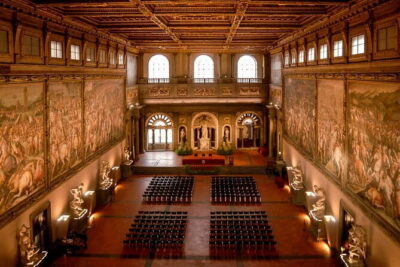
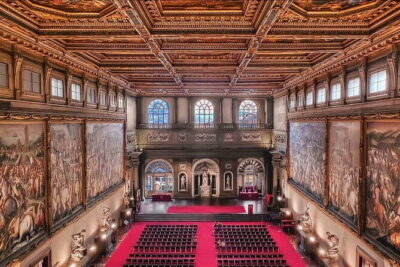
Next comes the Salone del Cinquecento, a grand hall that the tour treats as a living document. You do not just look at the architecture. You learn about the hall’s transformations, and what those changes meant for the people using it.
This is one of those Florence rooms where scale alone can make you feel small. But the real value is understanding that the same space can serve different political needs over time. When the guide explains the shifts, the hall stops being a single “look at this big room” moment and becomes a lens on how authority presented itself.
The timing of this stop also matters. Early in the tour, it helps you set the right expectations. Instead of drifting through rooms, you start reading them.
Medici family rooms: portraits, historical scenes, and myth symbols
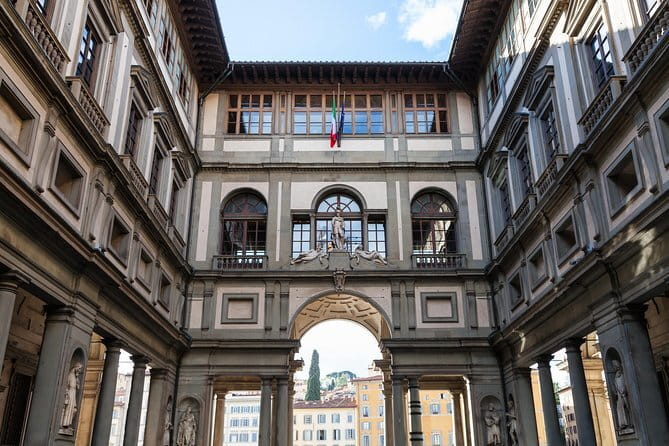
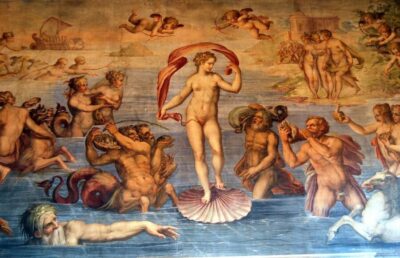
After the big hall, the tour turns to the more intimate spaces tied to the family. These rooms are described as heavily ornamented with portraits, scenes of historical events, and allegories of mythological gods.
This is where you start noticing how often Renaissance display used more than one layer:
- a surface layer (who is shown and what story is pictured)
- a symbol layer (myths and gods used like coded language)
- a politics layer (messages about legitimacy, rule, and values)
Artworks here are not random. Even the choice of subject matter is part of the narrative. You are essentially learning how symbolism worked like a visual press campaign.
And this is where the tour’s storytelling gets serious. A guide named Daniele is specifically mentioned for having a gift for bringing the Medici era to life, with enough detail to answer real questions. That kind of guide makes the difference between seeing rooms and actually understanding what you are looking at.
Donatello artwork: Judith and Oloferne as a focal point
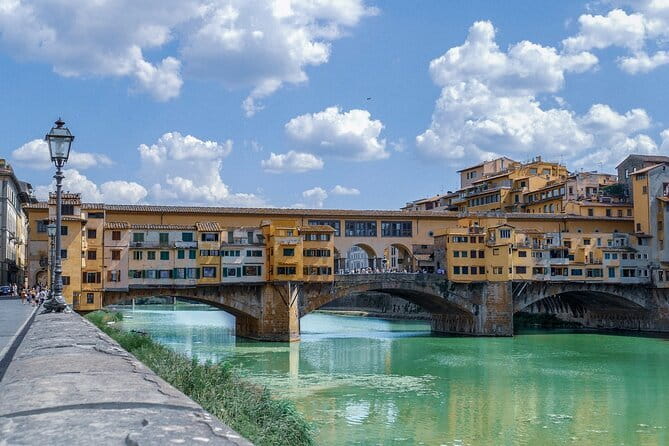
One standout stop inside the Medici rooms is a highly significant work attributed to Donatello, described as the original Judith and Oloferne. This is the kind of artwork that rewards attention, because it is not just dramatic. It is symbolic, and it fits the wider theme of the tour.
Even without reading every label, the guide helps connect the work to the broader message of the rooms. Think of it as a turning point. The tour shifts from “here are the themes” to “here is a specific artwork that carries serious meaning.”
If you are a fan of Renaissance sculpture and the way artists used emotion and action to communicate ideas, you are likely to feel this as a highlight.
More Medici stories behind the palaces, paintings and city streets
Machiavelli’s personal office and political thought in the same building
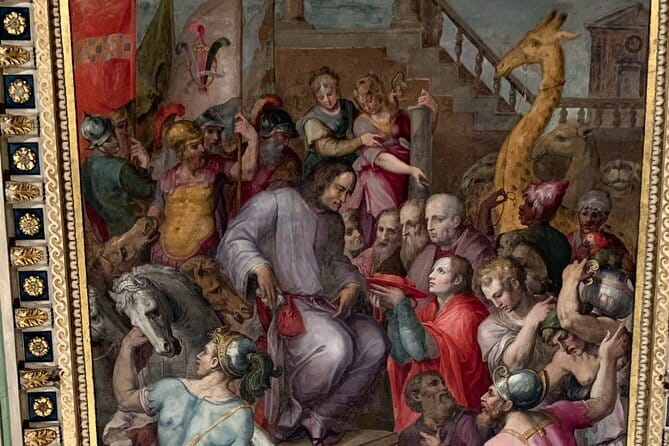
The tour also includes rooms connected with the history of European Political Thought, including Niccolò Macchiavelli’s personal office. This is a fascinating pairing in Palazzo Vecchio, because it links governance, philosophy, and the physical spaces where power was staged.
The tour frames this as part of the bigger story of how rulers and thinkers shaped each other. You are not just learning “Medici did X.” You also see how ideas about rule and strategy fed into the way leadership operated and justified itself.
If you want to leave Florence with something more than art trivia, this stop helps. It gives you a thread that ties palace decoration to intellectual history.
Pacing, comfort, and hearing the guide in a big museum
Two practical notes matter here.
First, the tour provides radios and headphones, which is a big deal in museums where sound can bounce. You can stay focused on details and not fight the acoustics.
Second, the museum environment can be uncomfortable, especially in winter. One review highlights that the museum can be unheated and that there are not many opportunities to sit down during the guide’s talk. So if you are sensitive to cold or you prefer sitting, dress for warmth and plan to stand.
Also, wear shoes that work for uneven floors. This tour is about moving through rooms, not lingering in one place.
Price, what’s included, and where the money goes
The price is $150.19 per person, for a guided visit of about 1 hour 45 minutes in English, with group discounts and a skip-the-line reservation at a set date and time.
Here is the practical part: the museum ticket is not included in that amount. You pay the museum ticket directly to the museum on the day of your tour. So your true total cost is your booking price plus that ticket.
Is it still good value? In my view, yes, especially if:
- you want a guide who explains symbols and context, not just points at rooms
- you care about hearing every detail clearly (radios help)
- you want the time savings of a skip-the-line reservation
The skip-the-line part is what often turns a “maybe I’ll do this later” museum into a plan you can trust. It helps you avoid wasting your limited Florence hours.
Who should book this Palazzo Vecchio Tales tour
This tour fits best if you like:
- symbol-heavy art (myths, allegories, coded messaging)
- political themes tied to real spaces and real artworks
- structured sightseeing with a guide who can answer questions
It is also a good option for many visitors because it is listed as suitable for most travelers, and service animals are allowed. It is near public transportation too, which helps when you are planning your day around other Florence sights.
If you are the type who wants to “just see the highlights,” you might feel the pace is too intentional. But if you like understanding why rooms look the way they do, you will likely enjoy the way the tour threads courtyard frescoes, palace halls, and political rooms into one story.
Should you book Palazzo Vecchio Tales for Medici secrets and symbols?
Book it if you want Palazzo Vecchio to make sense. The tour focuses on the ideas behind the visuals, from myth symbols in family rooms to political thought rooms tied to Machiavelli, plus a memorable art stop with Donatello’s Judith and Oloferne. The included radios and skip-the-line reservation are practical wins in a big, sometimes chilly museum setting.
Skip it or consider another format if you strongly prefer lots of seating, or if you only want a quick skim of famous rooms without explanation. The experience is designed for standing, listening, and moving.
If you are planning a Florence itinerary where you want one ticket to connect art, symbolism, and power, this is a solid choice.
FAQ
Is the museum ticket included in the tour price?
No. The museum ticket is paid directly to the museum by you on the same date of the tour.
How long is Palazzo Vecchio Tales?
It runs about 1 hour 45 minutes.
Where do I meet the guide?
You meet at Piazza della Signoria, Piazza della Signoria, 50122 Firenze FI, Italy. The tour ends back at the meeting point.
What language is the tour offered in?
The tour is offered in English.
Does the tour include skip-the-line entry?
Yes, you get a skip-the-line reservation for a concrete date and time.
Are radios or headphones provided?
Yes. The tour includes radios and headphones so you can listen better inside the museum.
Is this tour private?
It is described as a private tour, meaning only your group participates.
What is the cancellation policy?
Free cancellation is allowed. You can cancel up to 24 hours in advance for a full refund.
Are service animals allowed?
Yes, service animals are allowed.
Every Florence review, in one place
- Tuscany Day Trip from Florence: Siena, San Gimignano, Pisa and Lunch at a Winery
★ 5.0 · 21,634 reviews - The Best tour in Florence: Renaissance & Medici Tales – guided by a STORYTELLER
★ 5.0 · 12,316 reviews

The Medici thread through Florence
- The Best tour in Florence: Renaissance & Medici Tales – guided by a STORYTELLER
★ 5.0 · 12,316 reviews
Power, politics and Palazzo Vecchio
Florence picks that sit just beyond this itinerary
- One Hour Uffizi Guided Tour: Masterpieces of the Renaissance
★ 5.0 · 3 reviews - Sightseeing Tuscany by touring bike – 1 day rental
★ 5.0 · 3 reviews - Private Siena, S. Gimignano, Chianti Road and Wine Tasting
★ 5.0 · 3 reviews - Bargello Museum Private Tour: Michelangelo’s Bacchus & Donatello’s David
★ 5.0 · 3 reviews - Authentic Florence Cooking Class at Costanza’s 1839 Family Estate
★ 5.0 · 3 reviews - San Gimignano and Volterra private tour: etruscans, romans and middle age jewels
★ 5.0 · 3 reviews
More Palazzo Vecchio & Civic Florence worth comparing.
 ★ 4.4Palazzo Vecchio Entrance Ticket & AudioguideFrom $374,822 reviews
 ★ 4.8Palazzo Vecchio Guided TourFrom $521,260 reviews
 ★ 4.2Palazzo Vecchio Skip-the-Line Entry TicketFrom $43349 reviews
 ★ 4.5Palazzo Vecchio guided experience with entrance ticketFrom $64249 reviews
 ★ 4.7Palazzo Vecchio 90-Minute Morning Guided TourFrom $138104 reviews
 ★ 4.3Palazzo Vecchio Skip-the-line Ticket & Audio GuideFrom $4195 reviews
 ★ 4.0Small-Group Palazzo Vecchio Secret Passages Tour with Lunch Or “Gelato”From $6392 reviews
 ★ 3.5Florence Palazzo Vecchio Priority Entry Ticket with HostFrom $3670 reviews
Find this experience in another shortlist