
Florence field review · PITTI PALACE & BOBOLI GARDEN VISITS
Florence: Boboli The Medici Gardens & Hidden Messages
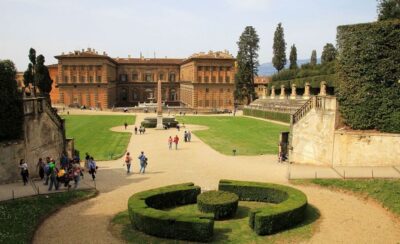
Boboli can feel like a maze, in the best way. On this guided walk through the Medici gardens, you get the art, myths, and hidden meanings turned into something you can actually follow, plus a panoramic Florence view at the top. I love the way the tour connects sculptures and fountains to stories, and I love seeing the garden layout like a living design project, not just pretty plants. The only real drawback is simple: it is still a walking tour, so comfy shoes matter if you want to enjoy every terrace.
I also like that the experience is kept efficient. You get a lot of Boboli highlights plus sights tied to Pitti Palace, without dragging you into museum rooms you may not even want. If you end up with a top guide like Alessandra, Guido, or Ivano, you are likely to get clear explanations and an easy pace that makes the symbolism click.
Key points to know before you go
- Skip-the-line entry means less waiting and more garden time
- Myths as a map, you follow stories that point to specific sculptures and water features
- Short but focused, 1.5 hours works well for fitting Boboli into a busy Florence day
- Garden design goes royal, inspired by Cosimo I de Medici in 1562 and treated like a model for other European courts
- Big view payoff, you reach the top area for Florence panoramas
- Right kind of tour for many people, especially kids, nature lovers, and couples
More time across the river at Pitti and in the Boboli gardens
- Florence: Uffizi, Pitti Palace & Boboli Combined 5-Day Pass★ 4.5 · 1,726 reviews
- Florence: Pitti Palace and Boboli Gardens Ticket & eBook★ 4.5 · 835 reviews
- Florence: Pitti Palace, Boboli Garden, Palatine Gallery Tour★ 4.9 · 558 reviews
- Florence: Uffizi, Pitti, Boboli and 7 Attractions 5-Day Pass★ 4.6 · 386 reviews
Why Boboli works so well in 90 minutes
Boboli is one of those places that can swallow an afternoon if you wander without a plan. With this tour, you get a structure that keeps you moving through the most important areas, while your guide explains what you are looking at and why it was placed there.
The timing is one big reason this feels like good value. At 1.5 hours, you can pair it with other Pitti Palace area plans without turning the day into a logistics puzzle. And since the tour includes entrance fees with skip-the-line tickets, you are not juggling extra ticket buying while you stand at the entry gate.
Also, you are not just looking at gardens in general. The experience ties Boboli to the wider Medici world, including Pitti Palace sights outside museum rooms. That matters because Boboli was not an afterthought. It was built to show power, taste, and control of space, down to the smallest symbol.
One quick reality check: since this is a guided walking tour, you will spend your time on foot. If you are used to slow museum pacing and dislike uneven garden walking, you might find it a bit more physical than you planned.
Cosimo I de Medici’s 1562 garden, built like a statement
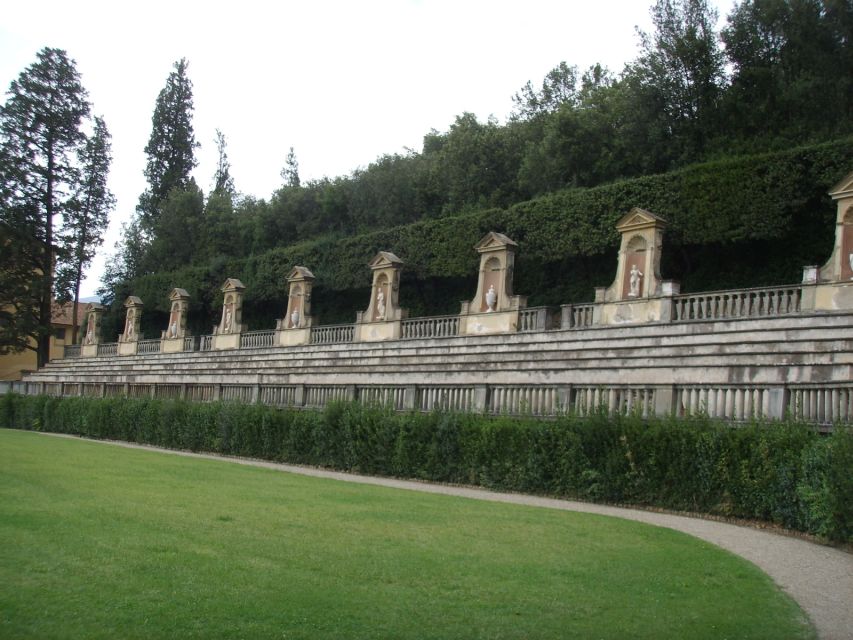
You are stepping into a garden designed for Cosimo I de Medici in 1562, and the tour frames Boboli as a kind of early blueprint for royal European gardens. That is more than trivia. It helps you understand why the space feels so designed, like architecture made out of greenery.
This is also where the tour’s concept clicks: Boboli is presented as a place where works of art hide meanings and allegories. In other words, you are not only seeing decorative statues. You are looking at a symbolic language meant to be read.
If you have ever walked through a historic garden and thought, I get that it is beautiful, but what am I supposed to notice, this is the fix. Your guide gives you a set of story clues so you can look at a fountain, then a statue, then a turn in the path and understand how the garden is telling you something.
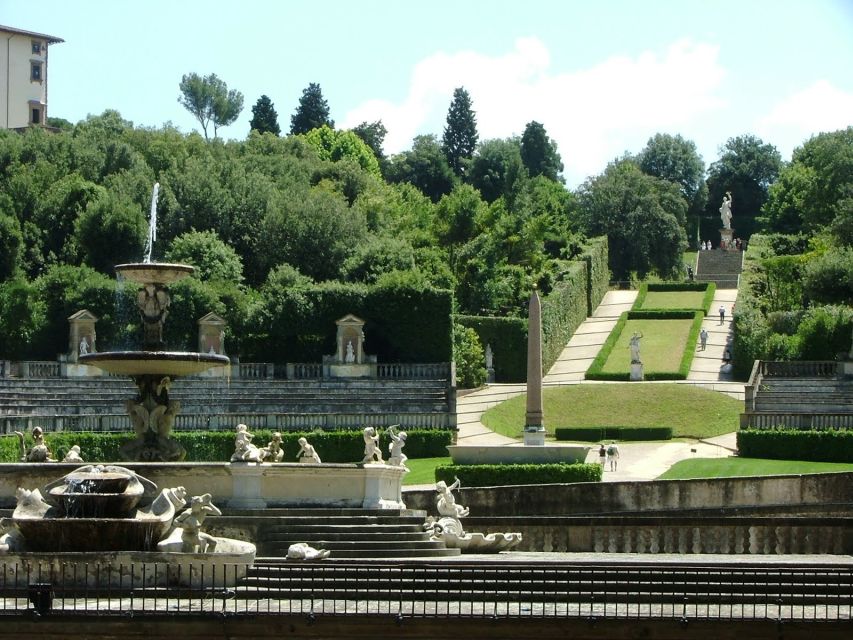
And yes, the tour emphasizes the classic Italian feel of the grounds: multiple kilometers of vegetation, fountains, terraces, and grottoes. It can be a lot to take in, but the short format keeps it manageable.
The myths you actually see, from Hercules to Demeter
Boboli’s standout idea is that the garden is full of mythic figures, not random sculpture. During the walk, you get guided attention on sculptures like Hercules, Demeter, and the Spartan King Tyndareus.
Here is why that matters for your experience. If you only see the statue without the story hook, you may admire the craftsmanship and move on. With the story framework, those figures start to feel purposeful. You begin noticing how the garden uses art to create themes, and how the Medici used classical references to signal education, strength, and legitimacy.
This is also why the tour works across time periods. The experience is described as presenting gods and heroes imagined and represented by artists across different eras, from ancient Roman to later periods. So when you look at something, you are not just taking in one “old thing.” You are seeing how later artists reinterpreted the classical world and then planted it into a Renaissance garden setting.
If you like art that has a “why,” this part is often what people remember most.
Fountains with personalities: Artichoke and Neptune
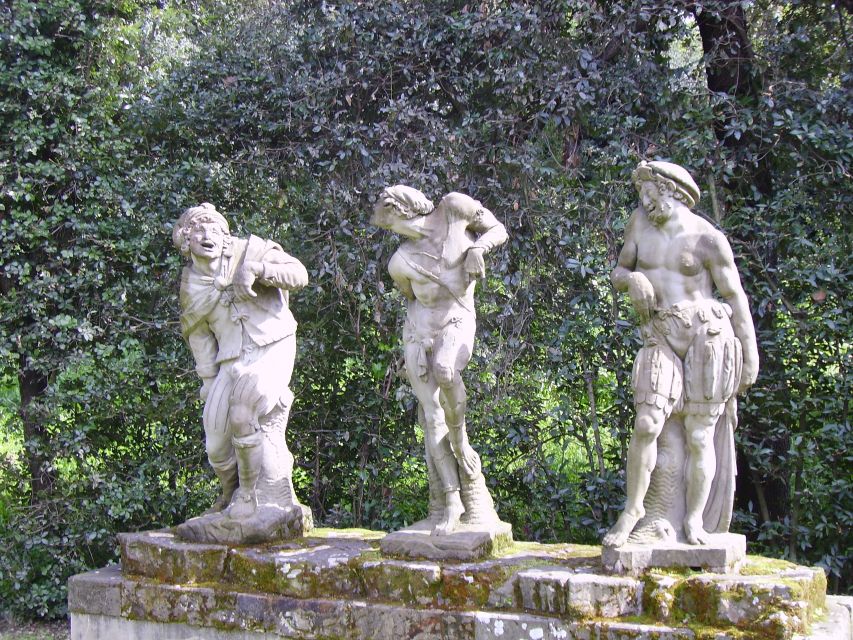
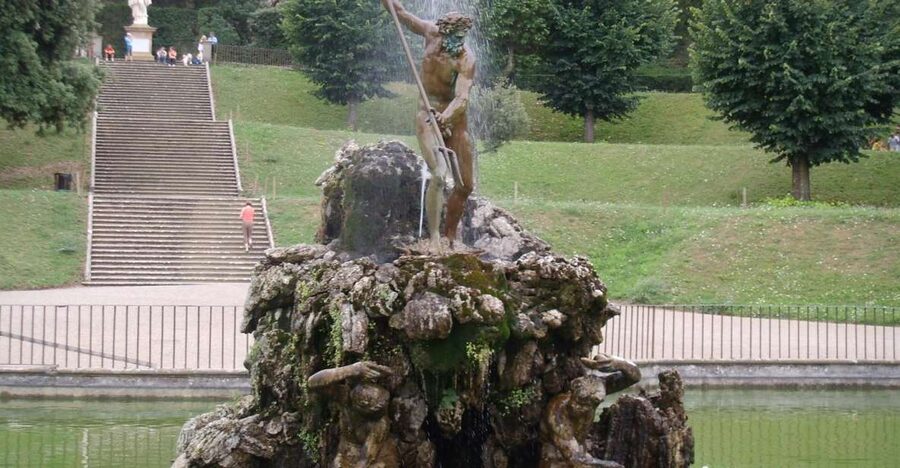
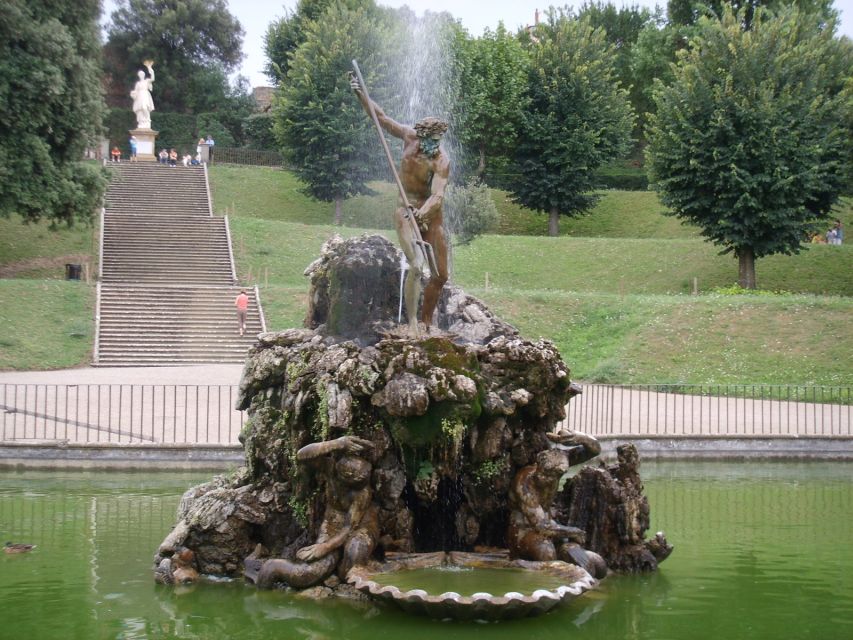
Boboli’s waterworks are not just decoration. Your guide points out major fountains, including the Fountain of the Artichoke and the Fountain of Neptune.
Even if you are not a fountain person, these are worth your attention because fountains are where Baroque-style theatre shows up in a garden setting. They shape how you move and where you pause. They also make the garden feel alive, especially when you hear the story attached to the water feature and then see how it functions within the broader layout.
Neptune, in particular, is the kind of figure that naturally ties to themes of power and control, which fit the Medici context. The Artichoke fountain is the kind of detail you might otherwise overlook because it sounds too weird to be important. On this tour, it becomes a clue that the garden is doing more than simple landscaping.
If you enjoy walking tours where every stop has a reason, this section is a good match.
Terraces, grottoes, and the Florence panorama payoff
One of the highlights is reaching the top areas of the gardens for a spectacular panoramic view of Florence. That view is the payoff for keeping your energy up through the walk.
The gardens are described as including terraces and grottoes, and the tour’s structure is set up to move you through multiple garden “rooms.” That matters because Boboli is not one long straight line. It is a sequence, and your guide helps you understand what you are looking at as you transition between spaces.
From a practical standpoint, this is also where timing matters. When the tour moves toward the higher viewpoints, you get the payoff while you are still on the guided clock, rather than realizing too late that the best view is still ahead.
If your Florence day includes crowded streets and big museum lines, the top view also feels like a mental reset. You get a slow moment where the city looks calm and spread out, even though it is the same Florence you have been walking through.
More Medici stories behind the palaces, paintings and city streets




Secret Garden and the Tunnel of Love, symbolism with a smile
Two of the most memorable stops named in the tour experience are the Secret Garden and the Tunnel of Love.
Even if you are not trying to be romantic on vacation, these names are a clue that the tour is not only about grand political myth. It also uses atmosphere and surprise. A “secret” area makes you slow down and look closer. A tunnel makes you move through a narrow corridor of greenery and light, which changes the way you experience the sculpture and architecture around it.
The Tunnel of Love is also a great example of how Boboli can work on multiple levels. On the surface, it is a charming garden feature. With your guide’s explanations, it becomes part of the garden’s larger language of allegory and intention.
So if you like tours that keep some human warmth in the middle of symbolism, this is where it shows up.
What you get (and what you do not) at Pitti Palace area
This tour includes:
- Entrance fees with skip-the-line tickets
- An official local guide
- A walking tour
What it does not include is also important. You do not get tickets to the Palatine Gallery or any other museum inside Pitti Palace. That means you should think of this as a garden-focused experience, not a full museum afternoon.
This is a good thing if you want Boboli for what it is: a designed outdoor art space. But if you planned a museum day inside Pitti Palace, you will need separate tickets for those rooms.
Meeting point is the main entrance to Pitti Palace. That helps a lot because you will not be wandering the area trying to match a tiny sign with a tiny group.
Price value: is $93 for 1.5 hours fair?
At $93 per person for 1.5 hours, it is not the cheapest add-on in Florence. But it can be fair value when you break down what is included.
You get:
- Entrance fees (so you are not paying twice)
- Skip-the-line access (so you are spending your time on the gardens, not standing around)
- An official local guide (this is the real engine, since the tour concept depends on interpretation of sculptures, fountains, and allegories)
If you were to visit Boboli alone, you might pay entry and then still spend a lot of time guessing what matters and why. This tour costs more because it pays for that translation layer. For people who like history as lived symbolism, that translation is worth paying for.
If you are the type who just wants to stroll and enjoy plants, you may decide to visit on your own later. But if you want the garden to make sense while you are walking through it, this price is easier to justify.
Practical tips that save you stress
Before you go, keep it simple:
Bring:
- Your passport or ID card
- Comfortable shoes (seriously)
Know the rules:
- No pets
- No smoking
- No luggage or large bags
Also, this is listed as a green and eco-friendly tour, and it is described as a good fit for kids, nature lovers, and romantic types. That aligns with the garden theme plus the fact that the experience mixes myth with approachable features like the Tunnel of Love.
Languages are English and Italian, so you can pick based on what you feel like listening to that day.
One more small piece of advice: because you will be walking, dress for your pace. If Florence weather swings, bring a layer. Gardens can be cooler or more exposed depending on the path.
Who should book this Boboli guided experience?
I think this tour is a strong fit if:
- You want Boboli to make sense fast, not after you research for an hour
- You like art tied to stories, especially classical myth figures
- You want a panoramic Florence view without planning a whole garden self-guided route
- You are traveling with kids, since the tour includes memorable features and short pacing
- You are planning a romantic walk but still want substance behind the scenery
It is less ideal if:
- You hate walking tours and want minimal time on your feet
- You are only interested in museum interiors, since this does not include the Palatine Gallery or other rooms inside Pitti Palace
- You are hoping for a free-for-all without guidance, since the whole value is interpretation and route focus
Should you book Boboli: The Medici Gardens & Hidden Messages?
Yes, if you want Boboli to feel like a story you can follow while you walk it. The big win is how quickly the guide turns statues, fountains, and garden architecture into meaning, including named features like Hercules, Demeter, Tyndareus, the Artichoke fountain, Neptune, the Secret Garden, and the Tunnel of Love. Add in skip-the-line entry and a timed route that ends with Florence views, and the $93 starts to feel like paying for time saved plus understanding gained.
If you prefer wandering without structure and you do not care about allegories, you might be happier with a self-guided visit. But if you want your garden stroll to come with a decoder ring, this is the kind of guided experience that pays off.
FAQ
How long is the Boboli and Medici gardens walking tour?
The tour lasts 1.5 hours.
Where do I meet for the tour?
You meet at the main entrance to Pitti Palace.
What is included in the price?
The tour includes entrance fees with skip-the-line tickets, an official local guide, and a walking tour.
Is the Palatine Gallery included inside Pitti Palace?
No. Tickets to the Palatine Gallery or any other museum inside Pitti Palace are not included.
What languages are available for the live guide?
The live guide is available in English and Italian.
What should I bring and what rules should I follow?
Bring a passport or ID card and wear comfortable shoes. Pets are not allowed, smoking is not allowed, and you cannot bring luggage or large bags.
Can I get a refund if my plans change?
Free cancellation is available up to 24 hours in advance for a full refund.
Every Florence review, in one place
- Tuscany Day Trip from Florence: Siena, San Gimignano, Pisa and Lunch at a Winery
★ 5.0 · 21,634 reviews - The Best tour in Florence: Renaissance & Medici Tales – guided by a STORYTELLER
★ 5.0 · 12,316 reviews





The Medici thread through Florence
- The Best tour in Florence: Renaissance & Medici Tales – guided by a STORYTELLER
★ 5.0 · 12,316 reviews




Pitti and Boboli across the Arno




Florence picks that sit just beyond this itinerary
- Florence: Duomo Complex Private Guided Tour & Optional Dome Climb
★ 5.0 · 4 reviews - Private Tour of Florence Cathedral, Bell Tower & Baptistery
★ 5.0 · 4 reviews - Michelangelo’s David Tour in the Accademia (Tickets NOT included)
★ 4.0 · 4 reviews - Exclusive Pisa Tour from Florence: With Skip-the-Line Access
★ 4.0 · 4 reviews - Full-Day Tour of Tuscany from Florence-small group up 8 pax
★ 4.5 · 4 reviews - Florence: Inferno Private Walking Tour
★ 5.0 · 4 reviews
More Pitti Palace & Boboli Garden Visits worth comparing.
 ★ 4.5Uffizi, Pitti Palace & Boboli Combined 5-Day PassFrom $811,726 reviews
 ★ 4.5Pitti Palace and Boboli Gardens Ticket & eBookFrom $45835 reviews
 ★ 4.9Pitti Palace, Boboli Garden, Palatine Gallery TourFrom $115558 reviews
 ★ 4.6Uffizi, Pitti, Boboli and 7 Attractions 5-Day PassFrom $67386 reviews
 ★ 5.0Pitti Palace, Boboli Garden & Palatina Gallery Guided TourFrom $118264 reviews
 ★ 4.9Pitti Palace and Palatina Gallery Ticket and TourFrom $80255 reviews
 ★ 4.5Pitti Palace, Palatina Gallery and the Medici: Arts and Power in Florence.From $82223 reviews
 ★ 4.6Pitti Palace and Boboli Gardens Walking TourFrom $117182 reviews
Find this experience in another shortlist