
Florence field review · FLORENCE
Florence: Access to the Brancacci Chapel
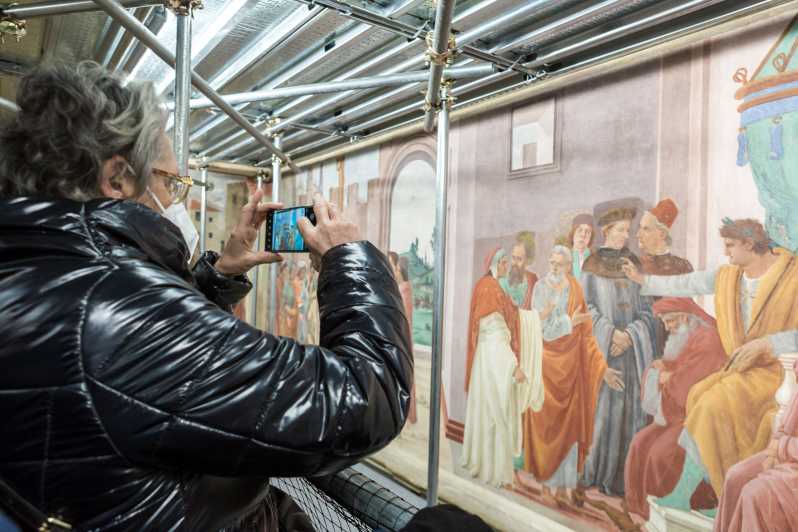
Florence’s best fresco room has a secret entrance. With special access to the Brancacci Chapel at Santa Maria del Carmine, you get close enough to actually study the storytelling in paint.
I love that the tour is built around the Stories of Saint Peter, so you are not just looking at famous names, you are learning how the scenes work. I also like that the explanations come from English-speaking cultural mediators, which makes the art feel clear instead of academic.
One thing to consider: the visit is only 50 minutes, and at least one guide can run talk long, so if you prefer short, crisp explanations, sit where you can hear well and focus on the frescoes first.
Key things to know before you go
- Special access to the Brancacci Chapel, not just a quick glance from the doorway
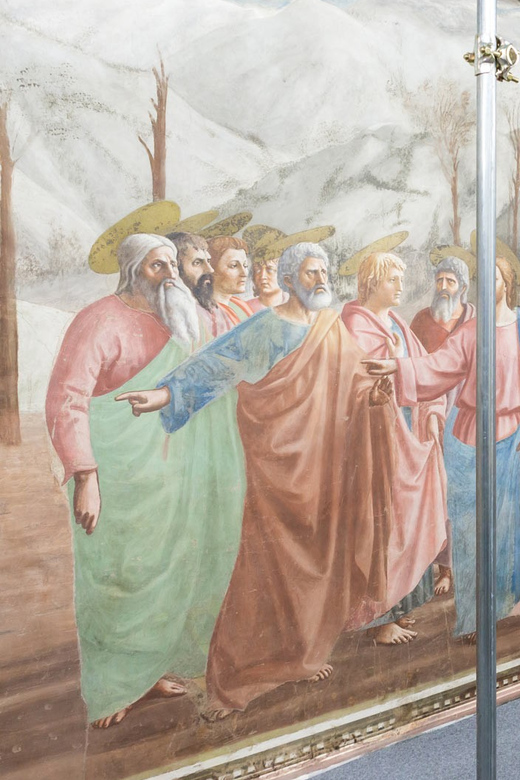
- Masaccio, Masolino da Panicale, and Filippino Lippi frescoes in one focused visit
- Stories of Saint Peter as the tour’s organizing theme, so you track the narrative
- English live explanations that help you connect style and structure to what you see
- Fast timing, 50 minutes, so you should come in ready to look carefully
- Meeting at Piazza del Carmine 14, with entry via the cloister area of Santa Maria del Carmine
Before you close the tab, compare these Florence options on the same shortlist.
- Florence: Skip-The-Line Uffizi Gallery Timed Entry Ticket★ 4.5 · 27,832 reviews
- Tuscany Day Trip from Florence: Siena, San Gimignano, Pisa and Lunch at a Winery★ 5.0 · 21,634 reviews
- Florence: Timed Entrance Ticket to Michelangelo’s David★ 4.6 · 16,983 reviews
- Florence: Michelangelo’s David Skip-the-Line Entry Ticket★ 4.5 · 12,764 reviews
Brancacci Chapel Florence: what special access changes
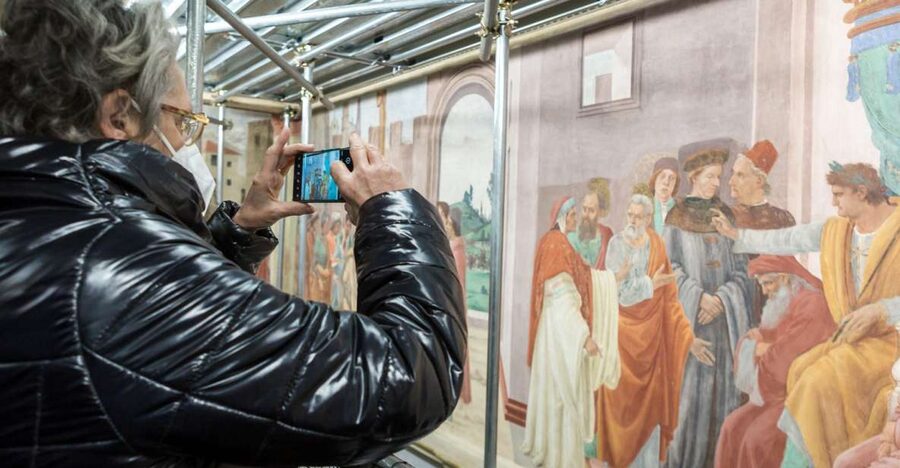
The Brancacci Chapel is one of those places in Florence where the main value is proximity. From farther away, frescoes can look like a wall of color. Up close, the scenes stop being a postcard and start becoming a sequence you can follow.
This experience gives you that proximity through special access inside the chapel. You are not trying to squeeze your way around crowds, and you are not stuck doing the quick, surface-level scan. The format is short and focused, which is good here, because the chapel works best when you can concentrate without wandering.
Also, the visit is guided with a clear purpose. You will spend your time analyzing the chapel’s fresco program, especially the Stories of Saint Peter, rather than treating the room like a museum buffet. That structure helps you remember what you saw, and it helps you notice the details your brain would otherwise skip.
Meeting at Piazza del Carmine 14 and entering through the cloister
Your day starts at Piazza del Carmine 14. The key detail is how you get in: access to the Brancacci Chapel is through the entrance that leads to the cloister of the Church of Santa Maria del Carmine.
That means you should plan to arrive a few minutes early, because the “where do I line up” moment can cost you precious minutes in a 50-minute tour. If you are walking in from nearby streets, give yourself extra time to find the exact cloister entrance, not just the church building.
Practical note: comfortable shoes matter here. Even though the tour is short, you are still doing walking and standing in a historic setting. And per the rules, backpacks are not allowed, so travel light.
Who painted what: Masolino, Masaccio, Filippino Lippi
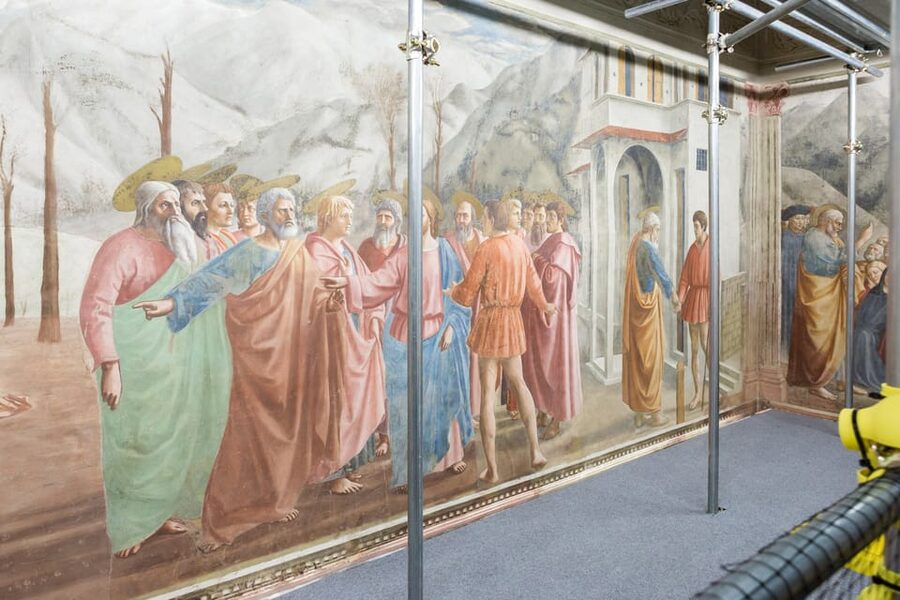
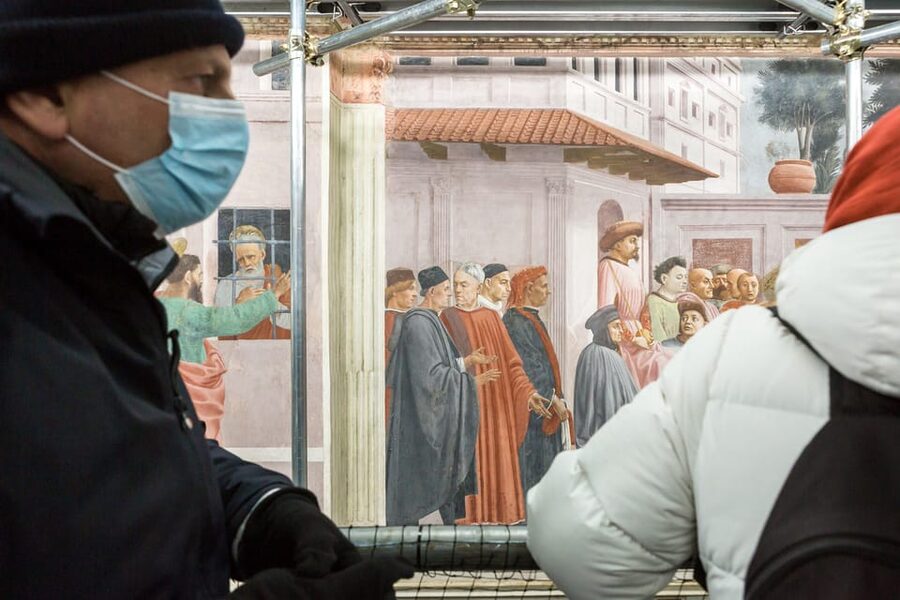
Inside the chapel, the tour centers on the painters tied to the frescoes: Masaccio, Masolino da Panicale, and Filippino Lippi. Seeing these names in one room is a big part of why this visit feels worth paying for, even though the duration is not long.
Here’s what that lineup does for you as a visitor. It turns the chapel into a study room for a particular moment in Renaissance art, not just a must-see stop. Instead of reacting to one style at a time, you start comparing how different hands shape the same overall storytelling project.
You will also learn that the chapel was commissioned by Felice Brancacci, which adds a human layer to what can otherwise feel like pure art reverence. Knowing the work was commissioned helps you understand that the fresco cycle is not random. It is connected to a specific patron context, and it is presented as a coherent set of scenes.
Stories of Saint Peter: how the tour helps you actually see the innovations
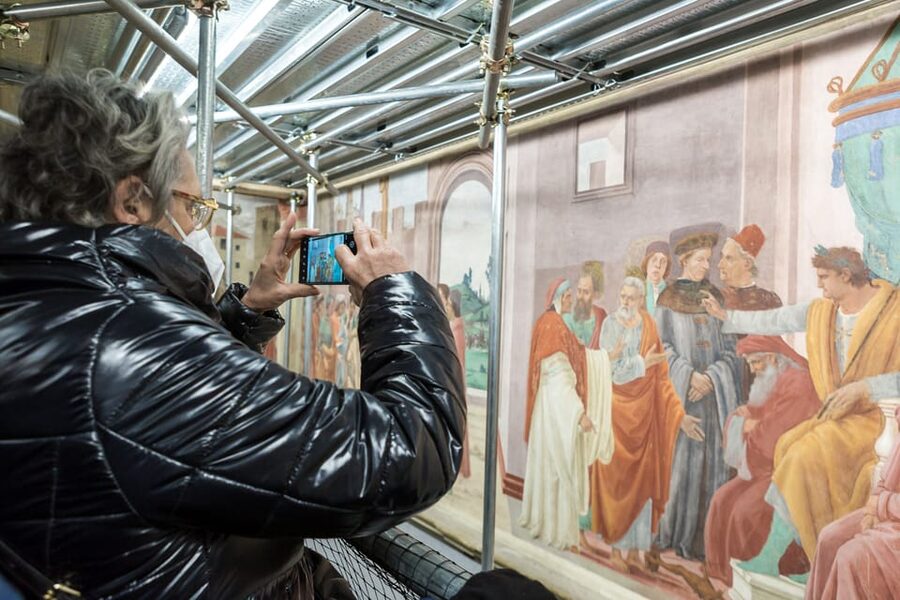
The main focus is the fresco scenes from the Stories of Saint Peter. That matters because it gives the room a storyline. When you have a narrative, you naturally look for how scenes connect, how actions shift, and how the composition guides your eyes.
The explanations also aim at the stylistic and structural innovations associated with Tommaso. You will hear about him as young Tommaso, nicknamed Masaccio, and the nickname is linked to stories of carelessness reported by Giorgio Vasari. Even if you do not normally care about artist anecdotes, this part helps because it gives you a lens for why his approach is discussed as revolutionary.
What I find most useful is that the guidance does not treat innovation as a vague label. It ties innovation to what you see in the scenes: how the figures and the storytelling are organized, and why those choices were different from what people expected.
In other words, you are not just learning that Masaccio is important. You are learning what the chapel looks like when you pay attention to the changes he is credited with.
The pace: 50 minutes in the chapel is short, so plan your attention
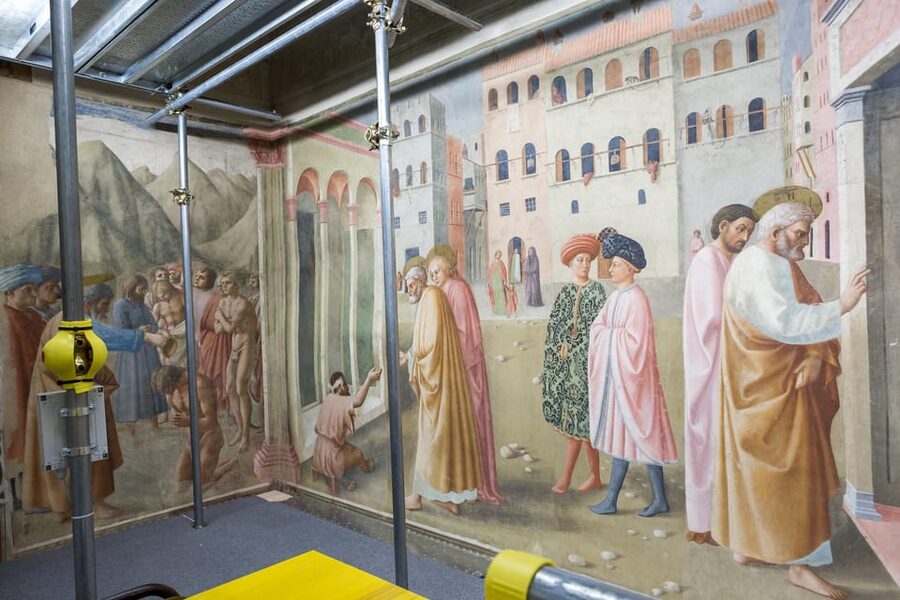
Fifty minutes sounds short because it is. But for a small chapel experience, it is also realistic. You cannot linger forever in a tight space and still keep the group together, and the tour format is designed for meaningful viewing without turning the visit into a long endurance event.
To get the most, I recommend arriving with a simple goal: pick two or three scenes you want to understand better, then let the guide fill the gaps. If you try to learn everything, you will likely remember very little.
One review detail worth taking seriously: some people felt the guide could be too verbose for the time available, and they had trouble hearing without an audioguide. You cannot control the guide’s speaking style, but you can control your position. Choose a spot where you can hear clearly, keep your phone away (distractions break focus fast), and if you rely on sound for comprehension, check on-site whether audioguide options exist for this visit.
If you prefer a tight, back-to-basics approach, just know that the overall experience is still explanation-heavy rather than silent self-guided wandering.

Language and what to expect from the guide
The tour is live, with an English guide. That is great if you want the explanation in real time and you like asking yourself questions as the guide points things out.
If English is not your comfort zone, plan accordingly. The only language listed here is English, so there is no guarantee you will be able to switch to another language style once you are inside.
That said, the positive side of having live explanation is clarity. The chapel’s fresco program can feel overwhelming at first glance, and the guide’s job is to give you a route through the visuals. With the theme of Saint Peter’s stories and the emphasis on Masaccio’s innovations, the guide gives you a framework your eyes can follow.
Price and value for a $36, 50-minute experience
At $36 per person for 50 minutes, you are paying for access plus interpretation. This is not an all-day walking tour where you amortize cost over hours. Instead, you are buying a concentrated time slot in a specific, high-demand interior.
So the value comes down to what you want:
- If you enjoy being guided through art with a clear focus, this price can feel fair because the chapel visit is structured and not random.
- If you prefer solo time at your own pace, you might feel constrained by the short duration and group format.
The good news is that the included special access is the core reason you are here. You are not paying simply to be told what exists, you are paying to see it in a guided, close, organized way. With the chapel being what it is, that focus often justifies the cost for visitors who want a meaningful first look.
Who this tour suits best
This is a strong fit if you:
- Want a focused Florence art stop with a clear theme, Stories of Saint Peter
- Like Renaissance art explanation, especially the role of Masaccio, Masolino, and Filippino Lippi
- Prefer a short, efficient tour instead of a long museum day
It may be less ideal if you:
- Dislike guided interpretation and prefer totally self-directed time
- Need very quiet viewing with minimal talking, because this is actively mediated by the guide
- Are hoping for a language other than English, since English is the listed option
Should you book access to the Brancacci Chapel?
If you are going to Florence with limited time, this is one of the best ways to make the Brancacci Chapel count. The chapel is famous, but the real win here is that you get close-up viewing with a guided framework that helps you read the fresco cycle instead of just admiring it.
Book it if you want a guided focus on the Saint Peter scenes and Masaccio’s credited innovations, delivered in English over a tidy 50-minute visit. Skip it only if you strongly prefer silent, fully independent museum time.
If you do book, come in with comfortable shoes, travel light (no backpacks), and plan to stand where you can hear. You will leave knowing not just the names on the walls, but the story those frescoes are trying to tell.
FAQ
How long is the Florence Brancacci Chapel access experience?
The experience lasts 50 minutes.
Where do I meet for the tour?
You meet at Piazza del Carmine 14.
How do I access the Brancacci Chapel from the meeting point?
Access is via the entrance leading to the cloister of the Church of Santa Maria del Carmine.
Is the tour guided, and what language is it in?
Yes, it is a live tour with an English-speaking guide.
What frescoes will I see during the visit?
You will see frescoes in the Brancacci Chapel by Masaccio, Masolino da Panicale, and Filippino Lippi.
What is the tour focused on inside the chapel?
The tour helps analyze scenes from the Stories of Saint Peter, with attention to stylistic and structural innovations associated with Tommaso, nicknamed Masaccio.
Is special access included?
Yes, special access to the Brancacci Chapel is included.
Are backpacks allowed?
No, backpacks are not allowed.
What should I bring?
Bring comfortable shoes.
What is the cancellation policy?
You can cancel up to 24 hours in advance for a full refund.
Every Florence review, in one place
- Tuscany Day Trip from Florence: Siena, San Gimignano, Pisa and Lunch at a Winery
★ 5.0 · 21,634 reviews - The Best tour in Florence: Renaissance & Medici Tales – guided by a STORYTELLER
★ 5.0 · 12,316 reviews

Florence picks that sit just beyond this itinerary
- Florence: Duomo Complex Private Guided Tour & Optional Dome Climb
★ 5.0 · 4 reviews - Private Tour of Florence Cathedral, Bell Tower & Baptistery
★ 5.0 · 4 reviews - Michelangelo’s David Tour in the Accademia (Tickets NOT included)
★ 4.0 · 4 reviews - Exclusive Pisa Tour from Florence: With Skip-the-Line Access
★ 4.0 · 4 reviews - Full-Day Tour of Tuscany from Florence-small group up 8 pax
★ 4.5 · 4 reviews - Florence: Inferno Private Walking Tour
★ 5.0 · 4 reviews