

Florence field review · WALKING TOURS
Florence Evening Walking Tour: Stories of Power, Love & Betrayal
Florence turns darker after sunset. This Florence Evening Walking Tour threads the Medici era of power, love, and betrayal through real streets and palaces, with audio headsets so you can hear your guide clearly. I like that it connects major Renaissance sites you already want to see with the family rivalries that shaped them.
You meet at Piazza degli Strozzi and finish at Ponte Santa Trinita, then you’re free to head to dinner in the centro storico. The one drawback to plan for is that this is story-heavy and you will be walking a lot, so if you want a chill, scenery-first stroll, the pace and plot may feel like nonstop intrigue.
Key things that make this tour worth your time
- Audio headsets that actually help you hear in crowded streets and squares
- Medici power, love, and betrayal explained where the drama unfolded
- Back-street stops at palazzi and churches that many visitors miss
- Piazza della Signoria and Ponte Vecchio covered with context, not just postcard views
- A tight 1.5-hour loop that leaves you ready for pre-dinner plans
Florence walks that make the stone streets tell the story
- Florence: Guided Walking Tour★ 4.5 · 3,334 reviews
- Skip the line: Uffizi and Accademia Small Group Walking Tour★ 4.5 · 3,135 reviews
- Florence: Guided Walking Tour★ 4.6 · 1,602 reviews
- Florence: Renaissance and Medici Tales Guided Walking Tour★ 4.8 · 1,549 reviews
Why Florence’s power stories work best after dark
Florence has a bright public face in daylight, museums and statues doing their best impression of eternal calm. At night, the same streets feel more personal, and the stories land better when you can picture all those rivals moving through alleys, balconies, and courtyards.
This tour is built for that mood. You’re not just walking between big names, you’re learning why those places mattered to families like the Medici, and to factions that treated politics like a blood sport. You also get a clear “Renaissance-through-the-people” angle, the kind of history that explains why the city looks the way it does.
That’s why I like the structure. It takes famous stops you already recognize and gives them emotional weight, from love affairs that turned into scandal to political games that ended violently.
Meeting in Piazza degli Strozzi, with audio that saves your ears
The tour starts in Piazza degli Strozzi, and it ends at Ponte Santa Trinita, near lots of dinner and bar options. Meeting and ending in well-connected areas matters in Florence, because you can build your evening without fighting the city’s maze for too long.
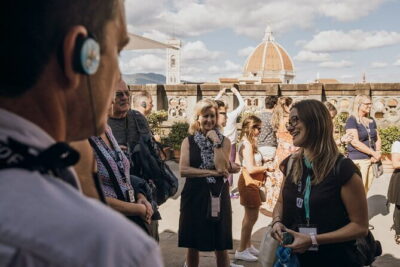
The biggest practical win is the audio headset setup. Florence streets get noisy fast, and it can be frustrating when you’re packed in close. With headsets, you can usually focus on the guide’s voice and not just the background crowd noise.
You’ll also be in a small group (up to 20 people), which helps the pace stay controlled and gives you time to ask questions when the guide slows at each stop. And since the tour is in English, you can follow the names, motives, and timeline without guessing.
Palazzo Strozzi: a facade built for rivalry
Stop 1 is Palazzo Strozzi, admired for its Renaissance grandeur. What makes it useful on this tour is the context your guide adds, why this building is tied to fierce family rivalries and how those conflicts shaped what Florence became.
Even if you’ve seen plenty of palazzi in Italy, this one helps you read the city like a chessboard. You start noticing the “who had power” question behind the architecture: who funded it, who competed, and who tried to look untouchable.
Admission is not included for this stop, so you’re mostly absorbing the building’s presence from outside. That works well for an evening tour, because you can keep moving and still get the meaning.
Palazzo Buondelmonti and the feud that set the tone
Next comes Palazzo Buondelmonti, another stop where the key value is the family feud angle. You’re not just hearing dates, you’re learning how a family’s fate could spark cycles of conflict that echoed for generations.
This is where the tour’s theme becomes clear: Renaissance Florence was not one smooth march of art and ideas. It was power struggles wrapped in ceremony, and palaces were both homes and weapons.
Admission is not included here either, so again, treat it like an outdoor history lesson designed for flow. The advantage is that you’re not stuck waiting for entrances when the evening light changes.
Church of the Santi Apostoli and Borgo Santi Apostoli’s darker folklore
Stop 3 is Chiesa dei Santi Apostoli in Borgo Santi Apostoli. The tour frames this church outside with medieval secrets and eerie stories, tied to rituals and events connected to the site.
This is a good moment to reset your brain. After palazzi and family politics, a church stop gives you a different kind of intrigue, the kind people told about fear, superstition, and the unknown. Even if you don’t buy every supernatural detail, you’ll come away understanding how rumor becomes culture.
This stop is marked as free, so there’s no extra cost tied to simply seeing the exterior and hearing the story.
Keep the Florentine shortlist moving
Palazzo di Parte Guelfa and the idea of factions as politics
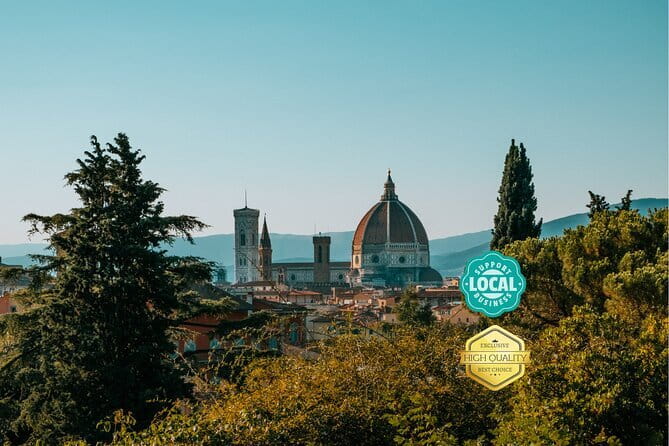
Stop 4, Palazzo di Parte Guelfa, is about Florence’s political factions. From this stately building, you can imagine plotting, voting blocks, and the way the city divided itself into competing identities.
Why this matters for you is simple: without the faction context, Florence’s Renaissance names can feel like random trivia. With it, those names start behaving like characters in a drama, and the rest of what you see in town clicks faster.
Admission is not included at this stop, so you’re again learning from outside views and nearby perspective. The payoff is that you understand why certain squares and buildings became hot zones for power.
Torre degli Amidei: the “bloodiest feud” stop

Stop 5 is Torre degli Amidei, and the tour treats it as a silent witness to one of Florence’s worst conflicts. This is not the calm side of city life, it’s the version where disputes escalated into violence.
For some people, this is the highlight because it explains the stakes behind all that Renaissance pageantry. For others, it may feel heavy, since the tour leans into betrayal, murder, and adultery themes throughout.
Admission is free for this stop, which keeps it uncomplicated. The main thing to know is you’ll spend a little time facing the tower while the story lands, so plan on a good posture and comfortable shoes.
Santo Stefano al Ponte Vecchio: the mystery stop near the river
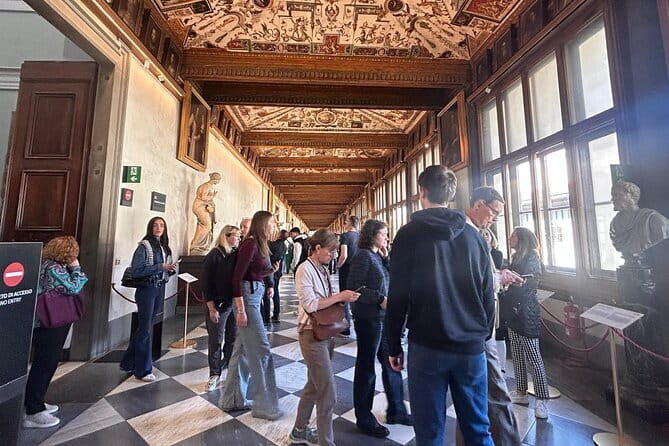
Stop 6 is Auditorium Santo Stefano al Ponte Vecchio, outside the medieval church Santo Stefano al Ponte. It’s described as an unassuming spot with mysteries and lesser-known connections.
This stop is valuable because it moves you off the most obvious track. You learn there’s more going on around Ponte Vecchio than just shops and photos, and you start understanding why the river area attracted both business and drama.
Admission is not included here. Like other stops, you’re positioned to hear the story and look around the area, not to enter a museum.
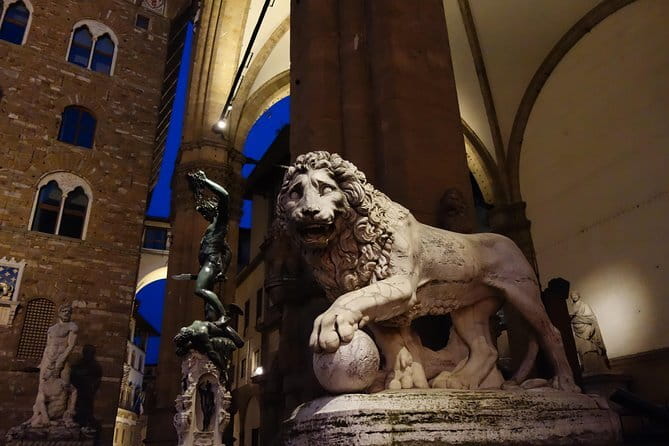
Piazza della Signoria and Palazzo Vecchio: politics you can feel
Stop 7 is Piazza della Signoria, Florence’s political heart. Stop 8 is Palazzo Vecchio, outside the building. The tour’s framing is clear: beneath the majestic surfaces are tales of betrayal, power plays, and murder.
If you care about architecture, this is also a time to practice “read the room” skills. When you understand that this is where decisions and intimidation happened, the stone stops being decorative. It becomes functional, like a theater with permanent sets for both government and conflict.
Stop 7 is marked free, and stop 8 is marked as admission not included. Either way, you’re seeing these places in the public space that made them famous.
And yes, the tour ties in the Uffizi Gallery too, setting up what’s ahead with the idea that the Medici family shaped cultural power as fiercely as political power.
Seeing the Uffizi from the outside, with Botticelli and Michelangelo named
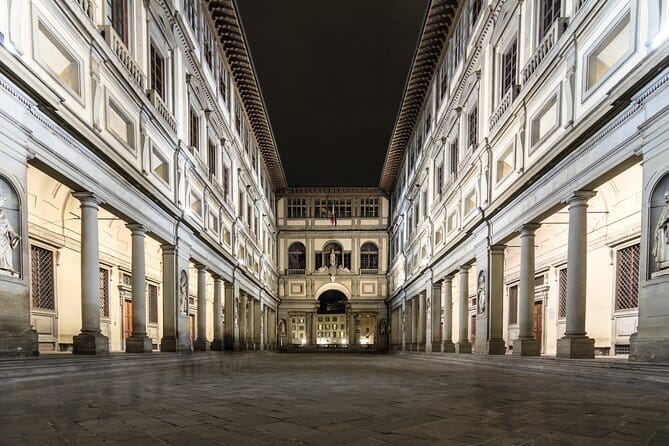
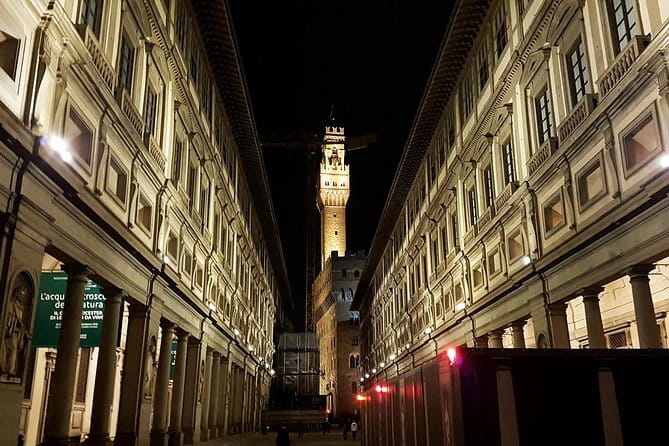
Stop 9 is Gallerie Degli Uffizi, which you view from the outside. You’ll hear about it as a cultural icon with a shadowy past, plus how the Medici family influenced its legacy.
The tour specifically points you toward famous artistic names like Botticelli and Michelangelo. Even without entering, that reference is useful because it helps you decide later whether to book an Uffizi visit and what to look for.
Admission is not included at this stop, so you’re not paying for entry as part of the walking experience. This keeps the evening plan smooth, and it still gives you something to chew on once you’re back inside the gallery later, or if you choose not to.
Ponte Vecchio: where secrets and romance share the same boards
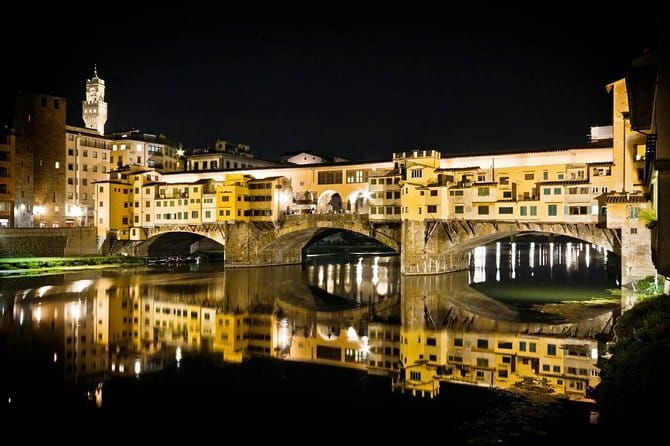
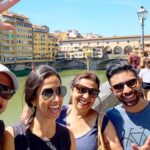
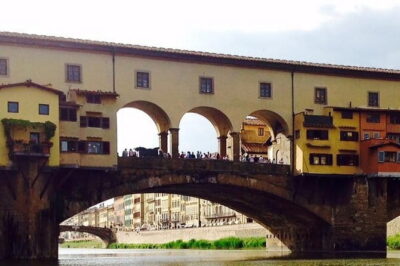
Stop 10 is Ponte Vecchio, and this is one of Florence’s most recognizable bridges. The tour uses that recognition and then flips the script toward hidden deals, forbidden romances, and ancient scandal whispers.
For me, the value here is learning to look beyond the obvious. If you only focus on the shops, you miss why this bridge mattered: trade, leverage, and the kind of power that moves through proximity to wealth.
This stop is free, so it’s a perfect “payoff” moment. You get a classic view and still leave with a story that makes the bridge feel lived-in.
Palazzo Pitti: opulence with a darker edge
Stop 11 is Palazzo Pitti. From the outside, you hear about it as a seat of power and opulence, and also about its darker past tied to political scheming and Medici secrets.
Palazzo Pitti is a great contrast to Palazzo Vecchio. One communicates dominance through grand living, the other through governance and public authority. When you hear both together in one evening, you start seeing Florence as an entire system of power, not just a collection of art.
Admission is not included for this stop. That’s fine for this format because the tour’s real goal is understanding, not tickets.
Palazzo Bianca Cappello: love story scandal and a tragic ending
Stop 12 is Palazzo Bianca Cappello, originally of the Corbinelli family. The tour highlights the mystery and tells the tragic tale of Bianca Cappello, whose love story with a Medici duke ended in scandal and an untimely death.
This stop is the tour’s emotional turn. It shifts from faction politics to personal stakes, showing how private relationships could reshape public life. If you like stories where romance and power collide, this is a standout.
Admission is not included here. You’ll be seeing it from outside while the story makes the name feel real.
Ending at Ponte Santa Trinita, ready for dinner and a final walk
Stop 13 is Ponte Santa Trinita, a Renaissance gem where the tour ends. The point of finishing here is practical: you land near the centro storico, where you can choose dinner without trekking across town.
Ponte Santa Trinita also works as a “wrap the evening” moment. You reflect on the mix of love, loss, and resilience that defines Florence’s long story arc, at least as this tour presents it.
Some groups also like to treat the evening with gelato near the finish area, since the tour’s final stretch often ends with time for a sweet stop. If that’s your style, plan for it, but keep it flexible so you don’t miss your dinner window.
Price and what you’re really getting for $21.72
At $21.72 per person for about 1.5 hours, this is priced like an efficient evening orientation plus story package. You’re not paying for museum entry as part of the plan, and much of what you see is outside, which helps the experience stay simple.
The tour is offered in English, and it uses a mobile ticket. That combination matters if you’re bouncing between activities, because you’re not juggling paper, lines, or complicated timing.
You’ll typically book it around 31 days in advance on average, which suggests it’s popular in peak season. If your schedule is tight, I’d still try to lock in early so you’re not hunting for late availability.
Also, you get audio headsets. In Florence, that’s not a small perk, it’s what keeps a guided story from turning into shouting across a crowd.
Who this evening walk suits best
This tour is ideal if you want to understand Florence as a city shaped by families, power, and consequences. If you enjoy dark romance, political rivalries, and the way art patronage and governance can be connected, the theme will feel focused, not random.
It’s also a smart first-evening option. You’ll see major areas like Piazza della Signoria and Ponte Vecchio while also getting off the most crowded lines into lesser-known streets and palazzi.
If you’re traveling with someone who wants lighter stories, more architecture time, or lots of stops to sit, you might feel less satisfied. A few participants have noted that storytelling can run long or feel like a history lesson, and that it can be difficult to keep photo focus when the guide is pushing plot points at each stop.
And if you have mobility challenges or need stroller access, note that it is not suggested for strollers or baby carriages. The walking is part of the design, so comfortable shoes are not optional.
Should you book this Florence Evening Walking Tour?
Book it if you want an evening plan that teaches you how Renaissance Florence worked behind the scenes, with audio headsets, a small group, and a route that ends in a dinner-friendly spot. It’s especially worth it when you crave stories about the Medici and the web of rivals around them, because the tour keeps tying names to streets and buildings you can point at.
Skip it or swap to a more relaxed option if you prefer a calm stroll, mostly architecture without heavy intrigue, or you want to spend more time at fewer stops. This is a “story-first” walk, and the best fit is someone who likes history presented as drama, not just facts.
Florence at walking speed

More Florence tours to open next
- The Best tour in Florence: Renaissance & Medici Tales – guided by a STORYTELLER
★ 5.0 · 12,316 reviews

Every Florence review, in one place
- Tuscany Day Trip from Florence: Siena, San Gimignano, Pisa and Lunch at a Winery
★ 5.0 · 21,634 reviews - The Best tour in Florence: Renaissance & Medici Tales – guided by a STORYTELLER
★ 5.0 · 12,316 reviews



Florence picks that sit just beyond this itinerary
- One Hour Uffizi Guided Tour: Masterpieces of the Renaissance
★ 5.0 · 3 reviews - Sightseeing Tuscany by touring bike – 1 day rental
★ 5.0 · 3 reviews - Private Siena, S. Gimignano, Chianti Road and Wine Tasting
★ 5.0 · 3 reviews - Bargello Museum Private Tour: Michelangelo’s Bacchus & Donatello’s David
★ 5.0 · 3 reviews - Authentic Florence Cooking Class at Costanza’s 1839 Family Estate
★ 5.0 · 3 reviews - San Gimignano and Volterra private tour: etruscans, romans and middle age jewels
★ 5.0 · 3 reviews
More Walking Tours worth comparing.
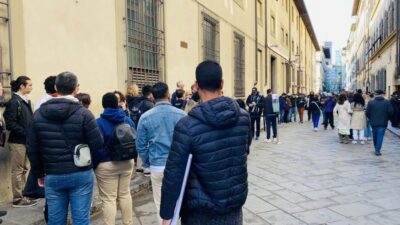 ★ 4.5Guided Walking TourFrom $313,334 reviews
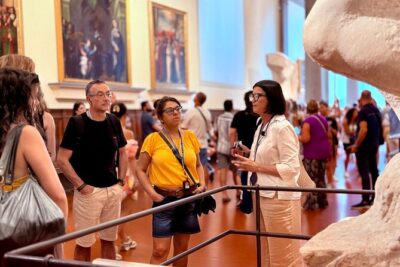 ★ 4.5Skip the line: Uffizi and Accademia Small Group Walking TourFrom $1483,135 reviews
★ 4.6Guided Walking TourFrom $271,602 reviews
★ 4.5Skip the line: Uffizi and Accademia Small Group Walking TourFrom $1483,135 reviews
★ 4.6Guided Walking TourFrom $271,602 reviews
 ★ 4.8Renaissance and Medici Tales Guided Walking TourFrom $21,549 reviews
 ★ 4.7Uffizi & Accademia Small Group Walking TourFrom $1481,380 reviews
 ★ 5.0Skip-the-Line Florence Highlights and David Walking TourFrom $1171,127 reviews
 ★ 4.6Dark Mysteries and Legends Guided Walking TourFrom $21,081 reviews
 ★ 4.5Florence in a Day: Michelangelo’s David, Uffizi and Guided City Walking TourFrom $1341,048 reviews
Find this experience in another shortlist