
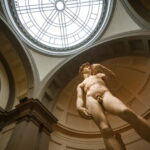
David is mind-blowing up close. This Florence Accademia Gallery tour gives you skip-the-line entry and a small group (up to 15) so you can actually focus, not queue. The trade-off: it is a tight 1-hour visit, so you will not get hours to wander room by room, and it is not suitable for wheelchair users.
What I like most is how the tour is built around the big emotional hit first, Michelangelo’s David, then it keeps going with the works people often miss fast. You will also get guided context from a local expert, with names like Francesca and Martina showing up in the tour experience, and you do it in English with a live guide.
Here is the practical consideration to keep in mind. If you hate structured time, or you want to linger at every sculpture and painting until it feels like your own private museum, this probably will feel a bit fast.
Key takeaways before you book
- Skip-the-line entry helps you spend time looking, not waiting
- Michelangelo’s David gets dedicated attention with a photo stop
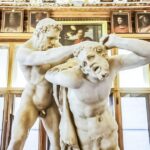
- Michelangelo’s other Accademia highlights include the Prisoners and San Matteo
- Giotto paintings with gold backgrounds add a different kind of Renaissance beauty
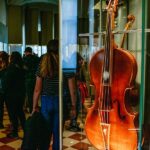
- Museum of Musical Instruments is included, which makes the visit more fun than you expect
- Headsets are provided when groups get larger than 5, so you do not have to fight for audio
Compare the Accademia visits built around the original David
- Florence: Timed Entrance Ticket to Michelangelo’s David★ 4.6 · 16,983 reviews
- Florence: Michelangelo’s David Skip-the-Line Entry Ticket★ 4.5 · 12,764 reviews
- Florence Accademia Gallery Tour with Entrance Ticket Included★ 4.5 · 6,148 reviews
- Florence: Accademia Gallery Guided Tour★ 4.6 · 4,156 reviews
Accademia and David in one shot, without the bottleneck
Florence has a special talent for turning art visits into stress. You step out of a sunny street, and suddenly there is a line, a crowd, and time moving faster than your attention. This tour is designed to remove the worst part of that problem with skip-the-line tickets to the Accademia Gallery.
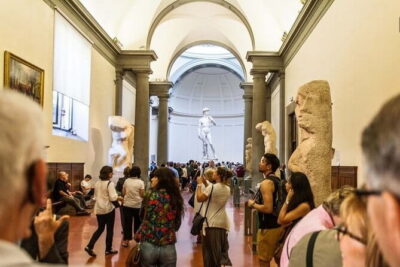
The other big reason I like this format: the group size stays small, up to 15 people. That matters because the Accademia is not just one room with one famous sculpture. It is a sequence of rooms where details build on each other, and it is easier to keep your bearings when you are not packed in like a moving subway car.
One more thing to appreciate as a traveler who wants a good plan. The tour is set for an efficient 1-hour length, so it fits into a tight Florence schedule. You will not leave with that feeling of, I saw the entrance and then the whole day vanished. You will leave with the main points covered and enough direction to decide what to explore later on your own.
Meeting on Via degli Alfani: simple start, clear handoff
The meeting point is Via degli Alfani, 115. You meet your TUI local guide about 10 minutes before departure, and the guide will be holding a TUI sign or flag.
This is the kind of detail that saves time in Florence. The city center can feel like a maze when you are checking streets while also trying to spot a flag in the sun. Arriving early gives you a buffer to get oriented, settle your phone maps, and avoid the scramble that happens when you are late.
The tour runs in English with a live guide. That matters because the value here is not just seeing the objects, it is understanding how they connect and what to look for when you get close enough that details start shouting at you.
Your guided Accademia Gallery visit: where the guide makes it click
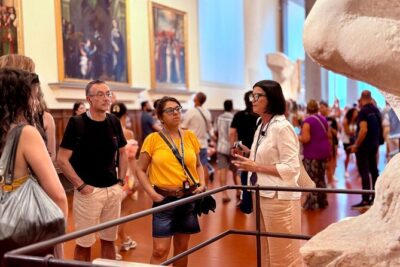
Your tour begins inside the Accademia Gallery with a guided portion (about an hour total for the experience). Even without getting too fancy, a good guide changes how you experience the museum. You do not just look. You start noticing relationships, repeated symbols, and artistic choices that you might otherwise miss.
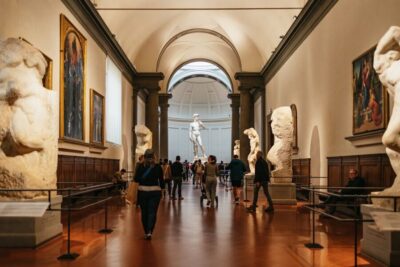
You are set up to see more than one kind of art. The tour is built around Michelangelo’s works and also includes Giotto paintings with gold backgrounds. That mix is important. Renaissance art in Florence is not a single style. It is a conversation across painters and time periods.
What your guide will help you focus on
The tour highlights include:
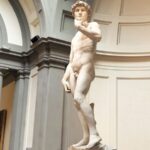
- Michelangelo’s David
- the Prisoners
- San Matteo
- Giotto paintings with gold backgrounds
- the Museum of Musical Instruments
In practical terms, this means your guide can help you shift attention the right way. For sculptures like Michelangelo’s, you need to look slowly at proportions, posture, and how the figure feels in three dimensions. For paintings with gold backgrounds, you need to notice the way light is implied and how figures and halos are designed to read clearly even when the room lighting is not perfect.
This is also where the local guide context comes in. The tour information credits guides like Francesca with explaining how what you see connects to the broader Renaissance world and the role of the Medici family, who collected and shaped art. Even if you only catch a few of those connections, it helps the museum stop feeling random.
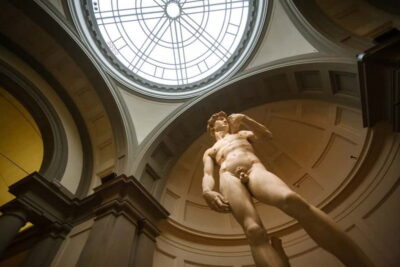
Michelangelo’s David: the photo stop that still leaves room to see
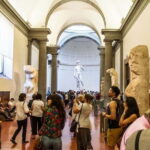
Michelangelo’s David is why many people come, and it is also why so many people fail to see it well. Crowds make you rush. Rush makes you miss the details that make David more than a famous image.
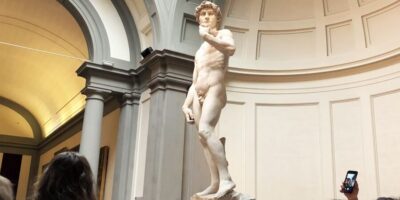
On this tour, you get Michelangelo’s David as a dedicated stop, with a photo stop built in. That is a smart move, because it tells you exactly when to pause for pictures, so you are not scrambling for timing while the group keeps moving.
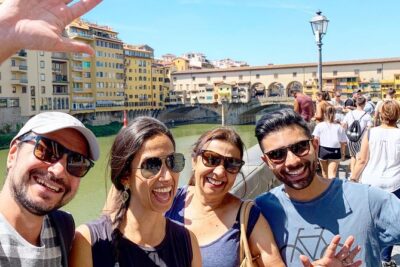
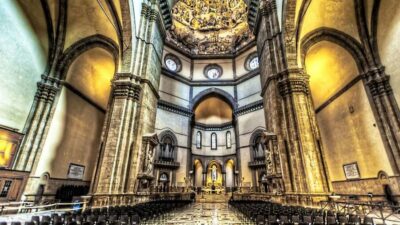
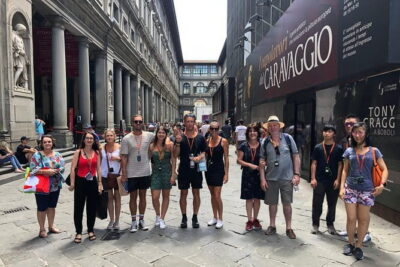
When a guide is worth having beside you in Florence
How to get more out of David without losing the group
You do not need a checklist to enjoy it. But if you want the tour to pay off, here is the mindset that works best:
- Look at the face first. The expression is not just pretty. It is tense, focused, and human.
- Then check the body. David’s stance communicates control, not just strength.
- Last, step your attention out and back in. The longer you look, the more you notice how the statue is meant to be read from different angles.
Because this is a small-group experience, you are not stuck behind ten people the whole time. You still should be realistic about time. The visit is 1 hour total, so you will not get an all-day David experience. But you should get a well-paced look that covers the major “wow” moments without turning it into a sprint.
Prisoners and San Matteo: the highlights people forget to plan for
If David is the headline, the Prisoners and San Matteo are where this tour earns its keep.
Here is why. Many first-time visitors come for one icon. They spend most of their energy photographing and staring at David, and then the rest of the collection fades into the background. A guided stop changes that. It nudges you to see that Michelangelo was doing more than one thing, and that his ideas show up across multiple works.
The Prisoners
The Prisoners are compelling because they feel like they are fighting to be released. Even if you have seen images online, being in the room can make the emotions hit harder. You tend to notice how unfinished forms suggest motion and resistance, which is the kind of detail you usually miss when you move too fast.
San Matteo
San Matteo brings a different emotional register. It helps you see Michelangelo’s range and how religious subjects were made to feel dramatic, physical, and close to the viewer. A guide helps you know where to look so the sculpture does not just become another impressive chunk of marble.
If you care about “why this matters,” these stops are exactly the kind of content that makes a guided tour feel worth the money.
Giotto gold backgrounds: seeing paintings like they are objects, not wallpaper
Not all famous Florence art is sculpture. This tour includes Giotto paintings with gold backgrounds, which is a big deal if you usually breeze through gallery walls.
Gold backgrounds can be tricky for modern eyes. In photos, gold often looks flat or decorative. In person, you start to understand what it is doing. It frames figures, creates a halo effect, and turns the painting into a world where light is not naturalistic. It is symbolic and intentional.
This is where the guide’s job matters. A good explanation helps you stop treating these paintings like background scenery and start reading them as design choices.
If you want a simple plan while you are looking, use this approach:
- Find the figure shapes first.
- Then look for facial expression and posture.
- Finally, notice how the gold background changes the way the figures feel, more sacred and more suspended.
Museum of Musical Instruments: the pleasant surprise stop
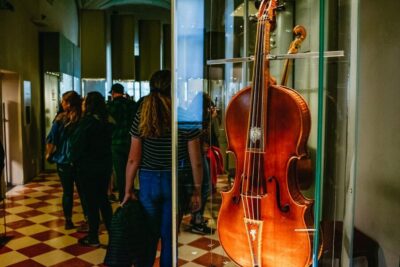
This is one of those inclusions that turns a famous-art day into a more varied Florence visit. The tour includes access to the Museum of Musical Instruments.
You might think musical instruments in a museum would be a quick detour. In reality, it often becomes a break from the heavy art focus. It is a reminder that creativity in Florence did not stop at sculpture and paint. If you like museums that shift your attention without losing quality, this stop is a nice payoff.
It also makes timing feel easier. After staring up at marble and thinking about Renaissance ambition, the musical objects give your eyes and brain a new kind of detail to process.
Temporary exhibitions: how they affect value
You also get access to temporary exhibitions. That is not just a bonus line item. It changes your odds of seeing something you cannot get during every other month.
Because the tour is only about 1 hour, adding temporary content increases the chance that your visit feels specific to your dates in Florence. Even if the main highlights are the same, temporary exhibitions can add variety to what you experience.
Small group size, headsets, and why sound matters
Small-group tours are usually sold with a vague promise of intimacy. The real benefit is practical: you spend less time waiting for people to get situated, and you can actually hear the guide.
This tour provides headsets for groups of more than 5 people. That matters in a museum setting where voices get swallowed by walls, crowd noise, and people trying to talk while walking.
When you can hear the guide clearly, you can do two things:
- You can follow the key points without turning your head every five seconds.
- You can look longer because you are not missing the important explanation.
This is one of the simplest “quality of experience” upgrades you can ask for, and it is included here.
Price, value, and who this is for at $58
At $58 per person for a 1-hour guided, small-group visit, I think the value comes from three places that cost money in time or effort:
- Skip-the-line tickets, which protect your schedule
- an expert local guide, which helps you see more than just the headline work
- small-group structure (up to 15) plus headsets when needed
If you are budgeting Florence tightly, this kind of guided time can be a smart buy. You are paying to reduce friction, and you are buying direction so you see more of the museum’s intended highlights in less time.
If you are the type who loves wandering museums slowly and reading every wall text, you might prefer an unstructured visit. But if your schedule is short, this is the sort of tour that helps you convert limited time into a clearer, more satisfying experience.
A few considerations so you can plan smoothly
A couple of reality checks help you set expectations:
- It is not suitable for wheelchair users, so plan an alternative if mobility access is needed.
- It is a tight 1-hour visit. You will see major highlights, but you will not have time to study everything.
- The tour is in English, which is great if that is your comfort language. If you need another language, you will want to check options before booking.
On the good side, it is also set up for easy meeting logistics, with a clear start at Via degli Alfani, 115 and a TUI sign or flag.
Should you book the Florence Accademia Gallery & David small-group tour?
I would book this tour if:
- you want to see Michelangelo’s David without spending your vacation time fighting lines
- you value guidance that helps you notice the Prisoners, San Matteo, and Giotto gold backgrounds
- you like the idea of adding something unexpected, like the Museum of Musical Instruments
- you want a small-group pace with headsets for clearer audio
I would think twice if:
- you want a long, self-paced museum day with time to revisit favorites repeatedly
- you need wheelchair-friendly access
My bottom line: this is a strong choice for a short Florence window. It is focused, efficient, and built around the parts of the Accademia that most people regret rushing past.
FAQ
How long is the Florence Accademia Gallery & David small-group tour?
The tour duration is 1 hour.
Where do I meet the guide?
You meet at Via degli Alfani, 115. Arrive about 10 minutes before departure, and the guide will be holding a TUI sign or flag.
How many people are in the group, and do I get help hearing the guide?
The group is up to 15 people. Headsets are provided for groups of more than 5 people.
What will I see during the tour?
You will visit the Accademia Gallery and see highlights including Michelangelo’s David, the Prisoners, San Matteo, Giotto paintings with gold backgrounds, and the Museum of Musical Instruments.
Does the tour include skip-the-line tickets?
Yes. Skip-the-line tickets to the Accademia Gallery are included.
Is the tour offered in English?
Yes. The live tour guide speaks English.
Is the tour suitable for wheelchair users?
No, it is not suitable for wheelchair users.
More Florence tours to open next
- The Best tour in Florence: Renaissance & Medici Tales – guided by a STORYTELLER
★ 5.0 · 12,316 reviews
Every Florence review, in one place
- Tuscany Day Trip from Florence: Siena, San Gimignano, Pisa and Lunch at a Winery
★ 5.0 · 21,634 reviews - The Best tour in Florence: Renaissance & Medici Tales – guided by a STORYTELLER
★ 5.0 · 12,316 reviews

David and the Accademia, compared
Florence picks that sit just beyond this itinerary
- One Hour Uffizi Guided Tour: Masterpieces of the Renaissance
★ 5.0 · 3 reviews - Sightseeing Tuscany by touring bike – 1 day rental
★ 5.0 · 3 reviews - Private Siena, S. Gimignano, Chianti Road and Wine Tasting
★ 5.0 · 3 reviews - Bargello Museum Private Tour: Michelangelo’s Bacchus & Donatello’s David
★ 5.0 · 3 reviews - Authentic Florence Cooking Class at Costanza’s 1839 Family Estate
★ 5.0 · 3 reviews - San Gimignano and Volterra private tour: etruscans, romans and middle age jewels
★ 5.0 · 3 reviews
More Accademia & David Experiences worth comparing.
 ★ 4.6Timed Entrance Ticket to Michelangelo’s DavidFrom $2616,983 reviews
 ★ 4.5Michelangelo’s David Skip-the-Line Entry TicketFrom $4512,764 reviews
 ★ 4.5Florence Accademia Gallery Tour with Entrance Ticket IncludedFrom $456,148 reviews
Accademia Gallery Guided TourFrom $534,156 reviews
 ★ 4.6Timed Entry Ticket to Michelangelo’s David & eBookFrom $374,049 reviews
 ★ 4.5Skip the line: Uffizi and Accademia Small Group Walking TourFrom $1483,135 reviews
 ★ 4.5Skip-the-Line Accademia Guided TourFrom $432,327 reviews
 ★ 4.6Accademia Gallery Guided Tour with Entry TicketFrom $492,253 reviews
Find this experience in another shortlist