
Florence field review · MEDICI FLORENCE & RENAISSANCE STORIES
Medici Mile Walking Tour along the path of Medici Residences
Florence’s Medici Mile is politics on foot. This walking tour strings together the places that powered the Medici family, from the first Medici religious base in San Lorenzo to the dramatic civic stage around Piazza della Signoria and the bridge everybody photographs. You’ll also trace the outside route tied to the Vasari Corridor, so the tour gives you more than pretty views, it gives you a sense of how control and comfort moved through the city.
I like two things the most. First, the pacing hits the big names fast, with short stops that still explain what you’re looking at, like the Medici chapel complex and the key squares that shaped Renaissance Florence. Second, I love the optional upgrade. If you add it, you get skip-the-line entrance with your ticket to Pitti Palace or Boboli Gardens, then you can tour the interiors at your own speed rather than getting stuck in a long, slow guided museum slog.
One caution, though: your enjoyment depends on guide clarity and keeping the group together in crowds. Florence streets can feel like a choose-your-own-adventure, and a couple of missed minutes at the start can snowball, especially when the later part includes timed entry tickets like Boboli Gardens or Pitti.
Key things to know before you walk
- You’re tracing power, not just monuments. The route connects Medici residences, government spaces, and the private passage used by the grand dukes.
- The Vasari Corridor is all about the exterior line. You see where it sits in relation to streets and buildings, not a full inside visit.
- Your ticket upgrade changes the tour shape. Early stops are quick and free, then the final stretch can turn into a longer museum-and-garden day if you choose Pitti or Boboli.
- The group is capped at 20. That usually means less crowd crush than you get with giant buses and big walking packs.
- The early stops are ticket-free. Basilica and chapel sites on this route do not require you to buy an admission ticket for the experience portion.
- Guide performance matters. Some leaders like Marta and Lisa are praised for story delivery and answering questions, while other departures can feel less focused, so choose with your priorities in mind.
More Medici stories behind the palaces, paintings and city streets
- The Best tour in Florence: Renaissance & Medici Tales – guided by a STORYTELLER★ 5.0 · 12,316 reviews
- The Best Tour in Florence: Renaissance and Medici Tales★ 5.0 · 10,810 reviews
- Florence: Renaissance and Medici Tales Guided Walking Tour★ 4.8 · 1,549 reviews
- Florence: Mysteries of the Medici Guided Walking Tour★ 4.4 · 940 reviews
The Medici Mile route, San Lorenzo to Palazzo Pitti
This is a linear “walk the dynasty” experience. You start near Via de’ Martelli 50, then you work your way through the heart of Florence’s Medici world, ending at Palazzo Pitti on Piazza de’ Pitti 1. The tour is designed around the idea that Renaissance power leaves footprints across churches, palaces, and squares.
A lot of tours in Florence treat the Medici era like background flavor. This one is more direct. It starts with the Medici religious stronghold in San Lorenzo, moves outward into public prestige and civic control around the Duomo and Piazza della Signoria, then links that story to the secretive, practical side of power in the Vasari Corridor route above Santa Felicita. After that, you cross the old bridge that shaped commerce and city life, Ponte Vecchio, and end with the Medici’s grand-domestic world in Boboli Gardens and Pitti Palace.
Plan for steady walking and lots of stopping. Even when the stop times are short, you’re looking at façades, doorways, and building relationships you might not notice on your own. That’s the real win here: the city becomes readable.
Getting oriented at Via de’ Martelli: start point and meeting rhythm
The meeting point is Via de’ Martelli, 50, 50122 Firenze FI. The tour ends at Palazzo Pitti, Piazza de’ Pitti, 1, 50125 Firenze FI. You’ll also get assistance at the meeting point, which matters because small groups can drift fast in a city where everyone is taking selfies and everyone has the same idea.
Most of the walking is manageable for people who can handle urban sidewalks and repeated short climbs. Comfortable walking shoes are a must, because even “just a stroll” becomes work when you’re stopping every few minutes for explanations and photos. Also note the tour has a mobile ticket, so have your phone ready and your reservation handy.
Language varies by season. From April to October, you get a monolingual guided visit. From November 1, 2024 to March 31, 2025, Spanish is confirmed when there are at least four participants. If you’re traveling outside the April to October window, that language detail can affect your experience, so check your booking language before you show up.
Stop 1 and 2: Basilica di San Lorenzo and the Cappelle Medicee
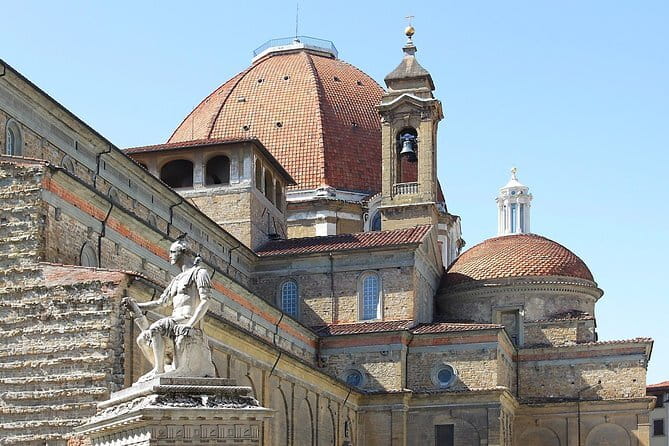
You begin at Basilica di San Lorenzo, a Medici family church. The idea is simple but effective. Before you see palaces and political squares, you see the place the Medici world wrapped itself in faith, legitimacy, and legacy.
Next comes the Cappelle Medicee, the Medici mausoleum. This is where the story turns from art patronage into family power made permanent. Even with a short visit, standing in the Medici burial complex helps you understand why later buildings are so confident. You’re watching a family brand build itself in stone.
These two stops are ticket-free for the experience portion, which makes them a smart start. You’re not burning time hunting for admissions, and you’re not paying extra just to get the background you need.
If you want one practical tip: keep an eye on what your guide points out, then look back at it later from a different angle. In this part of Florence, perspectives are everything, and the buildings reward slow observation.
Palazzo Medici Riccardi: the family residence that started it all
Palazzo Medici Riccardi is the first residence of the Medici family in the San Lorenzo district. It’s an important stop because it shows the Medici before they become the grand-ducal brand everyone recognizes from textbooks.
At this point in the route, you’re building a mental map. The guide’s job here is to connect the architectural cues you see on the exterior to the family’s ambitions. You’ll spend about 15 minutes here, which is short, but it’s usually enough time to understand the role the palace played in the early Medici phase.
One reason I like this stop: it keeps you from treating the Medici story like one long, uninterrupted success. When you see where power begins, you can better appreciate the later tension between civic life, court life, and private life in the city.
Piazza San Giovanni: Duomo views and the Medici civic stage
Then you head to Piazza San Giovanni. This is one of Florence’s “look up and you’re a scholar” squares. You’ll admire the Cathedral, the Brunelleschi Dome, Giotto’s bell tower, and the Baptistery.
This part can feel like a pause from the family story, but it isn’t. Public religious landmarks mattered because Renaissance families needed to show they were aligned with the city’s highest symbols. If you want to understand why the Medici worked so hard at patronage, this square helps you see the audience they were playing to.
Your stop time is around 15 minutes. That’s usually enough to take photos, then still register what makes the dome and bell tower so distinctive.
Florence walks that make the stone streets tell the story
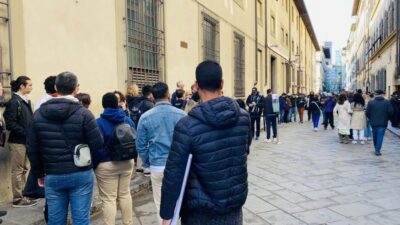
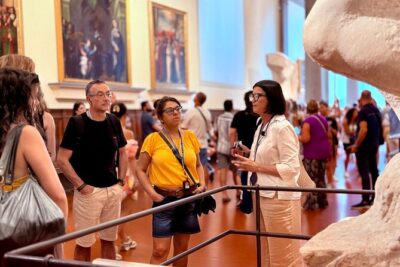
Piazza della Signoria, Palazzo Vecchio, and the public face of control

From the cathedral square you move to Piazza della Signoria, where you can see Palazzo Vecchio. The tour frames this as the second Medici residence. That matters because Palazzo Vecchio is not a quiet private home. It’s civic theater.
This is where the story often becomes more political. You’re in the space where government happens, where power is performed in public, and where the Medici needed to look legitimate to citizens who could be loud or skeptical.
Spend a full 15 minutes here. Use that time to notice how the square’s layout channels movement. If you stand in one spot long enough, you can imagine who was seen and who was hidden. That thinking links directly to the Vasari Corridor stop later.
Also, if your guide is one of the stronger story tellers, this is usually where you’ll feel it most. Names like Marta and Lisa are associated with clear explanations and good pacing, and that kind of guiding makes a big outdoor square feel like it has a script.
Santa Felicita and the Vasari Corridor exterior line above you
Next is the Church of Santa Felicita. Here’s the key detail. Above the church, you can see the Vasari Corridor, a secret and comfortable passageway used by the Medici grand dukes. The corridor let them move between Palazzo Pitti and their offices in Palazzo Vecchio without being seen by citizens.
This is one of the most interesting parts of the tour because it reframes Florence street life. Instead of thinking of the city as open and public, you start thinking about routes, sightlines, and who gets to move unseen.
You get about 10 minutes here. It sounds brief, but the point isn’t to stare at one façade. The point is to understand the connection between two residences and how the corridor bridges them in a practical, controlled way.
If you’re the type who likes to connect architecture to real life, you’ll probably enjoy this stop a lot.
Ponte Vecchio: old bridge, big symbolism
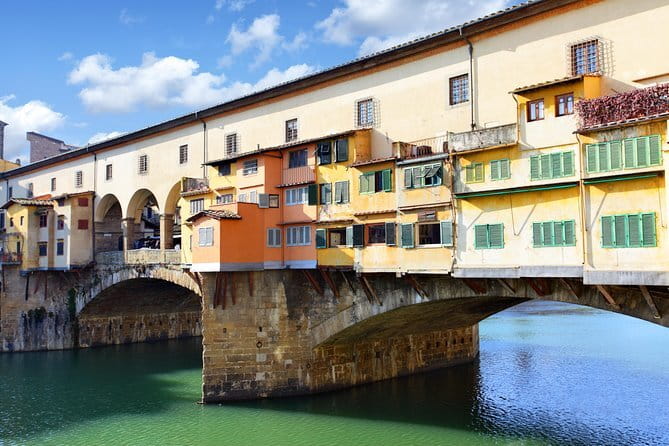
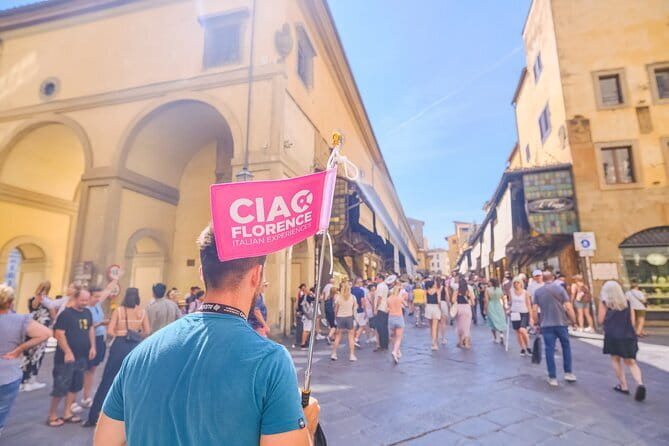
Then you reach Ponte Vecchio, the oldest bridge in Florence and also the most famous. It’s a short stop, about 10 minutes, but it’s a classic “stop and breathe” segment. The bridge is busy, it’s photogenic, and it helps you absorb what you’ve learned so far.
Why does it matter for a Medici tour? Bridges are chokepoints. They shape trade, movement, and daily visibility. When you connect that to the corridor concept from Santa Felicita, you can feel the contrast between public movement and private movement.
If the timing is right, take one minute just to look up and out, not down at your phone. Florence rewards that.
Boboli Gardens and Pitti Palace tickets: what you actually get
This is the part that depends on what you selected when you booked.
Giardino di Boboli
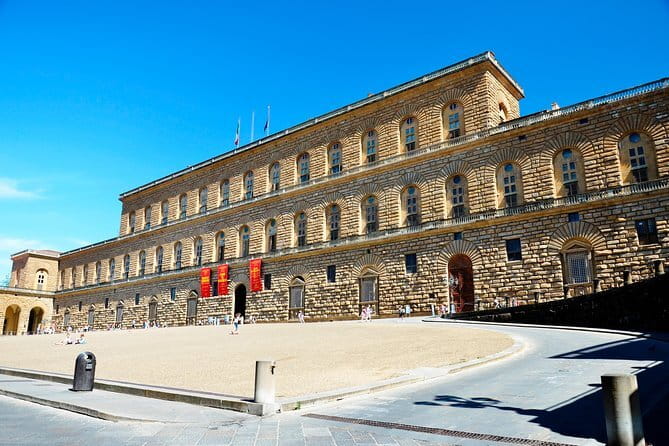
If you choose Boboli Gardens, the tour includes skip-the-line entrance tickets. The time for the garden portion is about 1 hour, and the tour frames Boboli as the grand-ducal garden of Palazzo Pitti, with a lot of historical weight in how it’s arranged.
Your ticket coverage also includes entrance at the Porcelain Museum and Bardini Gardens. That’s a useful add-on because it expands your garden visit into something more museum-like, without needing another separate booking right away.
Palazzo Pitti
If you choose Pitti Palace, the tour includes skip-the-line entrance tickets for self-guided exploring. The time on the palace portion is also listed as about 1 hour.
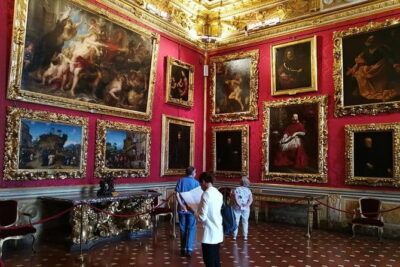
Your ticket allows you to visit the Palatine Gallery, Gallery of Modern Art, the Museum of Fashion and Costume, and the Treasure of the Grand Dukes. That set of venues is broad enough that even if you’re not a hardcore museum person, you can pick what interests you most.
Important note: the included tickets are self-guided. The experience does not include a guided visit inside Pitti Palace or Boboli Gardens. Your tour guide helps you set up the story outside, then your ticket lets you go in and explore on your own.
That can be a pro or a con. If you like flexibility, it’s a pro. If you want every room explained, it can feel unfinished.
When the guide matters: what to expect from different leadership styles
This tour’s value lives or dies by communication. The itinerary is clear, but Florence crowds are not. You need a guide who can be heard, can keep the group together, and can connect each stop to the Medici story instead of listing facts at speed.
I’ve seen examples of what works well on this route. Guides named Marta are credited with interesting stories and adding perspective, including ways of seeing the other side of Ponte Vecchio that you might skip. Lisa is praised for knowing the history closely and staying available even after the planned time. Maria Cristina is described as friendly and prepared, with a more personal feel, almost like walking with an informed friend.
There are also cautionary examples. One guide named Marcello reportedly moved at a pace that made it hard to keep up and did not handle ticket distribution for Boboli Gardens correctly. Another experience described a tour that felt more like general sightseeing than Medici-focused storytelling.
So here’s my practical advice. If you’re spending real money on upgrades, double-check at the start that your Pitti or Boboli tickets are included the way you reserved. And if you rely on the guide’s voice, arrive a little early, get a good spot near the front, and ask one quick question early so you can confirm you’re aligned with the teaching style.
Price and value: is $100 a fair deal for this Medici trail?
Let’s be honest about cost. $100 is not pocket change. You’re paying for a guided route plus an option for skip-the-line museum access.
The “value math” looks best if you choose one of the upgrades. The included tickets are not tiny. For Pitti Palace, you’re getting access to multiple internal museums and galleries, and for Boboli you’re getting more than just garden grounds thanks to the Porcelain Museum and Bardini Gardens included with the ticket. Since the tour does not include guided commentary inside those sites, the ticket acts like your plug-in flexibility, letting you control how long you linger.
Even if you skip the upgrades, the early part still has value because the story chain runs from Medici burial site to Medici palazzo to civic squares to the corridor concept tied to Santa Felicita and then to Ponte Vecchio. You get a framework to read the city.
Where value can slip is when the guide delivery doesn’t match what you want. If your top priority is deeply Medici-focused storytelling with clear pacing, pick a departure where you expect strong instruction. Group size capped at 20 helps, but it doesn’t fix a quiet guide or a rushed group.
For me, this is a good purchase when you want both orientation and a Medici landing pad at the end, especially if you’ll use your included ticket to actually go in and spend time.
Should you book the Medici Mile walking tour?
Book it if:
- You want a Medici-focused walk that connects churches, palaces, and civic squares into one story.
- You’re curious about the Vasari Corridor concept and how private movement worked alongside public life.
- You’re likely to use the included skip-the-line ticket, either for Boboli Gardens or Pitti Palace, and explore at your own speed after the walk.
Skip it or think twice if:
- You need the full Vasari Corridor experience inside, because this tour focuses on tracing the exterior route from street level.
- You hate crowding and moving in a group, because even a short outing can feel like navigation in packed streets.
- You want a fully guided walkthrough of every room inside Pitti or Boboli, because the tour states that guided visits inside are not included.
If you go in with the right expectations, this is a practical way to see Florence with a theme that actually sticks. You’ll leave with a map in your head, not just photos on your phone.
FAQ
How long is the Medici Mile walking tour?
The tour duration is listed as approximately 2 hours.
Where does the tour start and end?
It starts at Via de’ Martelli, 50, 50122 Firenze FI, Italy and ends at Palazzo Pitti, Piazza de’ Pitti, 1, 50125 Firenze FI, Italy.
Is this tour using a mobile ticket?
Yes, the tour features a mobile ticket.
Are tickets required for the early stops like San Lorenzo and the Cappelle Medicee?
For the listed early stops, admission tickets are free for the Basilica di San Lorenzo and the Cappelle Medicee, as well as for Palazzo Medici Riccardi, Piazza San Giovanni, Piazza della Signoria, and Church of Santa Felicita.
What’s included if I choose the Pitti Palace ticket upgrade?
If selected, you get a skip-the-line entrance ticket to Pitti Palace. Your ticket allows self-guided visits to the Palatine Gallery, Gallery of Modern Art, the Museum of Fashion and Costume, and the Treasure of the Grand Dukes.
What’s included if I choose the Boboli Gardens ticket upgrade?
If selected, you get a skip-the-line entrance ticket to Boboli Gardens. The ticket includes entrance at the Porcelain Museum and Bardini Gardens.
Is there a guided visit inside Pitti Palace or Boboli Gardens?
No. Guided visit inside Pitti Palace or Boboli Gardens is not included. The access is via ticket, and you explore on your own.
What languages are offered?
From April to October, the guided visit is monolingual. From November 1, 2024 to March 31, 2025, Spanish is confirmed with a minimum of 4 participants.
What is the maximum group size?
The tour has a maximum of 20 travelers.
Can I cancel for a full refund?
Yes, you can cancel for a full refund up to 24 hours in advance. If you cancel less than 24 hours before the experience start time, the amount you paid is not refunded.
More Florence tours to open next
- The Best tour in Florence: Renaissance & Medici Tales – guided by a STORYTELLER
★ 5.0 · 12,316 reviews
Every Florence review, in one place
- Tuscany Day Trip from Florence: Siena, San Gimignano, Pisa and Lunch at a Winery
★ 5.0 · 21,634 reviews - The Best tour in Florence: Renaissance & Medici Tales – guided by a STORYTELLER
★ 5.0 · 12,316 reviews



The Medici thread through Florence
- The Best tour in Florence: Renaissance & Medici Tales – guided by a STORYTELLER
★ 5.0 · 12,316 reviews

Florence picks that sit just beyond this itinerary
- One Hour Uffizi Guided Tour: Masterpieces of the Renaissance
★ 5.0 · 3 reviews - Sightseeing Tuscany by touring bike – 1 day rental
★ 5.0 · 3 reviews - Private Siena, S. Gimignano, Chianti Road and Wine Tasting
★ 5.0 · 3 reviews - Bargello Museum Private Tour: Michelangelo’s Bacchus & Donatello’s David
★ 5.0 · 3 reviews - Authentic Florence Cooking Class at Costanza’s 1839 Family Estate
★ 5.0 · 3 reviews - San Gimignano and Volterra private tour: etruscans, romans and middle age jewels
★ 5.0 · 3 reviews
More Medici Florence & Renaissance Stories worth comparing.
 ★ 5.0The Best tour in Florence: Renaissance & Medici Tales – guided by a STORYTELLERFrom $312,316 reviews
 ★ 5.0The Best Tour in Florence: Renaissance and Medici TalesFrom $310,810 reviews
 ★ 4.8Renaissance and Medici Tales Guided Walking TourFrom $21,549 reviews
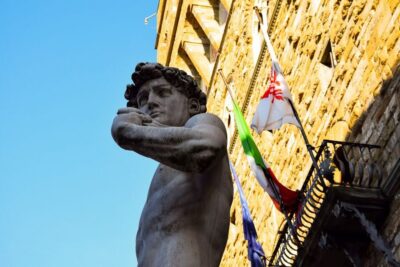 ★ 4.4Mysteries of the Medici Guided Walking TourFrom $31940 reviews
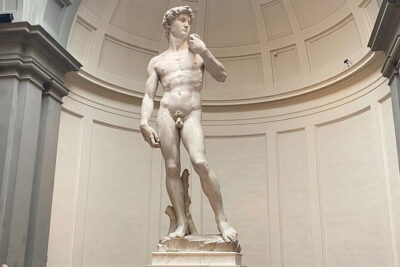 ★ 4.0Accademia Gallery: Michelangelo’s David and High Renaissance ArtFrom $43872 reviews
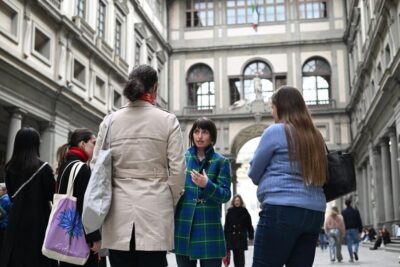 ★ 4.7Guided Tour of Medici Family Secrets and ChapelsFrom $93512 reviews
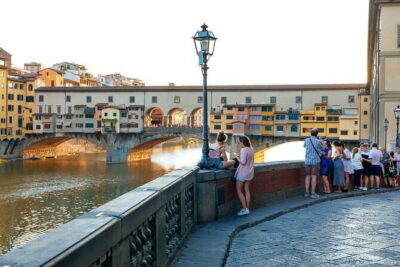 ★ 5.0Florence Private Tour: Renaissance, Famous Families & Hidden GemsFrom $199233 reviews
 ★ 4.5Pitti Palace, Palatina Gallery and the Medici: Arts and Power in Florence.From $82223 reviews
Find this experience in another shortlist