
Florence field review · MUSEUMS
Small-group Guided tour of Galileo’s Museum
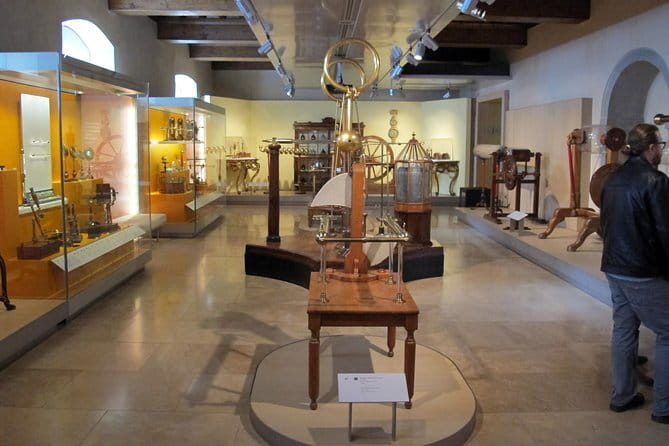
Galileo’s finger is the least interesting part. This small-group visit to Florence’s Museo Galileo turns famous names into working tools, with skip-the-line entry so you can spend your time inside. I especially like the tight group size, and I also like that the guide connects the instruments to the real world they were built for. One thing to keep in mind: if you want super technical, hands-on use instructions, some guides may lean more toward art and context than science mechanics.
You’ll meet at Piazza dei Giudici, 1 and spend about 1 hour 30 minutes in the museum, with admission included. Most people can join, and the format feels made for adults and older kids who want more than labels. If you arrive right on the edge of the museum day, timing can feel a bit short, since the guided window is fixed.
Key highlights before you go
- Skip-the-line entry: no standing around while everyone else queues.
- Small group size (max 9): easier questions, less rushing, better pacing.
- English-guided storytelling: the science comes with names, locations, and purpose.
- A focused 1 hour 30 minutes: enough time to learn without losing the day.
- Family-friendly for older kids: science curiosity stays engaged with the guide’s prompts.
When a guide is worth having beside you in Florence
- The Best tour in Florence: Renaissance & Medici Tales – guided by a STORYTELLER★ 5.0 · 12,316 reviews
- Florence: Duomo Cathedral Guided Tour★ 3.9 · 5,970 reviews
- Uffizi Gallery Small Group Tour with Guide★ 4.5 · 4,923 reviews
- Florence: Accademia Gallery Guided Tour★ 4.6 · 4,156 reviews
Museo Galileo makes more sense with a human guide
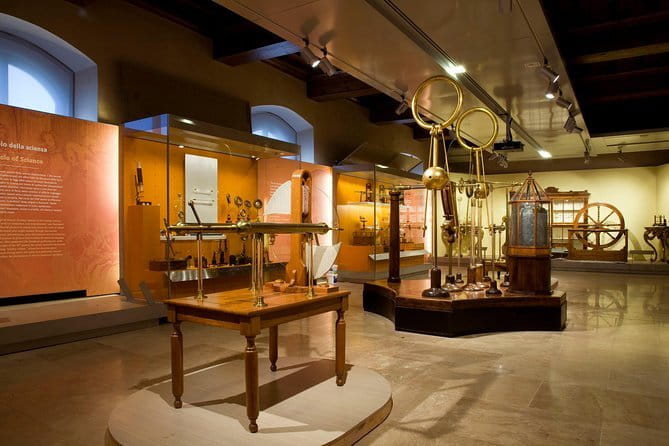
If you like science, but you also like the story behind it, this tour hits the sweet spot. Museo Galileo is packed with early instruments that look almost magical at first glance, but that’s also the trap. Without help, you can end up moving room to room and still feel like you only saw glass cases.
The guide changes that. The best part is how they translate objects into meaning: not just what something is, but why it existed and what problem it was trying to solve. In the feedback I’ve read, guides walked people from exhibit to exhibit and linked the devices to practical uses over time, from timekeeping and navigation to imaging, communication, and even weather thinking.
This kind of context is especially valuable in Florence, where science didn’t grow in a vacuum. When the guide explains the bigger Renaissance setting, you stop treating Galileo as a single genius moment and start seeing a whole system of patrons, politics, and practical needs.
A small but real consideration: the museum collection is broad. If your goal is heavy technical instruction on how to operate specific instruments step by step, you might want to ask yourself whether you prefer historical interpretation over deep mechanics. Some guides clearly aim at engagement and story, and that’s usually a win.
The 1.5-hour plan inside Museo Galileo
This is a simple format, and that’s good news. You spend about 90 minutes inside the museum with a professional guide, then the activity ends back at the meeting point.
The experience timing you should expect
In that 90 minutes, you’re not doing a marathon. You’re getting guided pacing, which matters because Museo Galileo has instruments that reward looking carefully. A good guide will slow you down at the right moments and keep things moving when you’d otherwise wander.
One detail that comes up in the feedback: guides often start with something outside the museum first, like the sundial out front, then continue into the interior exhibits. That outside-to-inside flow works because it gives you a physical reference point before you hit the glass and metal.
What happens during the museum walk
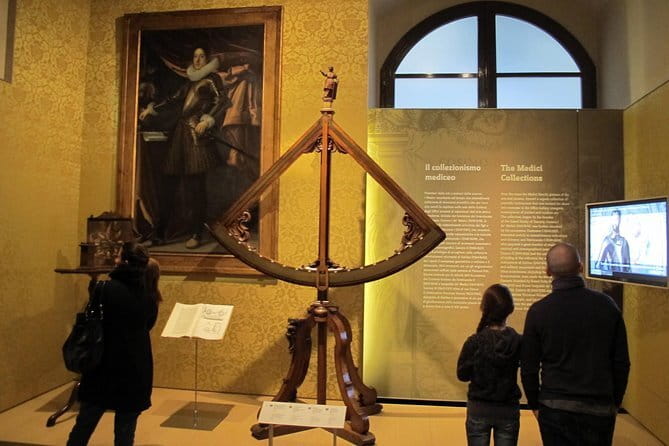
Inside, you can expect the tour to be structured around major scientific themes rather than random stops. The instruments you’ll likely encounter are in the “how people measured and understood the world” family:
- time and timekeeping devices (including chronometer-related advancements),
- astronomy tools and observation instruments,
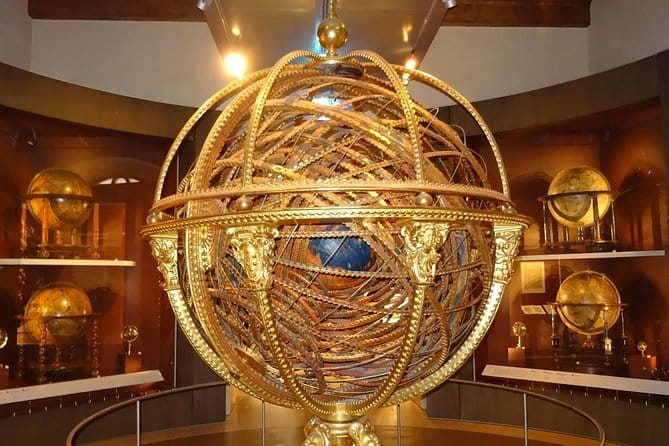
- navigation and cartography items, including globe and map thinking,
- imaging or related optics,
- instruments tied to communication and weather.
The guide’s job is to connect these tools to their time and purpose, so you understand not only the object, but also why it mattered.
What you’ll actually see: timekeeping, navigation, and the tools behind big ideas
Museo Galileo’s collection is the reason people book this. But the real value comes from the guide helping you read the exhibits like a timeline.
From the feedback, the tours tend to spotlight multiple strands of invention. For example, one guide-style described chronometers and how advances in measuring time fed navigation and coordination. Another highlighted how devices connect to where and when they were used, turning a display into a story with a location and a job to do.
Here are the kinds of moments that seem to land best:
More Florence museums with the visit format already compared
Timekeeping that connects to everyday decisions
If you’ve ever wondered how navigation and travel planning relied on accurate time, this museum can make that click. With guidance, timekeeping instruments stop being abstract and start being practical tools.
Astronomy and the culture around observation
You’ll likely see tools related to sky watching and understanding celestial movement. The best tours connect those objects to the mindset of the Renaissance, when observations were both scientific and political, and when better measurements could shift beliefs.
Navigation and cartography
Tools tied to mapping and navigation help you see how people tried to describe a world that was still being debated. In the feedback, one tour explicitly included cartography and maps, including the idea that people once thought the world worked differently and later moved past that.
The “wait, that’s a real scientific instrument” factor
This is a museum where objects can look like artifacts, but they’re actually working technologies. Guides highlighted how different instruments link together, so you see science as a network of tools rather than one isolated invention.
And yes, there is a famous interactive detail people mention, often described as the finger moment. Even if you don’t care about the celebrity myth, it’s a fun way to remember that the collection is about experimentation, not just admiration.
Small groups up to 9: why the format matters in Florence

This is where the tour earns its keep. With a maximum of 9 travelers, the pace stays human. You’re not squeezed into a silent line, and your questions have a chance to get answered.
That matters at Museo Galileo, because questions tend to be the best gateway to understanding. People often ask what an instrument measures, how it was used, or why it looks the way it does. In a large group, the answers are usually clipped. In a small group, they can actually be explanatory.
The feedback also mentions that guides tailor the tour based on the group. In practice, that often means:
- the guide can spend a little more time on what interests you,
- you can get clarification instead of just moving on,
- and the mood stays interactive, not lecture-only.
If you’re traveling with older children who love science, this format usually works better than a big bus-style museum tour. Kids can ask questions and not feel ignored.
Skip-the-line entry and logistics that save your brain
The tour includes skip-the-line access, and that’s not a small perk in Florence. Even when lines move, you still lose the prime energy part of your day. Getting inside faster makes it easier to focus.
You meet at Museo Galileo, Piazza dei Giudici, 1, 50122 Firenze FI, Italy. The end point is back at the meeting spot, which keeps things straightforward.
Two practical notes to help you plan:
- The meeting point is near public transportation, so you’re not stuck with one option.
- The tour does not include hotel pickup or drop-off, so you’ll want to plan your own arrival time.
Also, there’s no food or drinks included. Since the tour is about 90 minutes, you might keep snacks for before or after, especially if you’re doing this as part of a longer sightseeing day.
Price value: what $137.57 really buys you
At $137.57 per person, this isn’t the cheapest museum option. But for Florence, the value equation usually comes from what’s included:
- a professional guide for about 90 minutes,
- admission included,
- and skip-the-line entry.
So you’re not just paying for entry. You’re paying for time saved plus guided interpretation. If you’ve ever done a museum on your own and felt like you understood only half the story, that’s usually where the price makes sense.
This also becomes a better deal if you’re traveling with people who care about context. If everyone in your group is the type to read labels and look carefully, a guided visit adds structure and can prevent you from missing the most interesting threads.
One more angle: because the group is capped at 9, your cost is buying a less crowded experience. That can matter more than it seems when you’re trying to see and understand technical objects.
Who this tour is best for
This guided museum tour is a strong fit for:
- Adults who like science and want the human side of invention,
- older children and teens who can handle a longer museum explanation and enjoy asking questions,
- families that want something educational but not dull,
- travelers who prefer a focused tour format over wandering.
It can also work for art lovers, especially if the guide connects Galileo-era science to the surrounding Renaissance culture. Some tours described linking science and technology with art and sculpture, plus how Medici influence can show up indirectly in the development of science and ideas.
Where it might be less ideal is if you specifically want deep technical training on the operation of each instrument. One feedback note mentioned a guide with an art history bent, which can mean less hands-on usage detail. If that’s your top priority, consider choosing the guide style that matches your interests when available.
Should you book? My practical take
I’d book this if you want Museo Galileo to feel like a story with momentum, not a checklist of instruments. The small group size, the skip-the-line entry, and the fact that the guide connects objects to purpose are the big reasons.
Book it soon if you like calmer planning. On average, this is reserved about 57 days in advance, which suggests popular times can sell out.
If your idea of a great museum day is reading everything slowly and building your own interpretation, you might skip a guided tour and go solo. But if you want to understand why these tools mattered, this is a smart use of your limited time in Florence.
If you want, tell me your travel dates and whether you’re bringing kids. I can suggest how to schedule this alongside other nearby Florence stops so you don’t feel rushed.
FAQ
How long is the Small-group Guided tour of Galileo’s Museum?
The tour lasts about 1 hour 30 minutes.
Is admission included?
Yes. Museum admission and skip-the-line access are included in the tour price.
What language is the tour offered in?
The tour is offered in English.
What is the group size limit?
The tour has a maximum of 9 travelers.
Where do I meet for the tour?
The meeting point is Museo Galileo, Piazza dei Giudici, 1, 50122 Firenze FI, Italy. The tour ends back at the meeting point.
What’s included and not included?
Included: a professional guide and skip-the-line access. Not included: hotel pickup and drop-off, and food and drinks.
Florence with someone who knows the room
- The Best tour in Florence: Renaissance & Medici Tales – guided by a STORYTELLER
★ 5.0 · 12,316 reviews

More Florence tours to open next
- The Best tour in Florence: Renaissance & Medici Tales – guided by a STORYTELLER
★ 5.0 · 12,316 reviews



Every Florence review, in one place
- Tuscany Day Trip from Florence: Siena, San Gimignano, Pisa and Lunch at a Winery
★ 5.0 · 21,634 reviews - The Best tour in Florence: Renaissance & Medici Tales – guided by a STORYTELLER
★ 5.0 · 12,316 reviews



Florence picks that sit just beyond this itinerary
- One Hour Uffizi Guided Tour: Masterpieces of the Renaissance
★ 5.0 · 3 reviews - Sightseeing Tuscany by touring bike – 1 day rental
★ 5.0 · 3 reviews - Private Siena, S. Gimignano, Chianti Road and Wine Tasting
★ 5.0 · 3 reviews - Bargello Museum Private Tour: Michelangelo’s Bacchus & Donatello’s David
★ 5.0 · 3 reviews - Authentic Florence Cooking Class at Costanza’s 1839 Family Estate
★ 5.0 · 3 reviews - San Gimignano and Volterra private tour: etruscans, romans and middle age jewels
★ 5.0 · 3 reviews
More Museums worth comparing.
 ★ 4.5Skip-The-Line Uffizi Gallery Timed Entry TicketFrom $3027,832 reviews
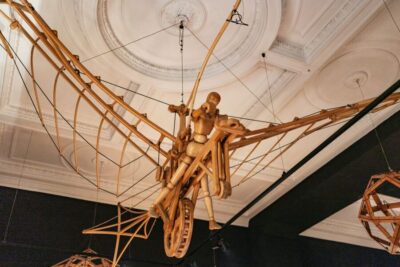 ★ 4.5Leonardo Interactive Museum Entry TicketFrom $911,763 reviews
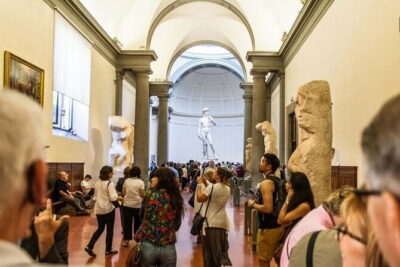 ★ 4.5Florence Accademia Gallery Tour with Entrance Ticket IncludedFrom $456,148 reviews
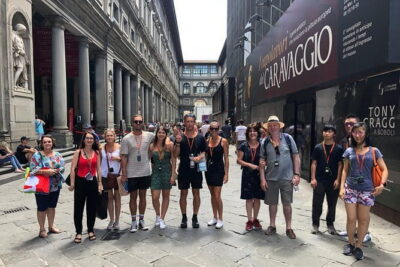 ★ 4.5Uffizi Gallery Small Group Tour with GuideFrom $764,923 reviews
Accademia Gallery Guided TourFrom $534,156 reviews
★ 4.5Uffizi Gallery Small Group Tour with GuideFrom $764,923 reviews
Accademia Gallery Guided TourFrom $534,156 reviews
 ★ 4.6Accademia Gallery Guided Tour with Entry TicketFrom $492,253 reviews
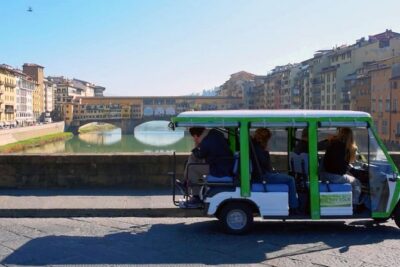 ★ 4.5Golf Cart Tour to Fiesole Roman Theatre and MuseumFrom $952,039 reviews
 ★ 4.8Uffizi Gallery and Accademia Gallery Guided TourFrom $1402,028 reviews