
Florence field review · WALKING TOURS
Art and History in Florence: Small Group Walking Tour
Florence history fits in a 1.5-hour walk. This small-group art and history route strings together the city’s biggest visual and political landmarks, with an easy pace and audioguide systems to keep you oriented as you move. It’s offered in English, so you get the stories right alongside the scenery.
I really like how the walk works like a quick timeline, from the Medici rise at Palazzo Medici Riccardi all the way to the Medici power base at Palazzo Pitti. I also like the guide style that comes through in the names you might meet, like Julia, Francesco, and Giovanni, who are repeatedly praised for clear storytelling and even practical local tips (like where to eat or what to pair with wine).
One thing to consider is that many stops are monuments where entrance tickets are not included, so you may only get exterior context during the time on the ground unless you choose to pay separately.
Key things to know before you go
- A tight highlights loop that hits major sites in under two hours, so it’s great for a first Florence day
- Audio support built in, so you can follow the story even when the group slows for photos or crowds
- Medici threads from palace to palace, with context that helps the city make sense
- Duomo and Uffizi area orientation, even when museum entry is not part of the price
- Flexible guide energy, with some guides described as humorous and story-driven, not just fact-dumping
- Max group size up to 50, which usually feels small in practice but still means you should expect some waiting at pinch points
Florence walks that make the stone streets tell the story
- Florence: Guided Walking Tour★ 4.5 · 3,334 reviews
- Skip the line: Uffizi and Accademia Small Group Walking Tour★ 4.5 · 3,135 reviews
- Florence: Guided Walking Tour★ 4.6 · 1,602 reviews
- Florence: Renaissance and Medici Tales Guided Walking Tour★ 4.8 · 1,549 reviews
Why this Florence art-and-history walk fits so well
If you want Florence without spending your whole day in lines, this kind of structured walking tour is a smart move. You get a concentrated loop of the places that define the city’s look: palaces, church squares, iconic bridges, and the famous viewpoints around the Uffizi side.
The real value is not just that you stop at famous buildings. It’s that you’re pushed to look at them differently. Instead of treating Florence like a postcard collection, you start connecting the architecture to the people who paid for it, the religious ideas that shaped it, and the political messages carved into stone.
At around 1 hour 35 minutes, the pacing is also friendly for getting back to do your own thing afterward. I like tours like this because they act like a “map with a brain,” and you’ll know where to spend extra time once you see what grabs you.
Meeting point and how the small-group setup plays out
This tour starts at Florence Tours, Via Camillo Cavour, 21R, 50129 Firenze FI, Italy, and it ends back at the same meeting point. It’s also near public transportation, which makes it easier to stitch into a day that includes other timed stops (like museum visits or a guided lunch).
The tour is listed as small group, with a maximum of 50 travelers. In real life, that often means you’re not stuck with a huge bus crowd. Still, Florence has narrow streets and bottlenecks, so expect brief slowdowns around the most photographed corners.
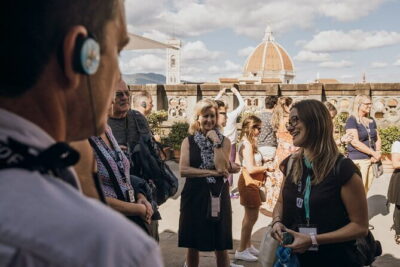
You’ll use audioguide systems, which is a big deal in a city like Florence. Guides naturally have to compete with wind, footsteps, and street noise, and the audio helps you keep track of the story even when you pause for a photo.
Practical note: wear shoes you trust on cobblestones. Even when the walk is not long, the ground is the thing that can tire you out.
Palazzo Medici Riccardi: where power starts looking expensive
Your first major stop is Palazzo Medici Riccardi. Even if you don’t go inside, it’s a strong opener because this is where the Medici presence becomes visually obvious. Florence’s big families didn’t just fund art. They staged their influence in stone, and this palace is part of that message.
This is also a good warm-up stop. You’ll have enough time to locate what you’re looking at and start learning how to read Florentine architecture as “branding.” Once you know that, the next sights hit differently, especially the way later palaces echo earlier claims to wealth and legitimacy.
Because admission tickets are not included here, treat this time as orientation. If you want to go deeper later, you’ll know what to search for and why it mattered.
San Lorenzo and the church-and-state vibe
Next you move to San Lorenzo, where the stop is marked as admission ticket free. That’s helpful because it lets you spend your time on the building itself without adding another ticket cost on top.
San Lorenzo matters for two reasons. First, it reinforces how central religion is to Florence’s public spaces. Second, it helps you see the way church institutions sat side by side with merchant and political power. In Florence, sacred and political life often share the same stage.
If you’re the kind of person who likes to compare buildings side-by-side, this stop gives you a clear anchor before the tour heads into the Duomo area and the larger civic sites.
Santa Maria del Fiore: reading the Duomo from street level

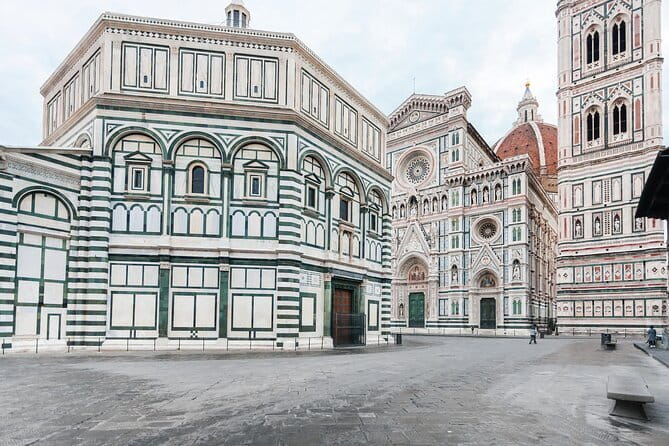
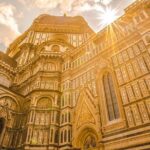
Then comes Cathedral of Santa Maria del Fiore. The tour timing is short, and admission tickets are not included, so you’re not buying museum time here. But that’s not a waste. Getting your bearings at the Duomo is often the difference between randomly walking around and actually understanding the city’s layout.
What to focus on at this stage is scale and placement. Florence’s church design does not just impress you. It teaches you how the city organizes space around faith, power, and civic identity.
Also, keep an eye on your route and where you’re standing. Some guides are careful about choosing spots that feel more comfortable for explanations, including shade when possible, which matters on bright or rainy days.
In at least one guide experience, timing was tight enough that a Duomo interior visit became possible when lines were short. You should not count on interior entry as part of the ticket you’re buying, but it’s a reminder that a guide who watches the moment can sometimes help you squeeze in more than expected.
Keep the Florentine shortlist moving


Museo Casa di Dante: why a writer belongs in Florence’s power story
After the big church moment, the tour shifts to Museo Casa di Dante. This stop is marked as admission ticket not included, so again, think context first.
Dante is more than a famous name in a schoolbook. He represents Florence’s intellectual life, and that intellectual identity is one reason the city’s art and politics kept feeding each other. When the guide explains why Dante belongs here, you start seeing Florence as a place that produced ideas as well as money.
This stop is also a good mental reset. You move from the visual language of religion into literature and civic identity, and suddenly the art you’ll see later in galleries can feel less random.
Palazzo Vecchio and the civic face of Florence
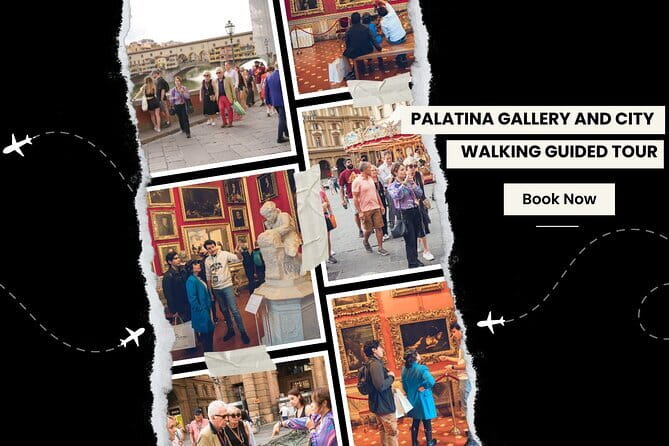
Then you’ll reach Palazzo Vecchio. This is one of those buildings that makes you understand why Florence ruled itself instead of waiting to be ruled. It’s a palace that also functions like a political statement.
Here, admission tickets are not included, so the emphasis is on the outside and the meaning behind the form. Look for how the building communicates authority, not just beauty. Florence had a talent for turning political goals into architecture, and Palazzo Vecchio is a major example.
If you care about symbolism, this stop is where you start noticing repeating motifs and the way families and governments stamped their identity on the city’s skin.
Piazza della Signoria: statues that make sense once you get the context

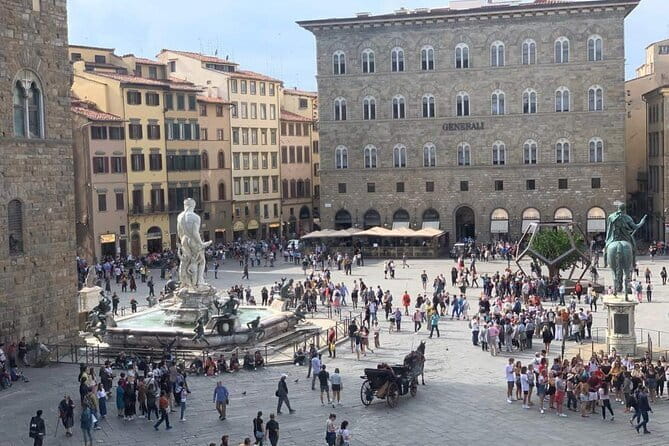
Next is Piazza della Signoria, marked as admission ticket free. This square is famous for a reason, and it can also feel like information overload if you show up without any framing.
With the guide’s story, statues and civic sculptures turn into something more useful. Instead of just admiring stone, you understand what the city wanted to say, who wanted to say it, and what the setting communicates.
One reason I like this stop is practical: it’s a big open area where you can spread out a touch for a better view. If you’re traveling with someone who wants photo time, this is usually where the pace feels most natural.
Le Gallerie Degli Uffizi: getting oriented before you commit to museum time
The tour continues to Le Gallerie Degli Uffizi. The stop is admission ticket not included, but that can still be a win. The Uffizi area can be confusing on your own because it sits at the intersection of major viewpoints, office buildings, and gallery history.
A guided stop helps you understand what you’re actually looking at and why the location matters. If you later buy museum tickets, you’ll have a clearer sense of what you want to focus on, which usually means fewer “we wandered for two hours” moments.
Ponte Vecchio: the bridge you think you know, but won’t for long
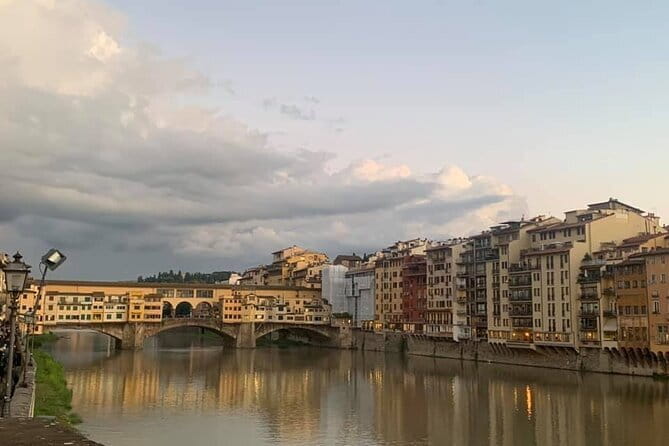
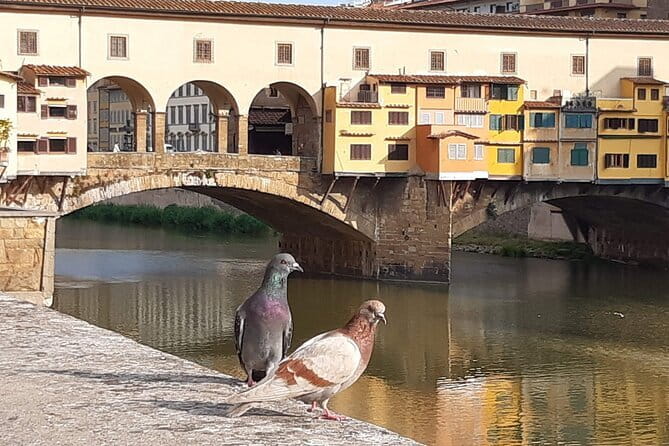
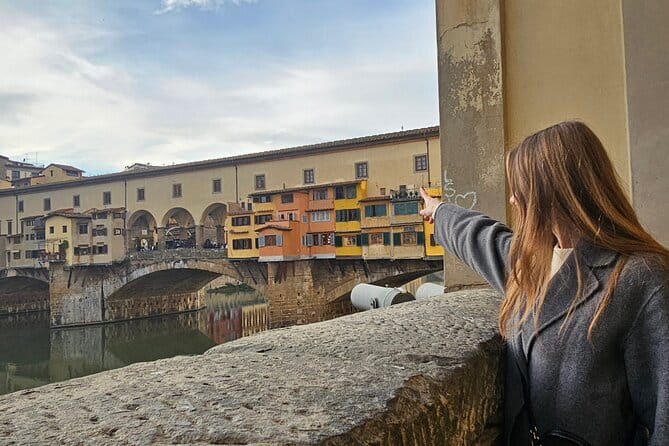
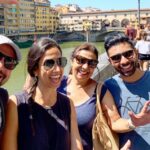
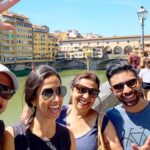
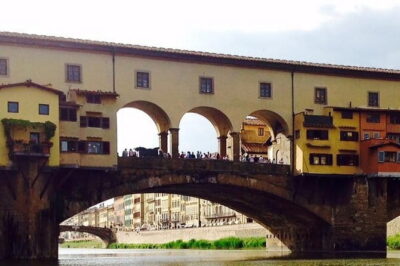
Then it’s on to Ponte Vecchio, marked admission ticket free. This bridge is one of the most photographed spots in Florence, but it’s also one of the easiest places to miss details when crowds push you around.
Use your short time to notice vantage points and architectural rhythm. When your guide ties the bridge to the city’s trade and Medici influence, it stops being just a pretty crossing and becomes an example of how commerce and power got embedded into daily life.
This is also a good morale stop in the walk. By now you’ve seen palaces and civic buildings, and Ponte Vecchio brings the city back down to scale and movement.
Palazzo Pitti and Boboli Gardens: the Medici finale, plus a roadmap for later
The tour finishes at Palazzo Pitti with around 15 minutes here. The stop description points you toward the major Medici-related collections and gardens associated with the complex, including Galleria Palatina, Appartamenti Reali, Galleria D’Arte Moderna, Galleria del Costume, Museo degli Argenti, and Boboli Gardens.
Importantly, admission tickets are not included, so this is best treated as orientation. You get the big picture and the “why this matters” explanations, not a full museum visit.
Still, that orientation can save you time later. Palazzo Pitti and Boboli Gardens are a huge decision tree if you’re not sure what you want. A guided context helps you choose what matches your interests, whether that’s Medici court life, decorative arts, modern collections, costume history, or the garden design behind the palace.
If you’re a first-time Florence visitor, you’ll likely leave this stop with a shortlist of where you want to return.
How long you should expect to wait at ticketed stops
Because most museum-and-church entries are not included, you have two basic options: either treat the tour as a guided walkthrough from the outside, or use it as a trigger to book separate tickets later.
A key practical point: Florence is crowd-prone. Even if your day feels flexible, the moment you decide you want to enter, your timing can change.
So here’s what I suggest: plan to use this walk for “seeing and understanding.” Then, if a specific place really grabs you, schedule a separate visit when you have enough time to do it properly. That way, you don’t turn a quick orientation walk into a half-day ticket marathon.
Price and value: why $30 can be a good deal here
At $30.01 per person for about 1 hour 35 minutes, this tour is priced like a solid orientation add-on, not a full museum day. That matters, because Florence’s top sights often cost extra once you start stacking tickets.
The best value angle is that the tour focuses on the stories that connect places. When those stories click, your later museum ticket feels more intentional. You’ll also be more likely to choose the right museum wing or garden area because you understand what each stop represents.
If you only have one day and you want to hit the city’s biggest “what is Florence, anyway” landmarks, this price makes sense. If you already know the city well or you’re determined to do only full interior museum visits, you might be better off spending that budget on tickets you can’t replicate from the street.
Who should book this tour, and who should pick something else
This is a great fit for you if:
- You want a first-day Florence orientation
- You like art and history but do not want to plan 10 separate entries
- You enjoy getting the “why” behind what you’re seeing, from Medici politics to church identity
- You’ll appreciate guides who mix humor and story with practical city advice
It might be less ideal if:
- You want a tour where you definitely enter major museums as part of the cost
- Your schedule is so tight you cannot handle short waits around the Duomo area or central squares
- You prefer quiet museums over street-level reading and explanations
Should you book this Florence art-and-history walk?
Yes, if you want to get your bearings fast and build real context around Florence’s most famous places. This tour is especially worth it when you’re mixing it with later self-guided exploring. You’ll walk away with a mental map of how Florence’s power shifted over time, not just a checklist of buildings.
If you book it, do two things that make the experience better: wear comfortable shoes, and be ready to spend a little extra money later if one of the ticketed stops calls your name. Treat this as your Florence starter course, then come back for the full meal where you want it most.
FAQ
How long is the Art and History in Florence walking tour?
It lasts about 1 hour 35 minutes.
Is the tour offered in English?
Yes. The tour is offered in English.
Do I need to buy admission tickets for the churches and museums?
Entrance to museums or churches is not included, so admission tickets are typically your responsibility if you want to enter.
Where does the tour start?
It starts at Florence Tours, Via Camillo Cavour, 21R, 50129 Firenze FI, Italy.
Is the tour ticket mobile?
Yes. You’ll use a mobile ticket.
Can I cancel for a full refund?
Yes, it offers free cancellation. You can cancel up to 24 hours in advance for a full refund. If you cancel less than 24 hours before the experience starts, the paid amount is not refunded.
Florence at walking speed

More Florence tours to open next
- The Best tour in Florence: Renaissance & Medici Tales – guided by a STORYTELLER
★ 5.0 · 12,316 reviews
Every Florence review, in one place
- Tuscany Day Trip from Florence: Siena, San Gimignano, Pisa and Lunch at a Winery
★ 5.0 · 21,634 reviews - The Best tour in Florence: Renaissance & Medici Tales – guided by a STORYTELLER
★ 5.0 · 12,316 reviews

Florence picks that sit just beyond this itinerary
- One Hour Uffizi Guided Tour: Masterpieces of the Renaissance
★ 5.0 · 3 reviews - Sightseeing Tuscany by touring bike – 1 day rental
★ 5.0 · 3 reviews - Private Siena, S. Gimignano, Chianti Road and Wine Tasting
★ 5.0 · 3 reviews - Bargello Museum Private Tour: Michelangelo’s Bacchus & Donatello’s David
★ 5.0 · 3 reviews - Authentic Florence Cooking Class at Costanza’s 1839 Family Estate
★ 5.0 · 3 reviews - San Gimignano and Volterra private tour: etruscans, romans and middle age jewels
★ 5.0 · 3 reviews
More Walking Tours worth comparing.
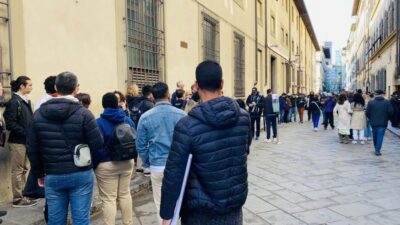 ★ 4.5Guided Walking TourFrom $313,334 reviews
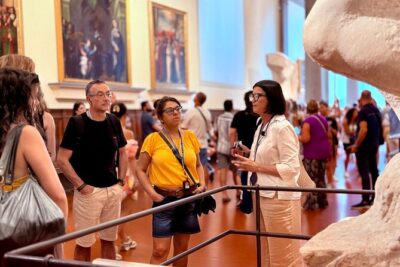 ★ 4.5Skip the line: Uffizi and Accademia Small Group Walking TourFrom $1483,135 reviews
★ 4.6Guided Walking TourFrom $271,602 reviews
★ 4.5Skip the line: Uffizi and Accademia Small Group Walking TourFrom $1483,135 reviews
★ 4.6Guided Walking TourFrom $271,602 reviews
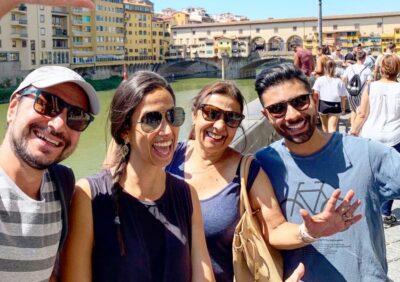 ★ 4.8Renaissance and Medici Tales Guided Walking TourFrom $21,549 reviews
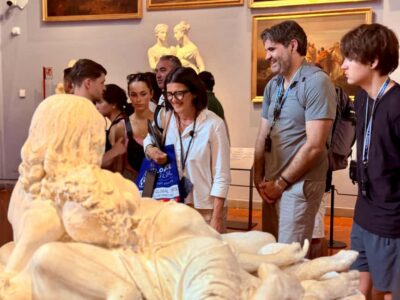 ★ 4.7Uffizi & Accademia Small Group Walking TourFrom $1481,380 reviews
 ★ 5.0Skip-the-Line Florence Highlights and David Walking TourFrom $1171,127 reviews
 ★ 4.6Dark Mysteries and Legends Guided Walking TourFrom $21,081 reviews
 ★ 4.5Florence in a Day: Michelangelo’s David, Uffizi and Guided City Walking TourFrom $1341,048 reviews
Find this experience in another shortlist