

Florence field review · WALKING TOURS
Essential Florence Walking Tour to discover its history
Florence gets personal on foot. This 3-hour walking tour turns famous streets into a clear timeline of how the city grew, from Roman roots to Medici power and Renaissance art.
I especially like the way the guide connects what you see to the stories behind it, from Piazza della Repubblica to bridges like Ponte Vecchio. I also like the practical extras, like English live guiding with headsets so you can actually hear the details while you walk. The main drawback to plan for is that it is a real walking tour with steps and cobblestones, so it is not a fit for wheelchairs or mobility impairments, and it may be tough if you have back problems.
Quick Reasons This Walk Works So Well

- Medici stories tied to real buildings, so politics and art make sense together
- Start at Piazza della Repubblica, then follow a logical route through key eras
- Headsets included, which keeps the narration clear on busy streets
- Gelato tasting built in, giving you a tasty break without breaking the flow
- A mix of outside viewing and one inside church stop, so you get more than street-level sightseeing
- Stops tied to major names, including Donatello, Ghiberti, Ghirlandaio, and the Dante thread
Florence walks that make the stone streets tell the story
- Florence: Guided Walking Tour★ 4.5 · 3,334 reviews
- Skip the line: Uffizi and Accademia Small Group Walking Tour★ 4.5 · 3,135 reviews
- Florence: Guided Walking Tour★ 4.6 · 1,602 reviews
- Florence: Renaissance and Medici Tales Guided Walking Tour★ 4.8 · 1,549 reviews
Why Florence Works Best With a Guide on Foot
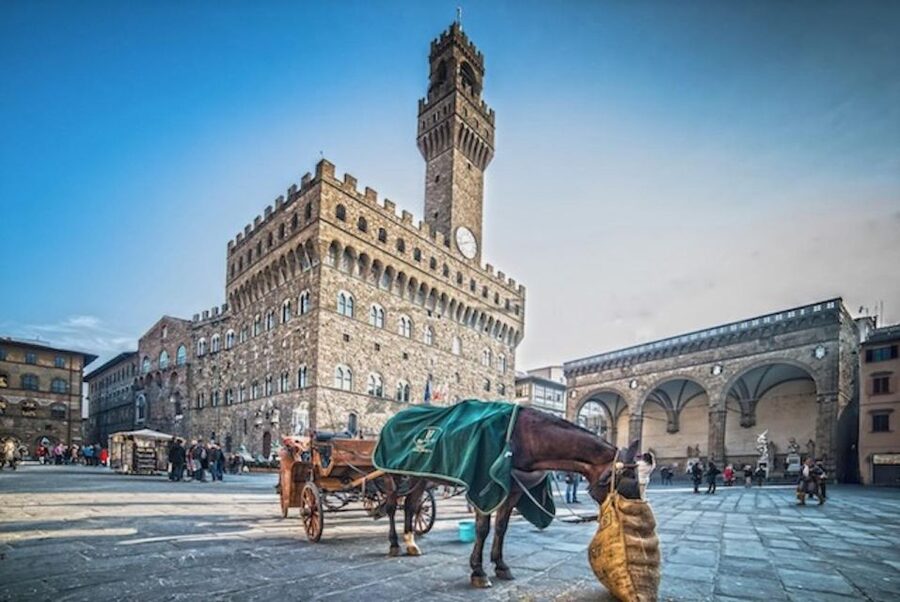
Florence is one of those cities where you can walk all day and still miss the plot. This tour helps you read the city like a story, not just a slideshow of landmarks. You cover a lot of ground at a walking pace, but the stops are chosen to make the timeline click.
You also get a guide who keeps the focus on details people usually speed past, like how architecture reflects the eras it came from. The narration leans into human drama too, with stories that help explain how Florence became Florence.
Starting At Piazza della Repubblica, Where Rome Sets the Stage
The walk begins at Piazza della Repubblica, and that first stop matters. You start with Florence’s Roman founding, which gives you a framework for everything that comes later. It is easier to understand medieval and Renaissance Florence once you know what came before.
From there, the route builds toward the city’s middle-age expansion and its rise in power and wealth. The guide’s job is to point out what changed, and why, so the streets feel intentional instead of random.
Medieval Florence to Medici Power, the City’s Real Engine
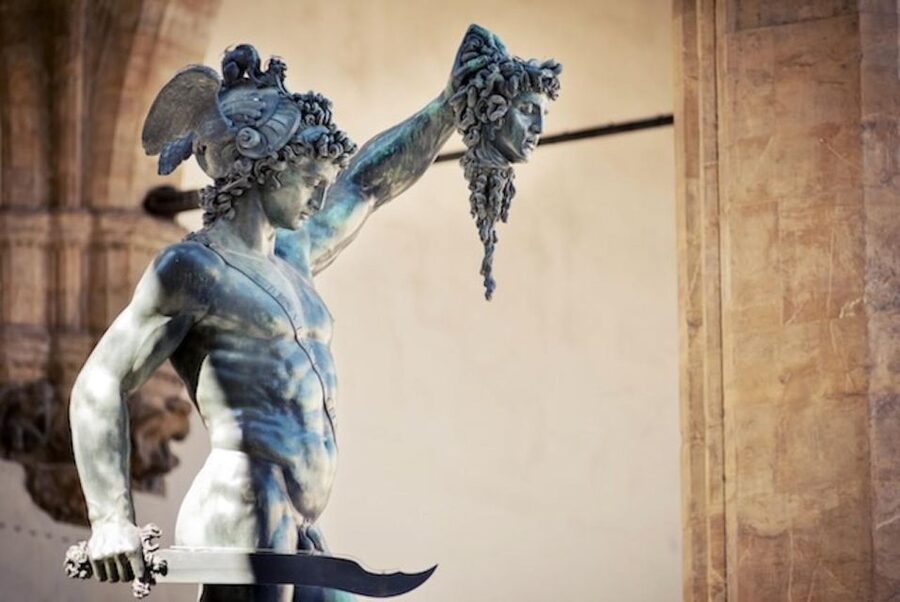
One of the biggest reasons this tour is worth your time is how it connects Florence’s wealth to the people who shaped it. You spend time on medieval Florence and the factors behind its growth, then the narrative naturally moves toward the Medici family.
The Medici story is not just names and dates. It is a lens that helps you see why certain palaces, churches, and artistic commissions exist where they do. Once you understand who had influence, the city’s mix of religion, art, and politics starts to look like one system.
Architecture Walk: Tower Homes, Palaces, and Changing Styles
Florence is famous for architecture, but the trick is learning how to spot the shifts. This tour is designed to show you the different eras as you move, from tower-like homes to grand Renaissance palaces.
You get outside viewing of major sites such as Ruccellai Palace and Strozzi Palace, which helps you understand Renaissance architecture as a practical achievement, not just an aesthetic one. You are also guided toward “why this looks like this,” so you can start making your own connections after the tour.
David, Artist Workshops, and Why Art Became a Status Symbol
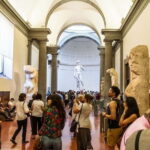
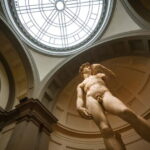
At some point you will focus on the creation of David and how artists worked through workshops. Even without a deep technical lesson, this angle helps you understand why Renaissance art was so tied to power and reputation.
When you look at art in that context, you stop seeing statues as isolated masterpieces. Instead, you see how Florence treated art like public proof of talent, funding, and influence.
Keep the Florentine shortlist moving

Dante’s Thread Through Florence
You walk past Dante’s home, which gives Florence a literary spine. It is a small stop, but it helps you connect the city’s identity beyond monuments.
Dante also fits into the bigger theme of the tour: how culture, religion, and politics all overlap. Once you notice that overlap, Florence starts feeling coherent.
The Religious Center: Duomo Area From the Outside
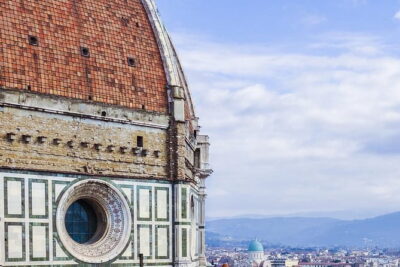
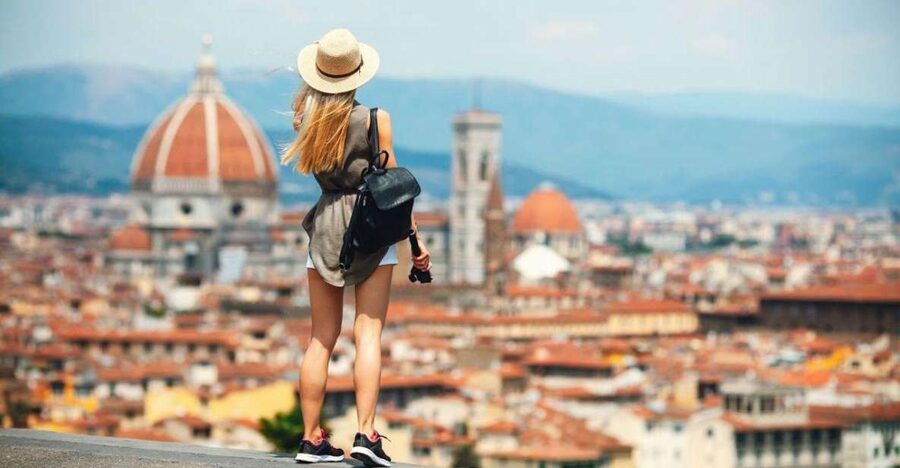
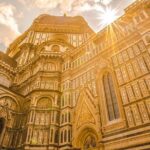
Religion shapes Florence in a way that feels obvious once someone points it out. You see the religious center area from outside, including the Duomo, Baptistery, and Campanile.
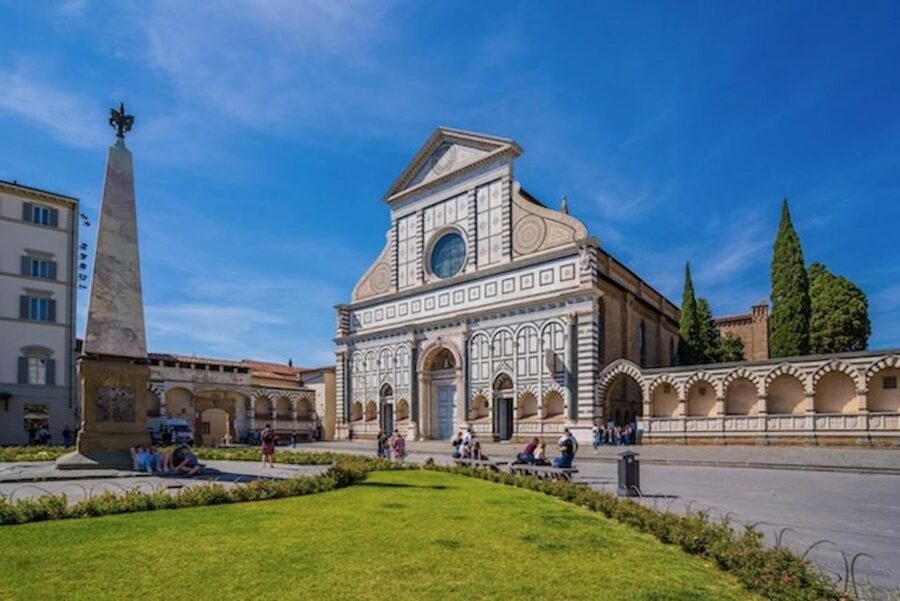
You also visit Santa Maria Novella from outside, so you are not just looking at one church. The guide explains how religion permeated everyday life, and that context changes the way you view the buildings. They stop being just beautiful façades and start acting like community landmarks tied to belief, power, and civic identity.
Orsanmichele Statues, Donatello and Ghiberti
The route includes Orsanmichele, famous for statues associated with major artists like Donatello and Ghiberti. This stop is especially good for helping you notice that public art had a role, not just an audience.
If you are the type who likes to connect names to the places they belong, this part pays off fast. You get a clearer sense of why certain artists became giants in Florence.
Bridges That Frame the City: Santa Trinita and Ponte Vecchio
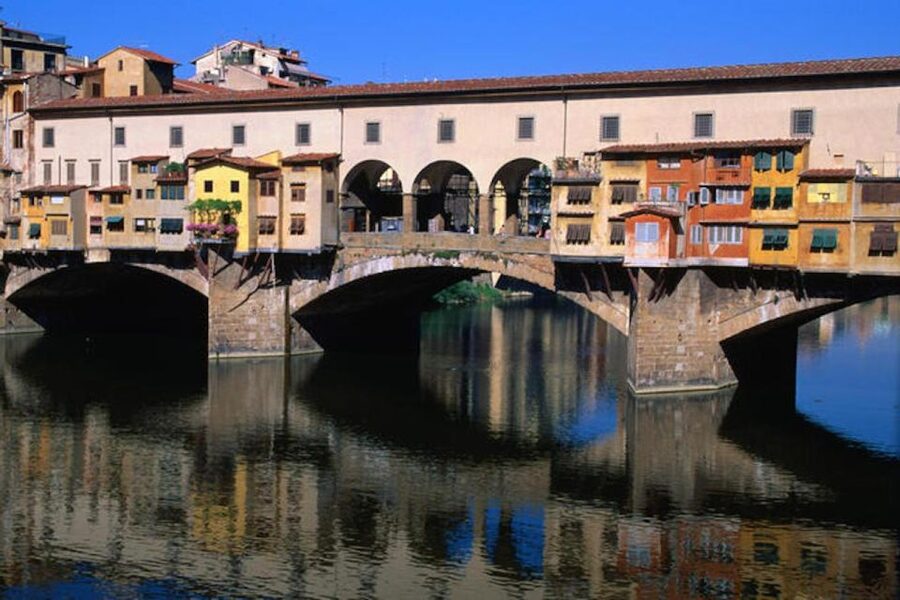
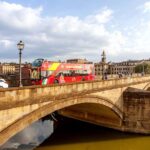
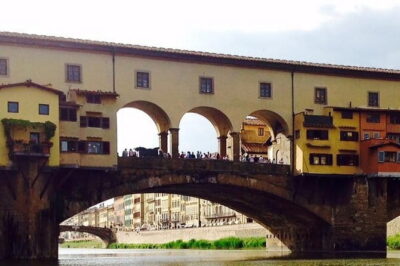
You traverse Santa Trinita and Ponte Vecchio, and that is more than a photo moment. Bridges in Florence are part of how the city connects neighborhoods and markets, and the guide uses that movement to keep the story flowing.
Walking over these bridges while you understand the timeline makes the views hit harder. You are not just looking across the river, you are moving through layers of the city’s growth.
Via Tornabuoni and Via Maggio, Modern Shopping With Historical Clues
This is one of those clever tour choices that keeps things fun. You walk along Via Tornabuoni, described as the city’s well-known designer retail strip, and you also notice Via Maggio, which is a key antique shopping street.
Even if you do not shop, these streets teach you something: Florence always had commerce baked into its identity. Architecture and streetscapes carry meaning, and a good guide shows you how to read it.
Oltrarno Cobblestones and Artisan Workshops
You stroll through Oltrarno, where the cobblestones and artisan workshops change the pace. This is the part of the walk that feels more local, even while you stay in the orbit of major sights.
The guide keeps you focused on what you are seeing and why it matters, especially as Oltrarno ties back to the city’s tradition of crafts and artistic production.
Santa Trinita Church Inside Stop and Ghirlandaio Frescoes
One highlight is the inside visit to Santa Trinita Church, where you get to admire frescoes by Ghirlandaio. Outside viewing is great for orientation, but an inside stop is what makes the story feel earned.
This is a good moment to slow down mentally. The church interior helps you connect the artistic thread of the tour to the visual reality of Renaissance painting, not just the talk.
Pitti Palace, Santa Felicita, and the Vasari Corridor Angle
The tour also includes outside viewing of Pitti Palace, the former Medici residence. You see the Medici footprint in another way, linking family influence to where they lived and what they wanted to project.
You continue with Santa Felicita, described as one of the oldest churches in Florence. That adds depth to the religious theme, showing you the city’s long timeline rather than a single peak moment.
Then there is the Vasari corridor, another reminder that Florence’s art and power were connected. Even from the outside, it gives you a sense of how elites planned access and visibility, not just beauty.
Gelato Stop, Headsets, and Keeping Your Energy for 3 Hours
You get a gelato tasting, which is a smart break in the middle of walking-heavy sightseeing. It feels like a Florence ritual, and it also gives you a natural reset when your brain is processing architecture and stories.
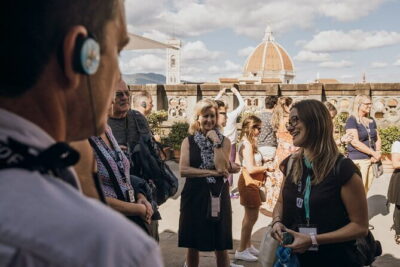
Headsets are included, which is not a small detail. On busy streets, it is easy to lose the thread. With headsets, you can stay focused on what matters instead of competing with the city.
Price and Duration: Why $41 for 3 Hours Can Be Good Value
At $41 per person for a 3-hour guided walk, the value comes from what is bundled: an expert local guide, a gelato tasting, and headsets so you get the full narration. You are also getting a route that strings together multiple eras and major landmarks without needing to plan every stop yourself.
A self-guided walk can still be great, but this tour saves you the guessing. It tells you what to look for and why it matters, which is especially helpful in a city where landmarks are close together and easy to mix up.
Who This Tour Fits Best (And Who Should Skip It)
This is a strong pick if you want an organized walk through central Florence with lots of context. It also helps if you care about the Medici family, Renaissance art, religion’s role, and architecture changes over time.
It is not suitable if you have mobility impairments or you use a wheelchair. The tour is not accepted for people with recent surgeries or back problems either, and it is not for children under 8. If any of that affects you, you will likely feel the steps and uneven surfaces more than you want to.
Guide Styles You Can Expect, From Becky to Lisa to Andrea
The best part of this kind of tour is the guide. In recent feedback, guides including Becky, Lisa, and Andrea consistently earned praise for making the city feel alive and interactive.
Becky is noted for having an art history background, and that matters because it shows up in how stories link to what you are actually seeing. Lisa is praised for being engaging and friendly, and Andrea is credited with doing a great job explaining Florence in a way that sticks.
Different guides can mean different flavors of storytelling, but the common theme is clear: the narration is designed to keep you paying attention from the first stop to the last.
Should You Book This Essential Florence Walking Tour?
Book it if you want a smart, story-driven way to understand Florence in a short time. You get a practical route through major sights, outside viewing plus one inside church moment, and an included gelato break, all in English.
Skip it if walking for three hours is hard for your body, or if steps and cobblestones are a no-go. If your main goal is to soak in architecture and Renaissance art with context, this is exactly the kind of guided walk that turns sights into a real understanding of how Florence worked.
Florence at walking speed

More Florence tours to open next
- The Best tour in Florence: Renaissance & Medici Tales – guided by a STORYTELLER
★ 5.0 · 12,316 reviews

Every Florence review, in one place
- Tuscany Day Trip from Florence: Siena, San Gimignano, Pisa and Lunch at a Winery
★ 5.0 · 21,634 reviews - The Best tour in Florence: Renaissance & Medici Tales – guided by a STORYTELLER
★ 5.0 · 12,316 reviews


Florence picks that sit just beyond this itinerary
- One Hour Uffizi Guided Tour: Masterpieces of the Renaissance
★ 5.0 · 3 reviews - Sightseeing Tuscany by touring bike – 1 day rental
★ 5.0 · 3 reviews - Private Siena, S. Gimignano, Chianti Road and Wine Tasting
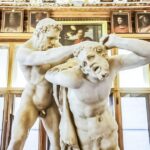
★ 5.0 · 3 reviews - Bargello Museum Private Tour: Michelangelo’s Bacchus & Donatello’s David
★ 5.0 · 3 reviews - Authentic Florence Cooking Class at Costanza’s 1839 Family Estate
★ 5.0 · 3 reviews - San Gimignano and Volterra private tour: etruscans, romans and middle age jewels
★ 5.0 · 3 reviews
More Walking Tours worth comparing.
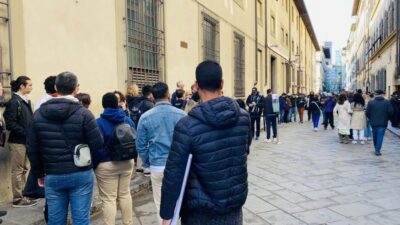 ★ 4.5Guided Walking TourFrom $313,334 reviews
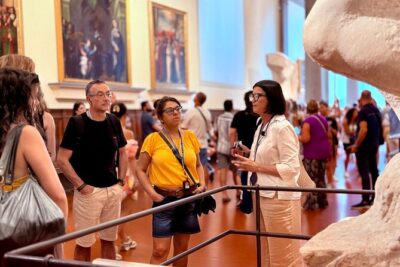 ★ 4.5Skip the line: Uffizi and Accademia Small Group Walking TourFrom $1483,135 reviews
★ 4.6Guided Walking TourFrom $271,602 reviews
★ 4.5Skip the line: Uffizi and Accademia Small Group Walking TourFrom $1483,135 reviews
★ 4.6Guided Walking TourFrom $271,602 reviews
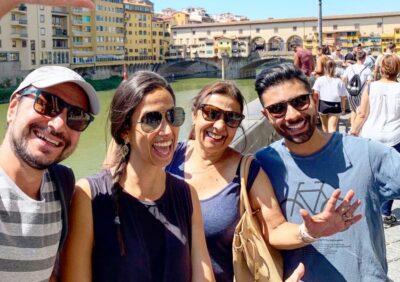 ★ 4.8Renaissance and Medici Tales Guided Walking TourFrom $21,549 reviews
 ★ 4.7Uffizi & Accademia Small Group Walking TourFrom $1481,380 reviews
 ★ 5.0Skip-the-Line Florence Highlights and David Walking TourFrom $1171,127 reviews
 ★ 4.6Dark Mysteries and Legends Guided Walking TourFrom $21,081 reviews
 ★ 4.5Florence in a Day: Michelangelo’s David, Uffizi and Guided City Walking TourFrom $1341,048 reviews
Find this experience in another shortlist