
Florence field review · FLORENCE
The not-touristy Florence with Camilla, local art historian
Florence feels different without the crowds. This 2-hour walk with Camilla, a local art historian, takes you through medieval squares and churches where the city feels lived-in, not staged, not-touristy route included.
I love how Camilla turns scenery into story, so you understand what you are looking at, and I love the small-group size, capped at 15, which makes it easier to hear and ask questions.
One possible drawback: this experience is weather-dependent, and it includes church time, so plan on slower, quieter moments inside religious spaces rather than a fast hit-and-run.
Key highlights I’d plan around
- Camilla is the art historian guide, so the focus is interpretation, not just directions
- A small group (max 15) keeps the walk from turning into a march
- Medieval squares and religious sites, chosen to steer you away from the main tourist flow
- A route that ends inside Basilica di Santa Trinita, giving the tour a calm finish
- Admission tickets are included at each stop, so you are not scrambling for extras
Before you close the tab, compare these Florence options on the same shortlist.
- Florence: Skip-The-Line Uffizi Gallery Timed Entry Ticket★ 4.5 · 27,832 reviews
- Tuscany Day Trip from Florence: Siena, San Gimignano, Pisa and Lunch at a Winery★ 5.0 · 21,634 reviews
- Florence: Timed Entrance Ticket to Michelangelo’s David★ 4.6 · 16,983 reviews
- Florence: Michelangelo’s David Skip-the-Line Entry Ticket★ 4.5 · 12,764 reviews
Why this not-touristy Florence walk is such a smart idea
If you only do Florence the loud way, you end up seeing a lot and understanding very little. This route is designed for the opposite feeling. You still hit key historic areas, but you do it at a human scale, with time to understand why these spaces matter.
I like that it is built around religious sites and medieval squares, the kinds of places where Florence’s art and power show up in daily life. A cathedral or a basilica is not just a building here. It is a statement about how people organized their world, and Camilla helps you read that statement.
You also get a practical benefit: fewer crowds. That means you can actually look. You can stand, pause, and notice details without constantly playing human bumper cars.
Camilla, local art historian: what you gain from an expert guide
This tour’s biggest strength is the guide. Camilla is a local art historian, and that shows in the way the tour talks about art. It is not just facts. It is the story behind the facts, the link between the city’s look and the ideas that shaped it.
The praise for Camilla is consistent: people say she loves what she does and makes Florence’s art feel deeper and more meaningful than the usual sightseeing format. You can feel that difference fast. Instead of a checklist of sights, you get an explanation of how Florence’s art grew out of real cultural priorities, including beauty, faith, and social roles.
If you have done museum tours before and felt like you were collecting highlights, this kind of street-level art history often lands better. The buildings and squares are right there, and Camilla connects the dots in real time.
Piazza Santa Croce start: quick orientation plus Florence’s art-and-beauty lens
The tour begins at Piazza di Santa Croce, 13, 50122 Firenze, where you get a first reset for your brain. The opening stop is short, about 10 minutes, but it is an important one because it sets the theme: Florence’s connection to art, beauty, and flowers.
Santa Croce is one of those places you can walk past while thinking you already know it. Camilla’s job at the start is to flip that assumption. You learn how Florentine identity has long been tied to visual culture, and how the idea of beauty shows up in everyday spaces, not just in major museums.
Practical tip: even though this segment is brief, arrive with a calm mindset. Use those first minutes to get your bearings. When the tour starts moving through quieter corners, you will appreciate the context more.
Piazza San Firenze: stepping away from the main flow
After the kickoff, the walk continues to Piazza San Firenze for another roughly 10 minutes. This stop is built around exploring a part of the city that feels less forced. You are in an area associated with hidden and unmissable sights, and the tour approach is to help you notice things you might miss on your own.
This is the kind of stop that rewards curiosity. You are not just looking at one landmark. You are learning how to read a neighborhood: what the space signals about religion, power, and how people once used public areas.
What I like here is the pacing. Florence can overload you if you try to see everything at once. This stop gives you a breather from the most obvious sights, while still staying in the thick of history.
If you hate stopping, this may feel like too much “looking and listening.” But if you want Florence to make sense, this is where it starts to click.
Piazza della Repubblica via Dante’s district: a medieval walk with big ideas

One of the tour’s more story-heavy segments is the walk that leads to Piazza della Repubblica, with about 15 minutes at the square. The key difference is how you get there. You cross the medieval city and pass through Dante’s district, including time to see Dante’s house.
This matters because Florence’s medieval identity does not feel separate from its art. Dante is part of that DNA. Camilla uses this area to connect literature to the way people thought about love and social roles.
At the square, the discussion shifts to platonic love with Beatrice and to the rule of women in the Middle Ages. That is not a random theme. It frames how the city’s art and religious life were tied to ideals of virtue, desire, and community responsibilities.
Here’s a practical consideration: these kinds of themes are easiest to follow when you can hear the guide. The square is open, so it can get breezy, and there may be other pedestrians. I recommend choosing a spot slightly off to the side where you can keep your attention on the guide rather than constantly turning your head.
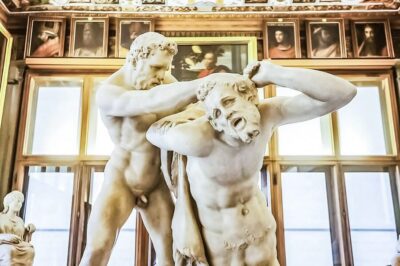

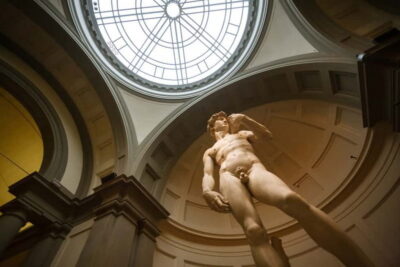
Basilica di Santa Trinita: ending inside a church with that quiet, medieval feel

The final stop is Basilica di Santa Trinita. You arrive after a complete tour experience that is meant to feel like real Florence, not a scripted tourist loop. The time inside is about 10 minutes.
This is one of those endings that changes the tone of your whole visit. You spend the first part learning and scanning, then you finish with quiet. The tour concludes inside the basilica, in a calm atmosphere that lets you absorb what you have just been told.
Why this is valuable: churches in Florence are not only about grand architecture. They are about devotion, ceremony, and the way art supported belief. Ending here gives your walk a kind of “last note,” so your memory stops being a list and starts being a sequence.
Practical tip: dress for church conditions. Even if the tour is only 10 minutes, you will be standing or moving slowly, and you will want to feel comfortable and respectful.
How the 2-hour plan fits real sightseeing (and real tired feet)
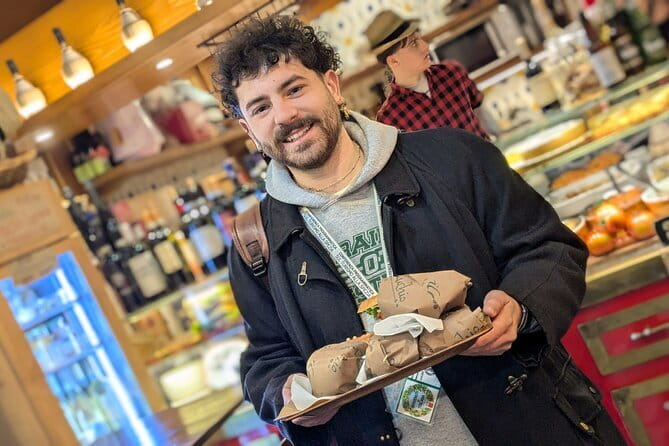
This experience is about 2 hours, give or take. That duration is ideal for a first or second day in Florence, especially if you already know you will do at least one bigger ticket attraction later.
Because the stops are spread across meaningful areas rather than endless museums, the time feels efficient. You are walking, listening, and stepping into brief interior moments. It is not a marathon.
Group size matters here. With a maximum of 15 people, you are less likely to feel lost in the back of a crowd. It is also easier for Camilla to direct your attention when you are moving through smaller spaces.
Weather matters too. The experience requires good weather, and if it is canceled due to poor conditions, you will be offered a different date or a full refund. So check your forecast seriously the day before.
Price and value: what $610 gets you in Florence terms
The price is $610 for the experience. That sounds steep until you look at what is included and what you avoid.
Here’s the value logic I see:
- You get an art historian guide who explains what you are seeing as you go, rather than handing you a passive audio route.
- You get a small-group format capped at 15, which is a big deal in Florence if you want to actually hear your guide.
- You get admission tickets included at each stop, which reduces the friction of planning and paying small extras on the spot.
- You get a route intentionally aimed at being away from the biggest crowds, which is hard to reproduce if you plan it alone.
If you are the type who hates standing shoulder-to-shoulder or trying to interpret buildings with limited context, this kind of guided walk often pays off quickly. You end up with understanding, not just photos.
If you are the type who wants complete freedom with no schedule, you might resent the guided pacing. But the time is short, the focus is specific, and the payoff tends to be high.
Practical logistics you will actually care about
The meeting point is Piazza di Santa Croce, 13, 50122 Firenze FI, Italy. The tour ends at Basilica di Santa Trinita, Piazza di Santa Trinita, 50123 Firenze FI, Italy.
You get a mobile ticket, and confirmation is received at the time of booking. The start and end points are near public transportation, which helps when you are mixing this with other plans.
Also, this tour is described as suitable for most people. Still, since it is a walking tour, come ready for a steady pace over two hours, with brief stops for explanations and short visits.
Who should book this tour, and who might not love it
This is a great match if you:
- Want a Florence walking tour that leans into art history and religious spaces
- Prefer quieter streets and medieval squares over the busiest sight corridors
- Enjoy learning how ideas like Beatrice, love, and social roles connect to what you see in the built environment
- Want the kind of guiding that makes you look closer and understand more
You might choose differently if you:
- Are looking for a fast checklist of major sights with minimal talking
- Struggle with churches or prefer to skip religious interiors
- Are traveling during a period where weather is unreliable and you cannot be flexible
Should you book Not-touristy Florence with Camilla?
I think this is an easy yes for anyone who wants Florence to feel personal instead of crowded and confusing. Camilla’s art-historian approach is the star here, and the consistent, highest praise is telling: people say the guide makes the city’s art experience feel deeper and more meaningful, not just more complete.
The route also makes sense. Starting at Santa Croce, moving through quieter areas, crossing Dante’s district to Piazza della Repubblica, and ending inside Basilica di Santa Trinita gives your visit a natural arc. You leave with more than images. You leave with a better way to read the city.
If you can handle a couple hours of walking and you are okay with a church-focused ending, book it. If weather looks bad or you need a fully flexible day, wait or plan for alternate days.
FAQ
How long is the Not-touristy Florence with Camilla walking tour?
It lasts about 2 hours.
Where does the tour start and end?
It starts at Piazza di Santa Croce, 13, 50122 Firenze FI, Italy, and ends at Basilica di Santa Trinita, Piazza di Santa Trinita, 50123 Firenze FI, Italy.
How large is the group?
The tour has a maximum of 15 travelers.
Who is the guide?
The tour is led by Camilla, a local art historian.
Do I receive a mobile ticket?
Yes, the tour includes a mobile ticket.
Are admission tickets included?
Admission tickets are included for the listed stops.
What happens if the weather is poor?
The experience requires good weather. If it is canceled due to poor weather, you will be offered a different date or a full refund.
What is the cancellation policy?
You can cancel for free up to 24 hours in advance for a full refund. If you cancel less than 24 hours before the start time, the amount paid is not refunded.
Can the tour be canceled if there are too few people?
Yes. If the minimum number of travelers is not met, the tour may be canceled, and you will be offered a different date or a full refund.
Every Florence review, in one place
- Tuscany Day Trip from Florence: Siena, San Gimignano, Pisa and Lunch at a Winery
★ 5.0 · 21,634 reviews - The Best tour in Florence: Renaissance & Medici Tales – guided by a STORYTELLER
★ 5.0 · 12,316 reviews

Florence picks that sit just beyond this itinerary
- Florence: Duomo Complex Private Guided Tour & Optional Dome Climb
★ 5.0 · 4 reviews - Private Tour of Florence Cathedral, Bell Tower & Baptistery
★ 5.0 · 4 reviews - Michelangelo’s David Tour in the Accademia (Tickets NOT included)
★ 4.0 · 4 reviews - Exclusive Pisa Tour from Florence: With Skip-the-Line Access
★ 4.0 · 4 reviews - Full-Day Tour of Tuscany from Florence-small group up 8 pax
★ 4.5 · 4 reviews - Florence: Inferno Private Walking Tour
★ 5.0 · 4 reviews