
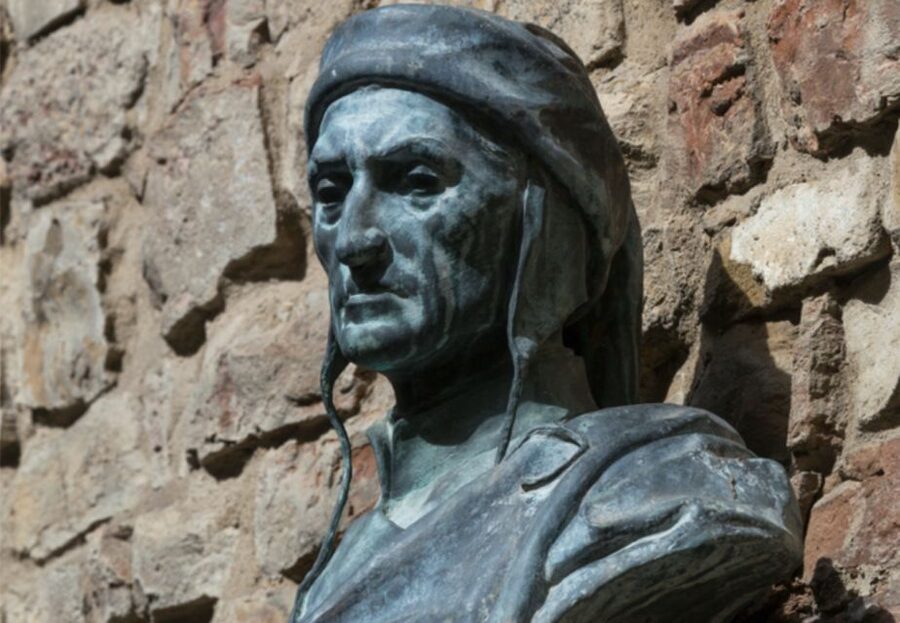
Florence field review · WALKING TOURS
Florence: Walking Tour of Dante’s Florence with a Guide
Dante’s Florence is hidden in plain sight. This 2-hour tour threads Dante Alighieri into real medieval streets, starting around Duomo Square and ending at Dante’s statue in Piazza Santa Croce, so the story feels grounded. I also love how it connects the places to the ideas behind the Divine Comedy, not just dates on a timeline. One drawback to plan for is that it is a walking tour, so comfy shoes matter, and some stops involve looking up and across narrow streets.
The guide makes a big difference here. In the best moments, Oksana’s storytelling hits both Dante’s life and how Florence worked as a medieval city, including the city split tied to the legend of the Guelphs and Ghibellines. If you prefer to hear every word clearly, note that earphones are provided only for groups over 15 participants, though you will still have an audio option included.
Key highlights you will feel right away
- Duomo Square launch point: San Giovanni Baptistery and the start of Dante’s district, with plenty to notice as you look around.
- Divine Comedy footsteps: the walk is structured to mirror steps of the work, so you get a clearer sense of what you are reading.
- Dante Studies Center and Ponte Vecchio: you move from Dante-focused learning to a landmark tied to medieval legends.
- Piazza della Signoria and Palazzo Vecchio: Dante’s funerary mask is kept inside Palazzo Vecchio.
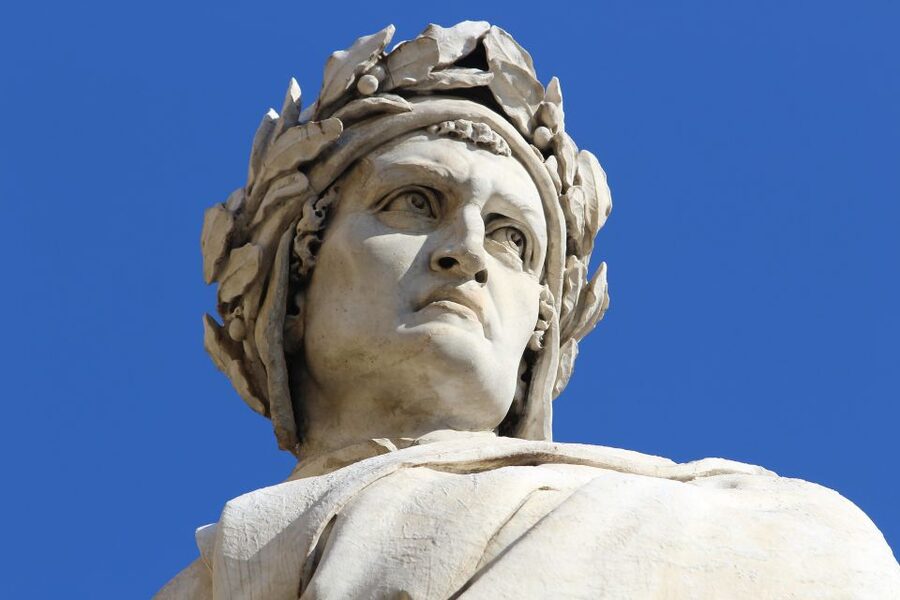
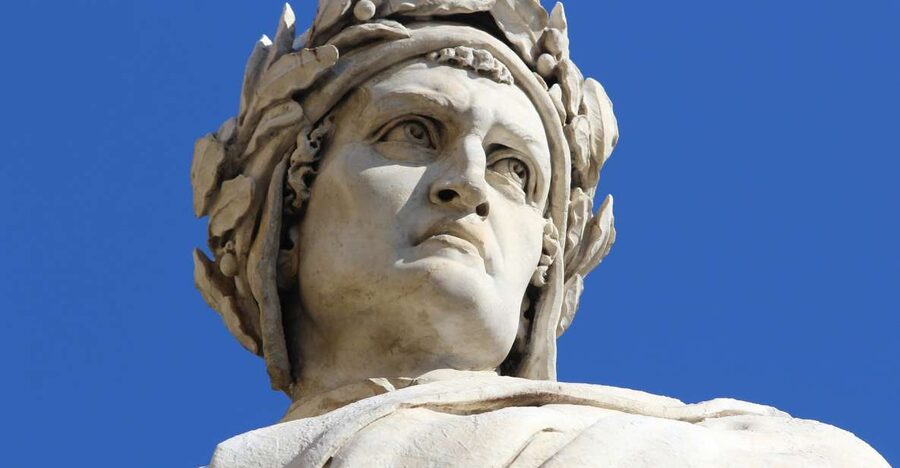
- Piazza Santa Croce Dante statue: you finish with one of the most striking marble depictions of Dante holding the Divine Comedy.
Florence walks that make the stone streets tell the story
- Florence: Guided Walking Tour★ 4.5 · 3,334 reviews
- Skip the line: Uffizi and Accademia Small Group Walking Tour★ 4.5 · 3,135 reviews
- Florence: Guided Walking Tour★ 4.6 · 1,602 reviews
- Florence: Renaissance and Medici Tales Guided Walking Tour★ 4.8 · 1,549 reviews
Why Dante’s Florence works so well on a 2-hour walking tour
Florence can feel like a greatest-hits collection if you rush. This tour slows you down on purpose by zooming in on one writer, Dante Alighieri, and asking what his city looked like when he lived there. The goal is not just to show monuments. It is to help you picture medieval Florence as a lived-in place: narrow lanes, stone and wooden houses, towers, and small churches tucked close together.
The timing also helps. Two hours is long enough to get into the story and short enough that you can still roam on your own afterward. You will leave with a handful of real locations tied to Dante’s birth and exile years, and a better sense of why his words landed where they did.
What I like about the pacing
You start in Duomo Square, then keep moving with a steady rhythm. Stops do not feel randomly sprinkled. Each one adds context, like you are building a map in your mind. If you like walking tours that actually teach, this one has that feel.
The one thing to consider up front
Because it is a guided walk, you may spend more time outside than you would on a museum visit. If weather is intense, bring what you need, hat or umbrella, and plan to keep moving.
Meeting at Loggia Bigallo, then heading straight to Duomo Square
The tour meets in front of the Loggia Bigallo Museum. From there, you start moving toward Duomo Square, the heart of your first big story beat. Even if you have seen the Duomo area before, this is a different way to experience it. The tour frames the square as the entrance to the city in medieval times, which changes how you read the space.
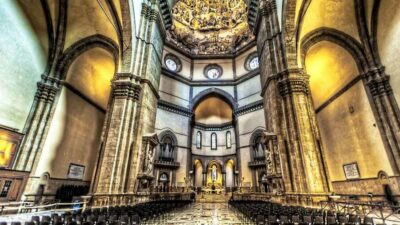
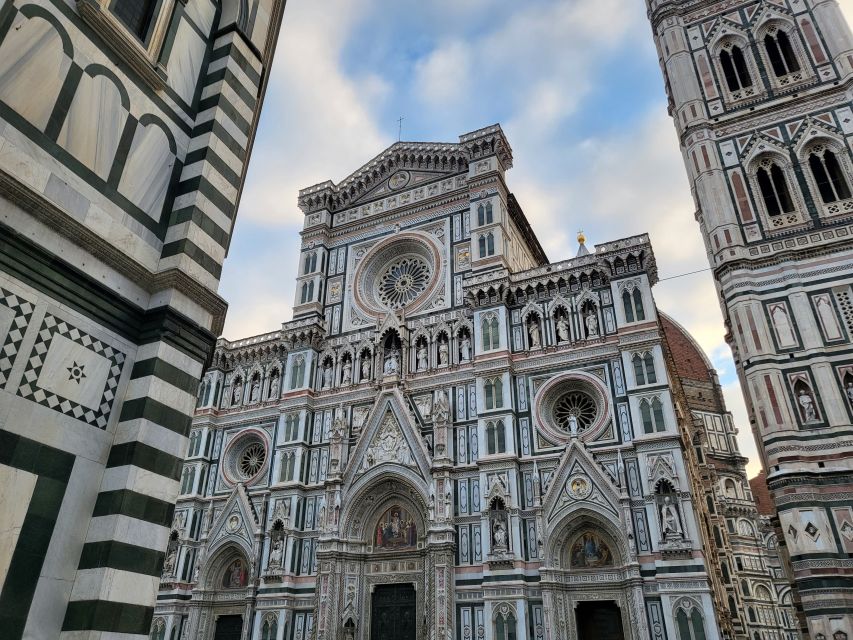
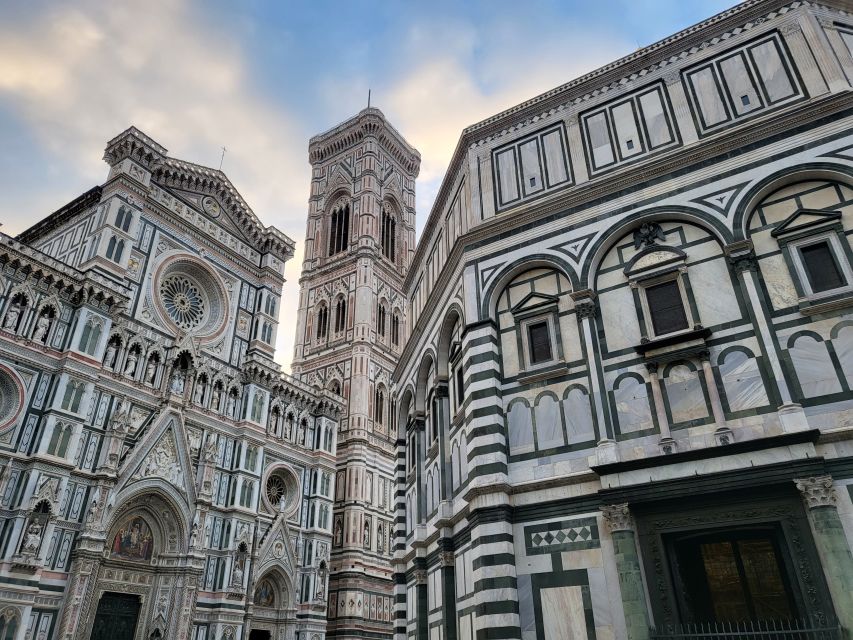
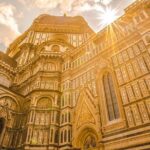
Duomo Square is where the tour begins in earnest, and it is easy to see why. The San Giovanni Baptistery is right there, and the surrounding area pulls your eyes in a way that makes it feel like an actual city gateway. The guide also points you toward what to notice on the walls of ancient Florentine towers, including words of Dante carved into the city fabric if you look upward.
Practical tip for your first 10 minutes
When a guide tells you to look up, do it right away. In this area, that small shift helps you see details that you would normally miss while staring at street-level architecture.
When a guide is worth having beside you in Florence
San Giovanni Baptistery and the idea of Dante’s district
The tour treats Duomo Square as the doorway into Dante’s Florence. That means you are not just admiring a famous landmark. You are learning how the square functioned as an entrance, so you can imagine people arriving and moving through the city in Dante’s era.
The guide’s approach is partly visual and partly story-based. You will connect what you see in the square with the way the city operated during Dante’s life. You are told that during his time, Florence was often a network of narrow streets with stone-built houses and wooden houses, and it was full of towers and small churches. Those details matter because they help explain why a poet would feel city streets so intensely. You start to understand how walking itself could become part of his world.
Why this matters for your understanding of Dante
If you only read Dante as literature, Florence can feel like a distant backdrop. By putting you near the kind of streets and civic spaces he would have known, the tour makes his writing feel less abstract. You are building a mental picture while you walk.
Finding Dante through birth stories and Beatrice’s first appearance
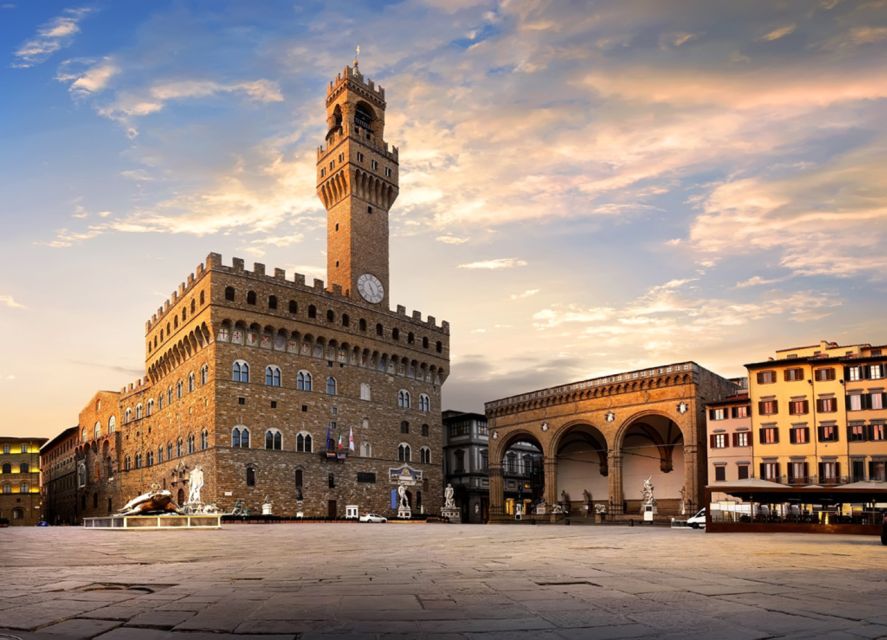
One of the most narrative-heavy parts of the walk is the segment focused on Dante’s early life. You will visit the place thought to be where he was born, and the stop connected to when he first saw Beatrice.
Even if you know the broad story already, this kind of stop can change how you remember it. You are not just hearing a quick biography. You are seeing how the guide links specific locations to personal milestones in Dante’s life.
What you should pay attention to
Keep an ear out for how the guide connects the emotional arc of Dante’s story to the structure of the Divine Comedy. The tour says you will walk through the steps of the work as you go, and that is what helps early-life stops feel more than sentimental sightseeing.
Moving to the Dante Studies Center and understanding the Guelph and Ghibelline legend
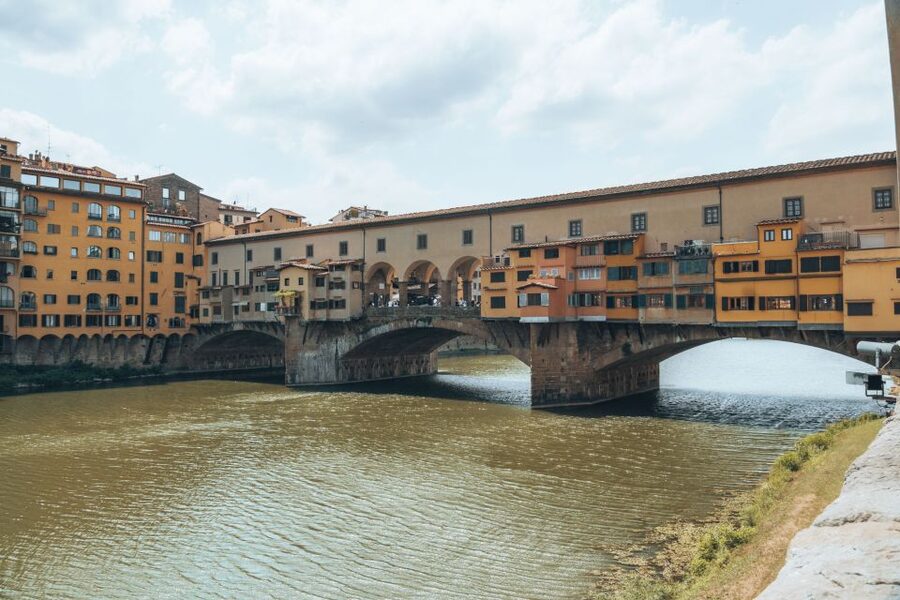
After the morning’s core Dante biography moments, you move to the Dante Studies Center. This stop helps you shift from story to study. It is where you can ground your understanding of who Dante was and why Florence mattered so much.
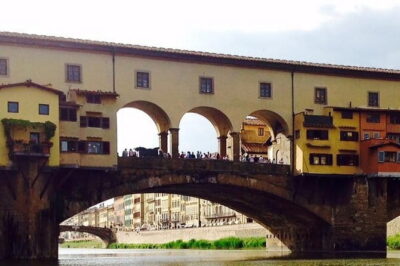
Then you head toward Ponte Vecchio. The tour specifically ties this area to a legend about conflict between the Guelphs and Ghibellines, with the claim that the struggle began there and that the city divided into two parts. Whether you treat the legend as literal history or as a reflection of how the city remembered power struggles, it adds real emotional stakes to the landscape you see around you.
Why Ponte Vecchio belongs in a Dante-focused walk
Ponte Vecchio is a signature Florence landmark, but in this tour it is more than a photo stop. The guide uses it to connect political conflict and civic division to where people actually moved through the city. That makes the streets feel like they mattered, not just looked pretty.
Piazza della Signoria, Palazzo Vecchio, and Dante’s funerary mask
Next comes Piazza della Signoria and Palazzo Vecchio. This is one of the tour’s most compelling civic-to-literary bridges. The tour explains that you reach the heart of Florence during medieval times here, and it is hard to argue with the scale and presence of the square.
Palazzo Vecchio is where the tour adds a powerful, tangible link to Dante. Dante’s funerary mask is kept inside. That detail matters because it gives you a physical connection to a writer who can otherwise feel distant. Seeing that the story preserved a likeness helps you understand why people in Florence kept returning to Dante, even after the poet faced exile.
A balanced way to view this stop
You might come into Florence already loving art. This stop asks you to love ideas too: civic life, identity, and how a city remembers one of its own. It is a good reminder that the Divine Comedy is literature, but it is also deeply tied to the society that shaped it.
How the tour uses monuments and streets to make Dante’s Florence feel real
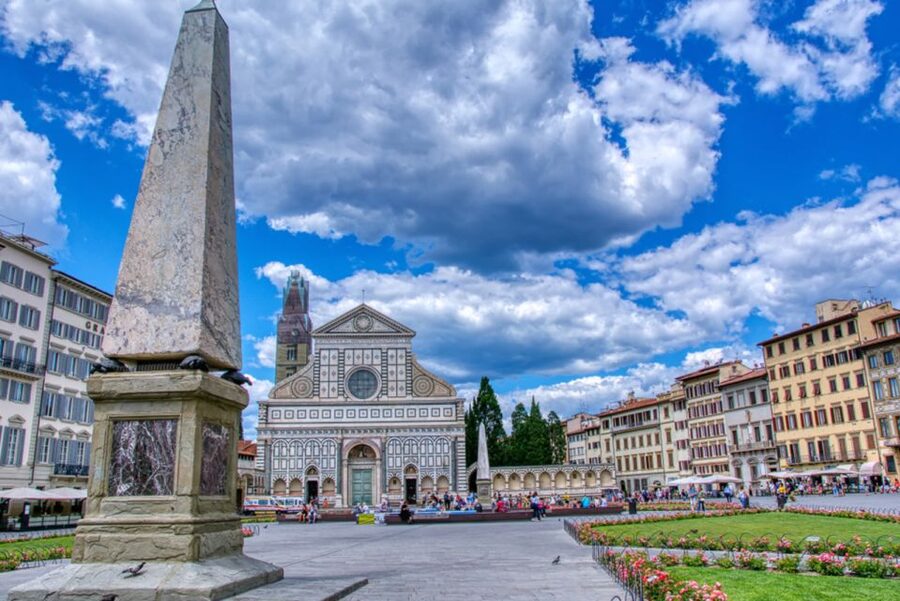
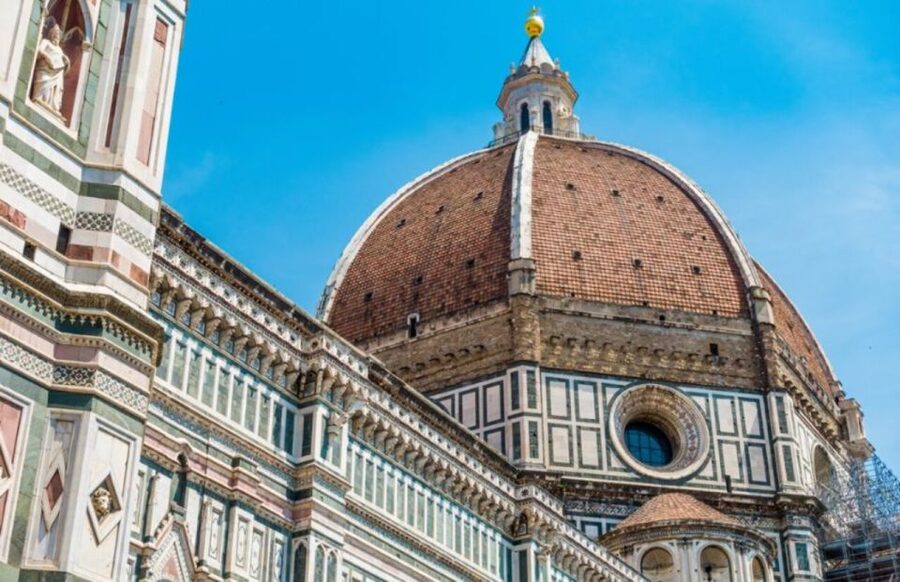
A walking tour is only as good as its “why.” In this one, the why is medieval context. The tour guide frames Florence in Dante’s lifetime as a city without major buildings that later became famous, like Giotto’s Bell Tower and Brunelleschi Dome, and it even notes that Palazzo Vecchio did not exist yet the way you know it now.
That perspective helps you do something useful as a visitor. It turns a famous modern city into a layered timeline. Suddenly, you are not just seeing today’s Florence. You are imagining the older Florence underneath it, the way the guide points out towers, churches, and historical street lines that can still shape how you move.
The best part, guided by real people
The reviews emphasize that the guide can make the tour feel like more than sightseeing. Oksana in particular is described as personable, knowledgeable, and passionate, with storytelling that connects Dante’s life events to medieval Florence itself. The birthday story also signals something important: if you care about Dante as a reason for being in Florence, the guide can tailor the energy of the morning to make it feel personal.
Pace, hearing the guide clearly, and what to do with earphones
The tour lasts 2 hours, and it is designed to keep you moving while still giving you time to understand each stop. You will hear from a live guide in Italian and English, and you also get an audio guide included in English, Italian, and Spanish.
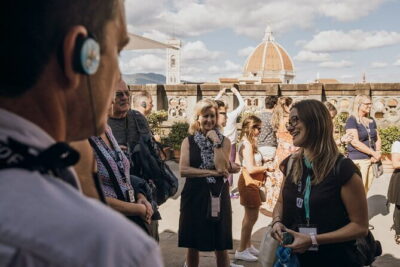
One small practical note: earphones are provided only for groups with over 15 participants. If your group is smaller, you might rely more on the live guide and the audio option. Either way, bring a bit of patience when you move through busy streets. In central Florence, sound carries in weird ways, and it is often easier to position yourself near the guide than to hover at the back.
What I recommend you bring
- Comfortable walking shoes
- A phone with enough battery if you plan to use your own notes
- Something for sun or light rain, since the tour follows outdoor streets
Price and value: what $34 gets you in Florence
At $34 per person for a 2-hour guided walk, you are paying for two things: interpretation and time. Florence is full of sights you can see on your own, but you would need a lot of prep to turn them into a clear Dante story. This tour does that work for you on the spot.
You also get included audio support, plus a live guide speaking Italian or English. That combination matters. If you want Dante context without reading for hours before your trip, this is one of the more budget-friendly ways to get it.
When the price feels especially fair
If Dante is your main reason for visiting Florence, spending $34 to connect his birth, Beatrice, study centers, civic spaces, and final statue imagery can feel like a high return. You are buying clarity, not just movement.
Who should book this Dante walking tour
This fits best if you:
- Love literature and want Florence to support the reading
- Want a structured way to see Dante-linked sites in a short time
- Prefer a guide who can explain how medieval Florence worked, not just what buildings look like
It may be less ideal if you:
- Want a long, slow photo session with no narration
- Only care about famous art and architecture with minimal context
- Struggle with walking for 2 hours on city streets
Should you book? My straightforward take
Book it if you want Dante in the real city, not in an abstract sense. The strongest reason is the guide quality. Oksana gets singled out for being personable, passionate, and able to connect Dante’s life with the medieval feel of Florence. The tour also ends in a memorable way, with the Dante statue in Piazza Santa Croce, so you finish your morning with an image that makes the whole walk click.
If you are on the fence, decide based on your travel style. If you enjoy understanding what you are seeing and you like walking with a purpose, this one is a smart use of time. If you only want to tick off landmarks, you might prefer an unstructured day and do your Dante research separately.
FAQ
FAQ
How long is the Dante’s Florence walking tour?
The tour lasts 2 hours.
How much does the tour cost?
The price is $34 per person.
Where does the tour start?
You meet in front of the Loggia Bigallo Museum.
Where does the tour end?
The activity ends back at the meeting point.
What languages are available for the live guide?
The live tour guide is available in Italian and English.
Is there an audio guide included?
Yes. Audio guide content is included in English, Italian, and Spanish.
Are earphones provided?
Earphones are provided only for groups with over 15 participants.
Is the tour wheelchair accessible?
Yes, it is wheelchair accessible.
What major sights are included on the route?
You visit Duomo Square (including San Giovanni Baptistery), the Dante Studies Center, Ponte Vecchio, Piazza della Signoria, Palazzo Vecchio, and Piazza Santa Croce, among the Dante-linked stops.
Is free cancellation available?
Yes, you can cancel up to 24 hours in advance for a full refund.
Florence at walking speed



More Florence tours to open next
- The Best tour in Florence: Renaissance & Medici Tales – guided by a STORYTELLER
★ 5.0 · 12,316 reviews


Every Florence review, in one place
- Tuscany Day Trip from Florence: Siena, San Gimignano, Pisa and Lunch at a Winery
★ 5.0 · 21,634 reviews - The Best tour in Florence: Renaissance & Medici Tales – guided by a STORYTELLER
★ 5.0 · 12,316 reviews




Florence picks that sit just beyond this itinerary
- Florence: Duomo Complex Private Guided Tour & Optional Dome Climb
★ 5.0 · 4 reviews - Private Tour of Florence Cathedral, Bell Tower & Baptistery
★ 5.0 · 4 reviews - Michelangelo’s David Tour in the Accademia (Tickets NOT included)
★ 4.0 · 4 reviews - Exclusive Pisa Tour from Florence: With Skip-the-Line Access
★ 4.0 · 4 reviews - Full-Day Tour of Tuscany from Florence-small group up 8 pax
★ 4.5 · 4 reviews - Florence: Inferno Private Walking Tour
★ 5.0 · 4 reviews
More Walking Tours worth comparing.
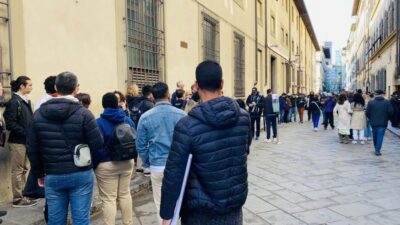 ★ 4.5Guided Walking TourFrom $313,334 reviews
 ★ 4.5Skip the line: Uffizi and Accademia Small Group Walking TourFrom $1483,135 reviews
★ 4.6Guided Walking TourFrom $271,602 reviews
★ 4.5Skip the line: Uffizi and Accademia Small Group Walking TourFrom $1483,135 reviews
★ 4.6Guided Walking TourFrom $271,602 reviews
 ★ 4.8Renaissance and Medici Tales Guided Walking TourFrom $21,549 reviews
 ★ 4.7Uffizi & Accademia Small Group Walking TourFrom $1481,380 reviews
 ★ 5.0Skip-the-Line Florence Highlights and David Walking TourFrom $1171,127 reviews
 ★ 4.6Dark Mysteries and Legends Guided Walking TourFrom $21,081 reviews
 ★ 4.5Florence in a Day: Michelangelo’s David, Uffizi and Guided City Walking TourFrom $1341,048 reviews
Find this experience in another shortlist